
Hemp and Bellflower
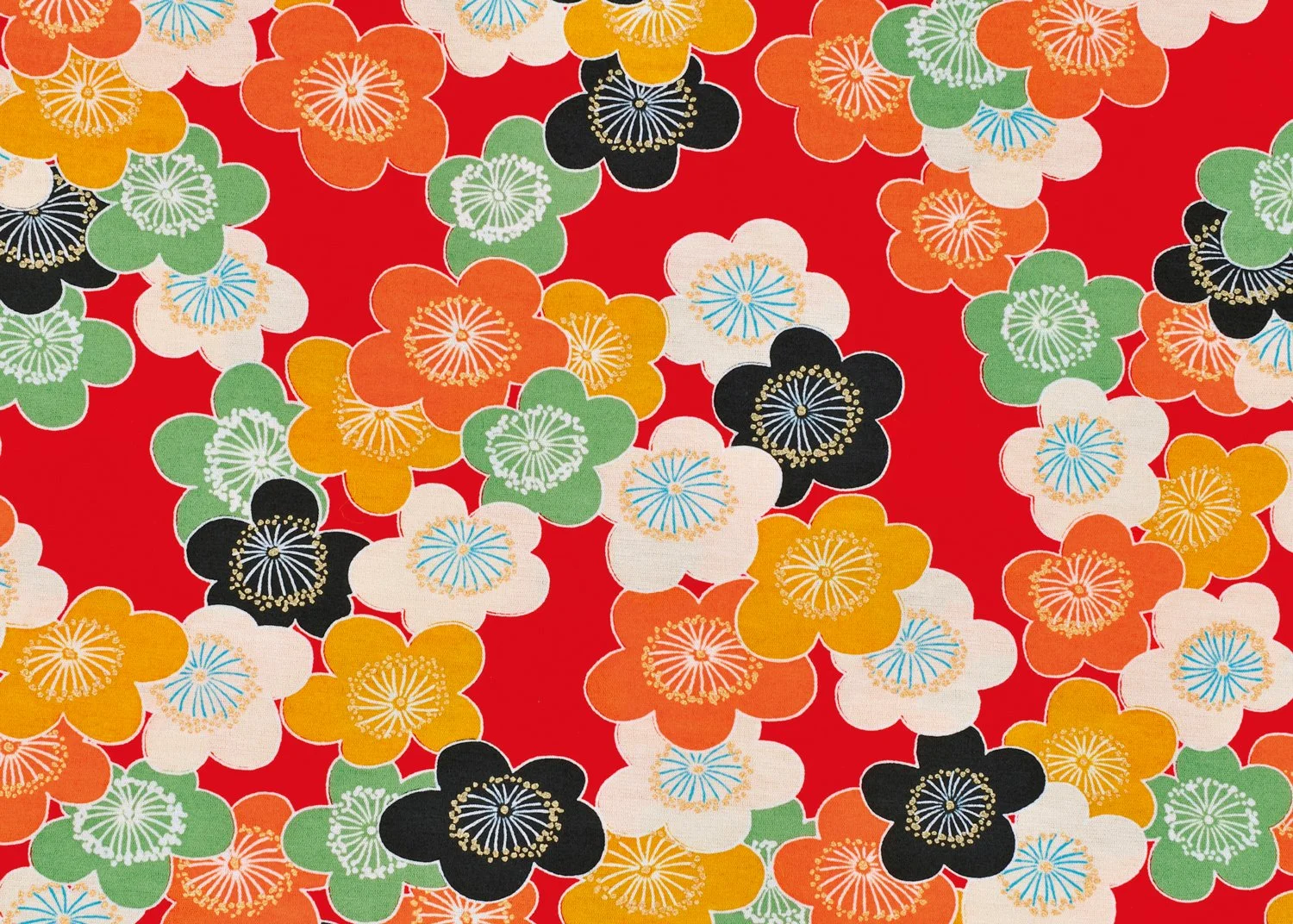
梅花ちらし - Ume hana chirashi
The Story of the Hemp Leaf & Bellflower Pattern
Hemp has long been admired for its rapid growth and resilience, making it a symbol of healthy development and the wish for children to grow strong. The geometric pattern known as “hemp leaf” is based on repeating hexagonal shapes that resemble the form of actual hemp leaves, and it has been widely used in kimono design. In this pattern, the hemp motif is expressed with a more natural, realistic touch.
In Japan, native hemp—called “ooasa” (large hemp)—was once a familiar and essential plant, grown alongside rice until the end of World War II. It was highly versatile: fibers from its stems were used for textiles, its seeds produced oil, and it even served as a source of food. This deep connection to daily life adds further meaning to the motif.
Paired with hemp is the bellflower, one of the “Seven Autumn Flowers.” While appreciated for its delicate beauty, it has also been valued since ancient times for its medicinal qualities. The bellflower motif was especially loved by artists of the Rinpa school, such as Ogata Korin and Kenzan, and frequently appears in their works.
Also known as “toki,” the bellflower was considered a sacred flower offered to the gods. Because of this, it carries meanings of protection against evil and the invitation of good fortune.
The combination of hemp and bellflower brings together powerful symbolism—vitality, protection, and quiet elegance—creating a pattern that connects tradition with everyday life.
The result is more than a pattern — it is a reflection of strength, meaning, and timeless beauty.