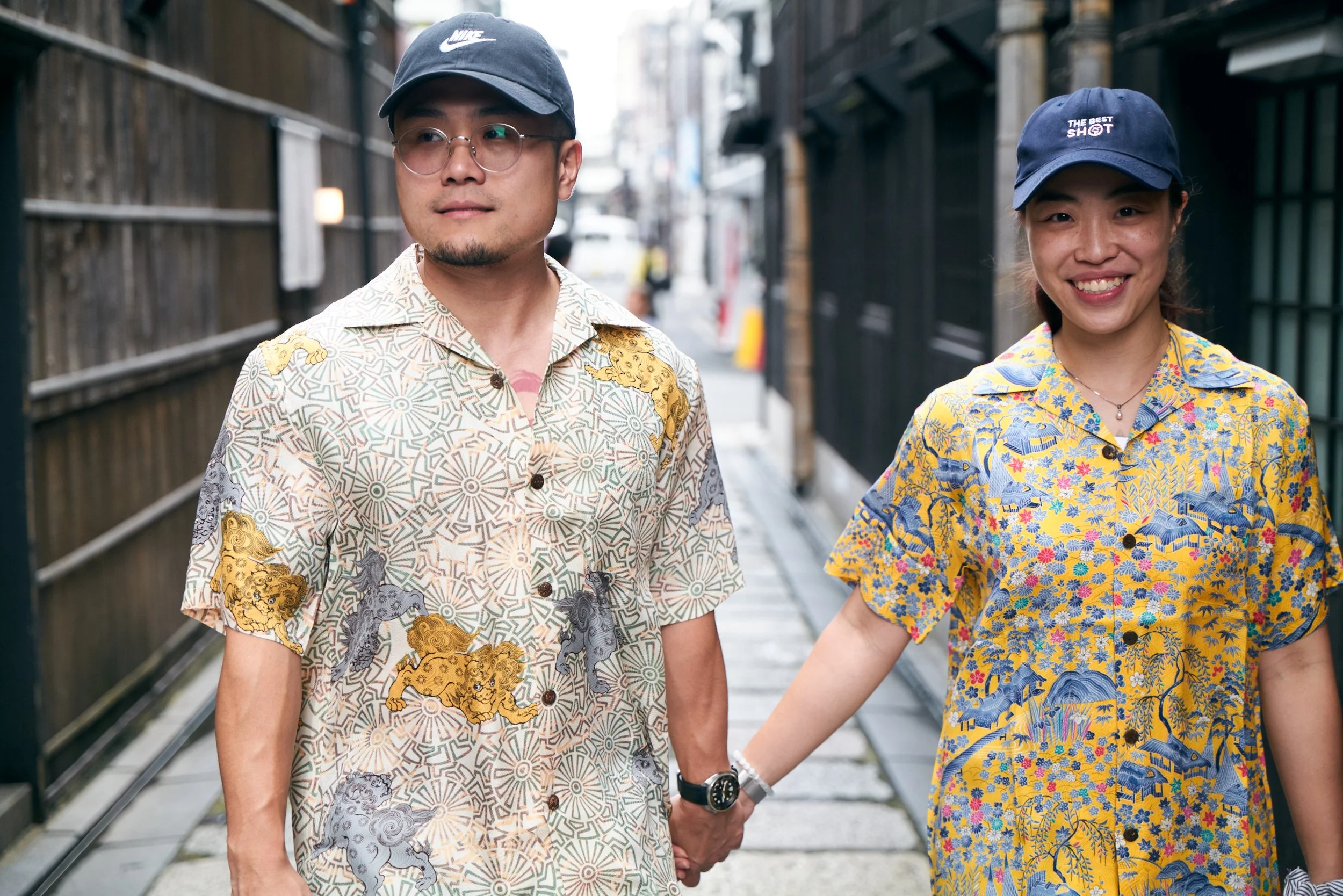
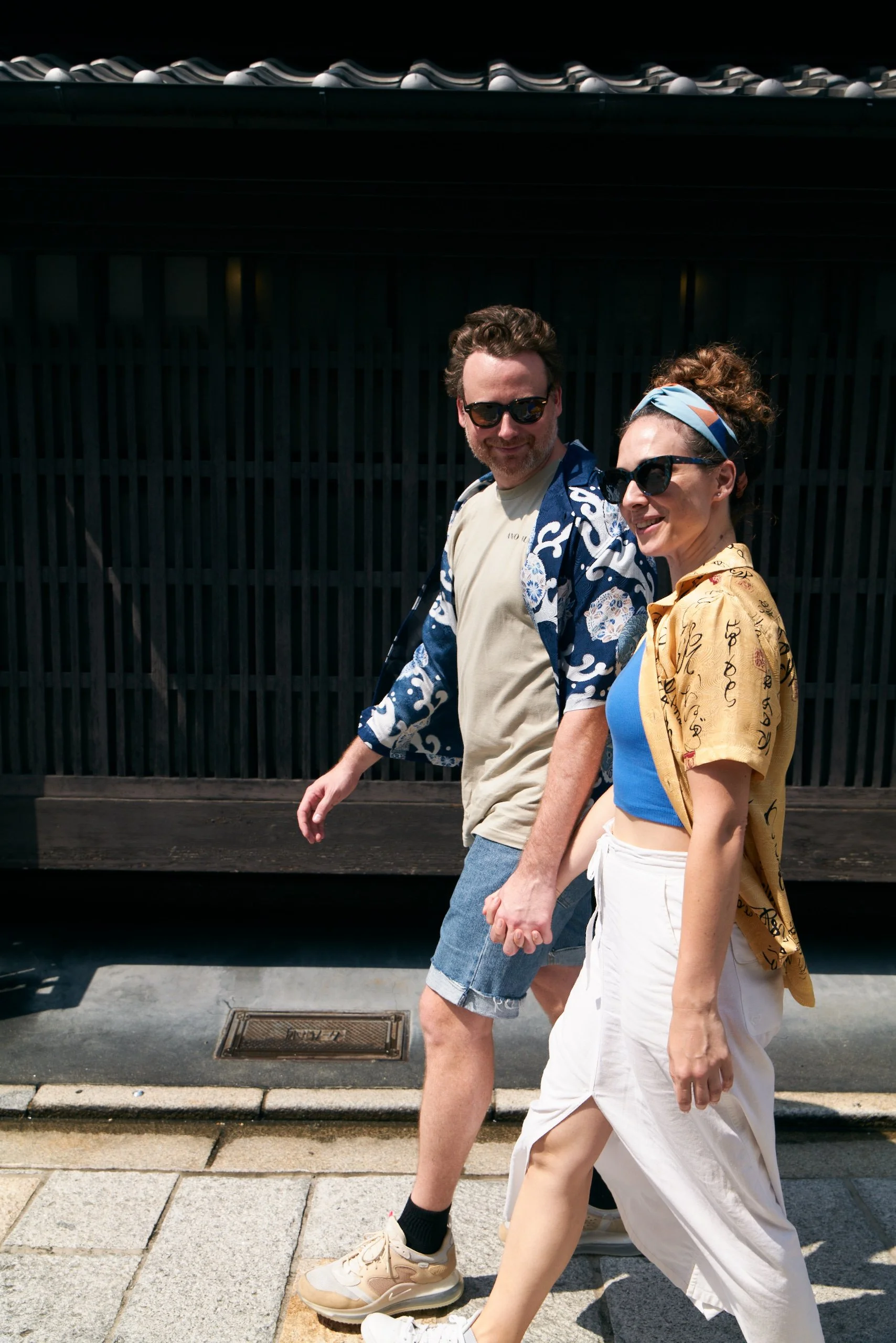
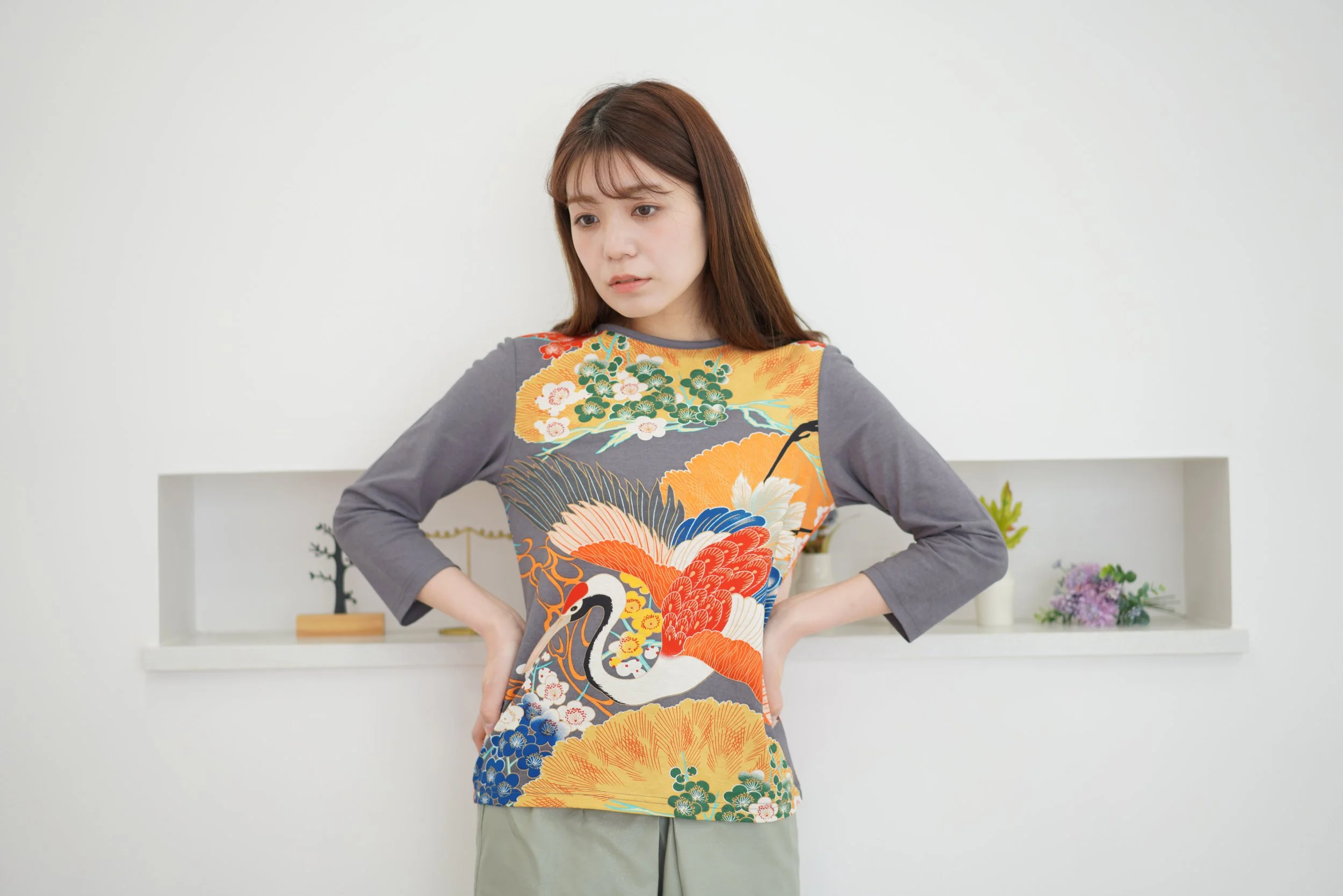
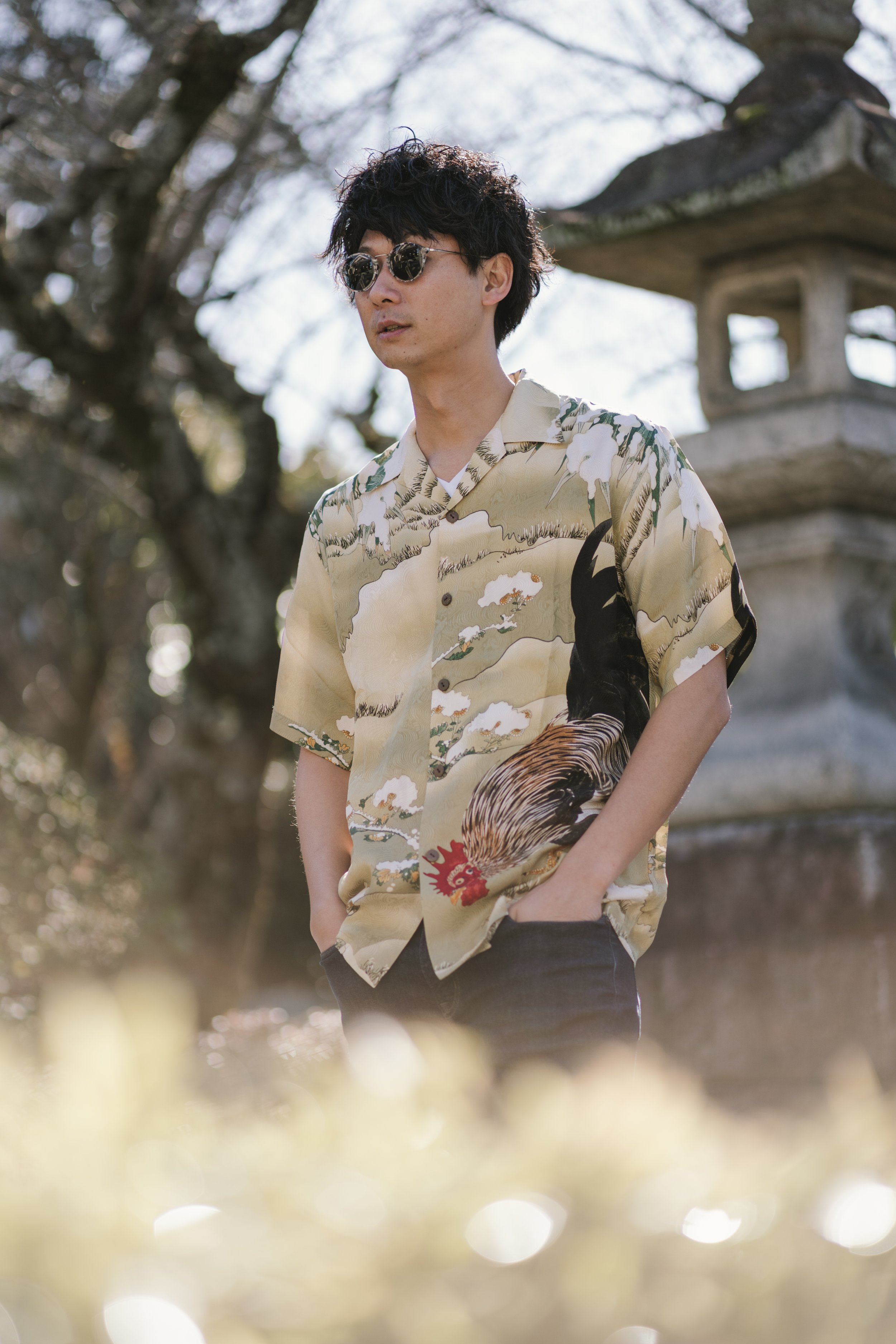
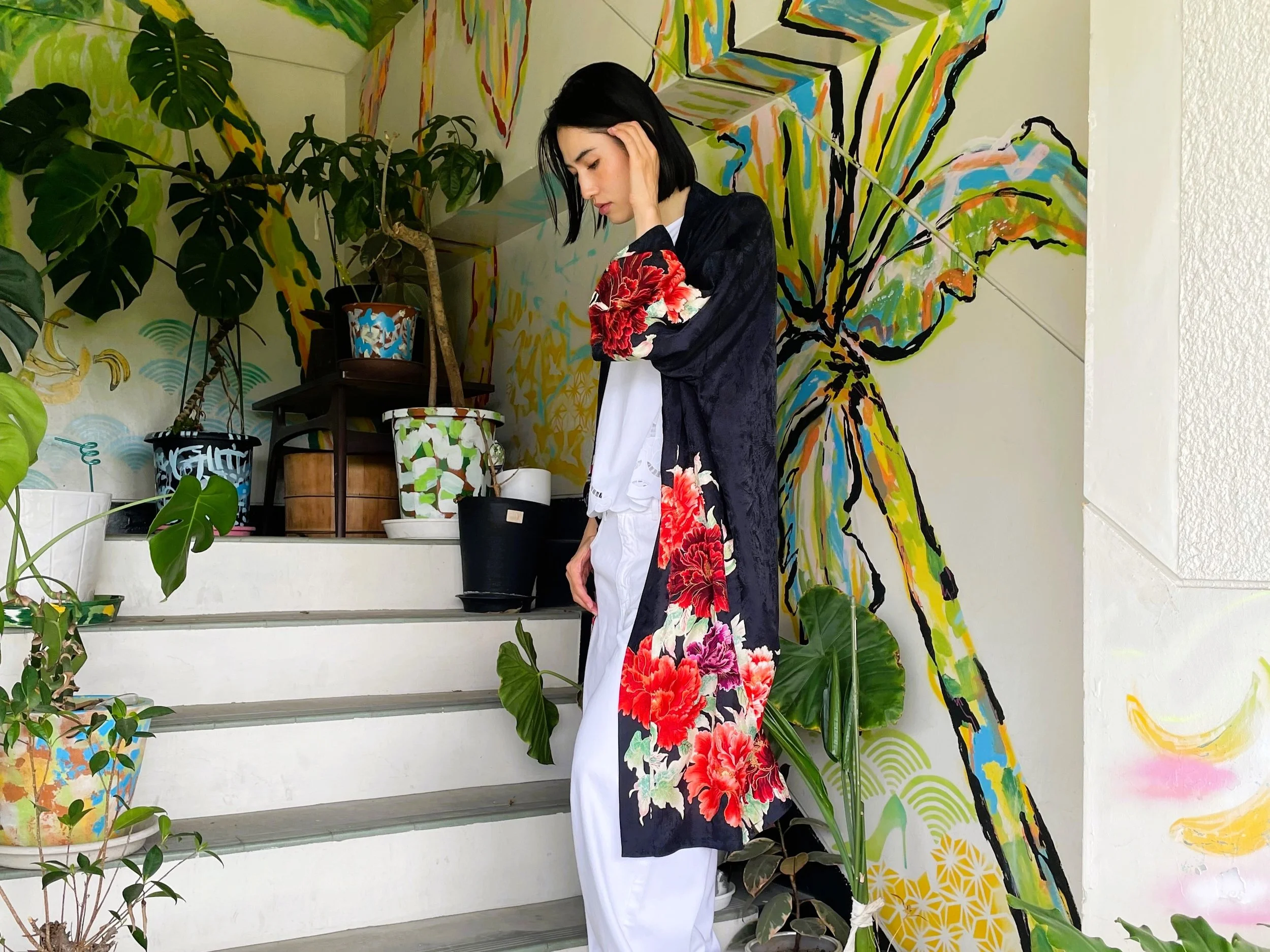
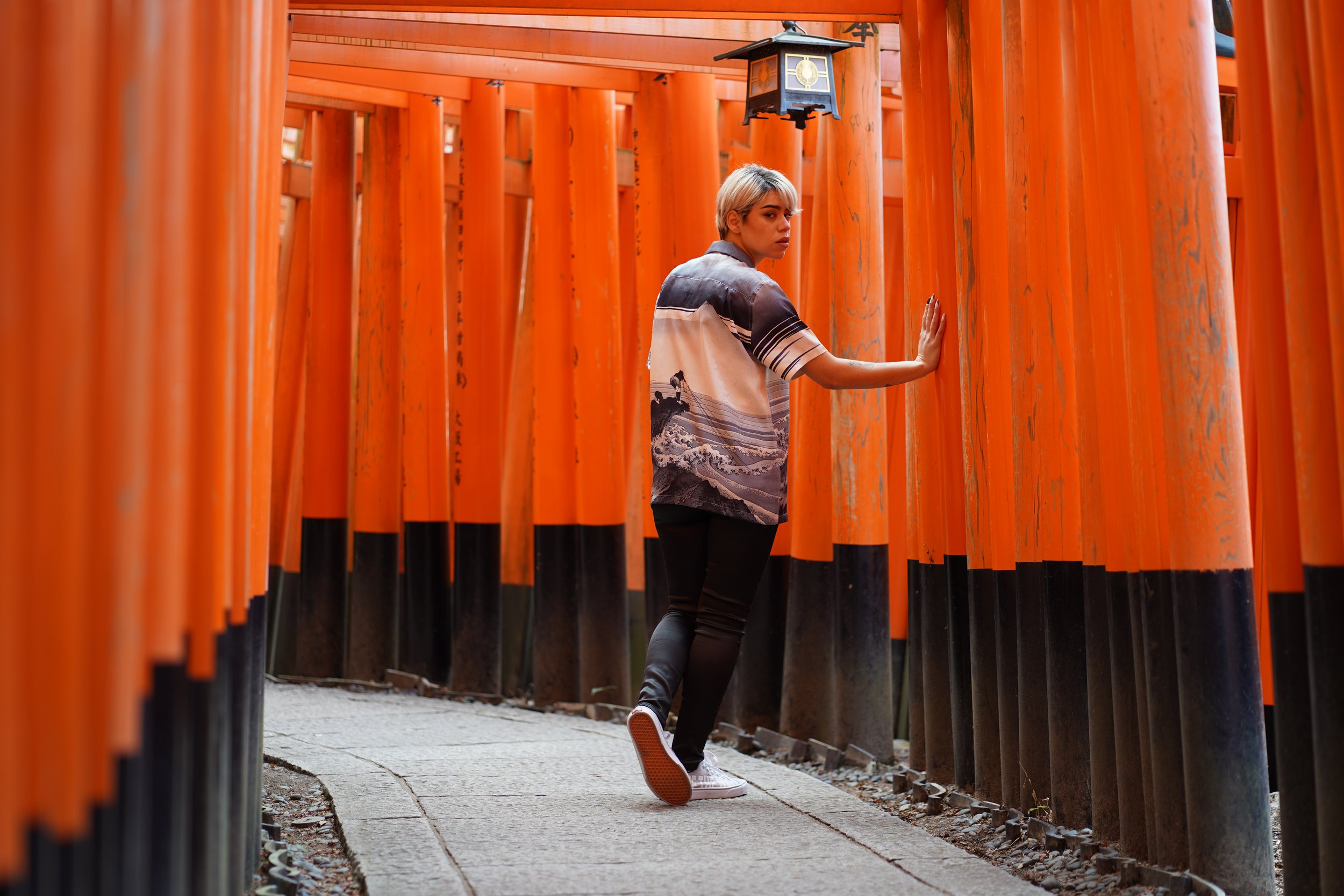
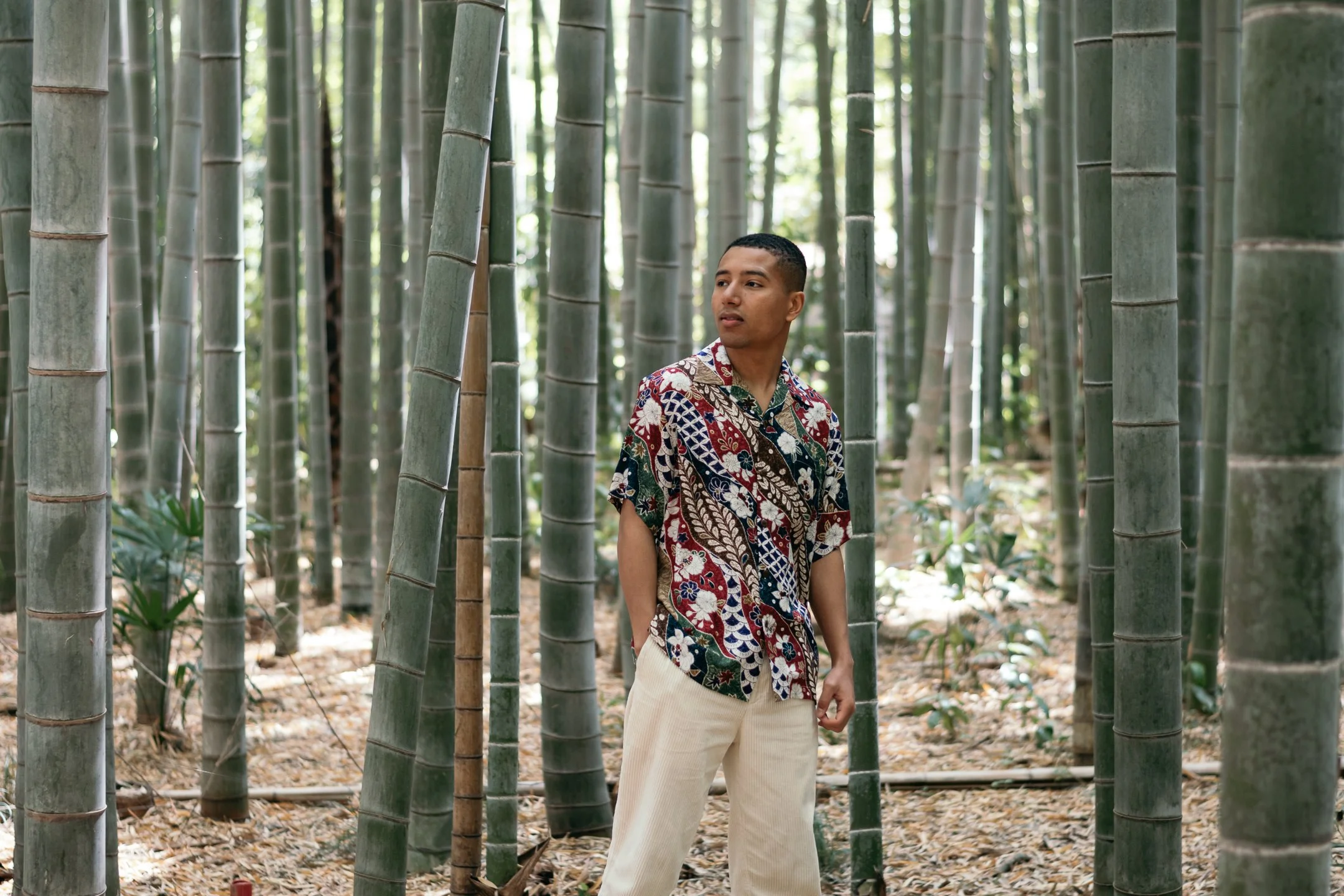
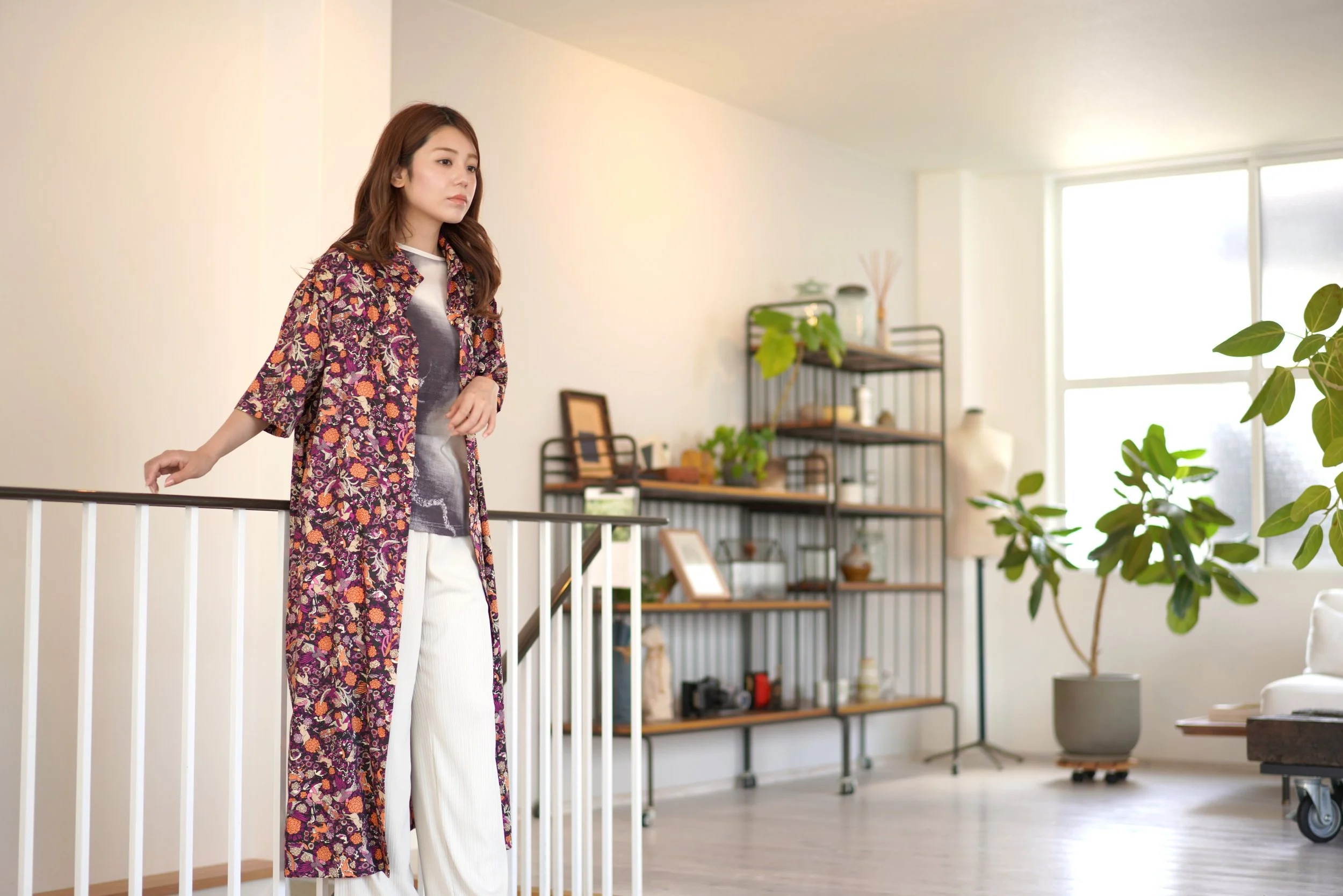
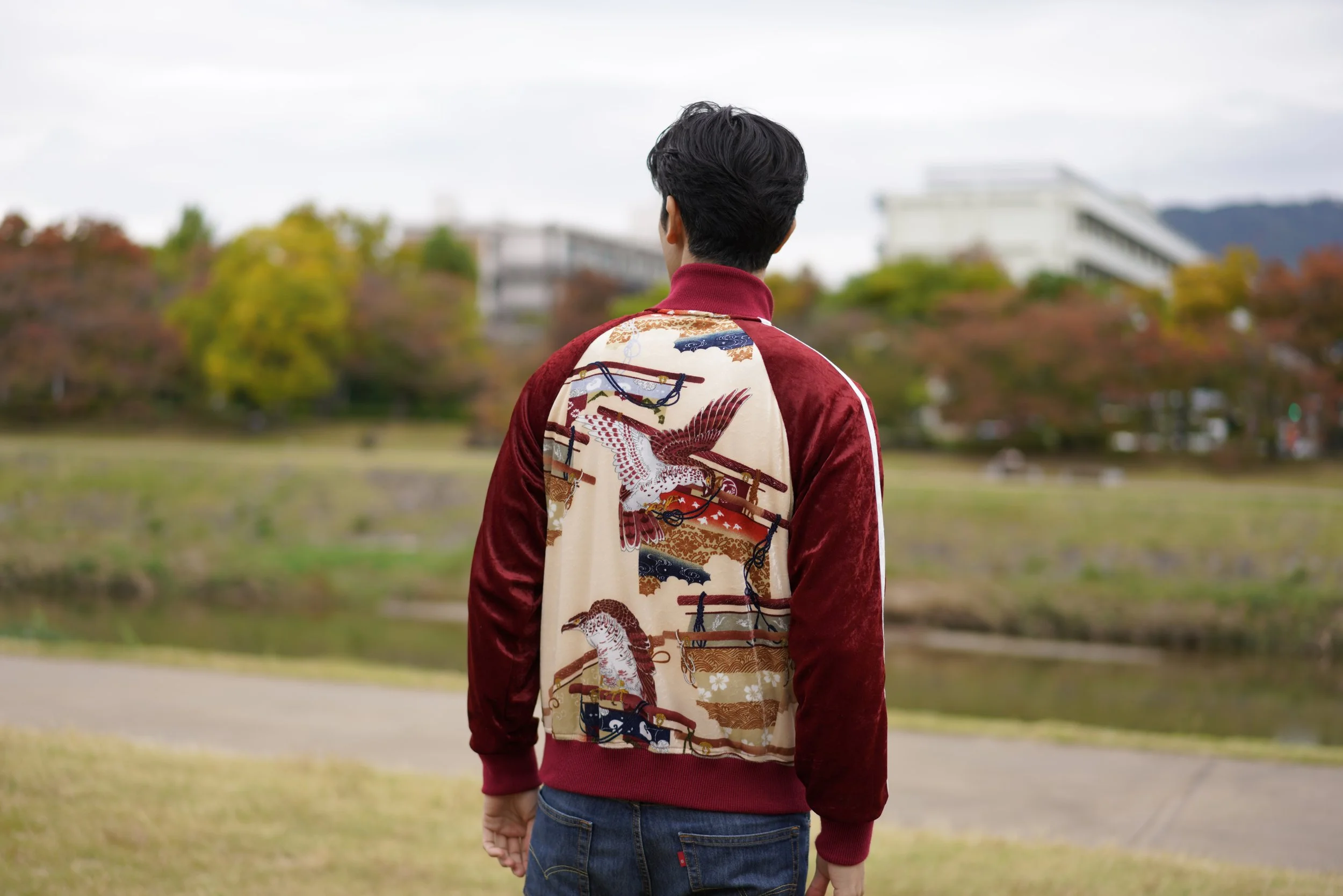
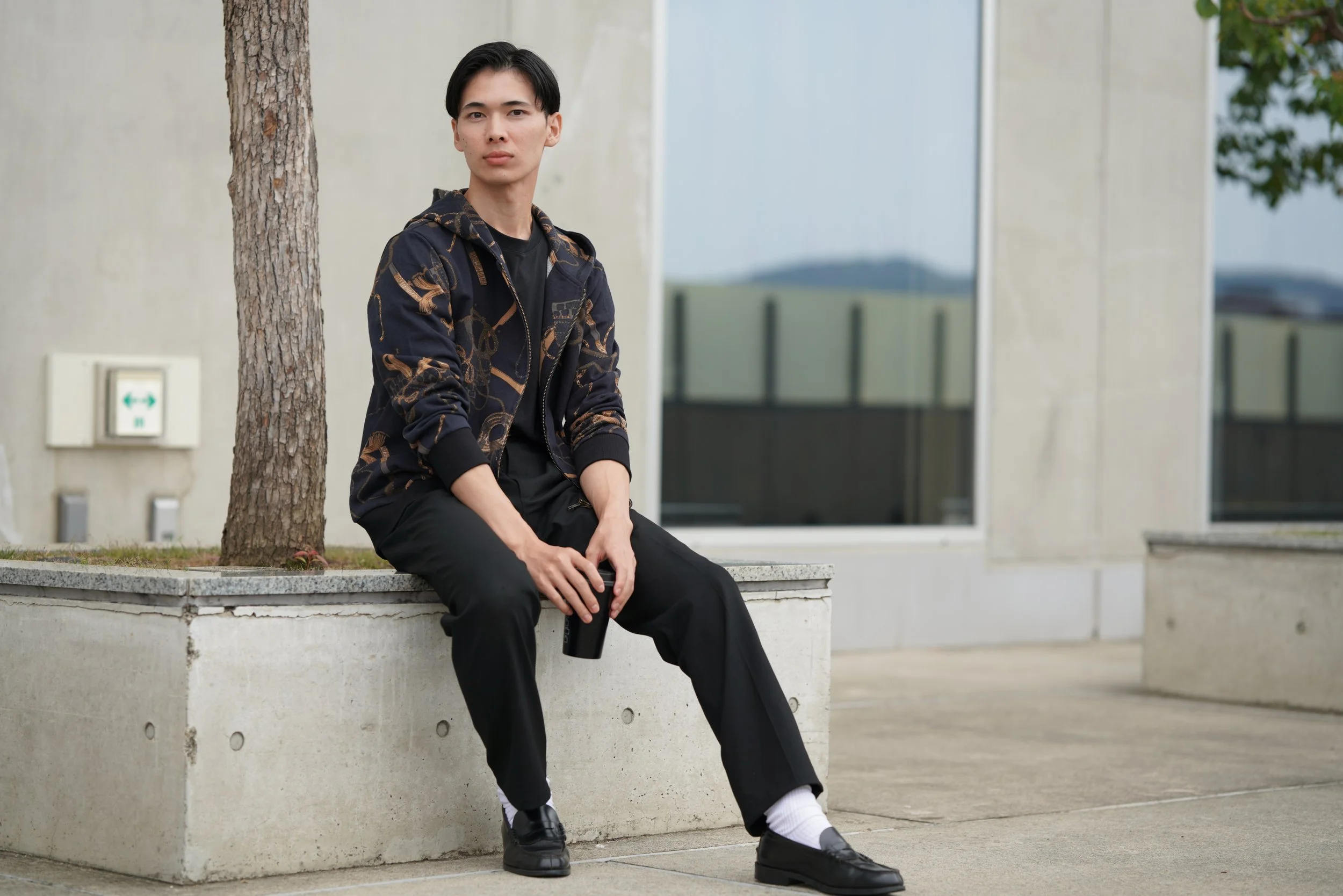
Color /Light Blue and Multi-color
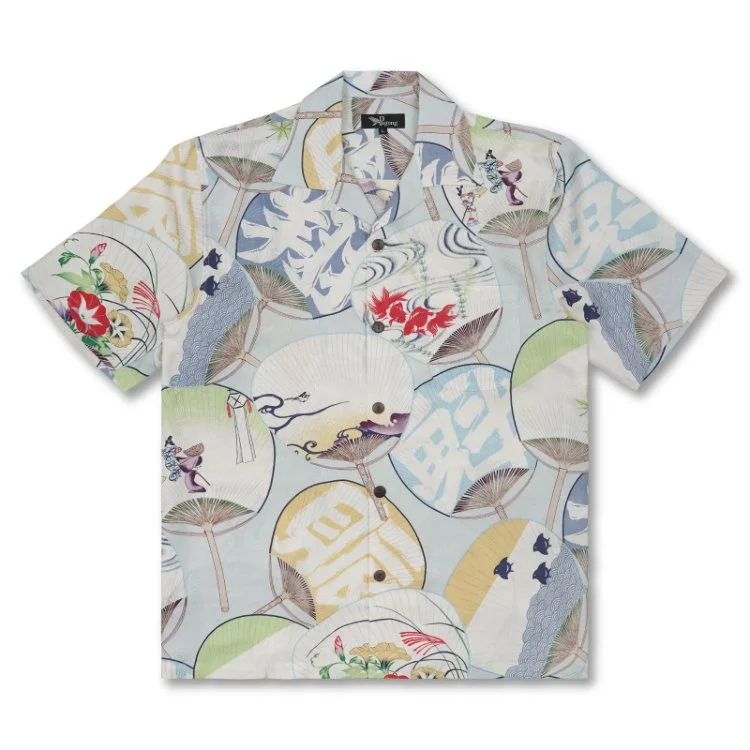
Japanese name / 京涼の団扇(Kyoryō Uchiwa)
-About-
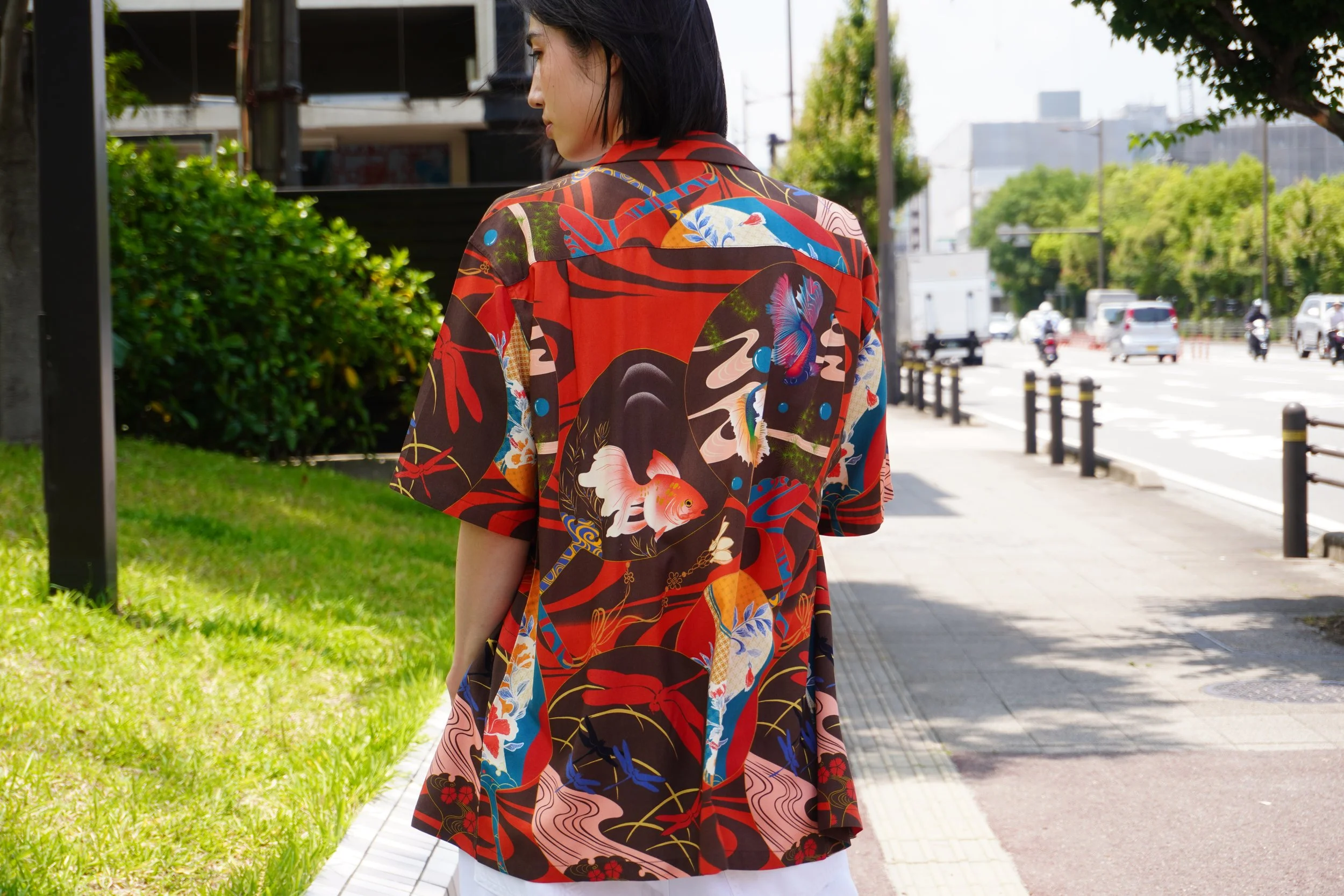
The Kyoryō Uchiwa design captures the essence of Kyoto’s summer scenery.
Inspired by Kyoto-style uchiwa fans, long cherished in daily life as symbols of comfort and coolness, this design expresses Kyoto’s distinctive elegance and the longing for purity and serenity amid the summer heat.
The overlapping fans are adorned with seasonal motifs such as morning glories, goldfish, flowing water, and dancing figures, evoking the vibrant atmosphere of summer.
Each element reflects the changing seasons and carries prayers for happiness and peaceful living.
The auspicious kanji depicted within the fans convey the following meanings:
「魁」 (Sakigake) — to lead the way, to stand at the forefront, and to guide an era forward.
「翔」 (Shō) — to soar freely through the open sky, transcending limitations and rising toward one’s dreams.
「賑」 (Nigiwai) — signifying liveliness, abundance, and prosperity, expressing the joyful gathering of people and the fullness of happiness, much like a festival.
The layered composition of the fans suggests the gentle flow of passing breezes and the quiet passage of time.
It depicts the interplay of light and shadow on summer days, the prayers woven into everyday life, and tranquil moments shaped by people and the wind.
Since ancient times, uchiwa fans have been regarded as auspicious objects, believed to invite good fortune and ward off misfortune. This pattern carries a wish that pure breezes may bring calm and clarity to the heart.
To express the unseen wind as beauty—this is a sensibility passed down through generations of Kyoto’s artisans and artists.
Kyoryō Uchiwa brings this appreciation of the invisible into the present, offering gentle coolness and quiet healing within the summer air.
Like a soft embrace of Kyoto’s summer, this design delivers a tender breeze to the wearer’s heart, adding peaceful blessings to everyday life.
・Currency : US Dollar (USD)
・100% Silk (Custom-woven Jacquard )
・Made in Japan
・Classic-fit Aloha shirt
・Coconut buttons
・Dry-clean
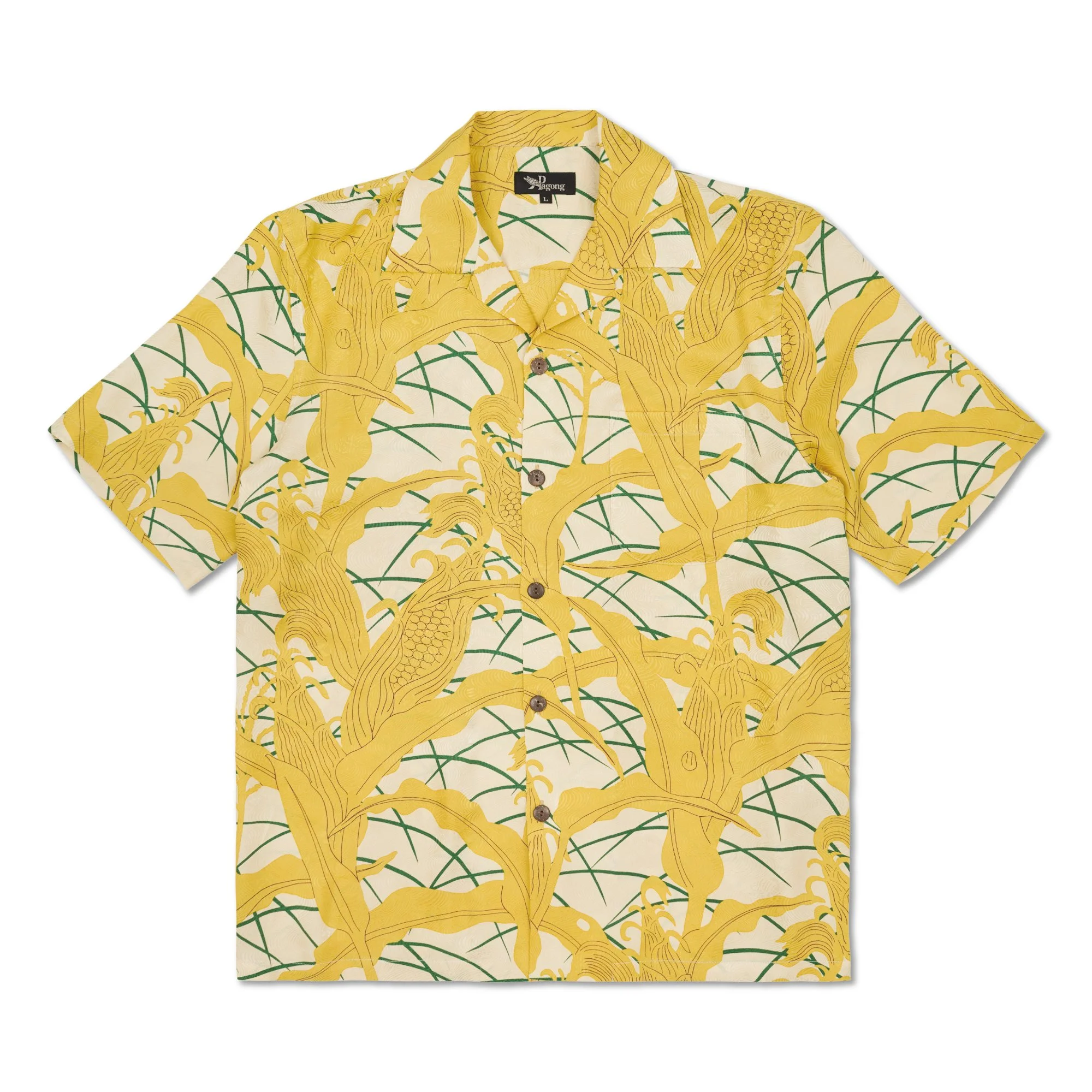
Color / Green and Yellow
Japanese name / 玉蜀黍(とうもろこし)
-About-
Rooted in the earth and growing straight in the sun, corn is depicted as a symbol of harvest and life. Its neat rows of golden grains evoke the order and abundance of nature, each one seemingly conveying the breath of the earth. The supple curves of the leaves rustling in the breeze and the soft flow of the stalks enveloping the kernels evoke both the strength and gentleness of life, quietly speaking to the beauty of nature's woven forms. Corn was introduced to Japan during the Edo period, initially attracting people's attention as a rare imported crop. Its simple yet powerful appearance eventually blended with the Japanese climate, and by the Meiji and Taisho periods, it was incorporated into textiles and decorative designs as a new natural motif. Though a plant from a foreign land, its shape evokes a sense of nostalgia, and it became a beloved symbol of harvest alongside rice and wheat. Designers discovered a modern sense of beauty in the unique shape, arrangement of grains, and overlapping leaves. They went beyond the realism of nature to project the power of life within abstract rhythms and compositions. Corn depicted as a pattern on kimonos and obi is not simply a plant, but is expressed as a new natural beauty that embodies the spirit of the times and the hopes of the people. This pattern is imbued with joy for the fruitful season and a deep respect for nature. Born from the earth, illuminated by the sun, and eventually bearing fruit, it is also a symbol of the cycle and connection of life. This pattern exudes a sense of undeniable power and warmth in its quiet presence, gently conveying the beauty of humans and nature living together. It is a pattern that makes you feel that nature is at its most artistic.
・Currency : US Dollar (USD)
・70% Cotton / 30% Linen
・Classic-style Aloha shirt
・Coconut buttons
・Wash by hand
・Made in Japan
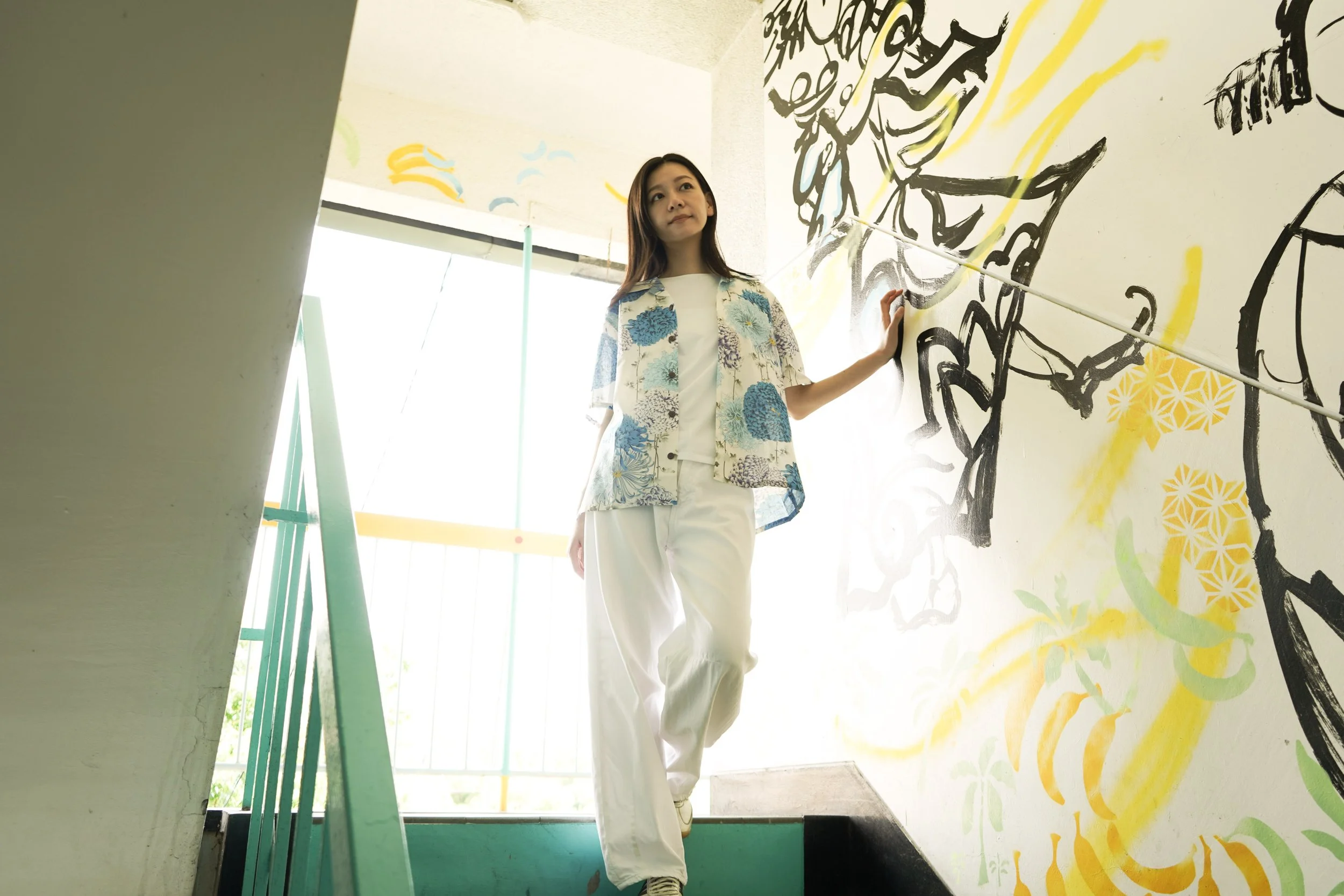
Color / White and Blue
Japanese name/ 彩り菊蔦文様 (Irodori Kikutsuta monyo)
-About-
Chrysanthemums, which have long been a symbol of longevity and immortality in Japan, were introduced from China during the Nara period as medicinal flowers. In ancient China, chrysanthemums were considered a symbol of immortality due to various historical events that linked chrysanthemums to longevity, and on the Double Ninth Festival, also known as the Chrysanthemum Festival, people drank chrysanthemum wine to pray for longevity.
・Currency : US Dollar (USD)
・70% Cotton / 30% Linen
・Classic-style Aloha shirt
・Coconut buttons
・Wash by hand
・Made in Japan
Color / Blue and Multi-color
Japanese name/ ぼんち柄 - Bonchi
-About-
This is a boys’ kimono pattern from the early Showa period, featuring motifs that would have appealed to young boys. It belongs to a style known as “bonchi-gara,” a category of playful and imaginative designs created especially for children.
The background is composed in a way reminiscent of the noshime kosode, a formal garment worn by samurai during the Edo period. It is structured in horizontal sections, combining plain areas with patterned bands such as stripes and checks. When worn with formal attire, the upper portion would appear plain, while patterned sections would be visible around the waist—much like the costumes seen in period dramas.
Layered over this traditional composition are charming, childlike motifs. The depictions of dogs and elephants have a distinctly retro character. Dogs not only symbolize cuteness but were also associated with emotional development in children. Owning a pet dog—often given a familiar name like “Pochi”—was considered a sign of a cultured and modern lifestyle at the time.
The elephant, on the other hand, represents strength and grandeur. During this era, boys’ kimono patterns often featured modern and exciting subjects such as steam locomotives, ships, war vessels, and even hot air balloons—symbols of progress and adventure that captured a young boy’s imagination. Elements like trumpets, rising sun flags, and battleships reflect the strong, spirited ideals of the time, emphasizing courage and masculinity.
Also depicted are nostalgic items such as a tin watering can, a toy trumpet, and paper balloons. The watering can is decorated with a wave pattern, while the paper balloon features checkered and arabesque designs. Above, large billowing summer clouds stretch across a bright blue sky, and together with the watering can, evoke a vivid scene of midsummer.
・Currency : US Dollar (USD)
・70% Cotton / 30% Linen
・Classic-style Aloha shirt
・Coconut buttons
・Wash by hand
・Made in Japan
Color / Blue and Multi-color
Japanese name/ 花車と宝尽くし- Hanaguruma to Takarazukushi
-About-
Most traditional Japanese patterns found on kimono date back to the 7th and 8th centuries and are inspired by nature, of which symbolism with a hidden meaning is very strong within the Japanese culture.
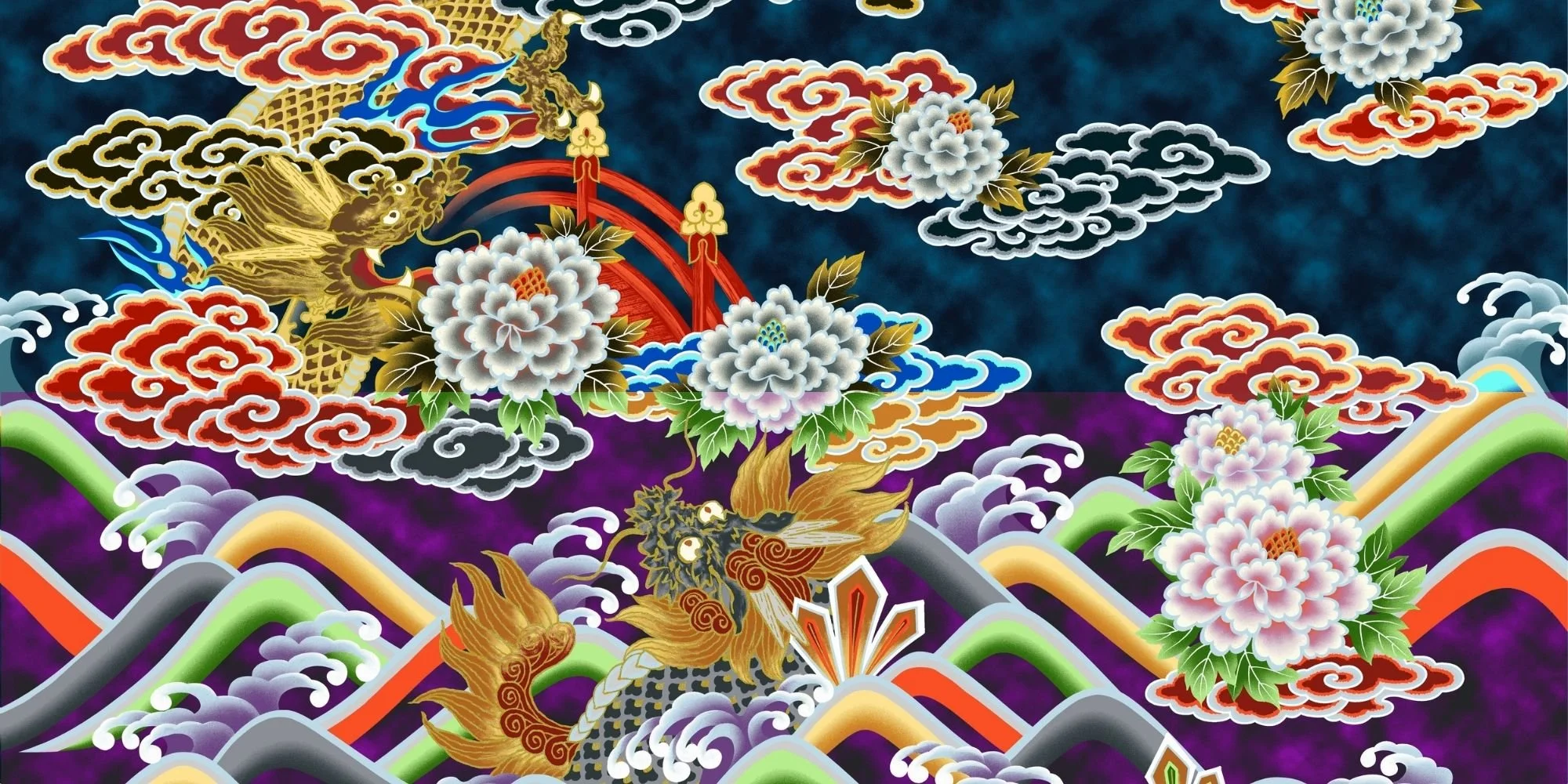
The “Hanaguruma” pattern is meant to represent small carts, “guruma” filled with seasonal flowers or “hana”. These carts were only used by the imperial family and nobility living in and around the imperial palace in Kyoto.
The “botan”, or peony is a flower of protection since its scent is said to ward off evil. The “kiku” or chrysanthemum is a symbol for the emperor and appears on the Japanese imperial seal.
When represented together, these flowers symbolize a future destined to be blessed with longevity, vitality, and zest for living.
・Currency : US Dollar (USD)
・70% Cotton / 30% Linen
・Classic-style Aloha shirt
・Coconut buttons
・Wash by hand
・Made in Japan
Color / Red and Multi-color
Japanese name/ 竹に花尽くし - Take to Hanatsukushi
-About-
This pattern, depicting bamboo and flowing water set against a backdrop of seasonal flowers, is a reproduction of a relatively modern furisode design from the 1960s–70s. While contemporary in origin, it draws deeply on traditional motifs, where each flower not only represents its season but also carries auspicious meaning—symbols of good fortune and favorable signs.
Peonies, known as the “flowers of wealth and nobility,” are believed to bring prosperity and abundance. Chrysanthemums, introduced during the Nara period as medicinal plants, are associated with longevity; it is said that drinking chrysanthemum-infused sake on the Double Ninth Festival (September 9) grants long life. Plum blossoms, which bloom in the cold of late winter before other flowers, symbolize resilience and the strength to endure adversity—an ideal long admired in Japanese culture.
In the background, bamboo appears as abstract silhouettes, within which various patterns are subtly arranged. Bamboo has long been revered as a symbol of integrity and noble character: it grows straight, its joints are firm, it bends without breaking under wind or snow, and it remains evergreen throughout the year. It is also a symbol of growth and vitality, as young shoots rise rapidly from the earth in spring.
Its spiritual and mythical significance is reflected in The Tale of the Bamboo Cutter, written during the Heian period, where Princess Kaguya is discovered within a bamboo stalk. The hollow spaces between bamboo nodes were once imagined as liminal realms—points of connection between the human world and the divine.
Water motifs further enrich the design. Patterns such as kanze-sui express the ever-changing, fluid nature of water, while seigaiha—depicted here within the bamboo forms—represents overlapping waves extending endlessly toward the horizon. This sense of infinite motion makes it an auspicious symbol of eternity, continuity, and peaceful living.
Since ancient times, people in Japan have lived in close harmony with nature, finding meaning and good fortune within its forms and rhythms. Even as styles evolve, this enduring desire to embody the auspicious power of nature within design continues to be passed down to the present day.
・Currency : US Dollar (USD)
・70% Cotton / 30% Linen
・Classic-style Aloha shirt
・Coconut buttons
・Wash by hand
・Made in Japan
Color/ White and Multi-color Size Chart Care Instruction
Japanese name / ( 大輪菊 ) Dairingiku
-About-
Kiku, or chrysanthemums, were introduced to Japan from China in the Nara-era ( 710-794 ). In Japan, the chrysanthemum has become a symbol for the emperor and appears on the Japanese imperial seal. In the language of flowers, the chrysanthemum carries the symbolic meaning of devoted love, loyalty, happiness, longevity, and joy.
Currency: US Dollar (USD)
・100% Polyester (Quick Dry)
・Made in Japan
・Classic-style Aloha shirt
・Coconut buttons
・Hand-wash
(Size Chart is below)
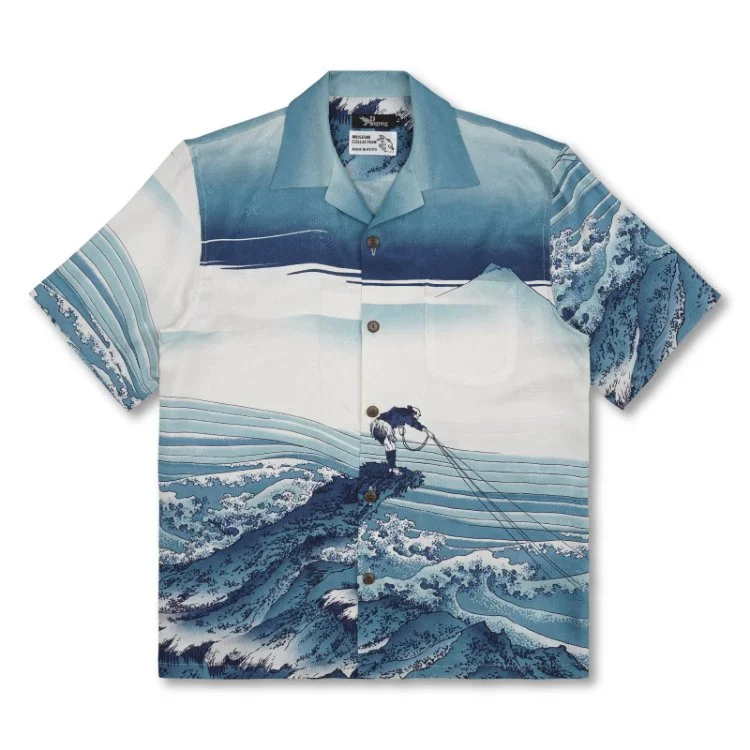
Japanese name/ 東海道五十三次 箱根 歌川広重 (Toukaidou gojusantsugi hakone Utagawa Hiroshige)
-About-
Utagawa Hiroshige was born in 1797, in the Yaesu area of Edo (modern Tokyo). An invitation to join an official procession to Kyoto in 1832 gave Hiroshige the opportunity to travel along the Tōkaidō route that linked the two capitals.
He sketched the scenery along the way, and when he returned to Edo he produced the series The Fifty-three Stations of the Tōkaidō, which contains some of his best-known prints. This is print Number 11 in the series, entitled “Hakone.”
・Currency : US Dollar (USD)
・100% Polyester (Quick Dry)
・Made in Japan
・Classic-style Aloha shirt
・Coconut buttons
・Hand-wash
Color / Light Blue Size Chart
Japanese name/ 錦海老 ( Nishiki Ebi )
-About-
Shrimp motif patterns are traditional Japanese designs that are considered particularly auspicious. In Japanese culture, shrimp symbolize longevity, as their bent bodies are thought to represent a long lifespan. For this reason, kimonos featuring shrimp patterns carry the meaning of wishing for longevity and good health. These patterns are especially appropriate for celebratory occasions, such as New Year's Day, where the hope for a long life is expressed.
・Currency : US Dollar (USD). ・100% Silk (Custom-woven Jacquard)
・Made in Japan
・Classic-fit Aloha shirt
・Coconut buttons
・Dry-clean

Size Chart Care Instruction
Color /Beige and Multi-color
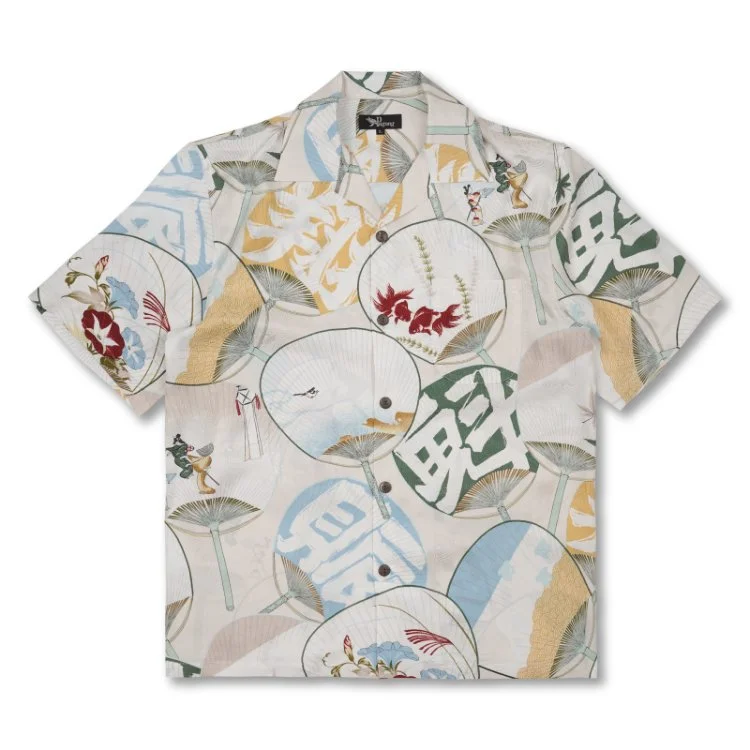
Japanese name / 京涼の団扇(Kyoryō Uchiwa)
-About-
The Kyoryō Uchiwa design captures the essence of Kyoto’s summer scenery.
Inspired by Kyoto-style uchiwa fans, long cherished in daily life as symbols of comfort and coolness, this design expresses Kyoto’s distinctive elegance and the longing for purity and serenity amid the summer heat.
The overlapping fans are adorned with seasonal motifs such as morning glories, goldfish, flowing water, and dancing figures, evoking the vibrant atmosphere of summer.
Each element reflects the changing seasons and carries prayers for happiness and peaceful living.
The auspicious kanji depicted within the fans convey the following meanings:
「魁」 (Sakigake) — to lead the way, to stand at the forefront, and to guide an era forward.
「翔」 (Shō) — to soar freely through the open sky, transcending limitations and rising toward one’s dreams.
「賑」 (Nigiwai) — signifying liveliness, abundance, and prosperity, expressing the joyful gathering of people and the fullness of happiness, much like a festival.
The layered composition of the fans suggests the gentle flow of passing breezes and the quiet passage of time.
It depicts the interplay of light and shadow on summer days, the prayers woven into everyday life, and tranquil moments shaped by people and the wind.
Since ancient times, uchiwa fans have been regarded as auspicious objects, believed to invite good fortune and ward off misfortune. This pattern carries a wish that pure breezes may bring calm and clarity to the heart.
To express the unseen wind as beauty—this is a sensibility passed down through generations of Kyoto’s artisans and artists.
Kyoryō Uchiwa brings this appreciation of the invisible into the present, offering gentle coolness and quiet healing within the summer air.
Like a soft embrace of Kyoto’s summer, this design delivers a tender breeze to the wearer’s heart, adding peaceful blessings to everyday life.
・Currency : US Dollar (USD)
・100% Silk (Custom-woven Jacquard )
・Made in Japan
・Classic-fit Aloha shirt
・Coconut buttons
・Dry-clean