
Plum blossom and Empress tree
梅と桐 - Ume to Kiri
The Story of the Plum & Empress tree ( Paulownia )
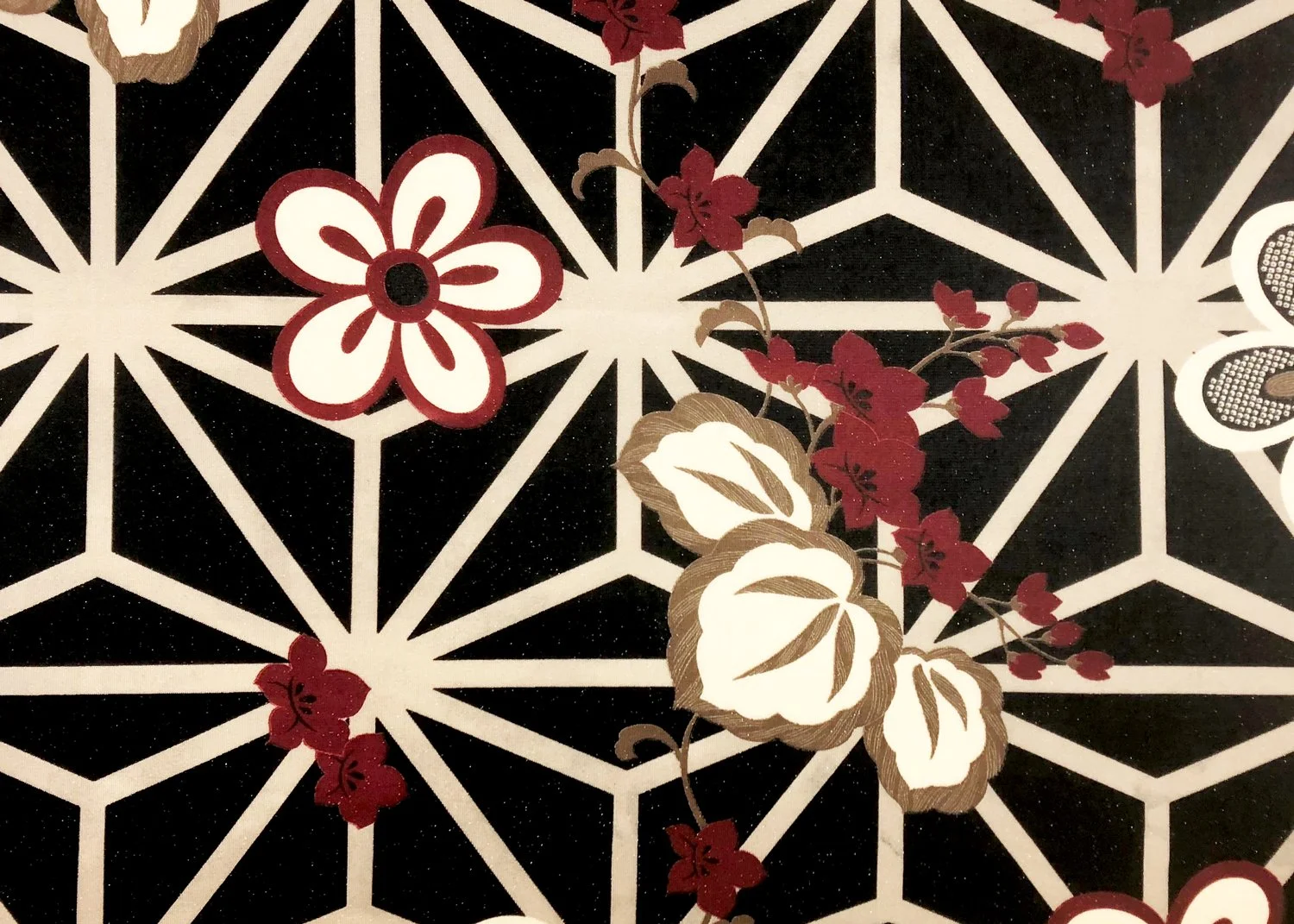
At the foundation of this design lies the “Asanoha” (hemp leaf) pattern, a geometric motif based on repeating hexagonal shapes. Its name comes from its resemblance to hemp leaves, a plant known for growing strong, straight, and quickly. Because of these qualities, Asanoha has long symbolized healthy growth and was often used in garments for children as a wish for strength and vitality.
In this pattern, large Asanoha forms create a bold base, upon which equally striking plum blossoms and paulownia motifs are arranged. The generous scale and confident composition give the design a powerful presence. Its vivid colors and dynamic layout reflect a time when kimono designs became increasingly expressive and decorative.
Plum blossoms have long been cherished as auspicious symbols. Blooming in the cold of winter, they represent resilience, renewal, and the quiet arrival of spring. Their delicate fragrance and enduring strength make them a timeless emblem of beauty and perseverance.
The paulownia motif adds a sense of dignity and refinement. Traditionally associated with nobility and elegance, it has been regarded as a prestigious symbol, admired for its graceful form and cultural significance. Over time, it has come to be widely used as a motif representing honor and sophistication.
Together, these elements create a striking harmony—geometric structure balanced with organic form, strength paired with elegance. The bold scale of the design gives it a modern presence, while its motifs remain deeply rooted in tradition.
The result is more than a pattern — it is a powerful expression of growth, resilience, and refined beauty.