
Animal Chintz
動物更紗 - Animal Chintz
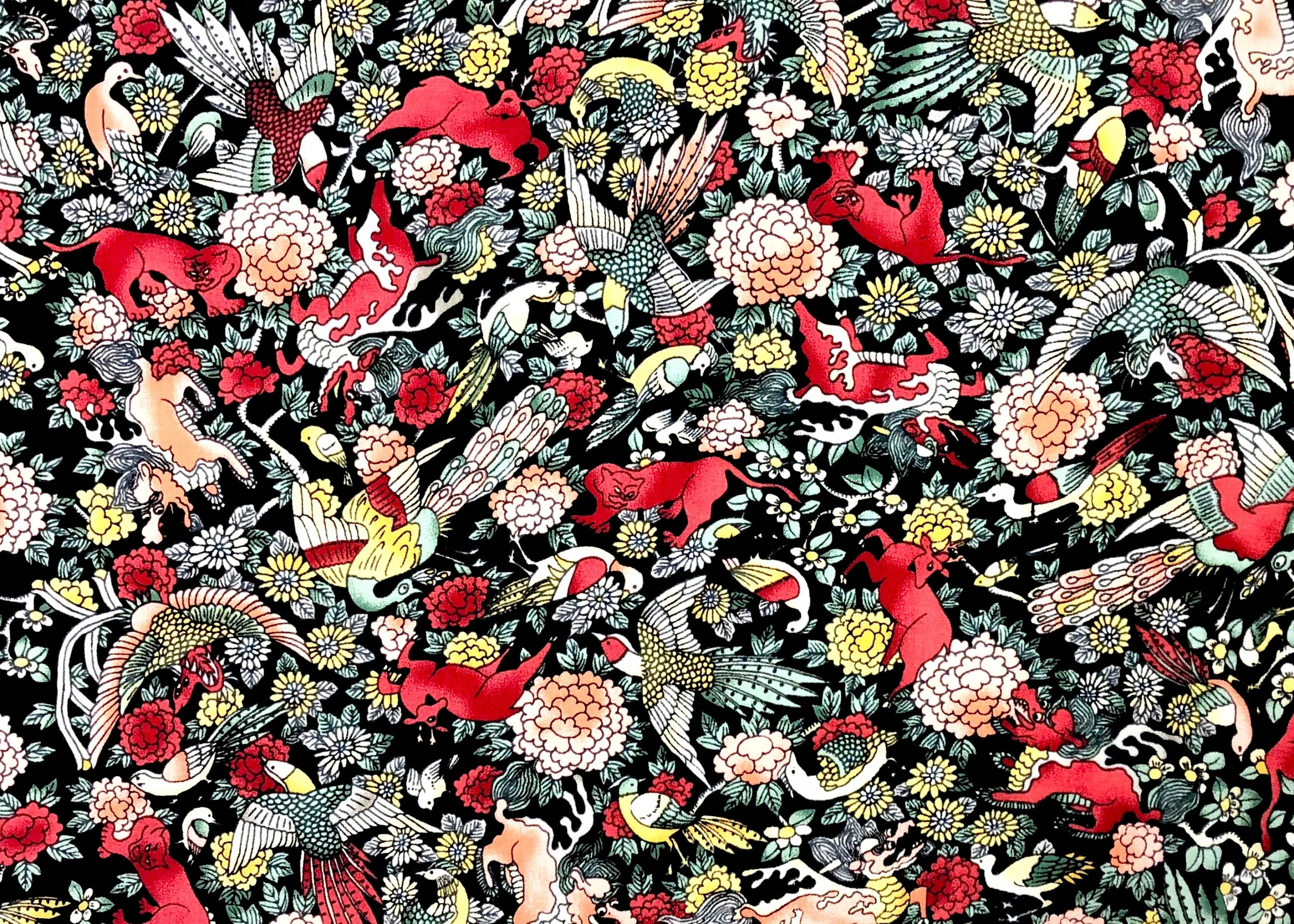
The Story of the Animal Chintz Pattern
In modern times, the term “sarasa” generally refers to fabrics featuring exotic dyed patterns. Originally, however, it referred to dyed cotton textiles imported from India through Nanban trade during the early modern period.
From the Momoyama period to the early Edo period, sarasa was also used for jinbaori (warrior’s surcoats), and garments with bold and innovative designs were created. In the world of the tea ceremony, rare sarasa fabrics were especially valued and often used as wrapping cloths for utensils and precious items.
Inspired by its vivid colors and distinctive designs, sarasa began to be produced domestically in regions such as Sakai, Kyoto, Nabeshima, and Amakusa—this came to be known as Japanese sarasa. With the exception of Nabeshima sarasa, which utilized unique woodblock techniques, most Japanese sarasa gradually adopted paper stencil methods, eventually leading to the development of Yuzen dyeing.
The designs range widely, including flowers, trees, birds, animals, and geometric patterns. Animal motifs in particular have deep historical roots, having been depicted since ancient times by various cultures. Originally painted on walls for purposes such as animal worship, ritual incantations, and commemorations of hunting, these motifs gradually evolved into decorative patterns. In Japan, under the influence of cultures such as China, a wide variety of animals came to be used as symbolic motifs.
This specific pattern features an array of creatures, including mythical beings such as the phoenix and qilin, alongside peacocks, deer, leopards, and tropical birds.
The phoenix, regarded as the king of birds, is an auspicious symbol representing peace and prosperity. The qilin is a sacred mythical beast said to live for a thousand years, appearing only when a ruler’s virtue has spread across the land, and symbolizes success and advancement. The peacock, revered as the Peacock King who protects the Buddha, represents beauty, vitality, and nobility. The deer is considered a divine messenger, a symbol of longevity and immortality.
Between these animal motifs are various flowers, likely inspired by auspicious species such as peonies, chrysanthemums, and plum blossoms. These floral elements are arranged in a tropical style, enhancing the overall design.
While sarasa patterns evoke an exotic atmosphere, the motifs themselves remain deeply rooted in traditional auspicious symbolism, as is characteristic of kimono design. By combining these elements with tropical birds and flowers arranged in a southern style, the pattern gains a unique charm and vibrancy.
Although the animal sarasa pattern feels fresh and distinctive, it continues to embody a timeless aspect of Japanese culture—the belief in drawing power and meaning from the patterns one wears.