
Arabesque
唐草- Karakusa
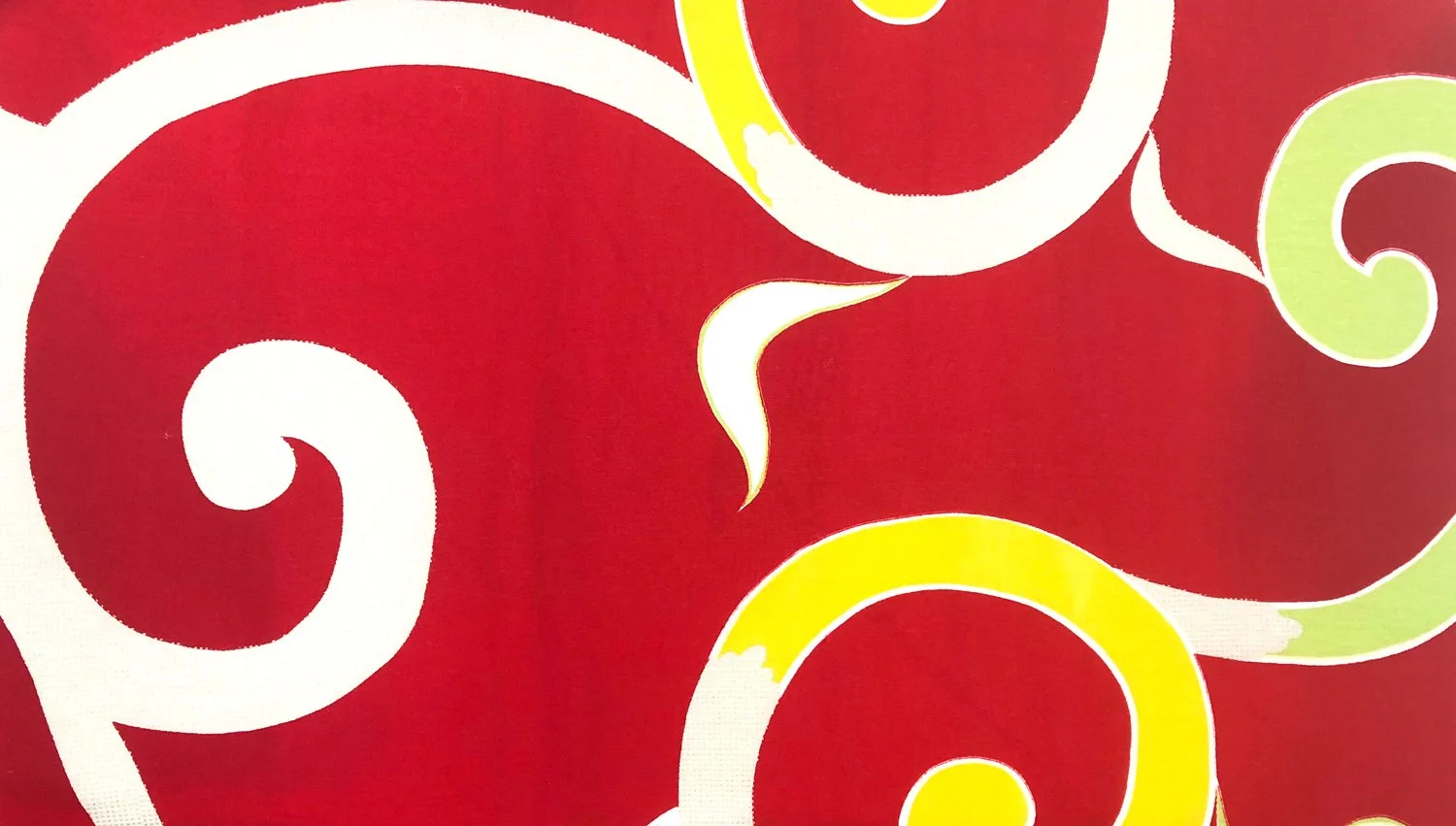
The Story of the Arabesque
Arabesque patterns are believed to have originated in Egypt and spread through Persia and Greece, traveling along the Silk Road to China before reaching Japan during the Asuka period via Baekje. Initially, they were introduced to Japan as decorative motifs in Buddhist art and can be seen on the halos of Buddhist statues, as well as in murals and textiles.
There are two main theories regarding the origin of the word “karakusa” (arabesque). One suggests it comes from the pattern’s appearance, meaning “entangled grass,” while another traces it to Tang dynasty China, implying “grass pattern from Tang.” In reality, karakusa does not represent a real plant. Its endlessly intertwining vines symbolize vitality and infinite growth, making it a motif associated with longevity, good health, and the prosperity of future generations.
In Japan, although karakusa was originally introduced through Buddhist art, it gradually evolved and became widely used in decorative crafts. Over time, the pattern expanded to include flowers without vines, such as chrysanthemums and plum blossoms. During the Edo period, it was especially popular as an auspicious design for kosode (short-sleeved kimono) and wedding furnishings. Even today, karakusa patterns can be seen on large cloths draped over wedding trousseau items and on furoshiki used in ceremonial settings.
For many people today, the arabesque pattern may first evoke the familiar image of a thief fleeing with a large bundle wrapped in a green furoshiki decorated with white vines—a trope popularized in modern media and by entertainers such as Tokyo Bonta in the 1960s. However, this association is relatively recent. In its original context, the karakusa pattern is a dignified and refined design, rich with cultural and symbolic meaning.