
Azalea
つつじに水辺文様 - Tsutsuji ni Mizube monyo
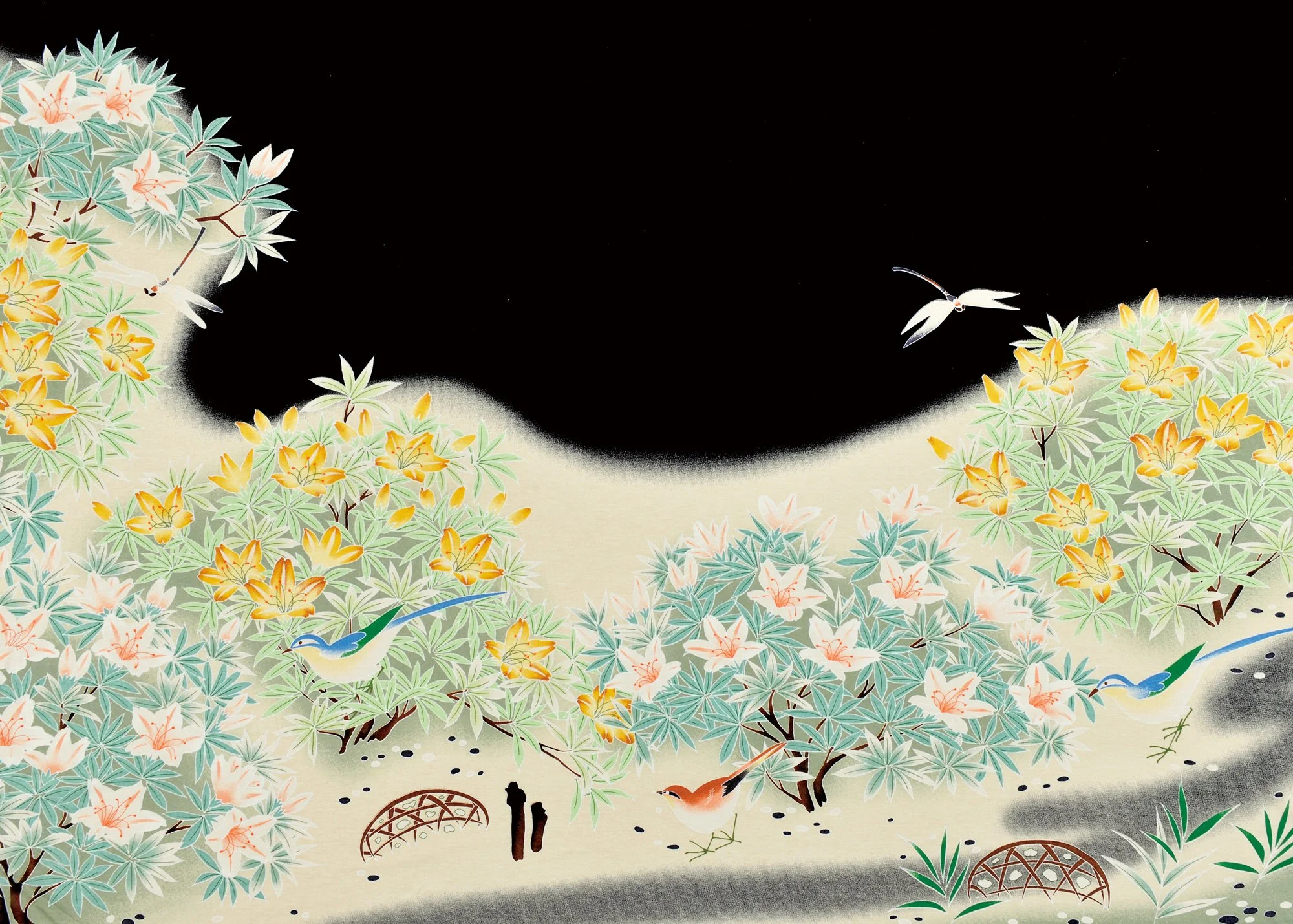
The Story of the Azalea Pattern
This pattern was originally depicted on a ro kimono, a lightweight, sheer fabric worn during the summer months.

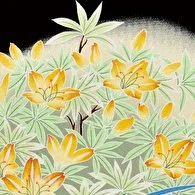
The flower portrayed here is the azalea (tsutsuji), which blooms brilliantly from spring to early summer. While many cultivated varieties exist today, azaleas were originally found growing along mountain streams. This design appears to draw inspiration from that natural setting, vividly capturing the fresh beauty of azaleas flourishing beside flowing water.
The symbolic meanings of azalea include modesty, restraint, self-discipline, and quiet effort. Because of its fresh blossoms and tender leaves in early spring, it has also been associated with youthful beauty and elegance.

The basket placed near the stream is called a jakago. A jakago is a cylindrical bamboo basket filled with stones and submerged in rivers to control the flow of water. Its elongated shape and mesh-like pattern resemble the scales of a snake, which is said to be the origin of its name. As a motif, it is often depicted alongside flowing water and is an essential element in waterside scenes.
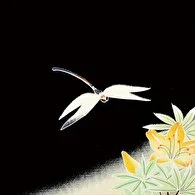
Dragonflies have long been familiar and beloved insects in Japan. Today, they are often depicted with grasses such as pampas grass and are used in summer kimono and obi designs as a subtle reference to the approaching season of autumn.
Small birds, another cherished motif in Japanese design, are frequently combined with plants and flowers to express seasonal atmosphere and harmony with nature.
Waterside patterns commonly feature combinations of flowing water, jakago, reeds, and birds. In this design, a gentle stream flows among blooming azaleas, with a jakago placed along its edge. Dragonflies flutter above, while small birds gather by the water—perhaps to drink—creating a lively yet tranquil scene.
When people wore kimono adorned with such patterns, they likely imagined not only the visual beauty, but also the coolness of the air, the sound of flowing water, and even the subtle fragrance of the azaleas. In this way, the design evokes a sensory experience that brings a feeling of refreshing calm during the heat of summer.
Unlike older plant motifs that were stylized as auspicious symbols, these later designs depict natural landscapes more directly, capturing the essence of a particular moment in the season. Yet, the underlying sensibility remains unchanged—a uniquely Japanese appreciation for nature and its fleeting beauty.
This pattern, with its cool waterside imagery and dragonflies hinting at the coming season, gently reflects the passage of time. It is a design shaped by a deep sensitivity to the seasons—an expression of the Japanese spirit that finds beauty in transition.