
Bamboo and Chrysanthemum
梅竹に菊籬 - Umetake ni Kikumagaki
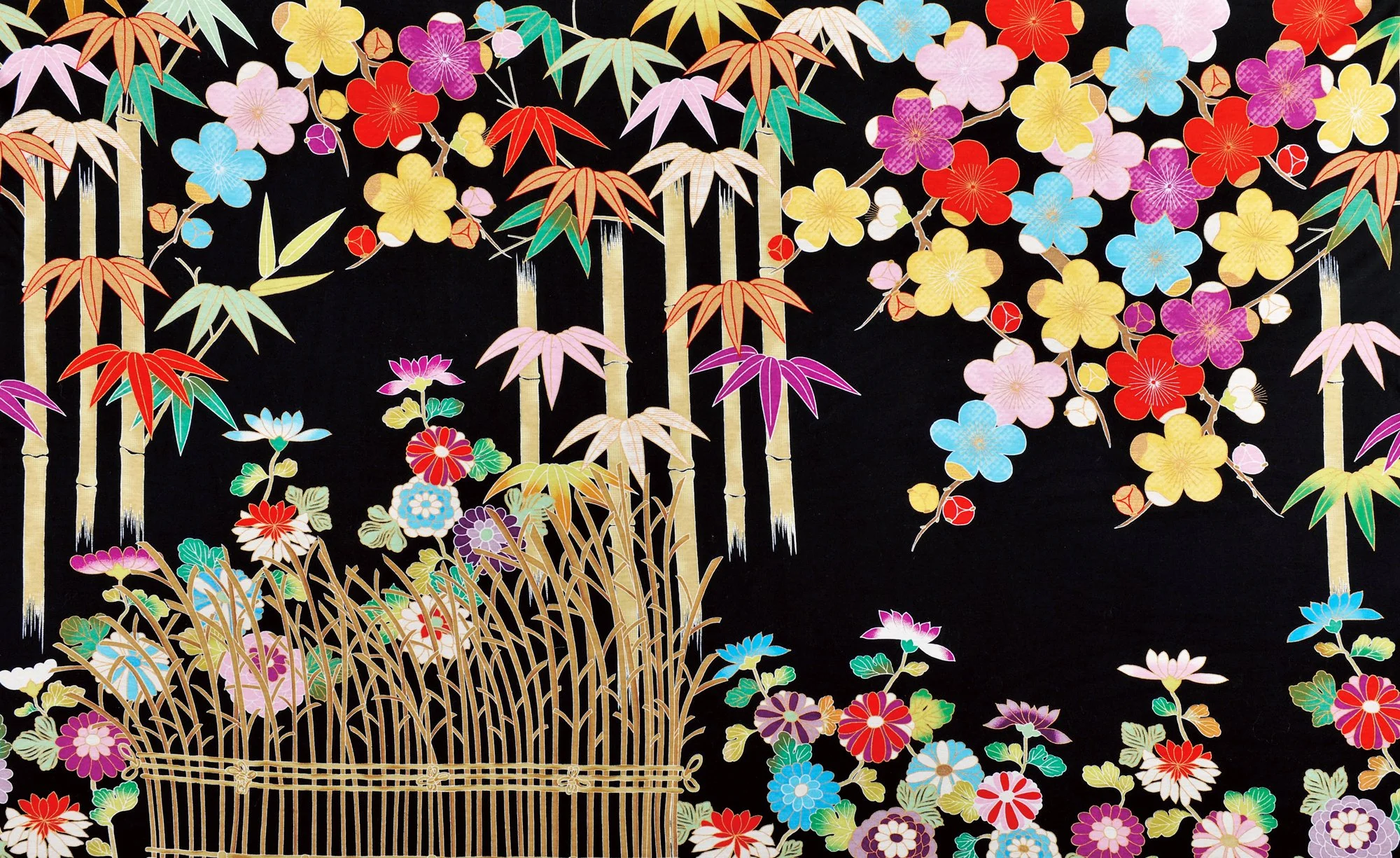
The Story of the Bamboo and Chrysanthemum Pattern
This pattern recreates the Kabuki costume “Umetake ni Kikugaki Mon’yō Ryōgata” through Kyoto Yuzen dyeing. The original garment appears as the costume of the courtesan Yūgiri in the Kabuki play Kuruma Bunshō, which is based on a scene from Chikamatsu Monzaemon’s jōruri work Yūgiri Awa no Naruto Watari.
Yūgiri was a real courtesan who lived in Shinmachi, Osaka. Celebrated for her beauty and grace, she passed away at the young age of 27. Her early death deeply moved people, inspiring numerous plays and songs in her memory. These works, often referred to collectively as “Yūgiri-mono,” were later gathered and shaped into a dramatic narrative by Chikamatsu.
She is counted among the three most famous courtesans of her time—alongside Takao of Edo and Yoshino of Kyoto—and was admired not only for her appearance but also for her character. Yūgiri was known as a lively yet refined woman: cultured in the arts, approachable and warm in conversation, yet never lacking dignity. Her charm lay in this balance of elegance, intelligence, and humanity, which captivated people from all walks of life.
Kuruma Bunshō tells the story of her relationship with Izaemon, a once-wealthy young man who falls into ruin. Though separated by circumstance, their bond endures through hardship, misunderstanding, and longing. While the historical Yūgiri died young, the story grants her a happy ending—symbolizing the enduring affection and admiration she inspired even after her passing.
The design itself features auspicious motifs such as plum blossoms, bamboo, chrysanthemums, and fences. Plum blossoms bloom in the cold of winter, signaling the coming of spring; bamboo, with its straight and hollow form, represents resilience and prosperity; and chrysanthemums are symbols of longevity. The fence motif, often combined with chrysanthemums, reflects both structural beauty and a sense of enclosure, framing the blossoms within.
Together, these elements create a composition that is both elegant and meaningful. The flowers blooming within the fence evoke a quiet, lingering beauty—much like Yūgiri herself, whose presence continues to resonate beyond time. Wearing this pattern feels like sharing in that enduring grace and refined charm.