
Boat and Crane
舟と鶴 - Fune to Tsuru
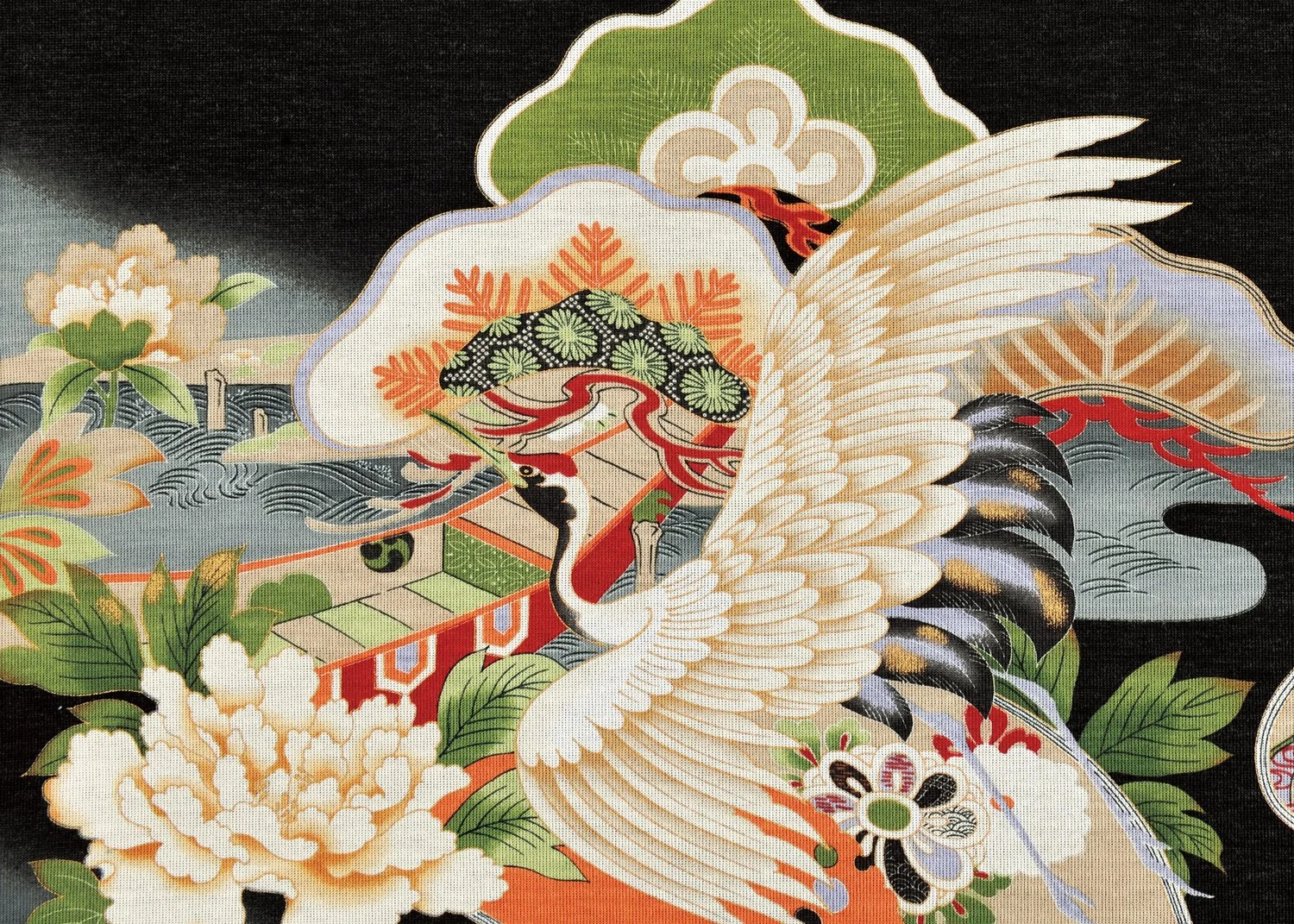
The Story of the Boat and Crane Pattern
This pattern originates from a bridal kimono of the Taishō to early Shōwa period. The original garment was exceptionally luxurious, and this design is a partial revival of its motifs. At the time, bridal kimono were often black with richly decorated hems, and the arrangement of these patterns varied by region, giving rise to distinct Kantō and Kansai styles.
The composition is especially fitting for celebrating a new beginning. A boat sets out across the great sea, said to lead to the mythical paradise of Hōrai—an ideal land of eternal prosperity. It carries a heartfelt wish that the bride’s new home may be as blessed and harmonious as this paradise.
Posts rising from the water suggest moorings, perhaps symbolizing stability and security, as if to ensure that her life after marriage remains grounded and prosperous. The peony, with its full and elegant blossoms, further expresses hopes for wealth, beauty, and a life of abundance.
The design also features yukiwa (snow-circle) motifs. Snow that falls in winter melts in spring, nourishing rivers and soaking into the earth, bringing life to the fields and supporting a rich harvest. For this reason, the yukiwa pattern is considered a symbol of fertility and agricultural abundance.
Together, these elements form an auspicious design, filled with wishes for prosperity, stability, and a flourishing future.