
Bonchi
ぼんち柄
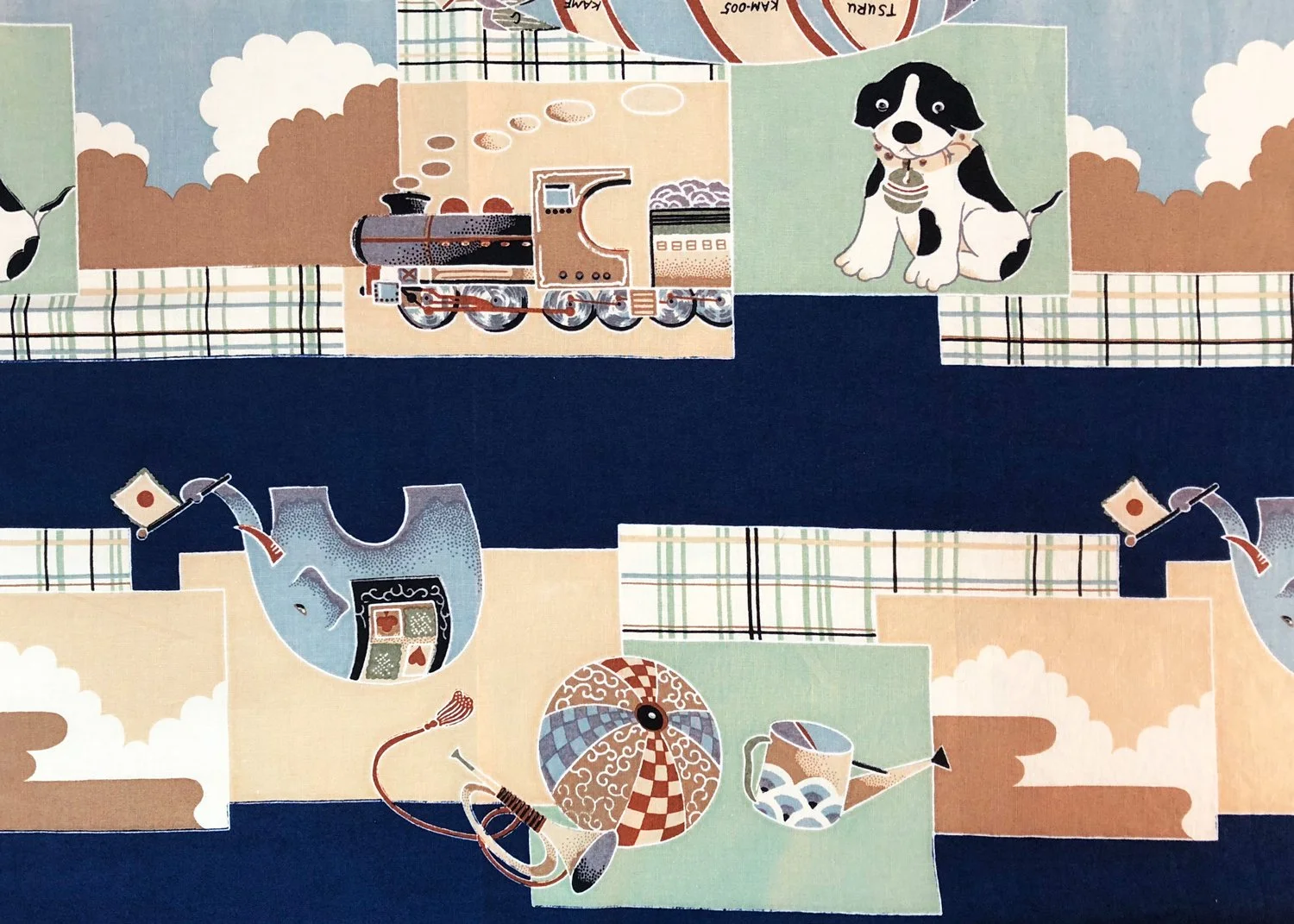
The Story of the Bonchi Pattern
This is a boys’ kimono pattern from the early Showa period, featuring motifs that would have appealed to young boys. It belongs to a style known as “bonchi-gara,” a category of playful and imaginative designs created especially for children.
The background is composed in a way reminiscent of the noshime kosode, a formal garment worn by samurai during the Edo period. It is structured in horizontal sections, combining plain areas with patterned bands such as stripes and checks. When worn with formal attire, the upper portion would appear plain, while patterned sections would be visible around the waist—much like the costumes seen in period dramas.
Layered over this traditional composition are charming, childlike motifs. The depictions of dogs and elephants have a distinctly retro character. Dogs not only symbolize cuteness but were also associated with emotional development in children. Owning a pet dog—often given a familiar name like “Pochi”—was considered a sign of a cultured and modern lifestyle at the time.
The elephant, on the other hand, represents strength and grandeur. During this era, boys’ kimono patterns often featured modern and exciting subjects such as steam locomotives, ships, war vessels, and even hot air balloons—symbols of progress and adventure that captured a young boy’s imagination. Elements like trumpets, rising sun flags, and battleships reflect the strong, spirited ideals of the time, emphasizing courage and masculinity.
Also depicted are nostalgic items such as a tin watering can, a toy trumpet, and paper balloons. The watering can is decorated with a wave pattern, while the paper balloon features checkered and arabesque designs. Above, large billowing summer clouds stretch across a bright blue sky, and together with the watering can, evoke a vivid scene of midsummer.