
Cherry blossom and Phoenix
桜と鳳凰 - Sakura to Hou
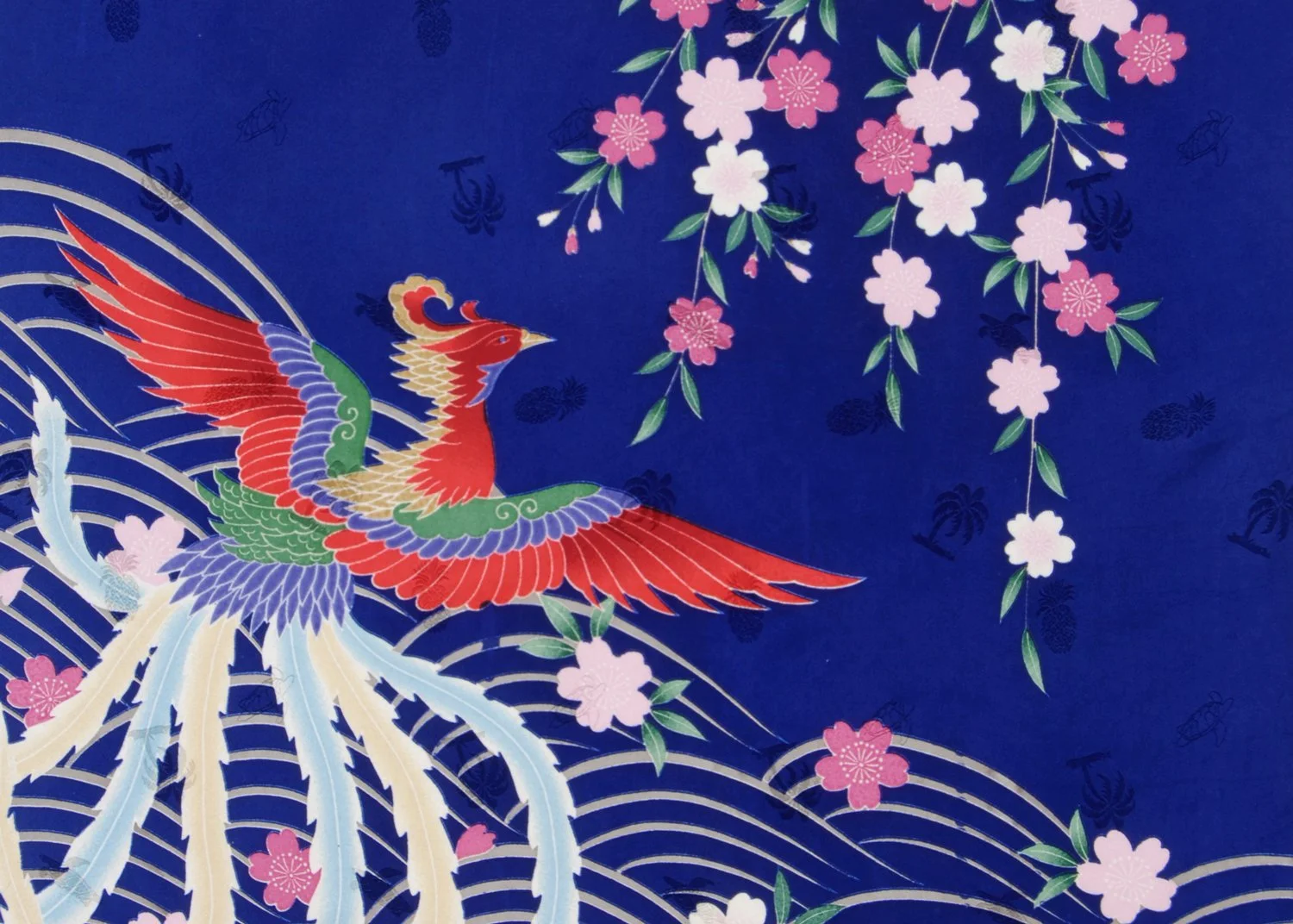
The Story of the Cherry blossom and Phoenix Pattern
Cherry blossoms are regarded as Japan’s national flower and remain one of the most beloved symbols of the seasons.
For generations, people lived in close harmony with nature, shaping their lives around its rhythms. The steady transition of the seasons was closely tied to abundance and peace, especially in an agricultural society. Cherry blossoms came to be cherished as a sign of renewal and vitality. Their blooming marked the beginning of the farming season, and people would gather beneath the trees, offering food and drink while celebrating the promise of a fruitful year ahead.
The word sakura is often associated with this connection to nature and life’s cycles, symbolizing both the presence of vitality and the place where it resides. In this way, cherry blossoms became more than a seasonal beauty—they represented hope, renewal, and the continuity of life.
The phoenix is a mythical bird long regarded as a symbol of grace, harmony, and prosperity. Known as the “king of birds,” it is associated with elegance, virtue, and the presence of an ideal and harmonious world. Its form, combining elements of various creatures, reflects a sense of balance and perfection.
This pattern brings together cherry blossoms and the phoenix in a rare and refined composition. While uncommon in traditional designs, such motifs were associated with courtly elegance and were even used in garments connected to the imperial household during the Edo period. Together, the cherry blossom and phoenix create an auspicious design symbolizing beauty, renewal, and noble harmony.