
Cherry blossom on the Lattice
格子に桜 - Koshi ni Sakura
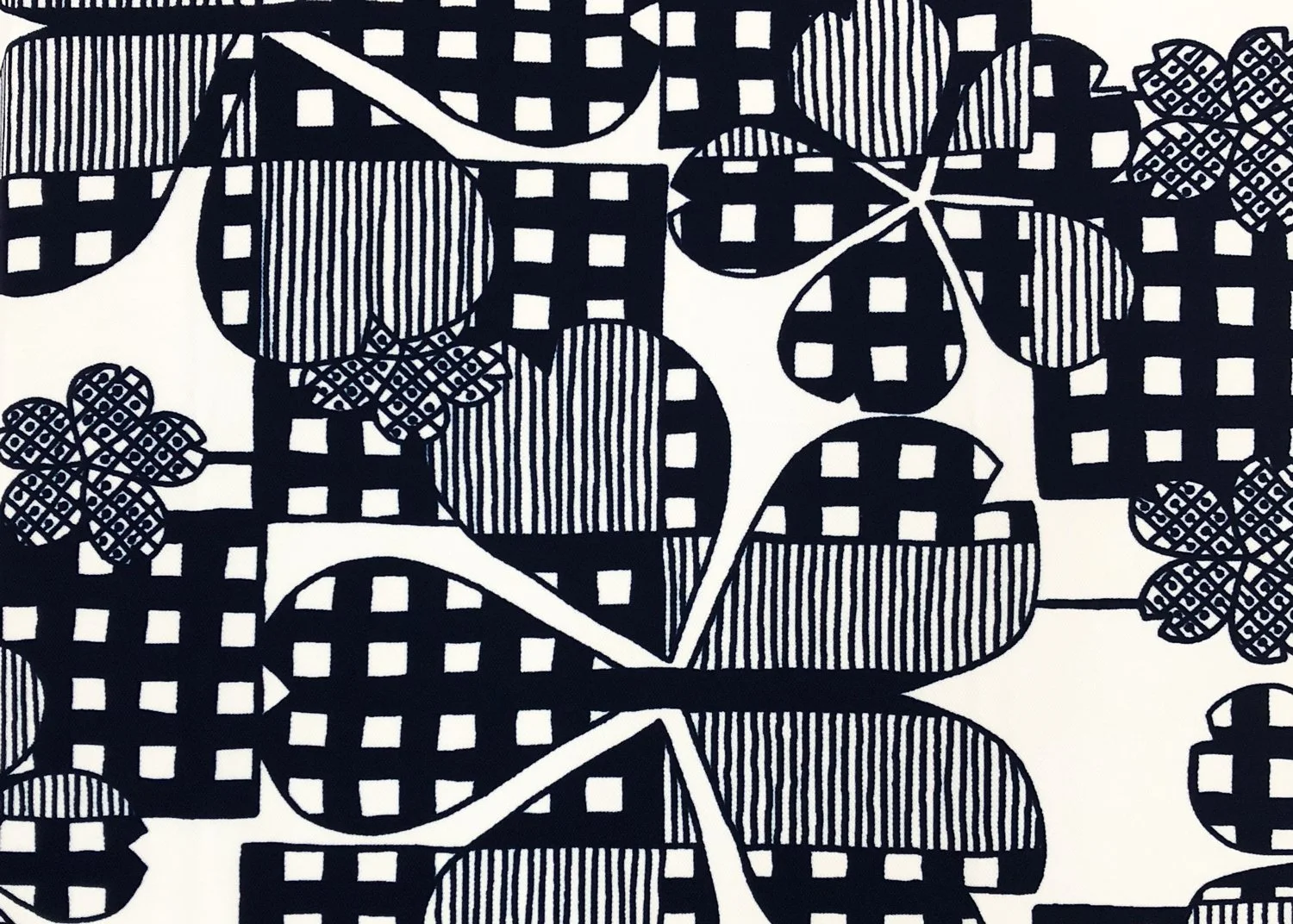
The Story of the Cherry Blossom on the Lattice Pattern
“Koshi” (lattice), also known as koshijima (lattice stripes), is a variation of striped patterns, alongside tatejima (vertical stripes) and yokojima (horizontal stripes). As one of the fundamental textile designs used since ancient times, it creates a wide range of impressions depending on the thickness, spacing, and rhythm of the lines.
During the Edo period, striped patterns became especially popular, giving rise to many creative variations. The name “koshi” comes from its resemblance to the grid of a traditional lattice door, made by arranging thin wooden slats both vertically and horizontally.
The lattice motif carries a subtle symbolic meaning of “holding something within.” Inspired by the structure of lattice doors, it was believed to protect and retain what is inside. When used in children’s garments, it expressed a heartfelt wish to keep the child’s soul safe and secure, reflecting the deep hopes of parents for their child’s healthy growth in earlier times.
Cherry blossoms, one of Japan’s most beloved motifs, were traditionally associated with vitality and renewal. In this design, they are depicted in a simple five-petaled form, emphasizing their pure and timeless beauty.
While cherry blossoms appear in countless artistic interpretations, their combination with the structured lattice creates a striking balance—both bold and charming—resulting in a fresh and modern impression.
There is a well-known sentiment from the Edo period that compares the fleeting nature of life to cherry blossoms that fall after only a few days in full bloom. This design, pairing blossoms with the lattice, can be seen as an expression of the desire to preserve that fleeting beauty just a little longer, capturing both the arrival of spring and the wish to hold onto it.