
Children with Clock
鳩時計と子供 - Hatodokei to kodomo
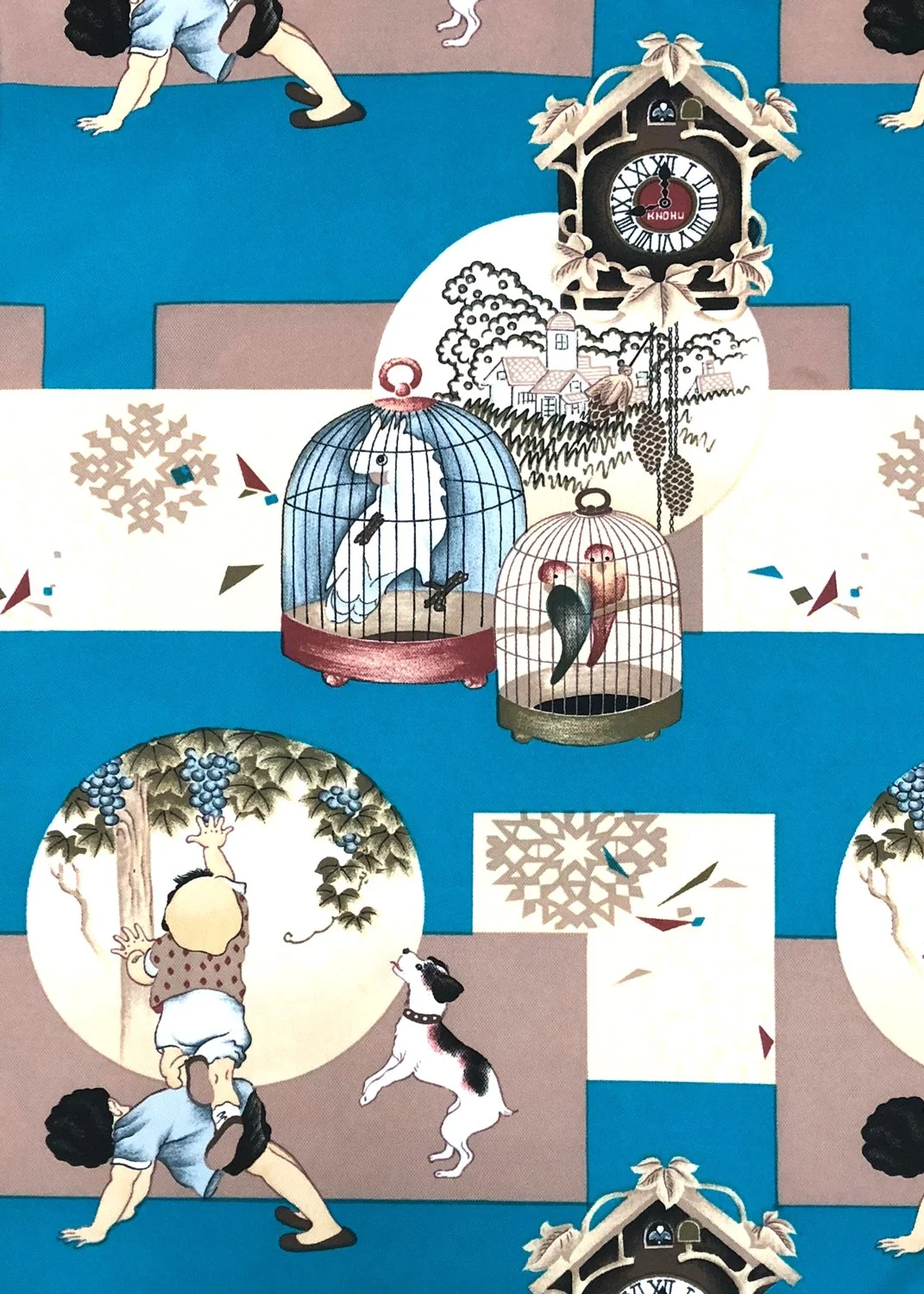
The Story of the Children with Clock Pattern
This pattern originates from a boy’s kimono design dating from the Taishō to early Shōwa period.
With its stylish, Western-inspired motifs and fairy-tale-like imagery, it differs from the typical boys’ kimono patterns known as bonchi-gara, offering instead a more cultured and imaginative atmosphere.
The Meiji period was an era focused on national strength and modernization. By the Taishō period, as society became more stable, greater attention was given to cultural life, and children—seen as the future of the nation—began to be valued more deeply. During this time, many children’s books and works of literature were published, and events such as children’s exhibitions also emerged.
This pattern incorporates Western-style motifs, creating a whimsical and storybook-like impression. Parrots, parakeets, cuckoo clocks, Western dogs, and scenes reminiscent of European fairy tales—these elements served as a form of cultural and emotional education, introducing children to ideas from abroad in a playful and imaginative way.
At the same time, department stores evolved from exclusive spaces for the wealthy into places catering to the general public. Children, too, began to be recognized as consumers, and items specifically designed for them started to appear.
Patterns created for children became more common from the Taishō period onward. While bonchi-gara designs of the Meiji period often depicted moralistic folk tales, Taishō-era designs shifted toward themes of culture—such as sports, literature, and children’s songs. By the Shōwa period, motifs like tanks and airplanes appeared, reflecting the changing times.