
Cho ni Kusabana
蝶に草花
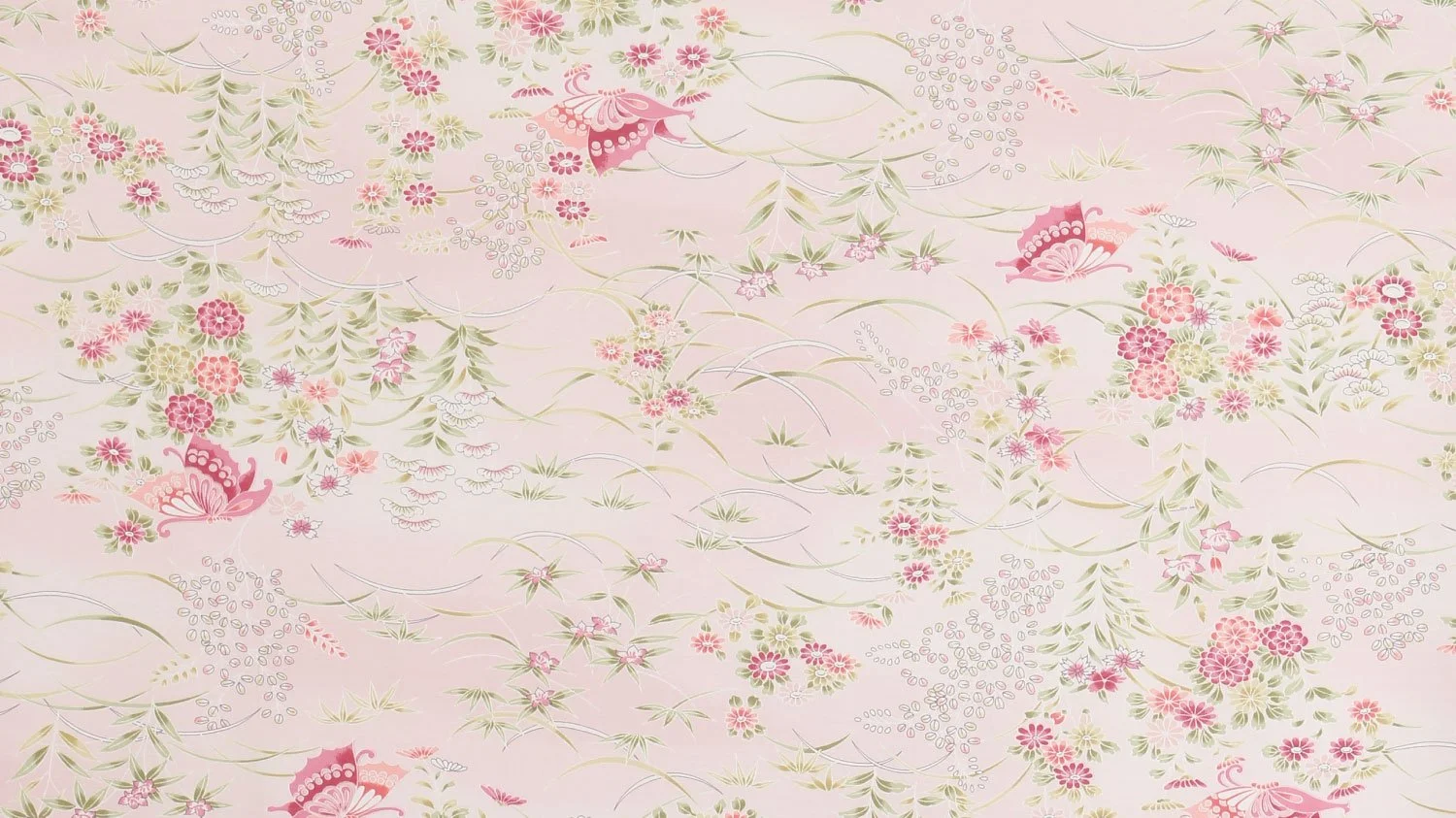
The Story of the Cho ni Kusabana Pattern
Butterflies, fluttering gracefully as they herald the arrival of spring, appear across many cultural traditions and spiritual teachings. Because of their remarkable transformation—from larva to chrysalis to fully formed wings—they have long been seen as symbols of immortality, longevity, reincarnation, and rebirth in both Eastern and Western thought.
In Japan, butterfly motifs first emerged during the Nara period. By the Heian period, they had been refined into elegant, distinctly Japanese forms and came to be used as auspicious designs on the garments and furnishings of the aristocracy. In later periods, such as the Momoyama period, butterflies appeared in Noh costumes, and during the Sengoku period, they were adopted by samurai as motifs on helmets and armor. For warriors facing the constant presence of death, the butterfly—symbolizing immortality and eternal life—held deep meaning and appeal.
Accompanying the butterflies in this design are autumn wildflowers, long celebrated in Japanese poetry. As early as the Manyoshu, seasonal grasses and flowers were admired for their quiet beauty. A famous poem by Yamanoe no Okura lists what later came to be known as the “Seven Autumn Flowers,” including bush clover, pampas grass, kudzu, pink, patrinia, eupatorium, and bellflower. In kimono design, however, chrysanthemums—symbols of longevity and refinement—are often used in place of kudzu, which is more difficult to stylize visually.
By combining butterflies, which evoke spring, with autumn flowers, this pattern expresses the seamless flow of the seasons. It captures the quiet continuity of nature—an eternal cycle moving from renewal to maturity, from bloom to stillness.