
Chroma and Verde
彩り菊蔦文様 - Irodori kikutsuta monyo
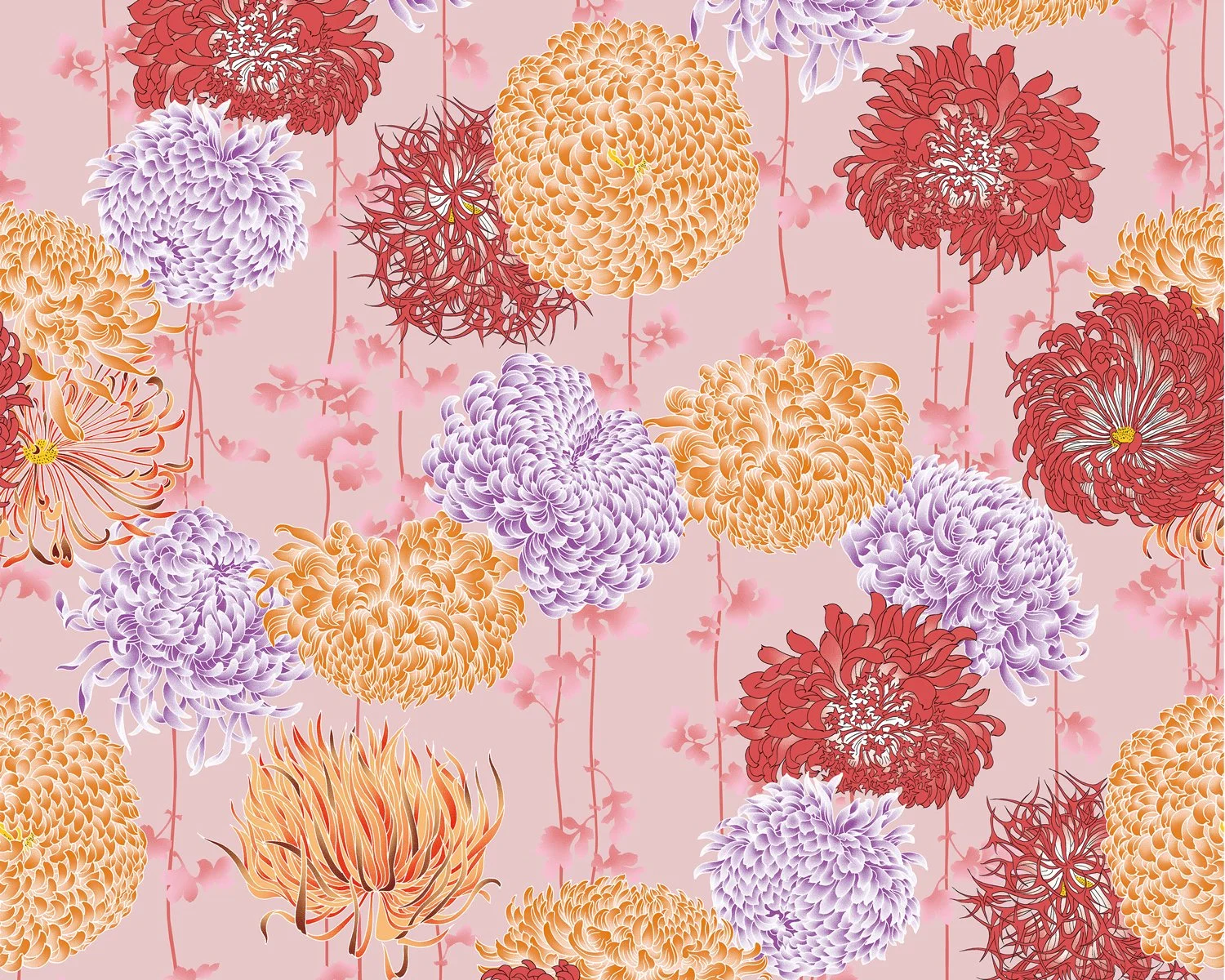
The Story of the Chroma and Verde Pattern
Chrysanthemum & Ivy — A Refined Symbol of Longevity
In Japan, the chrysanthemum has long been cherished as a symbol of longevity and eternal youth. It was introduced during the Nara period and later became an important part of court culture in the Heian period. Over time, it came to be widely appreciated, and its elegant form was incorporated into garments and decorative arts.
The chrysanthemum is also closely associated with the Imperial family, giving it meanings of nobility, dignity, and refined beauty.
In this Chrysanthemum and Ivy pattern, the graceful form of the chrysanthemum is combined with ivy, creating a design that feels both elegant and alive. It has long been favored for women’s kimono, obi, and accessories, offering a sophisticated and timeless impression.
Ivy is a plant that grows steadily while intertwining with its surroundings. Because of this, it symbolizes vitality, growth, and prosperity. Its continuous, extending vines also represent lasting connections and family bonds, making it a motif associated with enduring happiness and continuity.
Its flowing lines and distinctive leaves have been appreciated in Japanese art for centuries, and it later became a popular motif in textile design for its natural beauty and movement.
The combination of chrysanthemum and ivy brings together meanings of longevity, prosperity, and lasting relationships.
For this reason, it is often chosen for special occasions such as weddings, coming-of-age ceremonies, and other important celebrations.
Elegant and auspicious, this pattern expresses both beauty and meaning—carrying wishes for a long, prosperous, and graceful life.