
Clematis
てっせん - Tessen
The Story of the Clematis Pattern
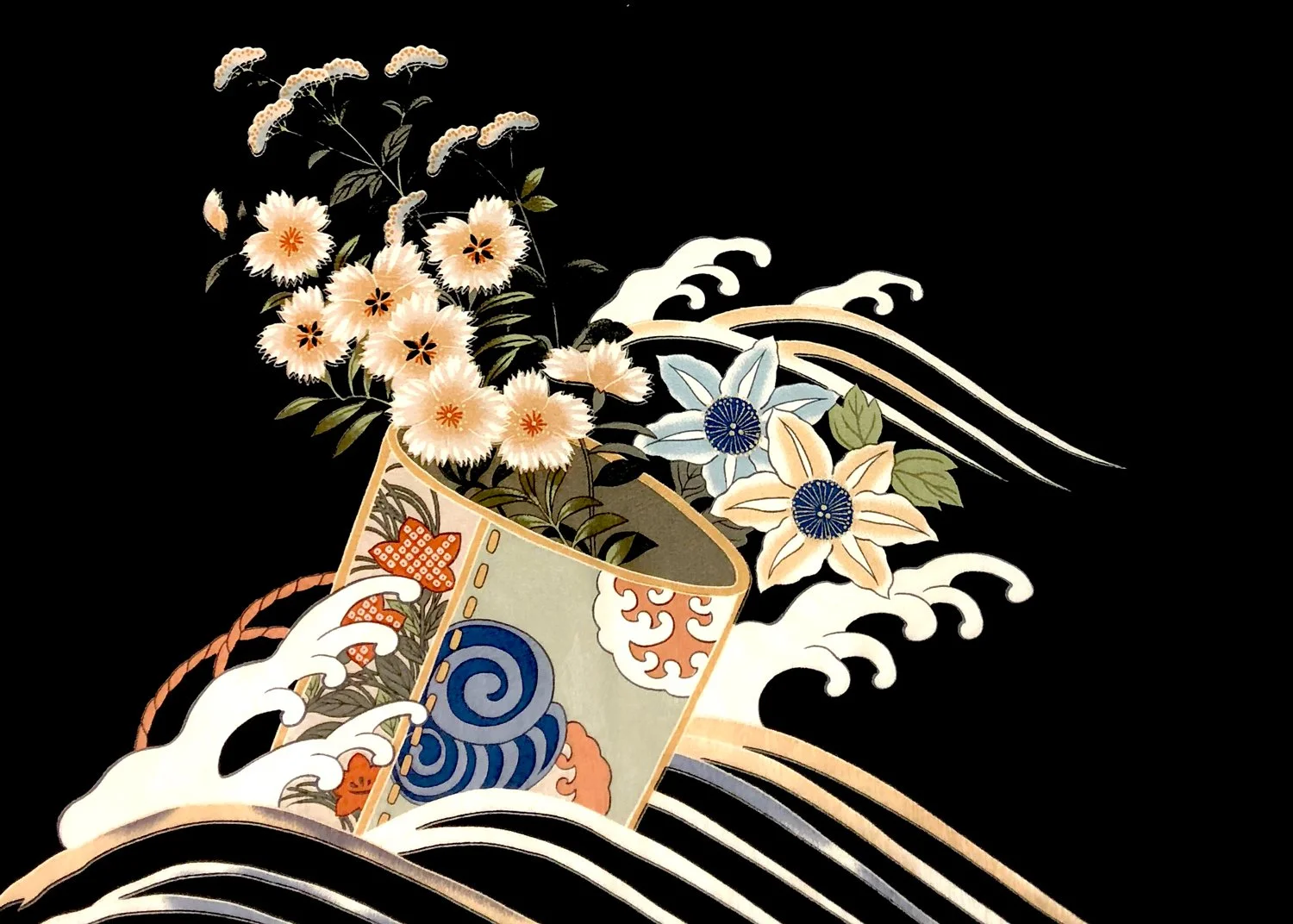
This design, depicting autumn flowers arranged in a tide bucket, dates back to the Taisho period. The flowers shown—carnations, bellflowers, and patrinia—are known as autumn blooms. Clematis, also included, typically flowers in summer, suggesting a refined aesthetic of anticipating the coming season. Combined with water imagery, the design evokes a refreshing sense of coolness, making it especially suited for summer kimono.
At the time this pattern was created, Noh theater was widely appreciated, and viewers would likely have associated this imagery with the poignant love story depicted in the Noh play Matsukaze.
Matsukaze tells the tale of two sisters, Matsukaze and Murasame. The nobleman Ariwara no Yukihira, having fallen from imperial favor, was exiled to Suma, where he lived in solitude. There, he encountered two young women who came daily to draw seawater. When he asked their names, they did not answer. At that moment, a breeze stirred the pine trees and brushed their cheeks, while a gentle rain fell upon their dark hair. Moved by the scene, Yukihira named them Matsukaze (“pine wind”) and Murasame (“autumn rain”) and took them into his service.
After three years, Yukihira was pardoned and returned to the capital. Before departing, he left behind a poem and hung his eboshi (court cap) and kariginu (robe) on a pine tree as mementos. The sisters, overcome with sorrow, remained behind, building a hermitage where they devoted themselves to prayer, worshipping Kannon and longing for his return until the end of their lives.
Even today, in Kobe’s Suma district, places associated with this legend—such as the remains of a Kannon hall and the pine said to have held Yukihira’s robe—are still remembered.
Through this design, the gentle beauty of seasonal flowers and water is interwoven with a story of longing and devotion. It captures both the elegance of nature and the emotional depth of classical Japanese literature, inviting the viewer to reflect on the passage of time and the quiet persistence of memory.