
Corn
玉蜀黍 - Toumorokoshi
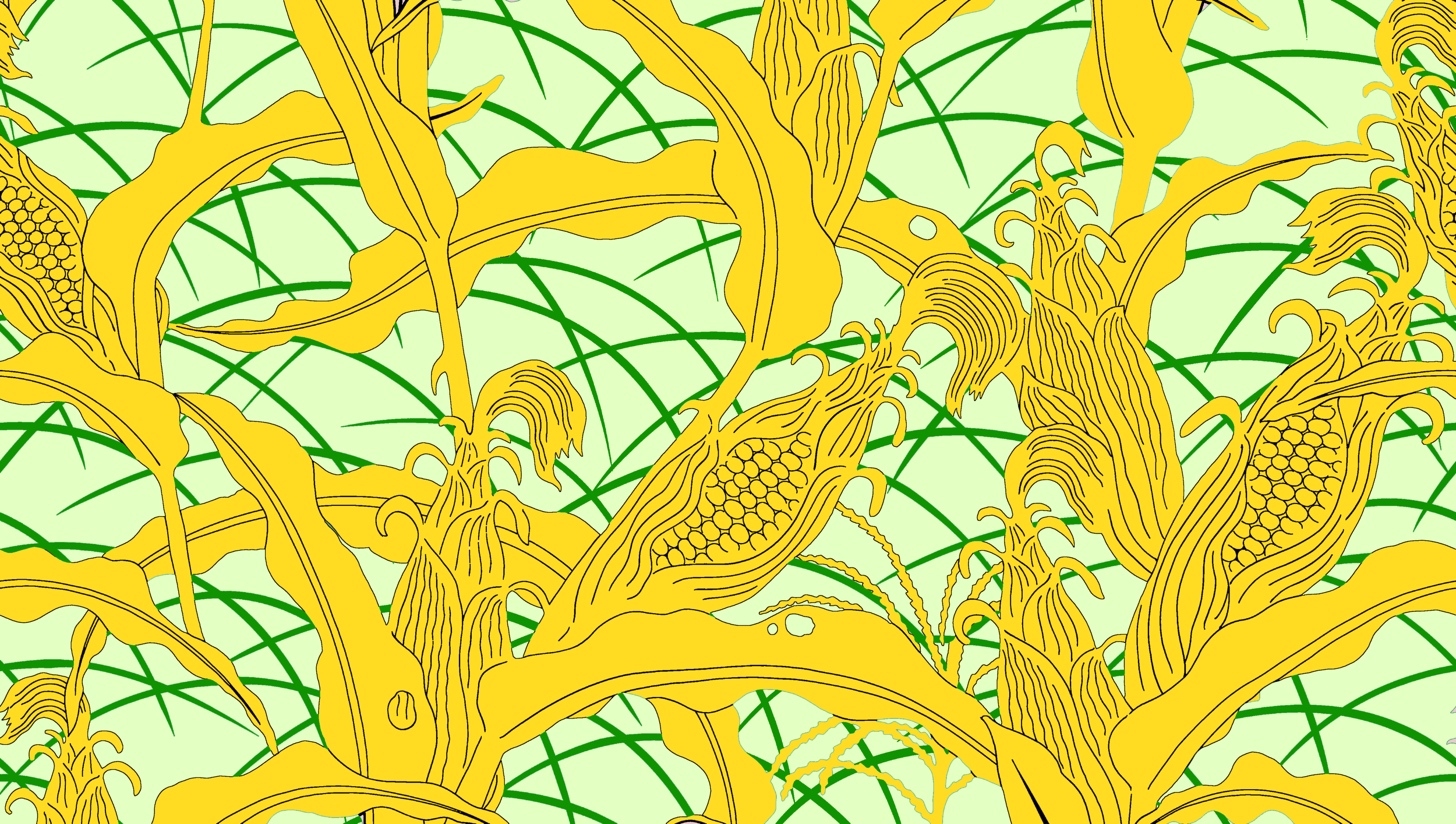
The Story of the Corn Pattern
Symbol of Life and Abundance
Rooted deep in the earth and reaching toward the sun, corn is depicted as a symbol of harvest and life. Its orderly rows of golden grains reflect the quiet rhythm of nature, each kernel carrying the essence of the earth itself.
The gentle curves of its leaves, swaying softly in the breeze, and the flowing lines of the stalk that embrace the fruit express both strength and tenderness. Together, they evoke a sense of harmony—nature’s form woven with balance and grace.
Corn was introduced to Japan during the Edo period, where it first drew attention as a rare and unfamiliar crop. Over time, it adapted to the land and climate, and by the Meiji period and Taisho period, it began to appear in textiles and decorative design as a fresh natural motif.
Though originally foreign, its form came to feel quietly familiar—eventually standing alongside rice and wheat as a symbol of harvest and nourishment.
Designers were drawn to its distinctive structure: the repetition of grains, the layered leaves, and the balance between order and organic flow. Moving beyond simple realism, they reinterpreted corn through abstract rhythms and compositions—capturing not just its form, but the vitality within it.
As a motif on kimono and obi, corn becomes more than a plant. It transforms into an expression of life’s continuity, reflecting both the spirit of the era and the hopes of the people.
This pattern carries a quiet strength—infused with gratitude for abundance and deep respect for nature. Born from the earth, nourished by light, and bearing fruit in time, it symbolizes the enduring cycle of life and connection.
Subtle yet powerful, it gently conveys the harmony between humanity and nature—revealing a moment where nature itself feels like art.