
Dancing Chrysanthemums
乱菊 - Rangiku
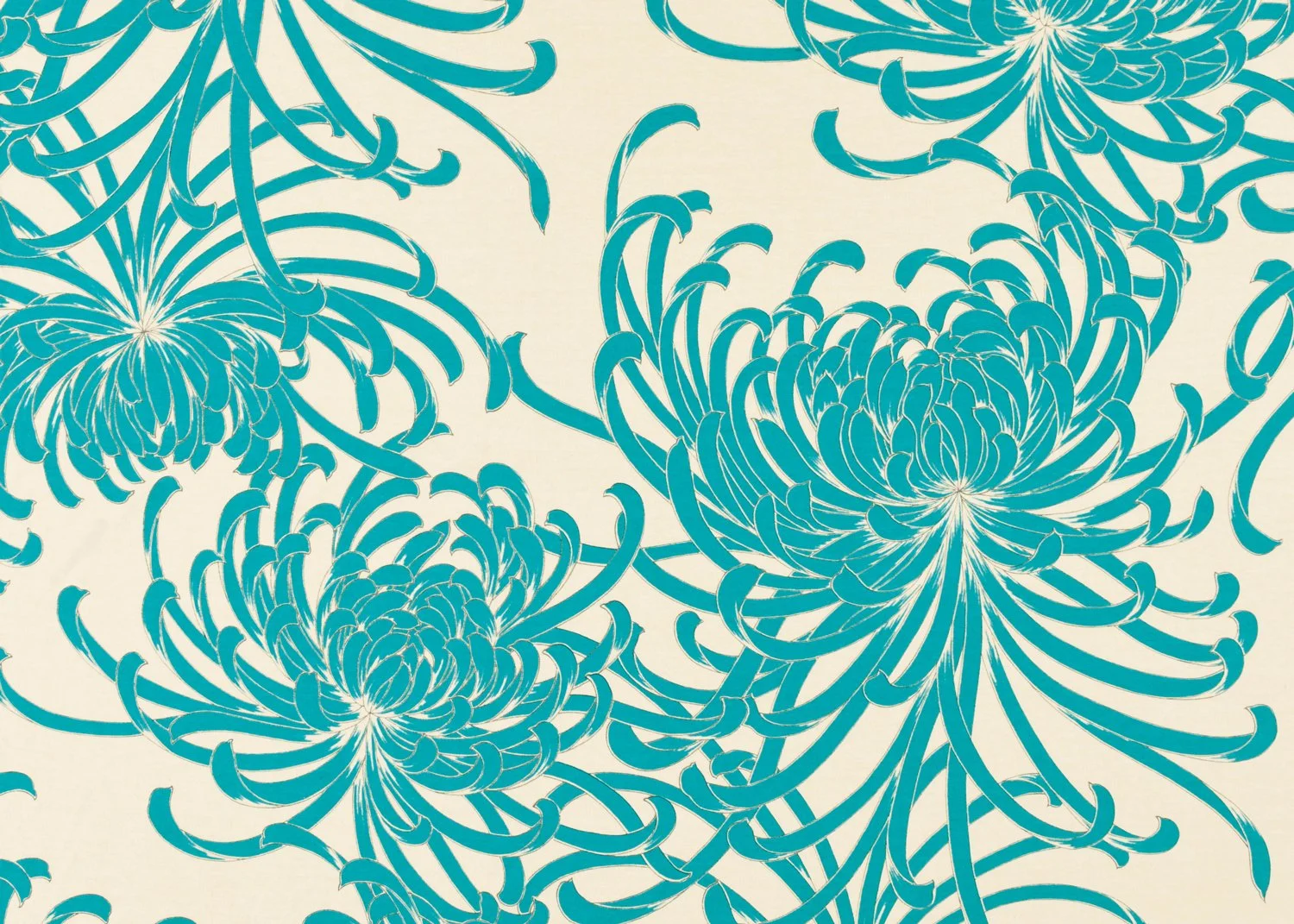
The Story of the Dancing Chrysanthemums Pattern
The chrysanthemum is one of the most familiar and beloved motifs in Japan.
It became especially popular as a design for kimono and obi during the Meiji period. In Japan, the chrysanthemum has long been associated with the imperial family, and fabrics featuring this motif were widely produced.
Meanwhile, in Europe, chrysanthemums experienced a surge of popularity in the late 19th century. Japanese chrysanthemums were highly praised at international exhibitions, sparking a widespread fascination. Against the backdrop of Japonism, chrysanthemum patterns appeared in Western fashion, often depicted in bold, flowing compositions reminiscent of the Art Nouveau style.
In Japanese dyeing, dynamic and expressive chrysanthemum-only designs began to emerge toward the end of the Taisho period and into the early Showa period. These patterns, featuring large, freely arranged blossoms, represented a fresh and innovative approach to kimono design.
After World War II, the style evolved further into bold, modern expressions—large chrysanthemums rendered in striking color combinations such as black, white, and red. This aesthetic, often described as “Japanese modern,” combined simplicity with a sense of luxury and became especially appealing in an international context.
Blending the flowing elegance of European design movements with the bold, dynamic compositions that emerged in postwar Japan, this pattern reflects a new vision of femininity—confident, refined, and forward-looking. It evokes the image of women who embrace both tradition and modernity, resonating with contemporary sensibilities.
The chrysanthemum has long been cherished not only in design but also in everyday life. It has been loved by gardening enthusiasts and celebrated in seasonal traditions such as the Choyo no Sekku, as well as in decorative displays.
Over time, it has become a flower deeply rooted in the Japanese heart—an enduring symbol of beauty, elegance, and cultural identity.