
Daruma Doll
鉢巻だるま - Hachimaki daruma
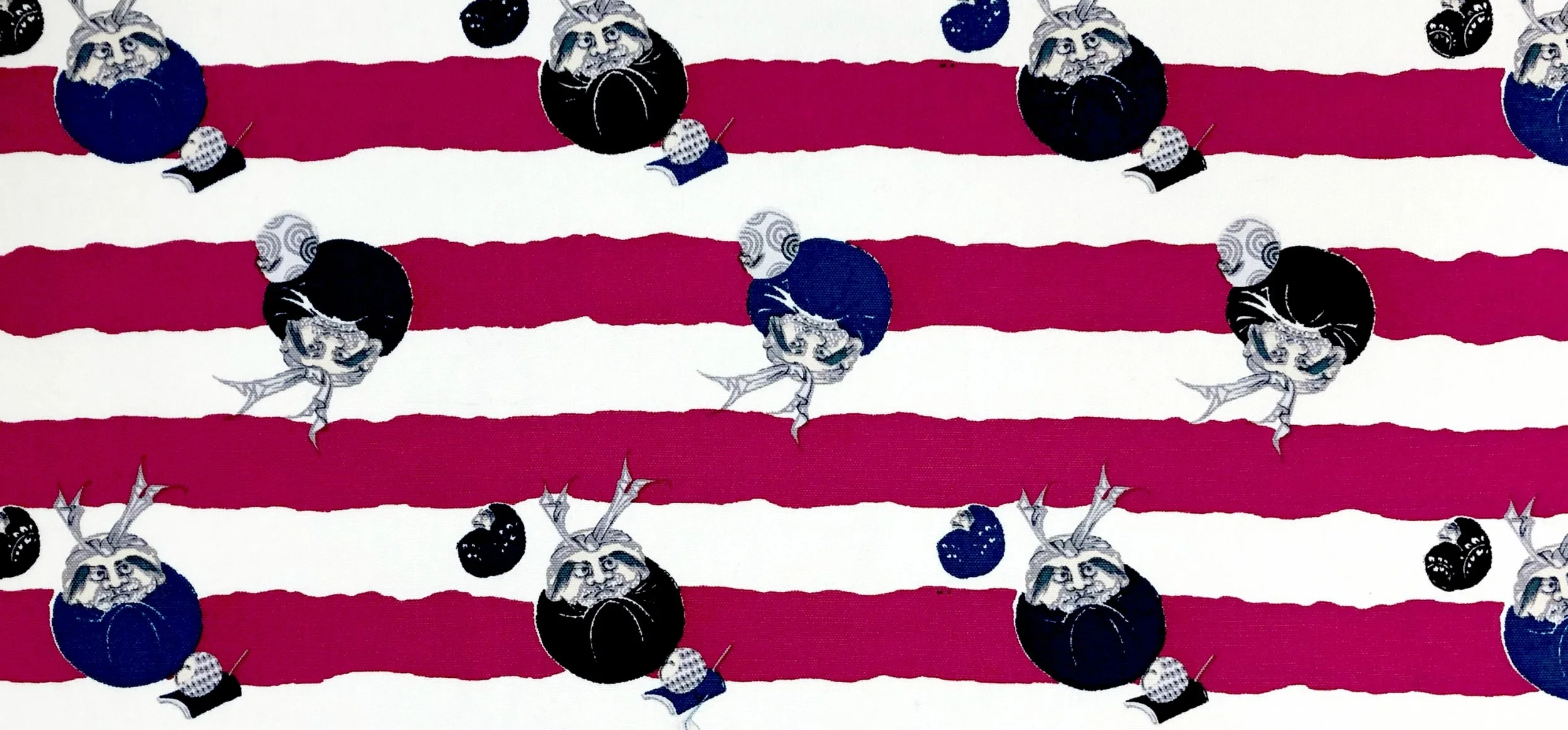
The Story of the Daruma Doll Pattern
Daruma dolls were introduced to Japan during the Edo period and became popular as okiagari-kobōshi—papier-mâché toys weighted at the bottom so they always return upright when tipped over. Their distinctive form is modeled after Bodhidharma, who is said to have meditated facing a wall for nine years. Because of this, Daruma came to symbolize perseverance—the spirit of rising again after every fall—and are regarded as auspicious charms for good fortune and success.
The red color of Daruma has long been believed to ward off evil. This belief stems from the idea that the color red could protect against illness and misfortune. During the Edo period, when infectious diseases such as smallpox were widespread, Daruma dolls were often given to children as toys imbued with the hope of protecting them from harm.
In this design, a hachimaki Daruma—wearing a headband tied firmly across the forehead—is depicted. This style is said to have originated in Kyoto and later became widely produced in the Nagoya area, spreading throughout western Japan. The hachimaki symbolizes focus and determination, tightening both body and spirit, and expressing a renewed resolve to strive for success.
This Daruma pattern serves as a reminder of resilience—the importance of standing up again, no matter how many times one may fall, and continuing forward with unwavering determination.