
Dragon
龍 - Ryu
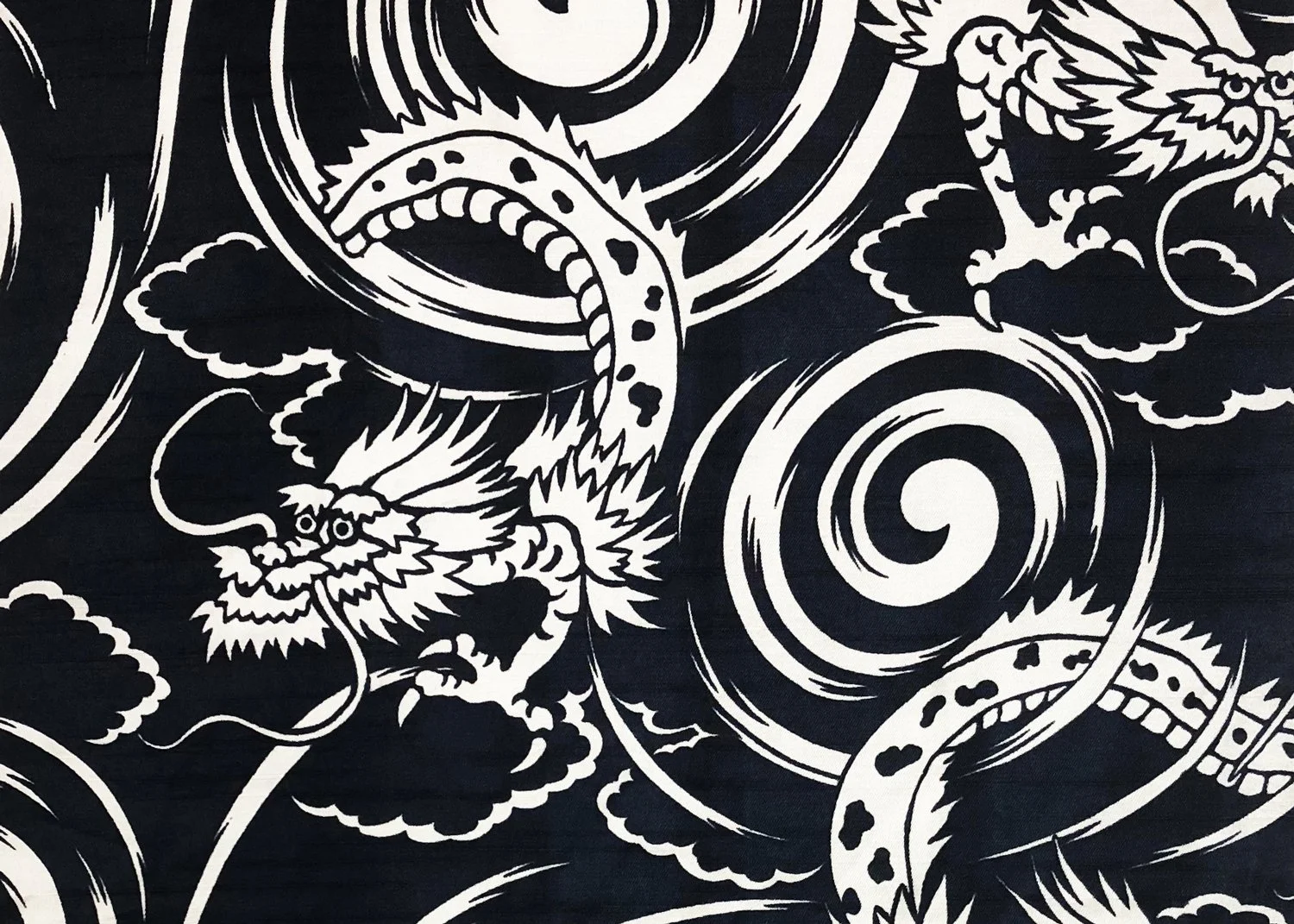
The Story of the Dragon Pattern
Dragons have appeared in many forms across cultures since ancient times, but the dragon known in Japan was introduced from the continent.
In its original context, the dragon was imagined as a mystical creature with the ability to change form freely. It was regarded as one of a group of sacred beings and was closely associated with rulership and divine authority. Over time, dragons came to symbolize power and were depicted in palaces, ceremonial garments, and works of art as emblems of sovereignty.
Beyond their awe-inspiring presence, dragons were also seen as benevolent forces. Believed to govern water and the land, they were thought to ride upon clouds, bring rain, support the harvest, and protect against misfortune—making them powerful symbols of good fortune and balance in nature.
Dragons are believed to have reached Japan around the 4th to 5th centuries, where they were embraced as divine messengers.
Japan already held deep-rooted beliefs in serpent deities connected to water, rain, and fertility. Because of this, the concept of the dragon was readily accepted and gradually blended with native traditions, evolving into a uniquely Japanese form.
This fusion can be seen in many legends and folktales. Stories such as that of Yamata no Orochi, the great multi-headed serpent, reflect this shared imagery of powerful, water-related beings.
Dragons came to be revered as deities of water, believed to ascend to the heavens in spring to bring rain, and descend in autumn to rest within deep waters. Closely tied to agriculture, they were honored as guardians of nature’s cycles.
Over time, they were also associated with a group of protective deities known as the Four Symbols, each representing a direction and offering spiritual protection.
As the centuries passed, the image of the dragon continued to evolve, blending with both native beliefs and Buddhist thought, developing into a uniquely Japanese spiritual symbol.
At the same time, dragons became a source of endless inspiration for artists and craftsmen. Their dynamic forms and powerful presence made them one of the most compelling motifs in art and design—an enduring symbol of strength, mystery, and refined beauty.