
Aloha Shirts
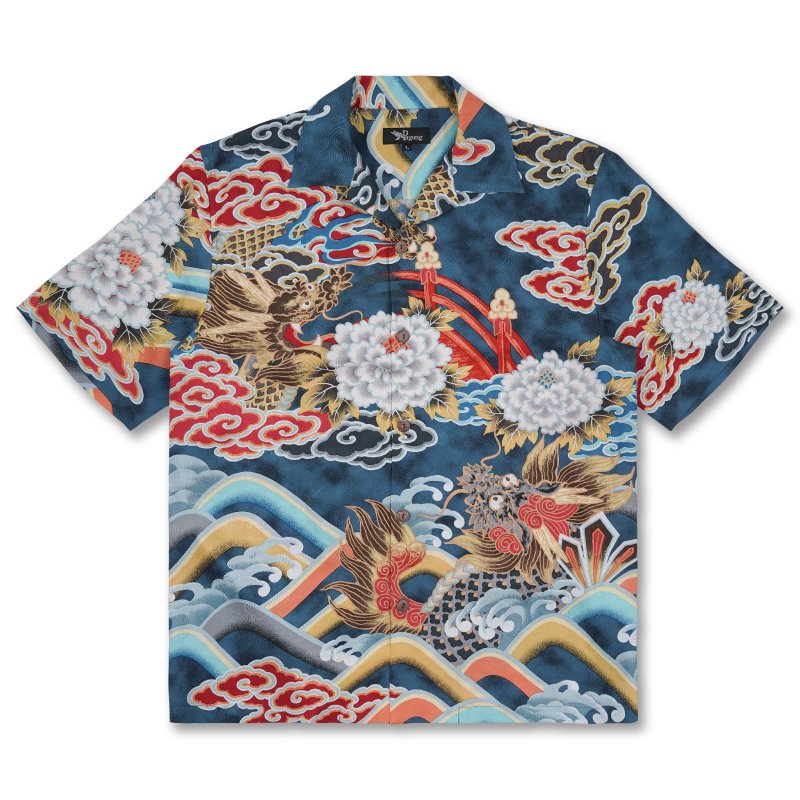
Color / Blue and Multi-color
Japanese name / 龍と麒麟 - Ryu to Kirin
-About-
This auspicious pattern, depicting a dragon and a Kirin facing one another, has long been cherished as a symbol of harmony between heaven and earth and the union of power and virtue.
The dragon is a sacred being believed to ascend to the heavens, summon clouds, and bring life-giving rain. Often associated with thunder and the sky, it has been revered as a manifestation of celestial power.
In contrast, the Kirin is known as a benevolent and gentle guardian, said to herald times of peace and wisdom. Though it bears horns, it is believed to possess such compassion that it would not even harm a single living creature.
Traditionally, the dragon represents the energy of the heavens, while the Kirin embodies the virtue of the earth. When these two stand together, they express the moment when heaven and earth are united. The vermillion bridge at the center symbolizes connection—between sky and land, humanity and nature, and differing forces brought into balance.
The scene of the dragon and Kirin facing one another captures the meeting of strength and virtue, merging in harmony and giving rise to renewal and new beginnings.
The mountains and waves in the background reflect the rhythms of nature and the flow of life, while blooming peonies symbolize prosperity, abundance, and noble grace.
Softly drifting clouds carry auspicious signs, lending depth and quiet movement to the composition.
This design reflects the refined elegance of classical court aesthetics, later echoed in ceremonial and performance garments, and is distinguished by its dignified and timeless beauty.
Within this composition, where the dragon and Kirin form a single world, there lives a quiet wish—that celestial power and earthly virtue may intertwine, bringing peace, balance, and prosperity.
・Currency : US Dollar (USD)
・100% Silk (Custom-woven Jacquard )
・Made in Japan
・Classic-fit Aloha shirt
・Coconut buttons
・Dry-clean
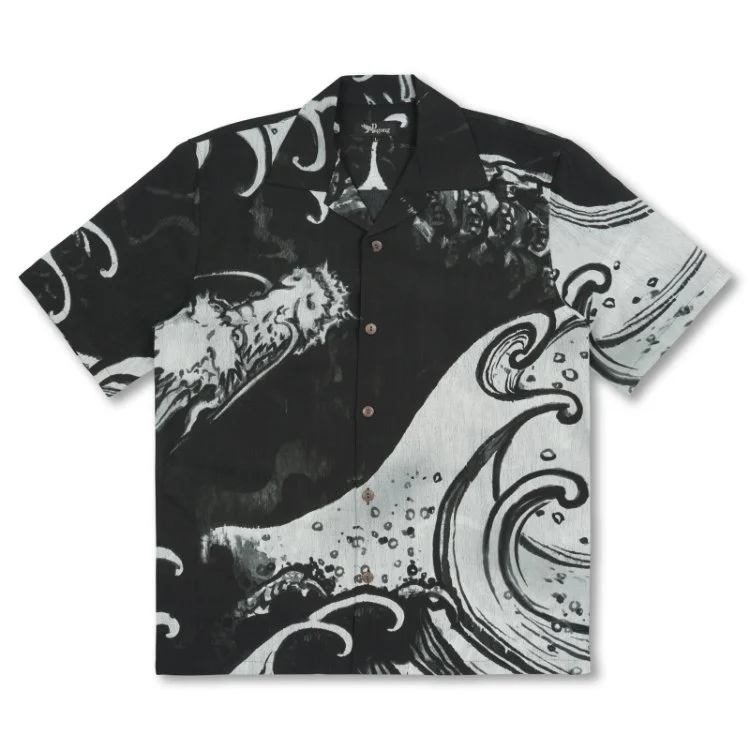
Color / Black and Grey Size Chart Care Instruction
Japanese name/ <波に龍> (Nami ni Ryu)
-About-
Fuyuki Fukaiya (1975~ ) is an artist living in the Okazaki areaof Kyoto. Fukaiya’s paintings reflect his deep appreciation of Japanese traditional beauty and spirituality.
This vigorously drawn figure of a dragon rising between waves represents divine energy in a dramatically fantastic atmosphere. The dragon protects our ambitions and success, giving us power at each important turning point in life.
Currency : US Dollar (USD)
・100% Polyester (Quick Dry)
・Made in Japan
・Classic-style Aloha shirt
・Coconut buttons
・Hand-wash

Color / White and Black Size Chart Care Instruction
Japanese Name / 富士越龍 (Fuji Koshi Ryu)
-About-
Katsushika Hokusai (1760-1849) was to spend his final years passionately making a rare collection of “free-hand” paintings, quite unlike any of his previous ukiyo-e print-works which he is most world-renowned.
Hokusai’s enduring passion to portray Mount Fuji, Japan’s sacred mountain, is a challenge he continued to pursue for his entire lifetime. The many ephocal events of his long prolific career seem to culminate in his final masterpiece, “Dragon Flying Over Mount Fuji” where we the viewer are given the rare opportunity to look deeply into the stillness and peace within the artist’s final year.
・Currency: US Dollar (USD)
・100% Silk (Custom-woven Jacquard )
・Made in Japan
・Classic-fit Aloha shirt
・Coconut buttons
・Dry-clean

Color / Iceberg Blue and Multi-color Size Chart
Japanese name/ 龍神 (Ryujin)
-About-
A deity of the sea in Japanese mythology, RYUJIN or “Dragon God”, has the powerful capability to transform into a human shape, and is the master of serpents. With his magic jewels he is responsible for the tides, and represents both the perils as well as the bounty of thesea.
Ryujin is one of the eight dragon gods which were originally imported from Indian mythology via China and Korea. His residence is in a palace beneath the sea or in a lake of an extinct volcano. The depths of Lake Biwa, north-east of Kyoto, are often cited as the home of Ryujin.
・Currency : US Dollar (USD)
・100% Silk (Custom-woven Jacquard )
・Made in Japan
・Classic-fit Aloha shirt
・Coconut buttons
・Dry-clean

Color / Red Size Chart Care Instruction
Japanese name/ 意休の龍 (Ikyu no Ryu)
(Featured in the Edo-era Kabuki drama “Sukeroku Yukari No Edo Zakura”.
-About-
On the gorgeous Kabuki stage, the setting from which this pattern was taken, we are transported to feudal Japan, when samurai and bushi still had important roles in the land.
Ikkyu, the main character of this kabuki drama, is wearing the boldly elegant, lavishly embroidered dragon kimono, which “explodes” on stage. Worn with confidence, Ikkyu’s full intention is to distinguish his importance as well as his high ranking.
The origin of the exquisite symbols within this costume can be traced all the way back to ancient Chinese mythology. The five-clawed dragon, considered god-like, is said to have been worn only by nobles. Mythological mountains, clouds, waves and flames, are all freshly represented to signify great wealth, strength, and abundance.
We have been been given official permission to use this extraordinary pattern from the ShochikuCostume Company in Tokyo, to which Pagong has implemented the dye technique of Kyoto Yuzen.
・Currency : US Dollar (USD)
・100% Silk (Custom-woven Jacquard )
・Made in Japan
・Classic-fit Aloha shirt
・Coconut buttons
・Dry-clean

Color / Black Size Chart Care Instruction
Japanese name/ 意休の龍 (Ikyu no Ryu)
(Featured in the Edo-era Kabuki drama “Sukeroku Yukari No Edo Zakura”.
-About-
On the gorgeous Kabuki stage, the setting from which this pattern was taken, we are transported to feudal Japan, when samurai and bushi still had important roles in the land.
Ikyu, the main character of this kabuki drama, is wearing the boldly elegant, lavishly embroidered dragon kimono, which “explodes” on stage. Worn with confidence, Ikkyu’s full intention is to distinguish his importance as well as his high ranking.
The origin of the exquisite symbols within this costume can be traced all the way back to ancient Chinese mythology. The five-clawed dragon, considered god-like, is said to have been worn only by nobles. Mythological mountains, clouds, waves and flames, are all freshly represented to signify great wealth, strength, and abundance.
We have been been given official permission to use this extraordinary pattern from the ShochikuCostume Company in Tokyo, to which Pagong has implemented the dye technique of Kyoto Yuzen.
Currency : US Dollar (USD)
・70% Cotton / 30% Linen
・Premium Fabric / Made in Japan
・Classic-style Aloha shirt
・Coconut buttons
・Gently wash by hand.
・Made in Japan

Color / Red
Size Chart Care Instruction
Japanese name/ 意休の龍 (Ikyu no Ryu)
(Featured in the Edo-era Kabuki drama “Sukeroku Yukari No Edo Zakura”
-About-
On the gorgeous Kabuki stage, the setting from which this pattern was taken, we are transported to feudal Japan, when samurai and bushi still had important roles in the land.
Ikkyu, the main character of this kabuki drama, is wearing the boldly elegant, lavishly embroidered dragon kimono, which “explodes” on stage. Worn with confidence, Ikkyu’s full intention is to distinguish his importance as well as his high ranking. The origin of the exquisite symbols within this costume can be traced all the way back to ancient Chinese mythology.
The five-clawed dragon, considered god-like, is said to have been worn only by nobles. Mythological mountains, clouds, waves and flames, are all freshly represented to signify great wealth, strength, and abundance.
We have been been given official permission to use this extraordinary pattern from the Shochiku Costume Company in Tokyo, to which Pagong has implemented the dye technique of Kyoto Yuzen.
・Currency : US Dollar (USD)
・70% Cotton 30% Linen
・Premium Fabric
・Classic-style Aloha shirt
・Coconut buttons
・Hand-Wash
・Made in Japan

Color / White and Black
Japanese Name / 富士越龍 (Fuji Koshi Ryu)
-About-
Katsushika Hokusai (1760-1849) was to spend his final years passionately making a rare collection of “free-hand” paintings, quite unlike any of his previous ukiyo-e print-works which he is most world-renowned.
Hokusai’s enduring passion to portray Mount Fuji, Japan’s sacred mountain, is a challenge he continued to pursue for his entire lifetime. The many ephocal events of his long prolific career seem to culminate in his final masterpiece, “Dragon Flying Over Mount Fuji” where we the viewer are given the rare opportunity to look deeply into the stillness and peace within the artist’s final year.
・Currency : US Dollar (USD)
・70% Cotton / 30% Linen
・Premium Fabric / Made in Japan
・Classic-style Aloha shirt
・Coconut buttons
・Gently wash by hand.
・Made in Japan

Color / Black and Grey Size Chart Care Instruction
Japanese name/ <波に龍> (Nami ni Ryu)
-About-
Fuyuki Fukaiya (1975~ ) is an artist living in the Okazaki areaof Kyoto. Fukaiya’s paintings reflect his deep appreciation of Japanese traditional beauty and spirituality. This vigorously drawn figure of a dragon rising between waves represents divine energy in a dramatically fantastic atmosphere. The dragon protects our ambitions and success, giving us power at each important turning point in life.
・70% Cotton / 30% Linen
・Premium Fabric
・Classic-style Aloha shirt
・Coconut buttons
・Gently wash by hand.
・Made in Japan

Japanese name/ <龍> RYU
-About-
A deity of the sea in Japanese mythology, RYU or “Dragon God”, can transform into a human shape, and is the master of serpents. With his magic jewels, he is responsible for the tides and represents both the perils as well as the bounty of thesea.
His residence is in a palace beneath the sea or a lake of an extinct volcano. The depths of Lake Biwa, northeast of Kyoto, are often cited as the “home of Ryu.”
Currency: US Dollar (USD)
・100% Polyester (Quick Dry)
・Made in Japan
・Classic-style Aloha shirt
・Coconut buttons
・Hand-wash

Color / Black and Golden Yellow Size Chart Care Instruction
Japanese name/龍神 (Ryujin)
-About-
A deity of the sea in Japanese mythology, RYUJIN or “Dragon God”, has the powerful capability to transform into a human shape, and is the master of serpents. With his magic jewels he is responsible for the tides, and represents both the perils as well as the bounty of thesea.
Ryujin is one of the eight dragon gods which were originally imported from Indian mythology via China and Korea. His residence is in a palace beneath the sea or in a lake of an extinct volcano. The depths of Lake Biwa, north-east of Kyoto, are often cited as the home of Ryujin.
・Currency : US Dollar (USD)
・70% Cotton / 30% Linen
・Classic-style Aloha shirt
・Coconut buttons
・Wash by hand
・Made in Japan

Color / Kyoto ”Matcha” Green Size Chart Care Instruction
Japanese name/ 菊花と龍 (Kikka to Ryu)
-About-
KIKKA also known as kika or the “chrysanthemum”, was introduced to Japan from China in the Nara-era (710-794).
In Japan, the chrysanthemum has become a royal symbol for the emperor and appears on the Japanese imperial seal.
In the language of flowers, the chrysanthemum carries the symbolic meaning of eternal youth, devoted love, loyalty, longevity, and joy.
In Japanese traditional culture the dragon and the chrysanthemum are firmly rooted in people’s lives through folklore and mythology.
A deity of the sea, the RYU or “dragon” has the ability to transform into a human shape, and is the master of serpents. With his magic jewels he is responsible for the tides, and represents both the perils as well as the bounty of thesea.
His residence is in a palace beneath the sea or in a lake of an extinct volcano. The depths of Lake Biwa, north-east of Kyoto, are often cited as the “home of Ryu”.
・Currency : US Dollar (USD)
・70% Cotton 30% Linen
・Premium Fabric-Made in Japan
・Classic-style Aloha shirt
・Coconut buttons
・Hand-Wash
・Made in Japan
Men’s
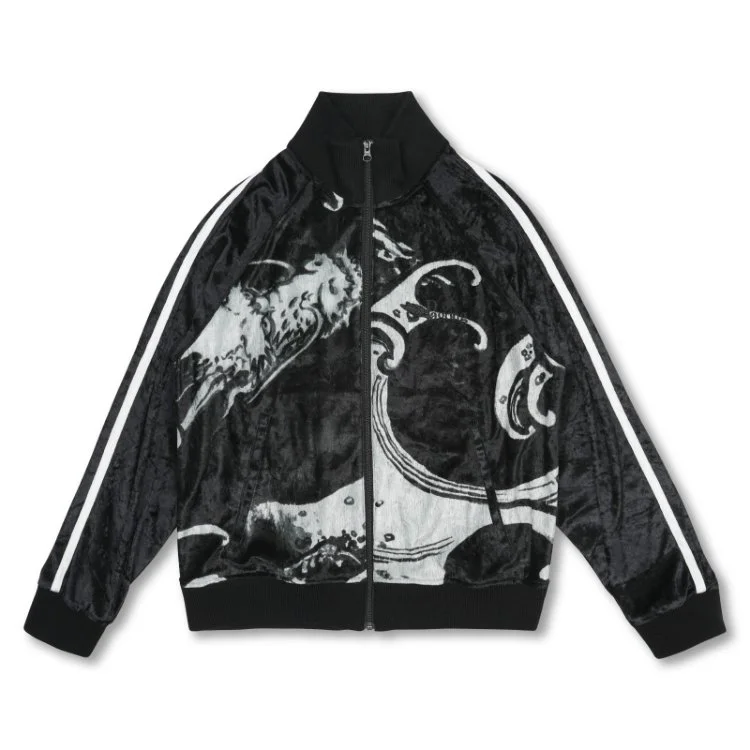
Color / Black and white Care Instruction
Japanese name/ <波に龍> (Nami ni Ryu)
-About-
Fuyuki Fukaiya (1975~ ) is an artist living in the Okazaki areaof Kyoto. Fukaiya’s paintings reflect his deep appreciation of Japanese traditional beauty and spirituality.
This vigorously drawn figure of a dragon rising between waves represents divine energy in a dramatically fantastic atmosphere. The dragon protects our ambitions and success, giving us power at each important turning point in life.
・Body: Polyester 100%
Rib: 85% Acrylic, 10% Polyurethane, 5% Wool
・Urban style
・Dyeing By Kyo-Yuzen in Kyoto
・Dry-clean
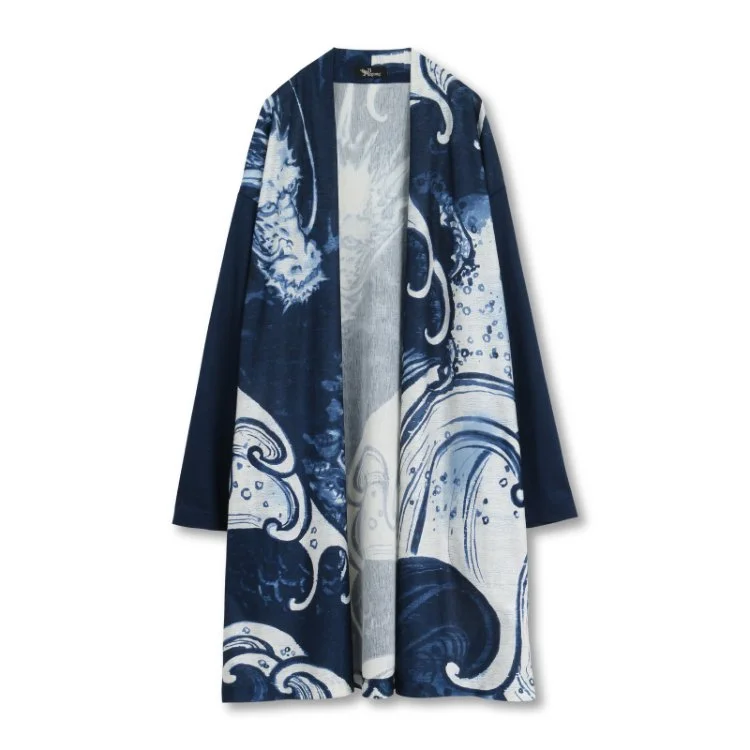
Color / Navy and White Care Instruction
Japanese name/ <波に龍> (Nami ni Ryu)
-About-
Fuyuki Fukaiya (1975~ ) is an artist living in the Okazaki areaof Kyoto. Fukaiya’s paintings reflect his deep appreciation of Japanese traditional beauty and spirituality.
This vigorously drawn figure of a dragon rising between waves represents divine energy in a dramatically fantastic atmosphere. The dragon protects our ambitions and success, giving us power at each important turning point in life.
・Rayon 50% Cotton 50%
・One-Size-Fits-Most
・Made in Japan
・Urban style
・Hand-wash
・Currency : US Dollar (USD)

Color / Size Chart
Japanese name/ <波に龍> (Nami ni Ryu)
-About-
Fuyuki Fukaiya (1975~ ) is an artist living in the Okazaki area of Kyoto. Fukaiya’s paintings reflect his deep appreciation of Japanese traditional beauty and spirituality. This vigorously drawn figure of a dragon rising between waves represents divine energy in a dramatically fantastic atmosphere. The dragon protects our ambitions and success, giving us power at each important turning point in life.
・Polyester 89% / Polyurethane 11%
Rib: Polyester 100%
・Made in Japan
・Urban style
・Dyeing By Kyo-Yuzen in Kyoto
・Dry-clean

Color /Blue and Multi-color Reversible Design Size Chart
Japanese name/ 甲州石班澤 (Koshu Kajikazawa)
-About-
At the age of seventy, with a career of over 50 years experience making traditional woodblock prints, Katsushika Hokusai (1760-1849), undertook making his now-famous series “Thirty Six Views of Mount Fuji”, honoring the most spiritual and sacred mountain in all Japan. The traditional technique he used was most common at the time, ukiyo-e, literally meaning “pictures of the floating world”.
“Koshu Kajikazawa”, is the name of a place between Tokyo and Kyoto where two rivers meet, the 14th print of the series, which we the viewer have the pleasure of seeing through Hokusai’s eyes.
In this masterpiece, the fisherman’s pose intentionally reflects the shape of Mount Fuji in the background, an example of Hokusai’s “signature” compositional genius, no doubt contributing to Hokusai becoming the most renown and respected Japanese artist of all time.
We have been been given official permission to use this extraordinary woodblock print from the Metropolitan Museum of Art in New York , to which Pagong has implemented the dye technique of Kyoto Yuzen.
・100% Cotton
(Lining: polyester 100% / Rib: Cotton 45%, Polyester 45%, Polyurethane 10%)
・Made in Japan
・Urban style
・Dyeing By Kyo-Yuzen in Kyoto
・Reversible design
・Dry-clean

Color / Red and Multi-color Reversible Design Size Chart
Japanese name/ 意休の龍 (Ikyu no Ryu)
(Featured in the Edo-era Kabuki drama “Sukeroku Yukari No Edo Zakura”.
-About-
On the gorgeous kabuki stage, the setting from which this pattern was taken, we are transported to feudal Japan, when samurai and bushi still had important roles in the land.
Ikyu, the main character of this kabuki drama, is wearing the boldly elegant, lavishly embroidered dragon kimono, which “explodes” on stage. Worn with confidence, Ikyu’s full intention is to distinguish his importance as well as his high ranking.
The origin of the exquisite symbols within this costume can be traced all the way back to ancient Chinese mythology. The five-clawed dragon, considered god-like, is said to have been worn only by nobles. Mythological mountains, clouds, waves and flames, are all freshly represented to signify great wealth, strength, and abundance.
We have been been given official permission to use this extraordinary pattern from the ShochikuCostume Company in Tokyo, to which Pagong has implemented the dye technique of Kyoto Yuzen.
・100% Cotton
(Lining: polyester 100% / Rib: Cotton 45%, Polyester 45%, Polyurethane 10%)
・Made in Japan
・Urban style
・Dyeing By Kyo-Yuzen in Kyoto
・Reversible design
・Dry-clean

Color / Black and Multi-color Reversible Design Size Chart
Japanese name/ 意休の龍 (Ikyu no Ryu)
(Featured in the Edo-era Kabuki drama “Sukeroku Yukari No Edo Zakura”.
-About-
On the gorgeous kabuki stage, the setting from which this pattern was taken, we are transported to feudal Japan, when samurai and bushi still had important roles in the land.
Ikyu, the main character of this kabuki drama, is wearing the boldly elegant, lavishly embroidered dragon kimono, which “explodes” on stage. Worn with confidence, Ikyu’s full intention is to distinguish his importance as well as his high ranking.
The origin of the exquisite symbols within this costume can be traced all the way back to ancient Chinese mythology. The five-clawed dragon, considered god-like, is said to have been worn only by nobles. Mythological mountains, clouds, waves and flames, are all freshly represented to signify great wealth, strength, and abundance.
We have been been given official permission to use this extraordinary pattern from the ShochikuCostume Company in Tokyo, to which Pagong has implemented the dye technique of Kyoto Yuzen.
・100% Cotton
(Lining: polyester 100% / Rib: Cotton 45%, Polyester 45%, Polyurethane 10%)
・Made in Japan
・Urban style
・Dyeing By Kyo-Yuzen in Kyoto
・Reversible design
・Dry-clean

Color/ Black Care Instruction
Japanese name/ 菊花と龍 (Kikka to Ryu)
-About-
KIKKA also known as kika or the “chrysanthemum”, was introduced to Japan from China in the Nara-era (710-794).
In Japan, the chrysanthemum has become a royal symbol for the emperor and appears on the Japanese imperial seal.In the language of flowers, the chrysanthemum carries the symbolic meaning of eternal youth, devoted love, loyalty, longevity, and joy. Japanese traditional culture the dragon and the chrysanthemum are firmly rooted in people’s lives through folklore and mythology.
A deity of the sea, the RYU or “dragon” has the ability to transform into a human shape, and is the master of serpents. With his magic jewels he is responsible for the tides, and represents both the perils as well as the bounty of the sea.
His residence is in a palace beneath the sea or in a lake of an extinct volcano. The depths of Lake Biwa, north-east of Kyoto, are often cited as the “home of Ryu”.
・Made in Kyoto
・Kyo-Yuzen dye method
・Hand-wash
・Currency : US Dollar (USD)
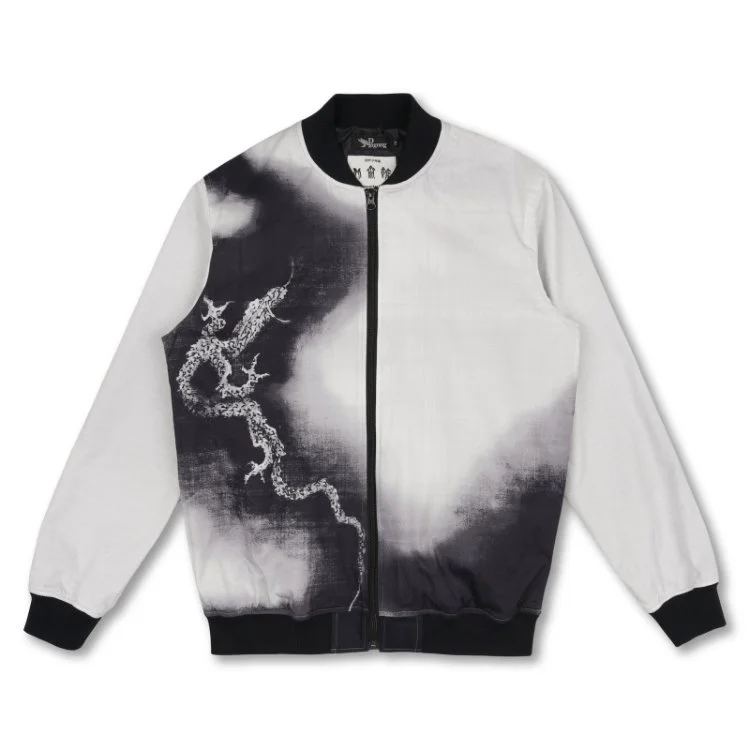
Care Instruction
Japanese Name / 富士越龍 (Fuji Koshi Ryu)
-About-
Katsushika Hokusai (1760-1849) was to spend his final years passionately making a rare collection of “free-hand” paintings, quite unlike any of his previous ukiyo-e print-works which he is most world-renowned.
Hokusai’s enduring passion to portray Mount Fuji, Japan’s sacred mountain, is a challenge he continued to pursue for his entire lifetime. The many ephocal events of his long prolific career seem to culminate in his final masterpiece, “Dragon Flying Over Mount Fuji” where we the viewer are given the rare opportunity to look deeply into the stillness and peace within the artist’s final year.
・100% Cotton (Lining 100% Polyester / Rib100% Polyester)
・Made in Japan
・Dye-technique-Kyo-Yuzen
・Urban style
・Dry-clean
・Currency : US Dollar (USD)

Color / Purple and Multi-color Care Instruction
Japanese name/ 意休の龍 (Ikyu no Ryu)
(Featured in the Edo-era Kabuki drama “Sukeroku Yukari No Edo Zakura”.
-About-
On the gorgeous kabuki stage, the setting from which this pattern was taken, we are transported to feudal Japan, when samurai and bushi still had important roles in the land.
Ikyu, the main character of this kabuki drama, is wearing the boldly elegant, lavishly embroidered dragon kimono, which “explodes” on stage. Worn with confidence, Ikyu’s full intention is to distinguish his importance as well as his high ranking.The origin of the exquisite symbols within this costume can be traced all the way back to ancient Chinese mythology.
The five-clawed dragon, considered god-like, is said to have been worn only by nobles. Mythological mountains, clouds, waves and flames, are all freshly represented to signify great wealth, strength, and abundance.
We have been been given official permission to use this extraordinary pattern from the Shochiku Costume Company in Tokyo, to which Pagong has implemented the dye technique of Kyoto Yuzen.
100% Brushed Cotton : As its name suggests, brushed cotton is cotton that’s finished with a brushing technique.
The fabric is luxuriously smooth and as soft as a “lived-in” shirt with the elegance of a premium material. In other words, its cotton, but BETTER!
・Made in Japan
・Dye technique-Kyo-Yuzen
・Urban style
・Hand-wash
・Currency : US Dollar (USD)

Color / Red and Multi-color Care Instruction
Japanese name/ 意休の龍 (Ikyu no Ryu)
(Featured in the Edo-era Kabuki drama “Sukeroku Yukari No Edo Zakura”.
-About-
On the gorgeous kabuki stage, the setting from which this pattern was taken, we are transported to feudal Japan, when samurai and bushi still had important roles in the land.
Ikyu, the main character of this kabuki drama, is wearing the boldly elegant, lavishly embroidered dragon kimono, which “explodes” on stage. Worn with confidence, Ikyu’s full intention is to distinguish his importance as well as his high ranking.
The origin of the exquisite symbols within this costume can be traced all the way back to ancient Chinese mythology.
The five-clawed dragon, considered god-like, is said to have been worn only by nobles. Mythological mountains, clouds, waves and flames, are all freshly represented to signify great wealth, strength, and abundance.
We have been been given official permission to use this extraordinary pattern from the Shochiku Costume Company in Tokyo, to which Pagong has implemented the dye technique of Kyoto Yuzen.
100% Brushed Cotton : As its name suggests, brushed cotton is cotton that’s finished with a brushing technique.
The fabric is luxuriously smooth and as soft as a “lived-in” shirt with the elegance of a premium material. In other words, it’s cotton, but BETTER!
・Made in Japan
・Dye technique-Kyo-Yuzen
・Urban style
・Hand-wash
・Currency : US Dollar (USD)
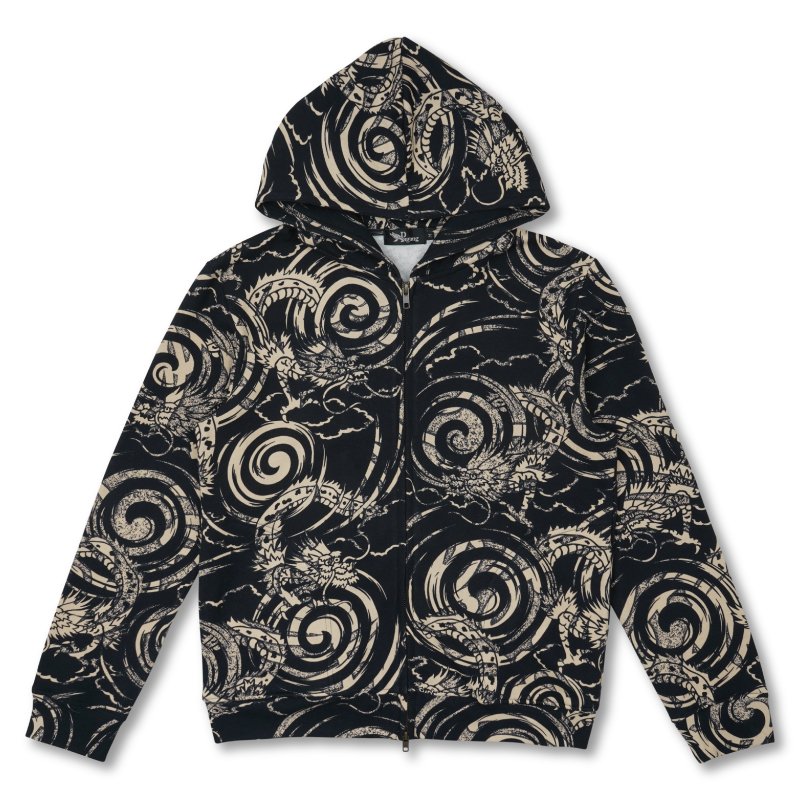
Color / Black Care Instruction
Japanese name/ <龍> RYU
-About-
A deity of the sea in Japanese mythology, RYU or “Dragon God”, has the ability to transform into a human shape, and is the master of serpents. With his magic jewels he is responsible for the tides, and represents both the perils as well as the bounty of the sea.
His residence is in a palace beneath the sea or in a lake of an extinct volcano. The depths of Lake Biwa, north-east of Kyoto, are often cited as the “home of Ryu.”
・100% Cotton
・Made in Japan
・Dye Technique-Kyo-Yuzen
・Hand-wash
・Currency : US Dollar (USD)

Japanese name / 富士越龍 - Fuji Koshi Ryū
-About-
"DRAGON FLYING OVER MOUNT FUJI"
Katsushika Hokusai (1760-1849) was to spend his final years passionately absorbed in making a rare collection of “free-hand” paintings, quite unlike any of his previous ukiyo-e print-works which he is most world-renown for.
Hokusai’s enduring passion to portray Mount Fuji, Japan’s sacred mountain, is a challenge he continued to pursue for his entire lifetime. The many ephocal events of his long prolific career seem to culminate in his final masterpiece, “Dragon Flying Over Mount Fuji” where we the viewer are given the rare opportunity to look deeply into the stillness and peace within the artist’s final year.
・100% Cotton
・Made in Japan
・Urban style
・Hand-wash gently
・Currency : US Dollar (USD)
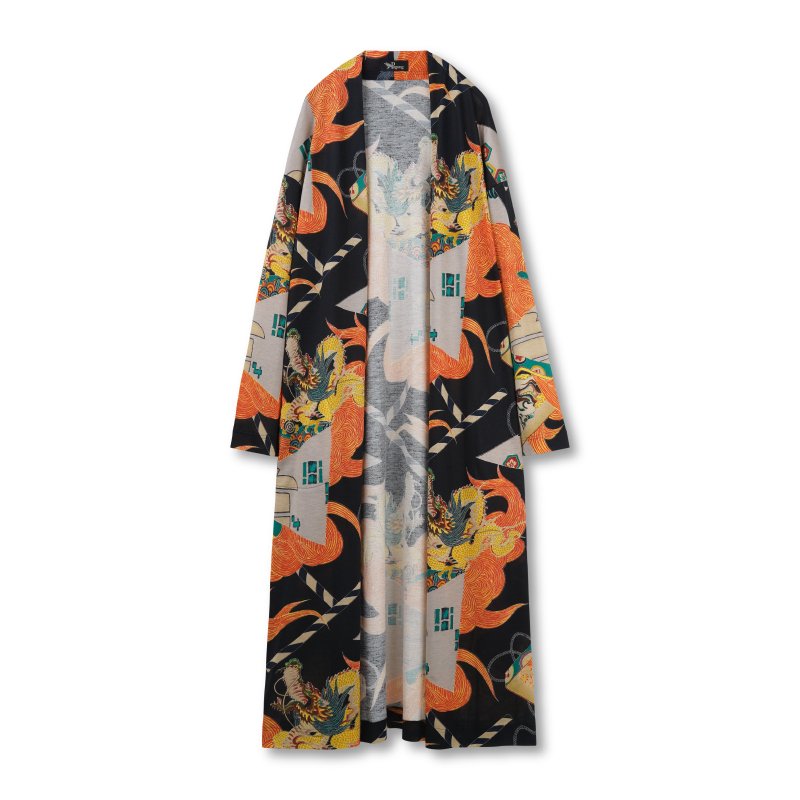
Color / Black and Golden Yellow Care Instruction
Japanese name / 龍神 (Ryujin)
-About-
A deity of the sea in Japanese mythology, RYUJIN or “Dragon God”, has the powerful capability to transform into a human shape, and is the master of serpents. With his magic jewels he is responsible for the tides, and represents both the perils as well as the bounty of the sea.
Ryujin is one of the eight dragon gods which were originally imported from Indian mythology via China and Korea. His residence is in a palace beneath the sea or in a lake of an extinct volcano. The depths of Lake Biwa, north-east of Kyoto, are often cited as the home of Ryujin.
・Rayon 75% Cotton 25%
・One-Size-Fits-Most
・Made in Japan
・Urban style
・Hand-wash
・Currency : US Dollar (USD)
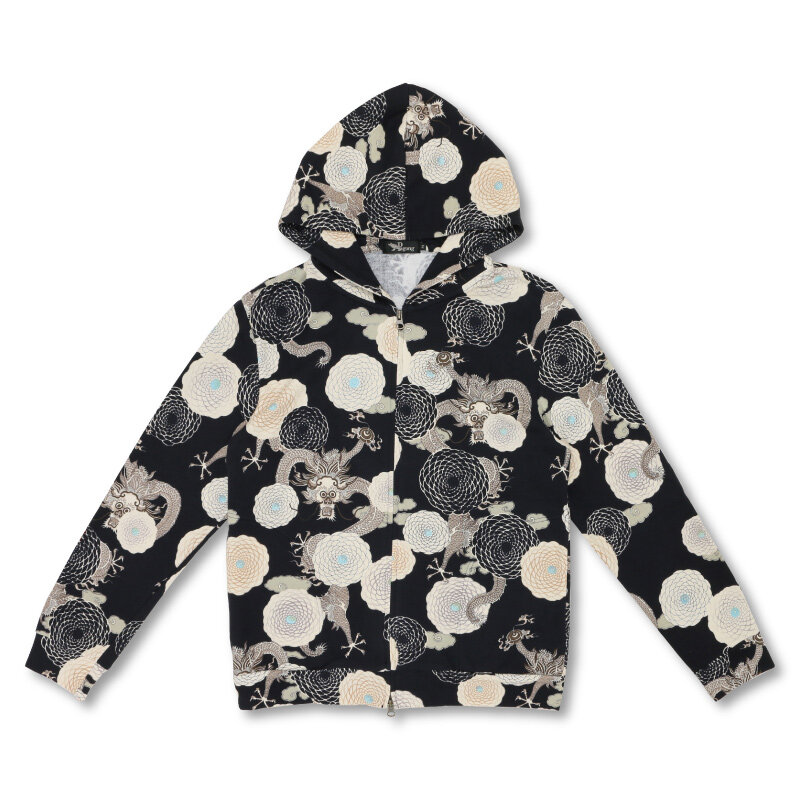
Color / Black and White Care Instruction
Japanese name/ 菊花と龍 (Kikka to Ryu)
-About-
“KIKKA” also known as “kiku” or the chrysanthemum, was introduced to Japan from China in the Nara-era (710-794).
In Japan, the chrysanthemum has become a royal symbol for the emperor and appears on the Japanese imperial seal.
In the language of flowers, the chrysanthemum carries the symbolic meaning of eternal youth, devoted love, loyalty, longevity, and joy.
In Japanese traditional culture the dragon and the chrysanthemum are firmly rooted in people’s lives through folklore and mythology.
A deity of the sea, the RYU or “Dragon” has the ability to transform into a human shape, and is the master of serpents. With his magic jewels he is responsible for the tides, and represents both the perils as well as the bounty of the sea.
His residence is in a palace beneath the sea or in a lake of an extinct volcano. The depths of Lake Biwa, north-east of Kyoto, are often cited as the “home of Ryu”.
・100% Cotton
・Made in Kyoto
・Kyo-Yuzen dye method
・Hand-wash
・Currency : US Dollar (USD)
Women’s
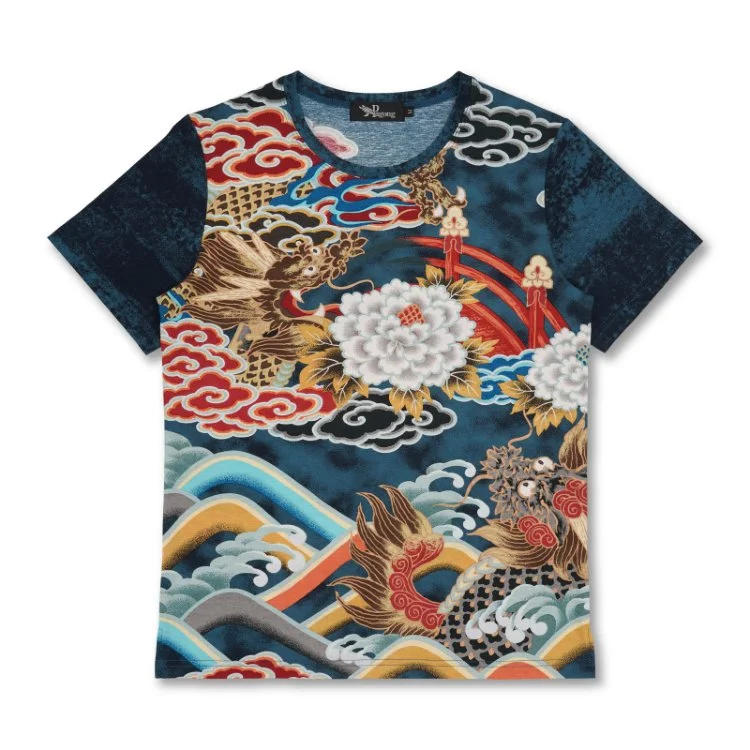
Color /Navy and Multi-color Care Instruction
Japanese name / 玉蜀黍(Ryu to Kirin)
-About-
This auspicious pattern, depicting a dragon and a Kirin facing one another, has long been cherished as a symbol of harmony between heaven and earth and the union of power and virtue.
The dragon is a sacred being believed to ascend to the heavens, summon clouds, and bring life-giving rain. Often associated with thunder and the sky, it has been revered as a manifestation of celestial power.
In contrast, the Kirin is known as a benevolent and gentle guardian, said to herald times of peace and wisdom. Though it bears horns, it is believed to possess such compassion that it would not even harm a single living creature.
Traditionally, the dragon represents the energy of the heavens, while the Kirin embodies the virtue of the earth. When these two stand together, they express the moment when heaven and earth are united. The vermillion bridge at the center symbolizes connection—between sky and land, humanity and nature, and differing forces brought into balance.
The scene of the dragon and Kirin facing one another captures the meeting of strength and virtue, merging in harmony and giving rise to renewal and new beginnings.
The mountains and waves in the background reflect the rhythms of nature and the flow of life, while blooming peonies symbolize prosperity, abundance, and noble grace.
Softly drifting clouds carry auspicious signs, lending depth and quiet movement to the composition.
This design reflects the refined elegance of classical court aesthetics, later echoed in ceremonial and performance garments, and is distinguished by its dignified and timeless beauty.
Within this composition, where the dragon and Kirin form a single world, there lives a quiet wish—that celestial power and earthly virtue may intertwine, bringing peace, balance, and prosperity.
・100% Premium Cotton
・Made in Japan
・Hand-wash
・Hang to dry
・Currency : US Dollar (USD)
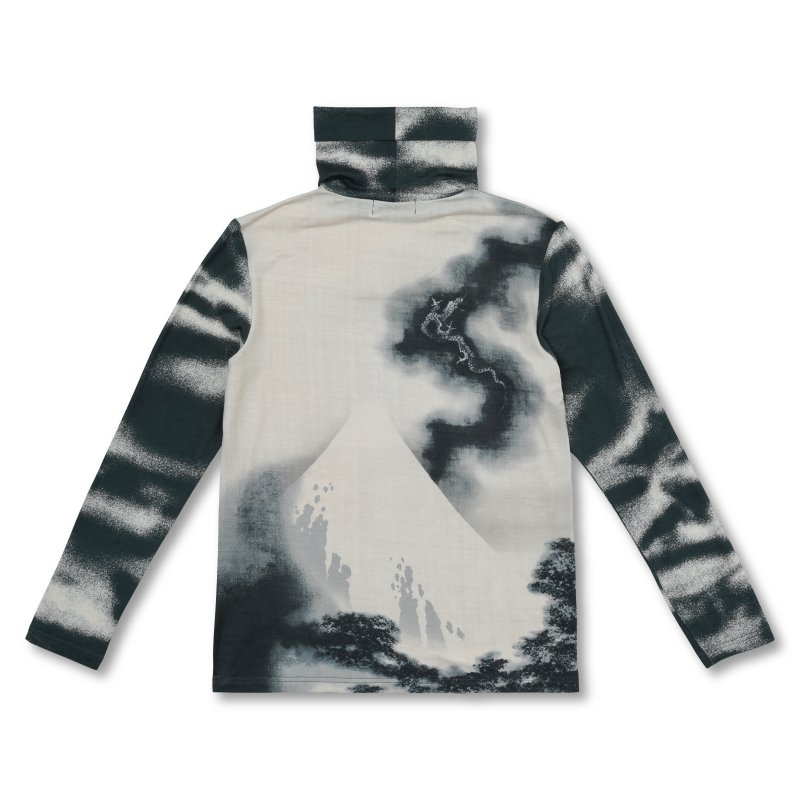
Japanese name / 富士越龍 - Fuji Koshi Ryū
-About-
Katsushika Hokusai (1760-1849) was to spend his final years passionately absorbed in making a rare collection of “free-hand” paintings, quite unlike any of his previous ukiyo-e print-works which he is most world-renown for.
Hokusai’s enduring passion to portray Mount Fuji, Japan’s sacred mountain, is a challenge he continued to pursue for his entire lifetime. The many ephocal events of his long prolific career seem to culminate in his final masterpiece, “Dragon Flying Over Mount Fuji” where we the viewer are given the rare opportunity to look deeply into the stillness and peace within the artist’s final year.
・93% Rayon 7% Polyurethane
・Made in Japan
・Heat-retention knit fabric
・Hand-wash
・Hang to dry
・Use pressing cloth to iron
・Currency : US Dollar (USD)
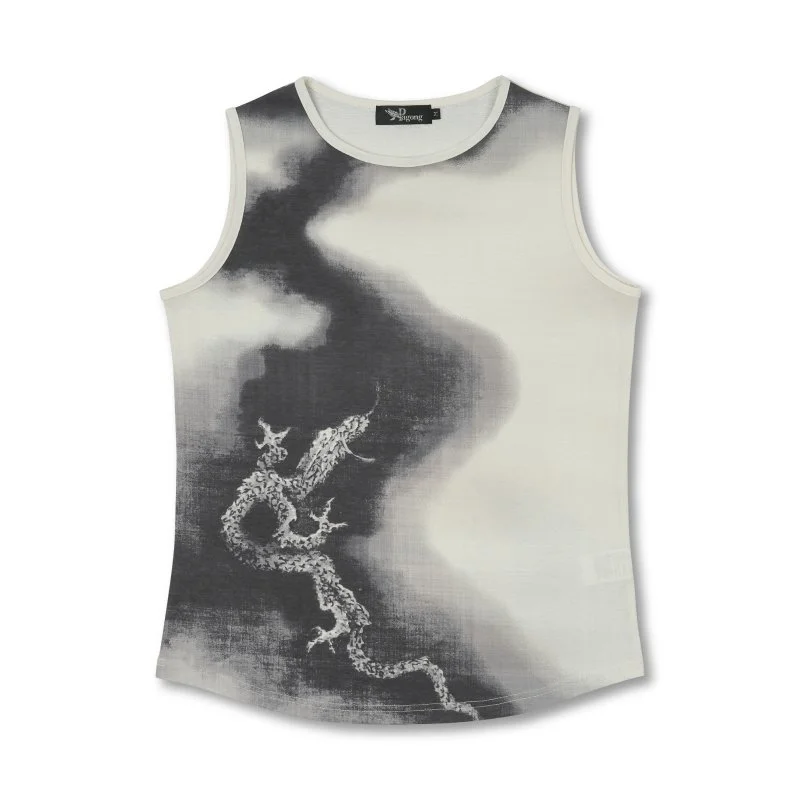
Color/ Black and Beige Care Instruction
“Dragon Flying over Mount Fuji”
Katsushika Hokusai (1760-1849) was to spend his final years passionately making a rare collection of “free-hand” paintings, quite unlike any of his previous ukiyo-e print-works which he is most world-renowned.
Hokusai’s enduring passion to portray Mount Fuji, Japan’s sacred mountain, is a challenge he continued to pursue for his entire lifetime. The many ephocal events of his long prolific career seem to culminate in his final masterpiece, “Dragon Flying Over Mount Fuji” where we the viewer are given the rare opportunity to look deeply into the stillness and peace within the artist’s final year.
・100% Premium Cotton
・Made in Japan
・Hand-wash
・Hang to dry
・Currency : US Dollar (USD)
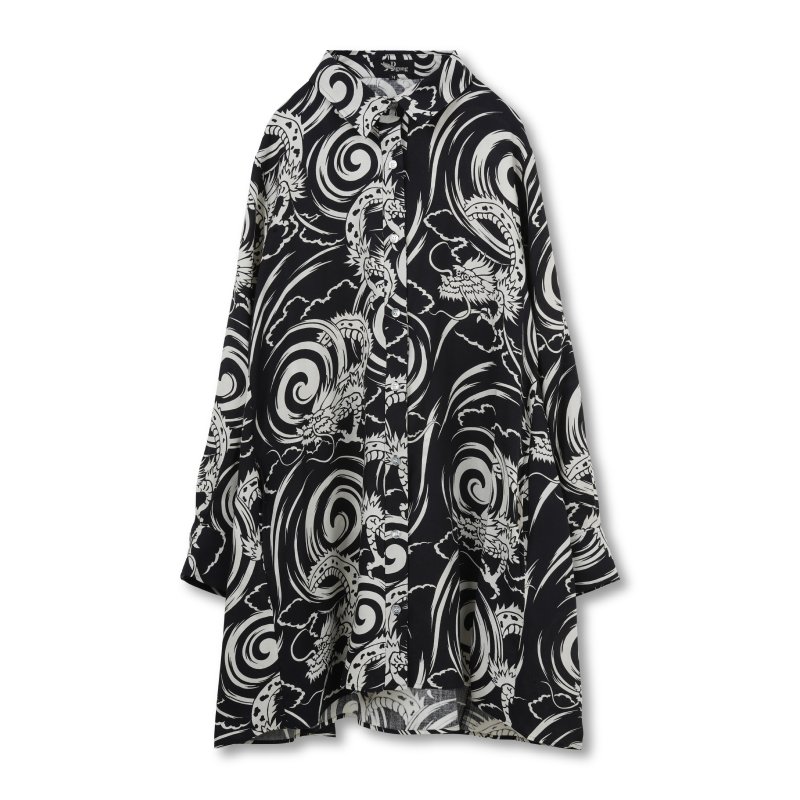
Japanese name/ 龍 (Ryu)
A deity of the sea in Japanese mythology, RYU or “Dragon God”, has the ability to transform into a human shape, and is the master of serpents. With his magic jewels he is responsible for the tides, and represents both the perils as well as the bounty of the sea.
Ryu was originally imported from Indian mythology via China and Korea. His residence is in a palace beneath the sea or in a lake of an extinct volcano. The depths of Lake Biwa, north-east of Kyoto, are often cited as the home of Ryu.
・Cellulose fiber 100%
・Made in Japan
・Dry-clean
・Model (5 feet, 3 inches)
・Currency : US Dollar (USD)
Color / Navy Care Instruction
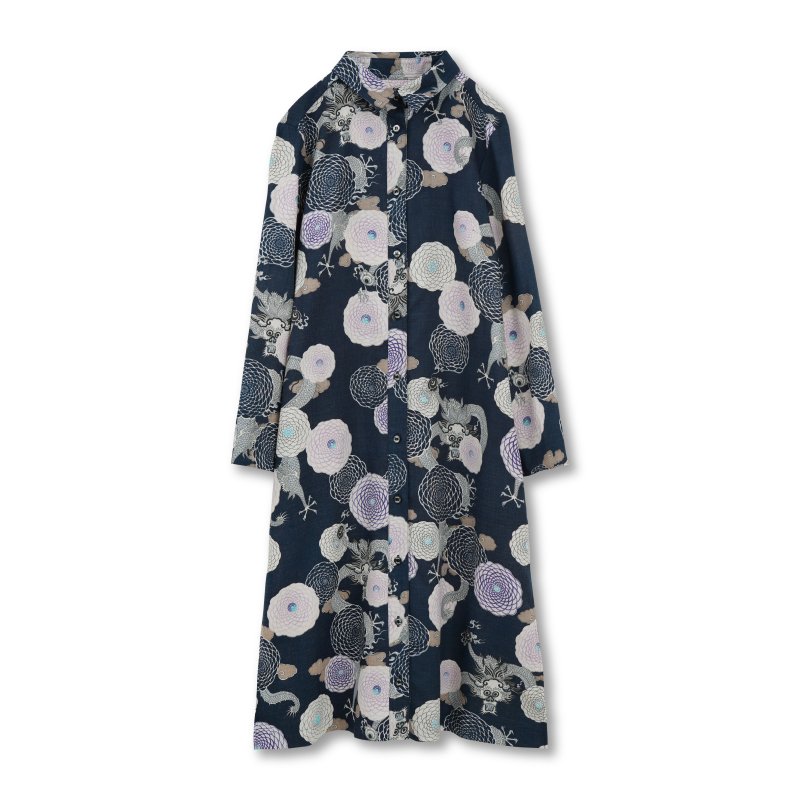
Japanese name/ 菊花と龍 (Kikka to Ryu)
-About-
“KIKKA” also known as KIKU, or the chrysanthemum was introduced to Japan from China in the Nara era (710-794).
In Japan, the chrysanthemum has become a royal symbol for the emperor and appears on the Japanese imperial seal.
In the language of flowers, the chrysanthemum carries the symbolic meaning of eternal youth, devoted love, loyalty, longevity, and joy.
In Japanese traditional culture the dragon and the chrysanthemum are firmly rooted in people’s lives through folklore and mythology.
A deity of the sea, the RYU or “Dragon” has the ability to transform into a human shape, and is the master of serpents. With his magic jewels he is responsible for the tides, and represents both the perils as well as the bounty of the sea.
His residence is in a palace beneath the sea or in a lake of an extinct volcano. The depths of Lake Biwa, north-east of Kyoto, are often cited as the “home of Ryu”.
Polyester 90% / Wool 10%
・Made in Japan
・Dry-clean
・Model (5 feet, 3 inches)
・Currency : US Dollar (USD)
Color / Purple and Pink Care Instruction
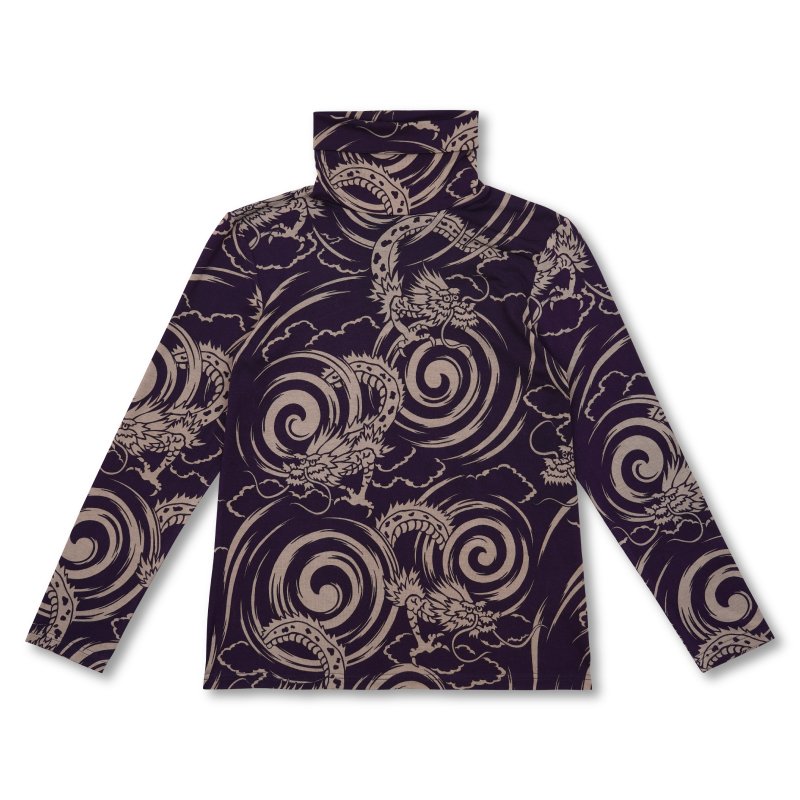
Japanese name/ <龍> RYU
-About-
A deity of the sea in Japanese mythology, RYU or “Dragon” has the ability to transform into a human shape, and is the master of serpents. With his magic jewels he is responsible for the tides, and represents both the perils as well as the bounty of the sea.
Ryu is one of the eight gods which were originally imported from Indian mythology via China and Korea. His residence is in a palace beneath the sea or in a lake of an extinct volcano. The depths of Lake Biwa, north-east of Kyoto, are often cited as the “home of Ryu”.
・Heat-retention fiber:
93% Rayon 7% Polyurethane
・Knit fabric
・Hand-wash
・Hang to dry
・Use pressing cloth to iron
・Made in Japan
・Currency : US Dollar (USD)

Color / White and Purple Size Chart
Japanese name/ 水龍 (Suiryu)
-About-
A deity of the sea in Japanese mythology, Water Dragon has the ability to transform into many fantastic shapes, and is the master of serpents. With his magic jewels he is responsible for the tides, and represents both the perils as well as the bounty of the sea.
Water Dragon is one of the eight dragon gods which were originally imported from Indian mythology via China and Korea. His residence is in a palace beneath the sea or in a lake of an extinct volcano. The depths of Lake Biwa, north-east of Kyoto, are often cited as his home.
・100% Premium Cotton
・Made in Japan
・Hand-wash
・Hang to dry
・Currency : US Dollar (USD)
Accessories
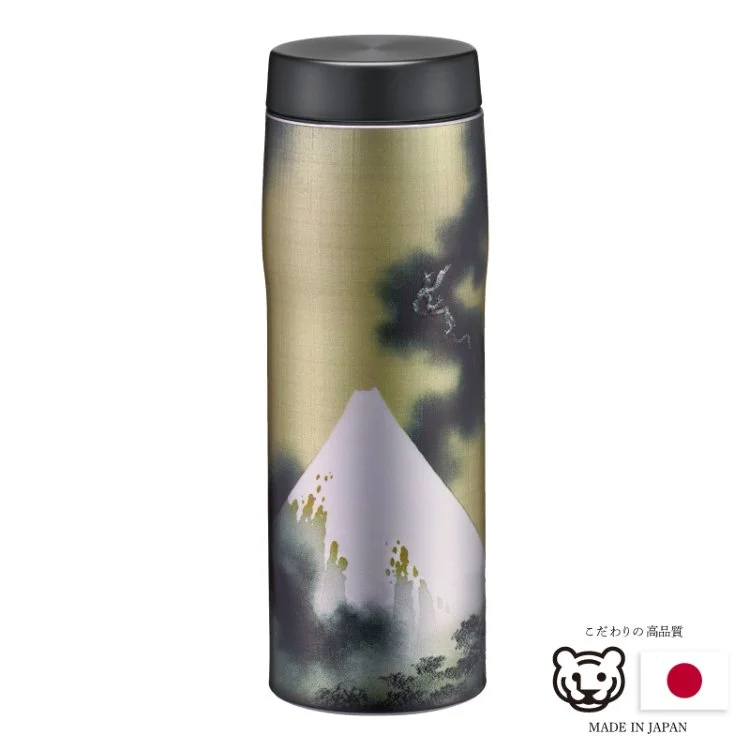
Japanese name / 富士越龍 (Fuji Koshi Ryu)
-About-
Katsushika Hokusai (1760-1849) was to spend his final years passionately making a rare collection of “free-hand” paintings, quite unlike any of his previous ukiyo-e print-works which he is most world-renowned.
Hokusai’s enduring passion to portray Mount Fuji, Japan’s sacred mountain, is a challenge he continued to pursue for his entire lifetime. The many ephocal events of his long prolific career seem to culminate in his final masterpiece, “Dragon Flying Over Mount Fuji” where we the viewer are given the rare opportunity to look deeply into the stillness and peace within the artist’s final year.
・Size:2.8 × 2.8 × 7.9 (inches)/ Mass : 0.51 lbs / Caliber : 1.9 (inches)
・Made in Japan
・Currency : US Dollar (USD)
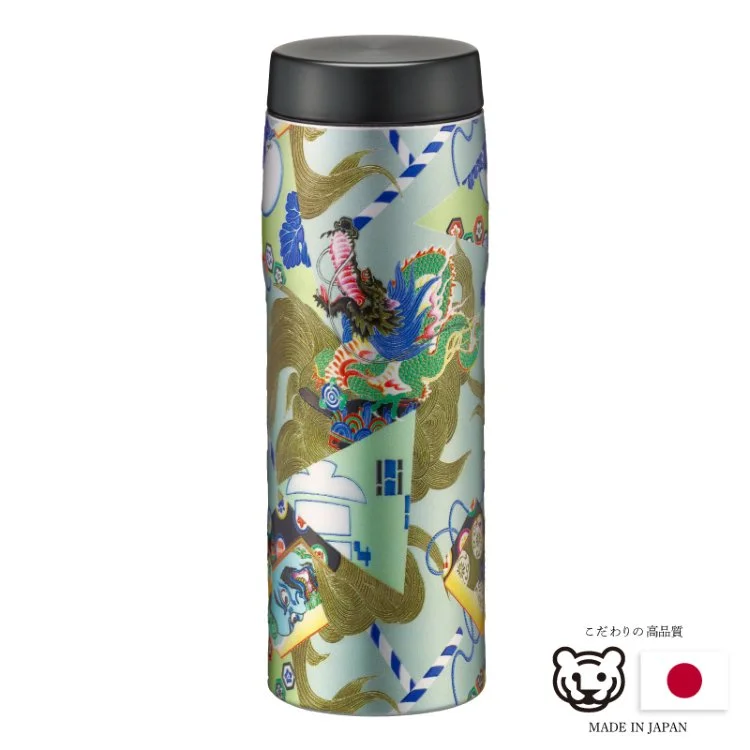
Japanese name / 龍神 (Ryujin)
-About-
A deity of the sea in Japanese mythology, RYUJIN or “Dragon God”, has the powerful capability to transform into a human shape, and is the master of serpents. With his magic jewels he is responsible for the tides, and represents both the perils as well as the bounty of thesea.
Ryujin is one of the eight dragon gods which were originally imported from Indian mythology via China and Korea. His residence is in a palace beneath the sea or in a lake of an extinct volcano. The depths of Lake Biwa, north-east of Kyoto, are often cited as the home of Ryujin.
・Size:2.8 × 2.8 × 7.9 (inches)/ Mass : 0.51 lbs / Caliber : 1.9 (inches)
・Made in Japan
・Currency : US Dollar (USD)
Color / Violet and Multi-color
Size Chart
Japanese name / 龍と麒麟 - Ryu to Kirin
-About-
This auspicious pattern, depicting a dragon and a Kirin facing one another, has long been cherished as a symbol of harmony between heaven and earth and the union of power and virtue.
The dragon is a sacred being believed to ascend to the heavens, summon clouds, and bring life-giving rain. Often associated with thunder and the sky, it has been revered as a manifestation of celestial power.
In contrast, the Kirin is known as a benevolent and gentle guardian, said to herald times of peace and wisdom. Though it bears horns, it is believed to possess such compassion that it would not even harm a single living creature.
Traditionally, the dragon represents the energy of the heavens, while the Kirin embodies the virtue of the earth. When these two stand together, they express the moment when heaven and earth are united. The vermillion bridge at the center symbolizes connection—between sky and land, humanity and nature, and differing forces brought into balance.
The scene of the dragon and Kirin facing one another captures the meeting of strength and virtue, merging in harmony and giving rise to renewal and new beginnings.
The mountains and waves in the background reflect the rhythms of nature and the flow of life, while blooming peonies symbolize prosperity, abundance, and noble grace.
Softly drifting clouds carry auspicious signs, lending depth and quiet movement to the composition.
This design reflects the refined elegance of classical court aesthetics, later echoed in ceremonial and performance garments, and is distinguished by its dignified and timeless beauty.
Within this composition, where the dragon and Kirin form a single world, there lives a quiet wish—that celestial power and earthly virtue may intertwine, bringing peace, balance, and prosperity.
・Currency : US Dollar (USD)
・100% Silk (Custom-woven Jacquard )
・Made in Japan
・Classic-fit Aloha shirt
・Coconut buttons
・Dry-clean