
Lobster
海老 - Ebi
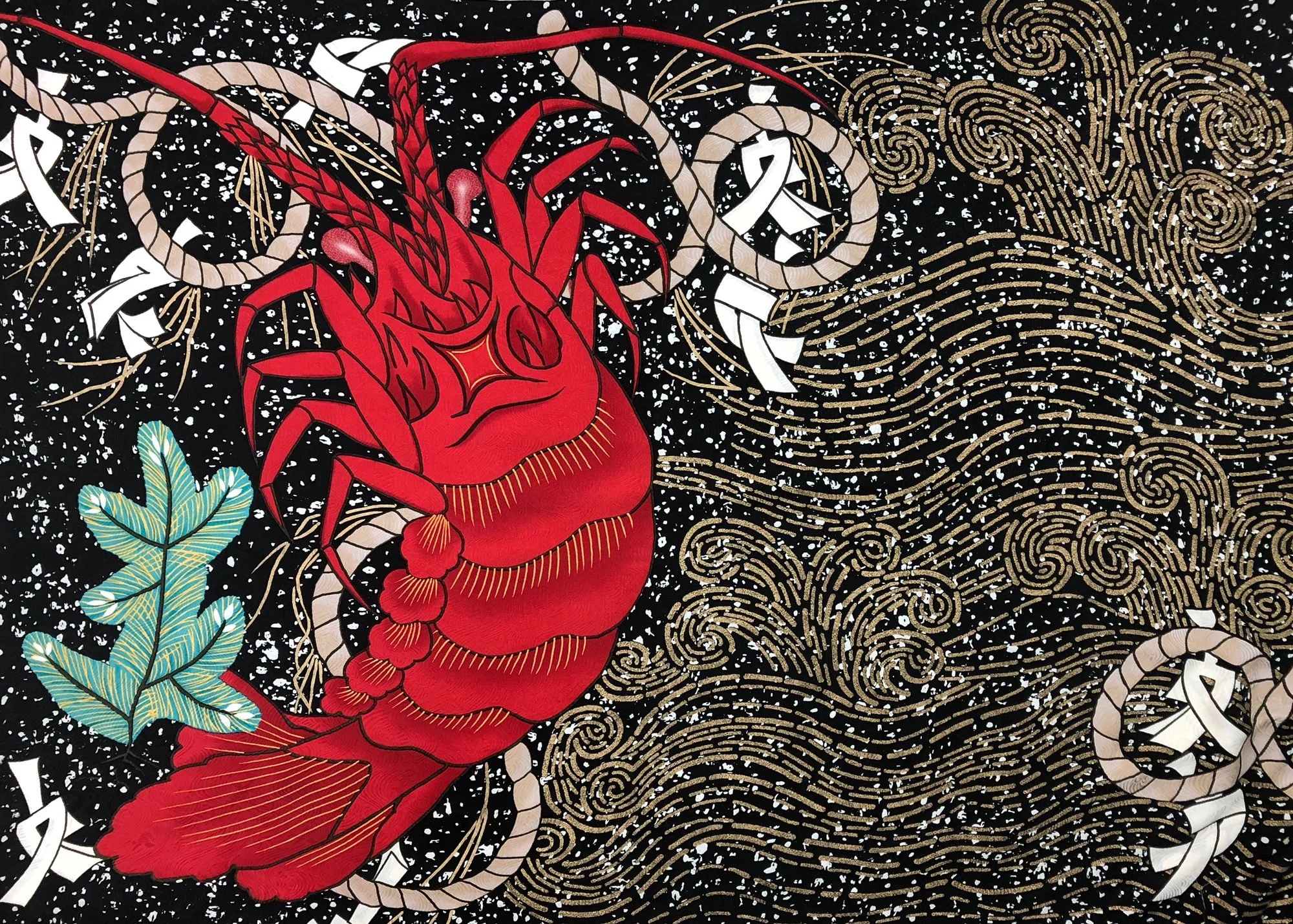
The Story of the Lobster Pattern
This striking pattern, centered on a large and dynamic shrimp, is based on an Edo-period Kabuki costume preserved in the collection of the Tokyo National Museum. The original garment, titled “Black Uchikake with Shrimp, Shimenawa, and Young Pine Motif,” has been faithfully recreated through Kyoto Yuzen dyeing with official permission. While the original design expressed the shrimp through techniques such as cutwork and embroidery, this version reinterprets it through refined dyeing methods.
The shrimp (ebi) is a classic symbol of longevity. Its curved back and long antennae resemble those of an elderly person, evoking a long and healthy life. For this reason, it has long been used in celebratory decorations. In addition, the image of a shrimp leaping energetically has led to associations with success, advancement, and vitality—qualities that even made it a motif used on samurai helmets.
Beside the shrimp appears a young pine tree, a symbol of renewal and future growth. Young pines are traditionally displayed at the beginning of the year, representing fresh beginnings and the promise of prosperity. The composition is further enriched by the presence of shimenawa, sacred ropes used to mark pure spaces and ward off impurity.
Together, these elements form a powerful visual narrative: from the freshness of youth, symbolized by the young pine, to the long life represented by the shrimp, all protected by the purifying force of the shimenawa. The design conveys a wish for a life that is both protected and prosperous from beginning to end.
The shrimp is also known as kagami-mono in the refined language once used at the imperial court, possibly linked to its use as a decoration for New Year offerings such as kagami mochi. Combined with the pine and sacred rope, the motif carries a strong sense of New Year celebration—embodying both the joy of new beginnings and protection from misfortune.