
Eternal Flower
千代見草- Chiyomigusa
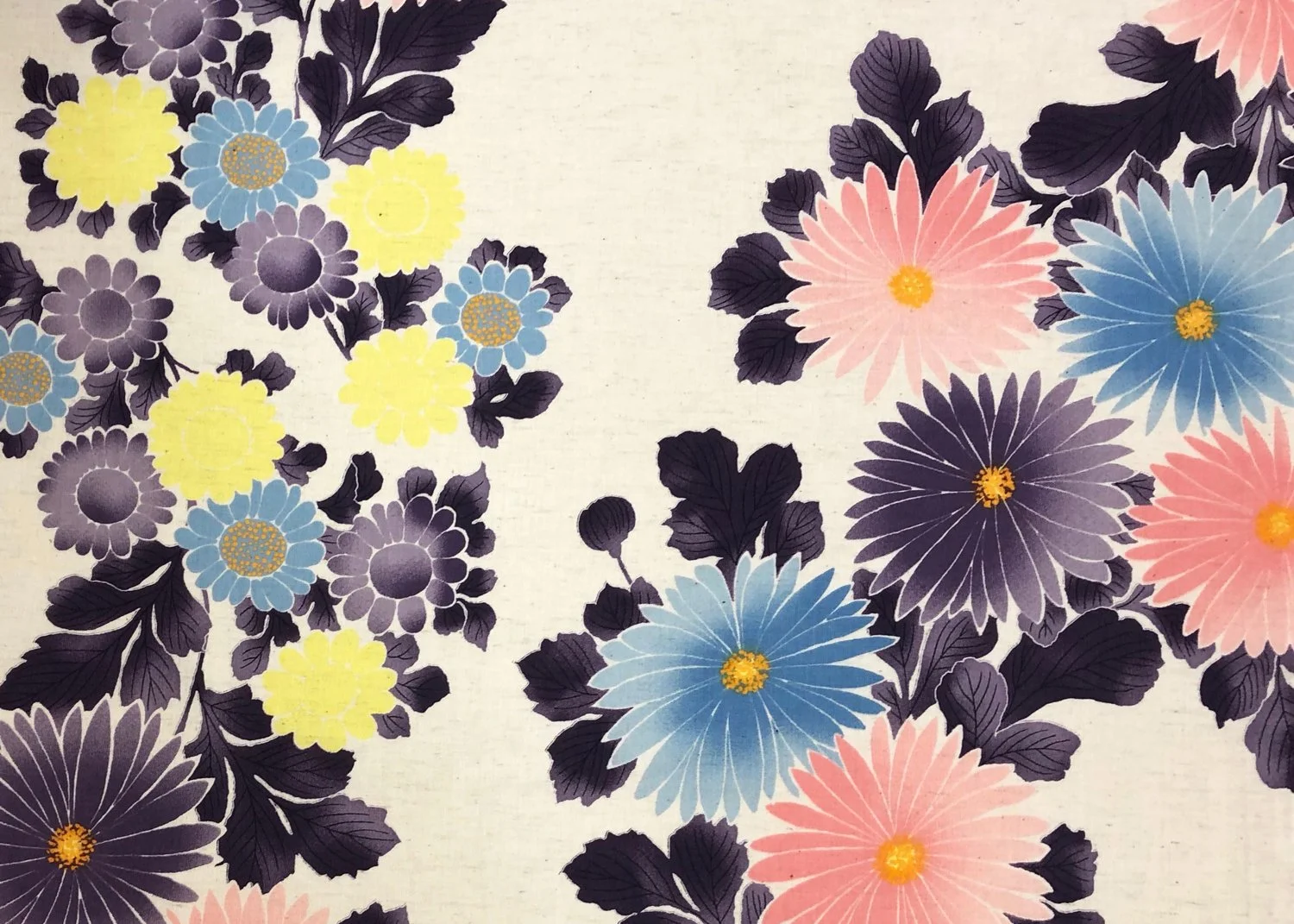
The Story of the Eternal Flower Pattern
This design is a reproduction drawn from the extensive archive of the Kameda Tomizome Factory, preserving the beauty of traditional motifs while presenting them through a contemporary lens.
“Chiyomigusa” is another name for the chrysanthemum, a flower long associated with eternal youth and longevity. The word chiyo signifies “a thousand years” or an enduring span of time, and the name is sometimes written as “Senrei-migusa” (千齢見草), further emphasizing the wish for everlasting vitality. As a representative flower of autumn, the chrysanthemum embodies dignity and refinement, standing as a symbol deeply rooted in Japanese culture. Its rounded blossoms—whether large or small—also suggest harmony, completeness, and peaceful well-being.
Accompanying the chrysanthemum is bush clover (hagi), a classic motif of autumn grasses. It is the most frequently mentioned plant in the Manyoshu and has been cherished since ancient times. Even during the Manyō period, it was common to cultivate bush clover in gardens, and poems speak of planting it as a remembrance before setting out on long journeys. Through its gentle presence, it came to symbolize memory, longing, and emotional connection—perhaps evoking thoughts of loved ones left behind.
In this design, the bush clover is rendered in a soft, watercolor-like style against a backdrop of layered chrysanthemums, blending classical motifs with a modern sensibility. The composition reflects enduring human sentiments: the wish for eternity and continuity, and the quiet act of cherishing memories shared with others. From the age of the Manyoshu to the present day, these emotions remain timeless, carried forward through pattern and design.