
Fan and Flowing Water
流水にうちわ - Asa to Kikyo
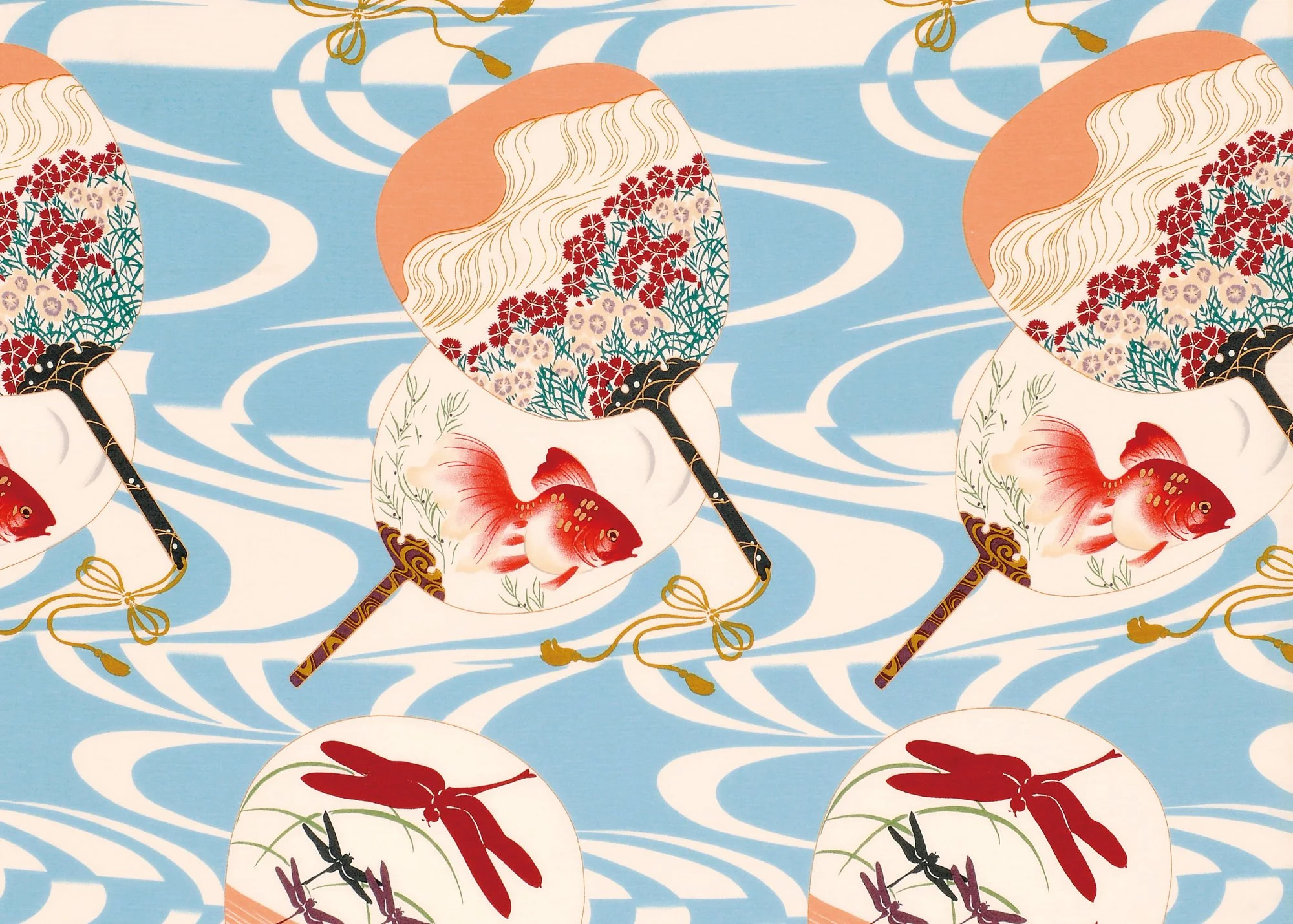
The Story of the Fan and Flowing Water Pattern
The hand fan (uchiwa) was introduced to Japan from the continent during the Nara period. In its earlier cultural context, it was associated with legendary figures and believed to possess mystical power—capable of restoring life or warding off harmful influences. It was also used as a ceremonial object symbolizing authority.
In Japan as well, the fan was initially reserved for rulers and used in court rituals. It was sometimes associated with the idea of “striking away” misfortune, and came to be valued as a protective object against negative energy.
Later, toward the end of the Heian period, folding fans were developed, and the use of hand fans gradually spread to the general public. As a decorative motif, however, the fan became popular in kimono design from the Edo period onward, especially in garments for the summer season.
The fans depicted in this design are known as Kyo Uchiwa. They are distinguished by their unique construction, in which the handle is crafted separately and inserted into the fan surface.
Their origins are said to lie in elegant court fans once decorated by painters of classical schools such as Tosa School and Kano School. Over time, increasingly ornate versions emerged, featuring lacquered handles and decorative finishes, reflecting a taste for refinement and luxury.
The fans in this pattern are also richly detailed, with carefully designed handles that add a sense of artistry and sophistication. During the Genroku era, when a culture of opulence flourished, fan decoration reached new heights, leading to the refined forms seen today.
Fan motifs often serve as frames for a variety of seasonal imagery, and each fan in this design contains its own distinct scene.
Goldfish evoke the gentle charm of summer waters. Dragonflies, which appear with the warm season and fade as autumn deepens, reflect the passage of time. Delicate flowers such as pinks (nadeshiko) bloom for long periods from spring into summer, symbolizing enduring beauty. Together, these motifs create a vivid sense of the summer season.
Beneath the fans flows a stylized water pattern known as Kansei water pattern, characterized by graceful currents and subtle swirling forms. Originally associated with classical performing arts traditions, this pattern carries a sense of refinement and formality.
The fans appear as if gently floating upon this flowing water, enhancing the feeling of coolness and movement.