
Floral Arabesque
花唐草 - Hana Sarasa
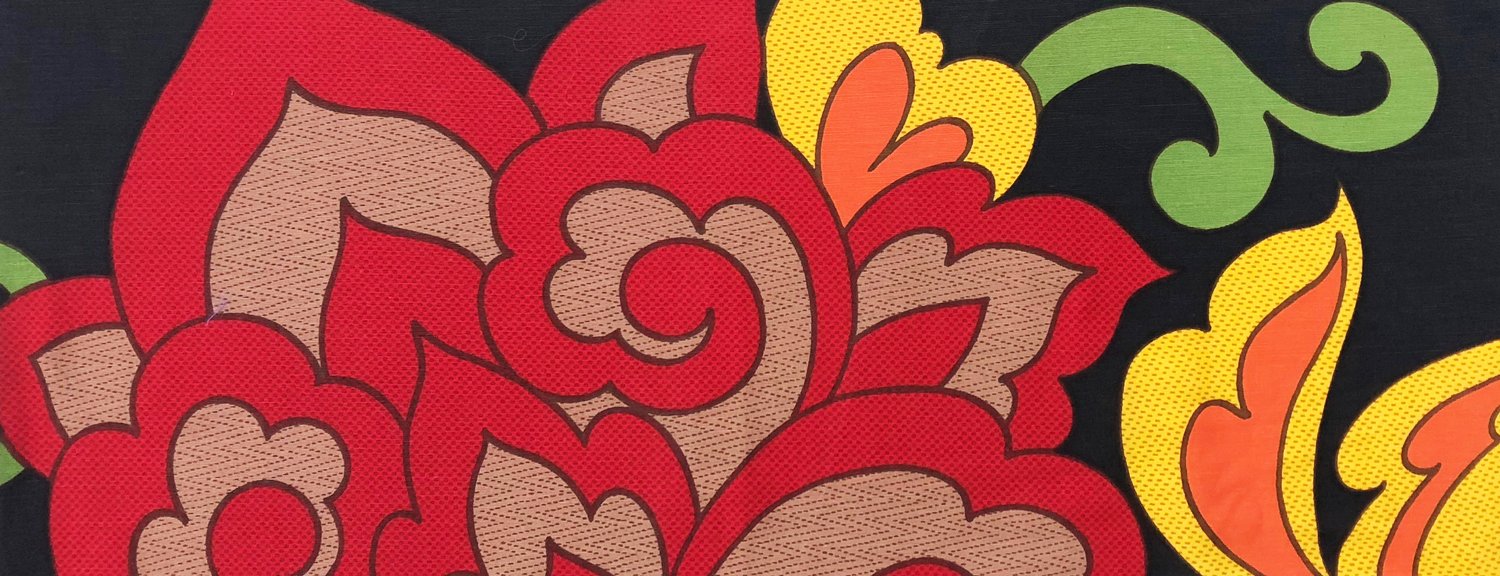
The Story of the Floral Arabesque Pattern
Beginning with the lively call of “Yo-iya-sa,” the Miyako Odori is a seasonal tradition that heralds the arrival of spring in Kyoto.
This time, a special collaboration between Miyako Odori and Pagong has been realized. The Miyako Odori is an annual performance in which the geiko and maiko of Gion Kōbu present dances they have carefully honed through their daily training. Among its highlights is a segment known as the sō-odori, where all performers appear together in matching kimono and obi. The hana-karakusa (floral arabesque) seen here is a pattern taken from the obi used in this performance.
Karakusa refers to a stylized pattern of vine-like plants that intertwine in flowing, curvilinear forms. Although no actual plant called “karakusa” exists, the motif has been developed as a decorative design. Hana-karakusa adds imaginary flowers to this vine pattern, creating a more ornate variation.
This motif was introduced to Japan via the Asian continent during the Nara period and is believed to have evolved from continuous ornamental patterns originating in ancient Mediterranean cultures. In Japan, it further developed to include flowers such as plum and chrysanthemum—plants that do not naturally have vines—blending imagination with tradition.
Vines are known for their vitality and their ability to grow and extend endlessly. For this reason, karakusa patterns symbolize longevity, prosperity, and the flourishing of future generations, making them an auspicious and enduring design.