
Floral Cascade
滝と扇面 - Taki to Senmen
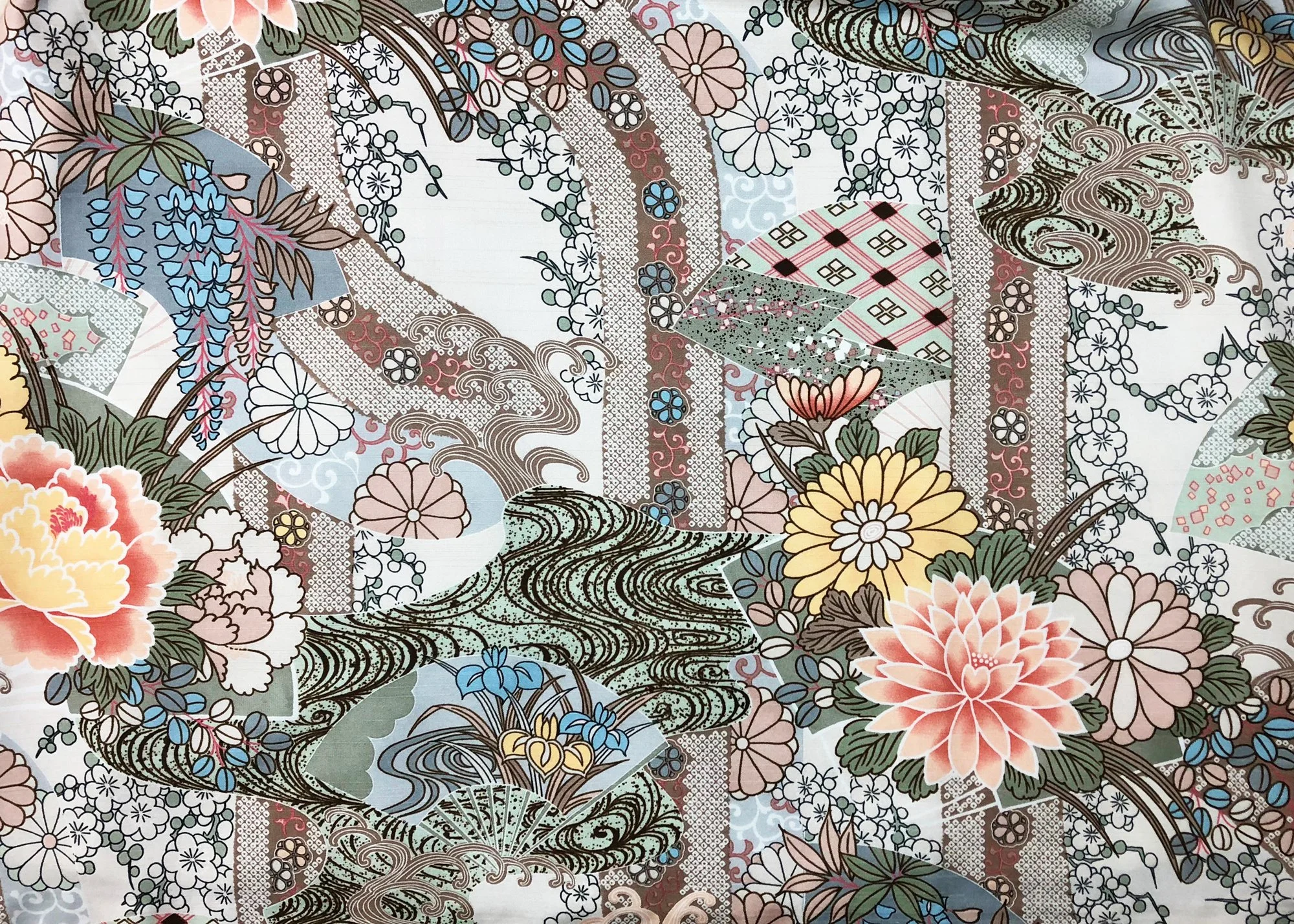
The Story of the Floral Cascade Pattern
This vibrant pattern, depicting an abundance of flowers arranged upon a fan, reflects a kimono style worn by young women around 1965. While relatively modern, the design draws deeply from classical inspiration and is thought to reference kosode patterns of the Edo period.
A striking vertical band of black represents a waterfall. The cascading flow is expressed through dynamic rising waves, while below, gentle streams of flowing water unfold. Upon a fan drifting within this scene, peonies, chrysanthemums, wisteria, and irises bloom in graceful harmony.
Water, in Japanese aesthetics, is often a metaphor for life itself—unceasing, ever-flowing, and eternal. Calm streams and surging waves together reflect the rhythms of life, its quiet moments and its turbulence. In this design, the fan adorned with blossoms floats softly upon the current, evoking a celebration of life’s richness and beauty.
Each flower carries its own meaning.
Peonies, known as the “flowers of wealth,” symbolize prosperity and good fortune.
Chrysanthemums have long been cherished as emblems of longevity and eternal youth.
Wisteria, with its gently swaying clusters and soft violet hues, expresses elegance and grace.
Irises, associated with the word shōbu (meaning both “iris” and “victory”), symbolize strength and enduring success.
Within the waterfall appear plum arabesque motifs, while chrysanthemum arabesques trace along its flow. These arabesque patterns—introduced to Japan through Buddhist art—do not depict real plants, but rather endlessly intertwining vines. Their continuous growth symbolizes vitality, longevity, and the flourishing of future generations. Over time, such motifs evolved into uniquely Japanese forms, blending with native flowers like plum and chrysanthemum.
Plum blossoms are also featured in the design. Before cherry blossoms came to define the Japanese seasonal aesthetic, plums were the most beloved flower, celebrated in countless poems within the Manyoshu.
Altogether, this design evokes the refined world of Heian period aristocracy—an elegant scene where courtiers composed waka poetry upon fans, adorned them with auspicious imagery, and set them adrift upon gently flowing water as a form of poetic leisure.