
Flowers and Gagaku
花と雅楽 - Hana to Gagaku
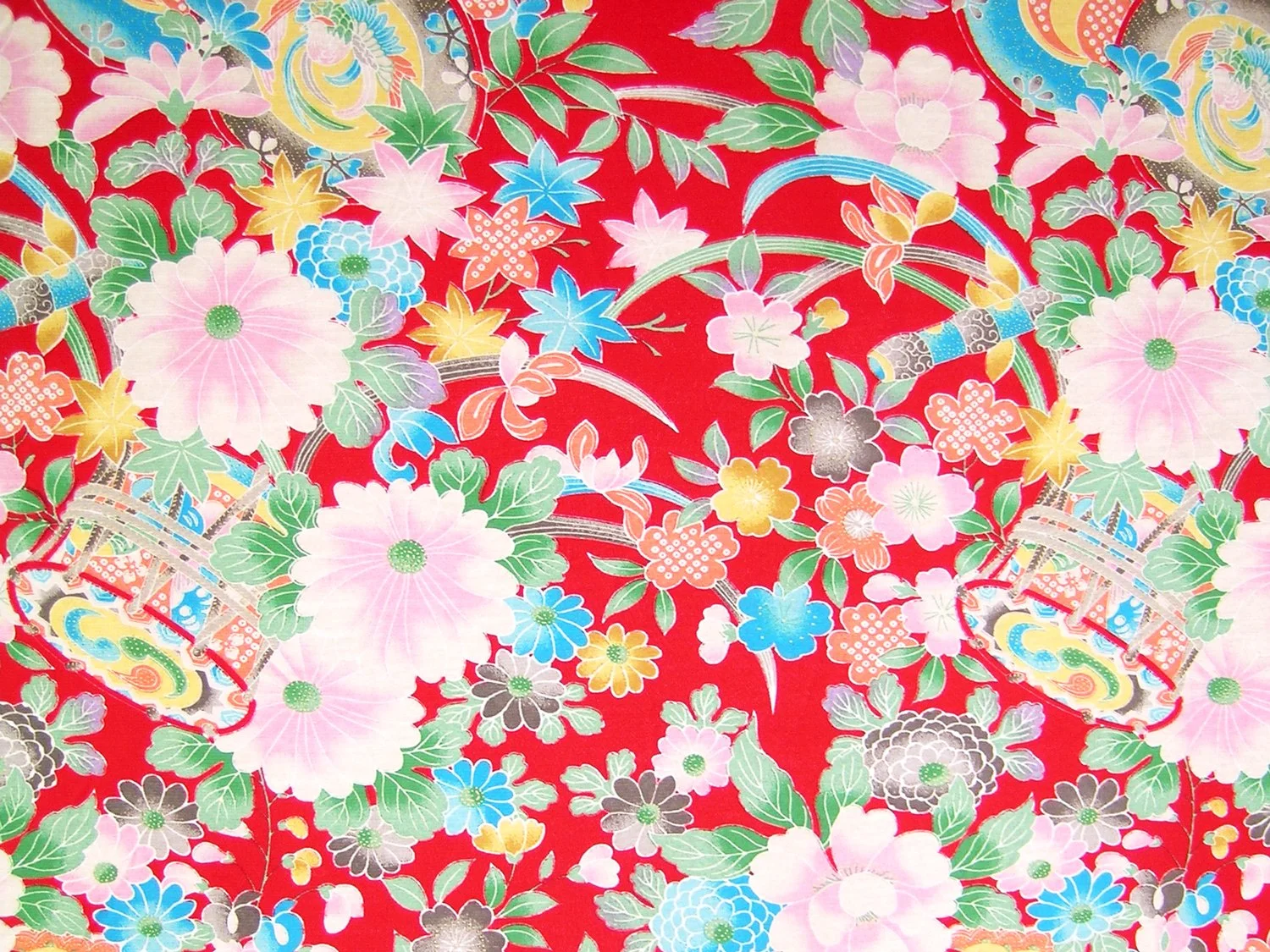
The Story of the Hana to Gagaku Pattern
This type of pattern is often seen on formal kimono for young girls. Created using a combination of stencil dyeing and hand-applied techniques, it is thought to date from the Taishō to early Shōwa period. Seasonal flowers bloom in abundance, alongside motifs such as torikabuto (ceremonial headgear worn by performers of court music) and musical instruments like drums and flutes, creating an atmosphere of refined elegance.
Inspired by gagaku—the ancient court music of Japan—this design evokes the splendor of the imperial court. During this period, simply referencing courtly aesthetics was enough to convey auspiciousness, imbuing the pattern with a sense of grace and celebration.
In the early Shōwa era, designs of this kind became so popular that pattern books were published under the name goten-moyō (“palace motifs”). These often featured elegant compositions of decorative elements such as balls (mari), ornamental charms (kusudama), and folding fans (hiōgi), connected by flowing cords, and were widely used in children’s kimono.
Originally, such designs were known as ōuchi-moyō, referring to patterns inspired by the imperial palace (daidairi). They depict scenes and elements reminiscent of court life, expressing refinement, prosperity, and harmonious beauty—making them auspicious motifs associated with elegance and good fortune.