
Flower Chintz
花更紗 - Hana Sarasa
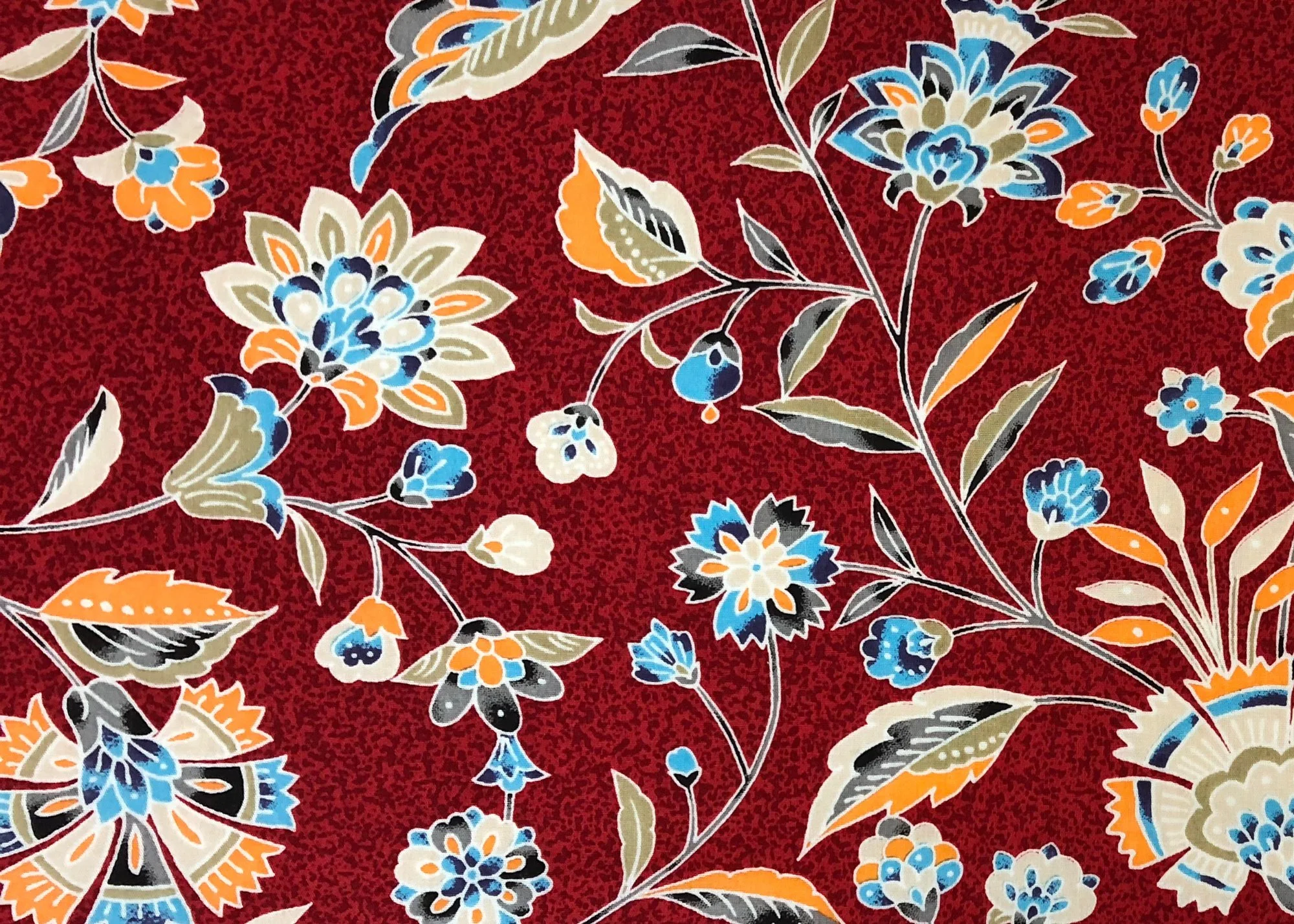
The Story of the Flower Chintz Pattern
Sarasa patterns, with their exotic atmosphere, were introduced to Japan from India via European trading ships between the Muromachi and Edo periods. These vividly colored cotton textiles, adorned with expressive depictions of unfamiliar flowers and animals, must have felt like encounters with an unknown world to people of the time. As rare and luxurious imports from distant lands, they were highly prized.
Due to their rarity, sarasa textiles—like other treasured fabrics—became objects of admiration and collection among feudal lords, tea masters, and wealthy townspeople.
From the mid-Edo period onward, domestically produced versions inspired by these imports, known as Japanese sarasa, began to be made throughout the country. Notable examples include Nagasaki sarasa, Nabeshima sarasa, Amakusa sarasa, Sakai sarasa, Kyoto sarasa, and Edo sarasa. What had once been a luxury enjoyed only by the elite gradually became accessible to a wider public.
This particular design is a revival of a kimono fabric pattern from the 1960s, preserved in the Kameda Tomisen Factory collection. It features gracefully flowing, exotic floral motifs.
Plant motifs have long been regarded as symbols of the fundamental flow of life. Their imagery—growing vigorously and extending endlessly—has been associated with wishes for longevity and vitality, making them auspicious designs that celebrate the continuity of life.