
Fukura Sparrow
福良雀 - Fukura Suzume
The Story of the Fukura Sparrow Pattern
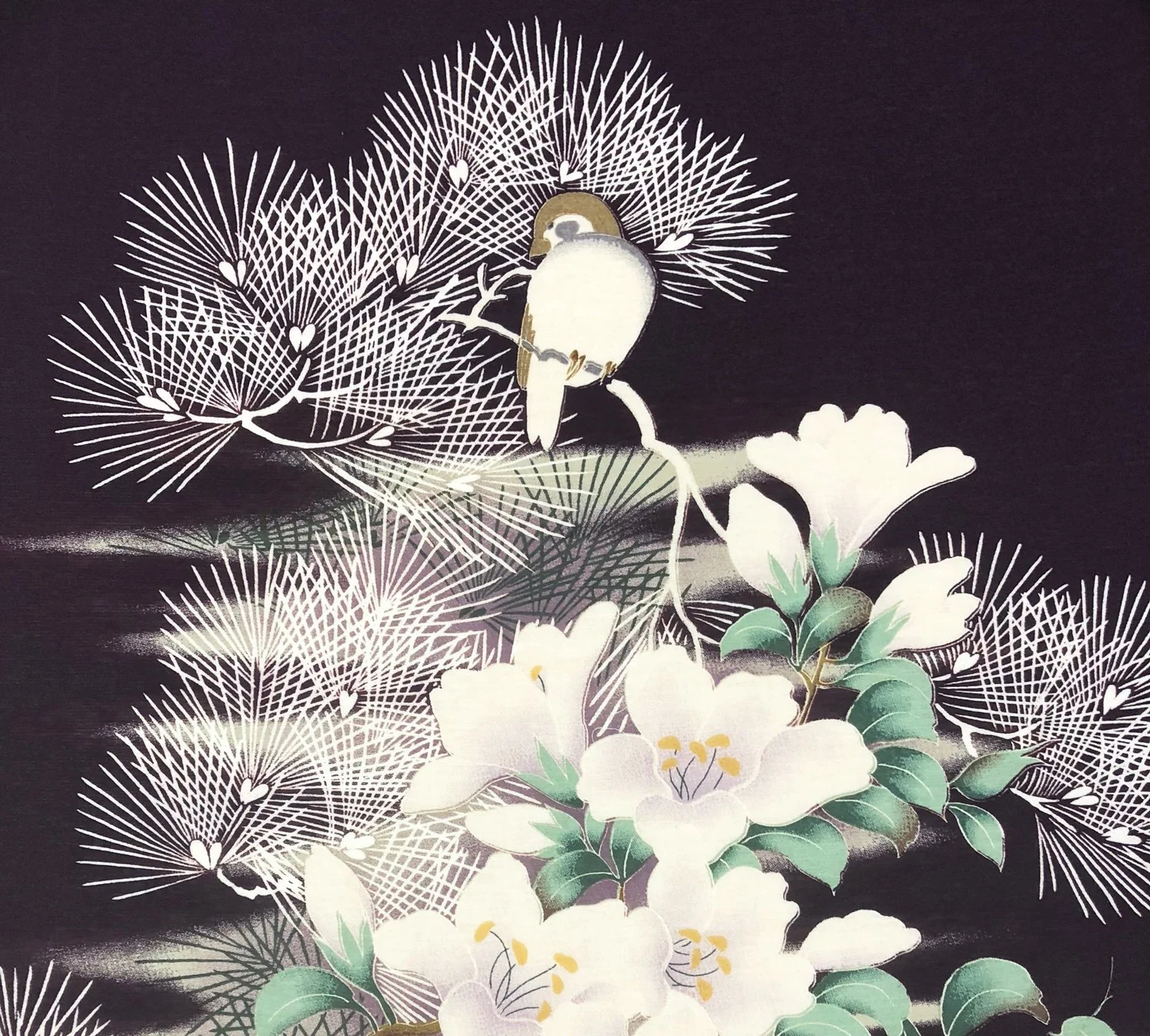
This pattern has a strong pictorial quality, evoking a vivid scene from nature.
Sparrows have long been familiar to people in Japan, commonly seen in everyday surroundings. Their presence appears in classical literature such as the Tongue-Cut Sparrow tale found in the Uji Shūi Monogatari, reflecting how closely they have been connected to daily life since ancient times. Though they can be seen year-round, sparrows are often paired with seasonal motifs in design, such as “sparrows on rice stalks.” Among these, “sparrows and bamboo” is especially well known and even appears in the family crest of the Date clan.
A plump sparrow, or one puffed up against the cold, is called fukura-suzume (“plump sparrow”). The word fukura also echoes the idea of “fullness” and “good fortune,” giving the motif an auspicious meaning.
The sparrow in this design perches on a pine tree—one of the most symbolic auspicious motifs in Japan. As an evergreen (tokiwagi), the pine retains its green needles throughout winter, enduring wind and snow without losing its vitality. For this reason, it has long been associated with longevity and steadfast strength.
At the center, white blossoms quietly announce the arrival of spring. A closer look reveals young bracken shoots (warabi), suggesting an early spring landscape. Bracken appears in the Man'yōshū and has been appreciated as a motif for its distinctive form. It is often depicted alongside ferns, as seen here. Ferns remain lush and green throughout the year, symbolizing growth, continuity, and long life—making them another auspicious element within the design.
The artist’s intention is clear: to freely combine motifs that evoke the feeling of early spring. The scene captures a moment when winter’s chill still lingers in the air, yet the soft chirping of sparrows signals the changing season. It feels like a quiet mountain village at dawn—crisp, serene, and full of life.
With a “lucky sparrow” resting on a pine tree—both symbols of good fortune—this pattern is rich in auspicious meaning. Wearing it may inspire you to notice small moments of happiness and fortune in everyday life.