
Gakunami Wave
額波 - Gakunami
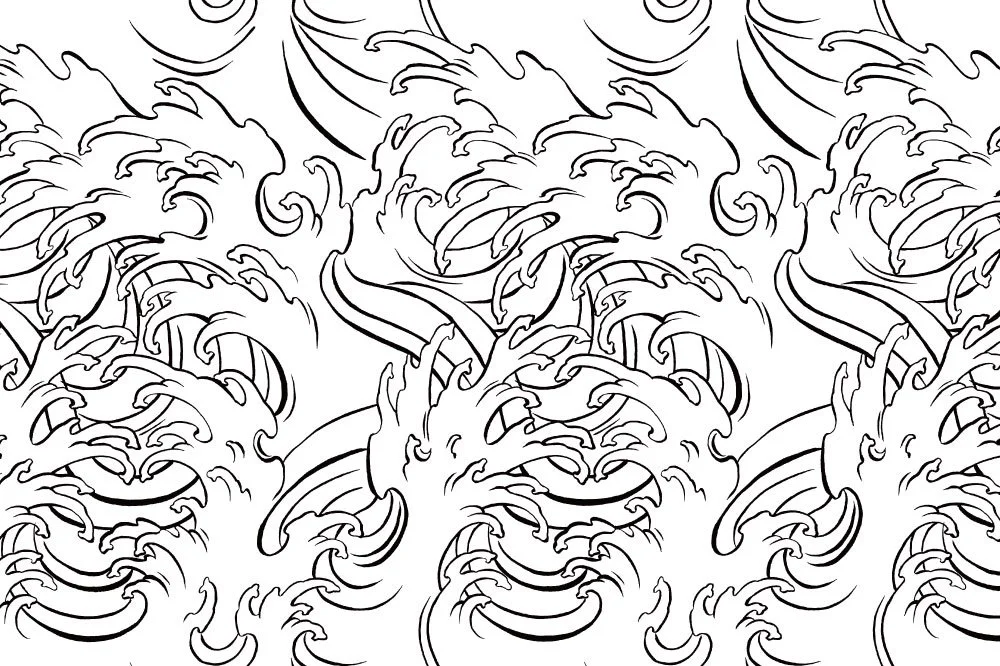
The Story of the Gakunami Wave Pattern
The History of Tattooing in Japan
What is now commonly referred to as tattoos or body art was traditionally known in Japan as horimono—literally “carved designs.” Among these, the distinctive traditional style is called wabori, meaning “Japanese-style tattooing.”
The origins of tattooing in Japan are said to date back as far as the prehistoric era. Some theories suggest that forms of body marking existed even in ancient times.
Written records from the Yayoi period, such as the Records of Wei, describe how people decorated their faces and bodies with markings. This suggests that tattooing was already part of everyday life and cultural expression, deeply rooted in early Japanese society.
During the Edo period, tattooing developed into a form of fashion and self-expression. It became especially popular among men whose work involved physical labor and frequent exposure of the skin—such as firefighters, couriers, and carpenters.
For these individuals, tattoos were a way to express courage, pride, and personal identity. Elaborate and vividly detailed designs became a symbol of strength and spirit.
Some believe that tattoos also served a practical purpose: while minimal clothing allowed for greater mobility, body art provided a sense of dignity and visual presence when the body was exposed.
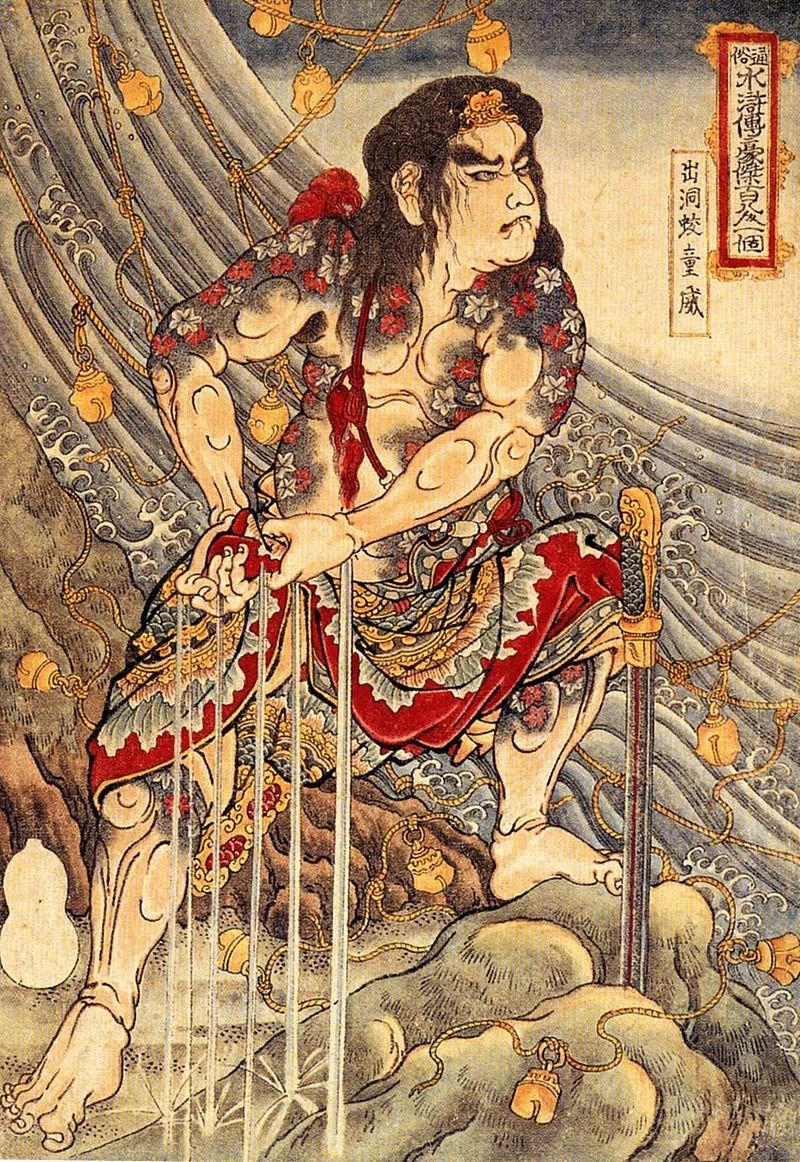
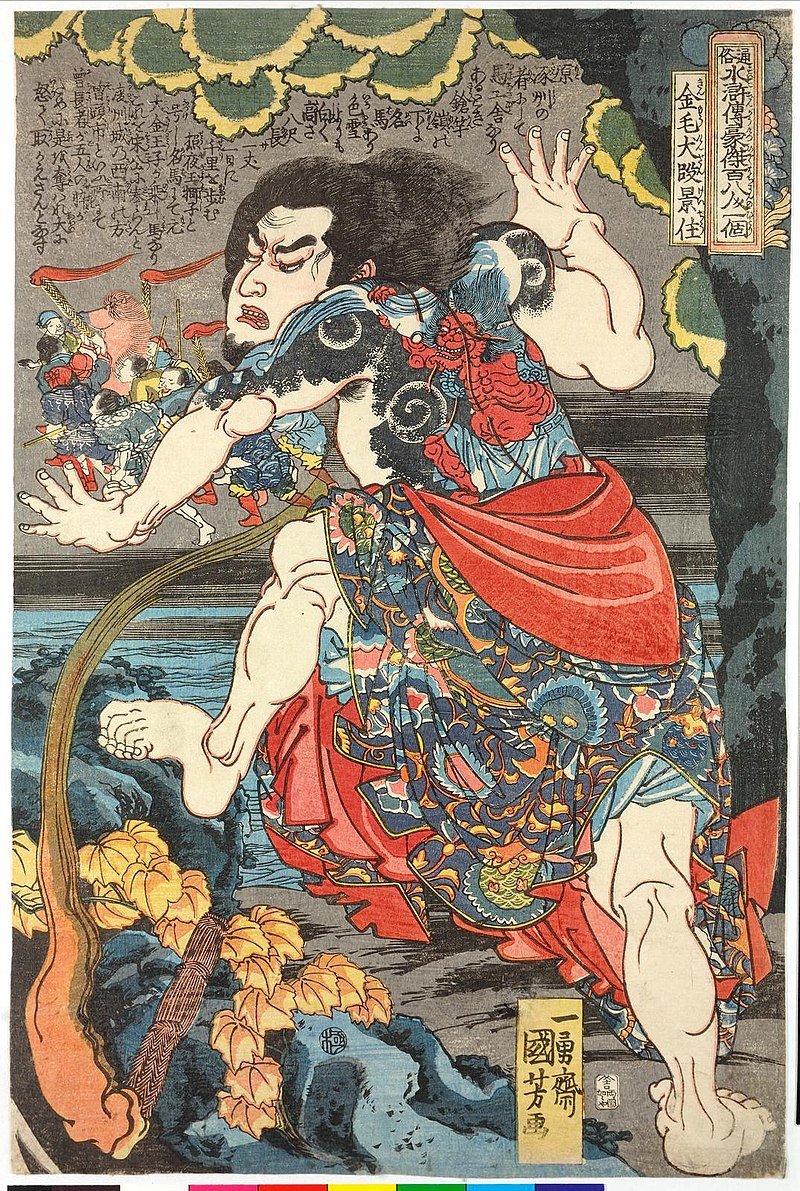
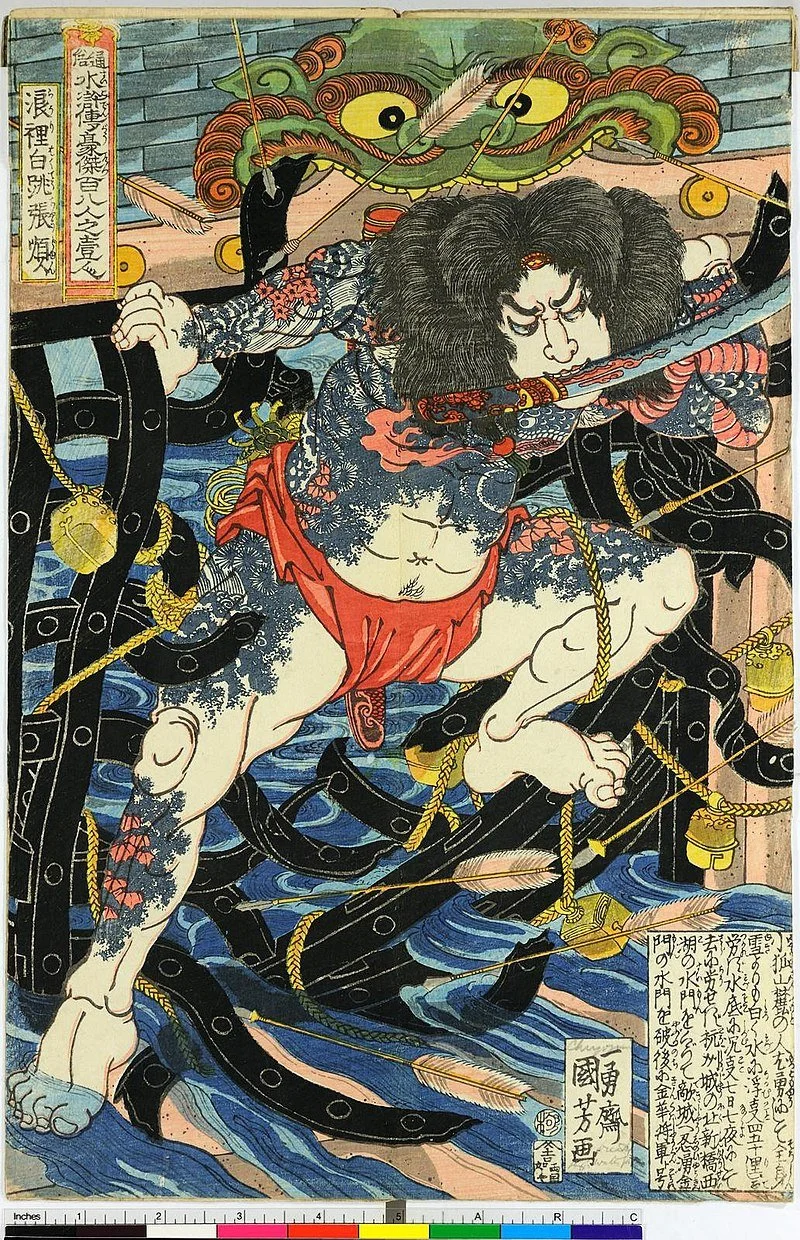
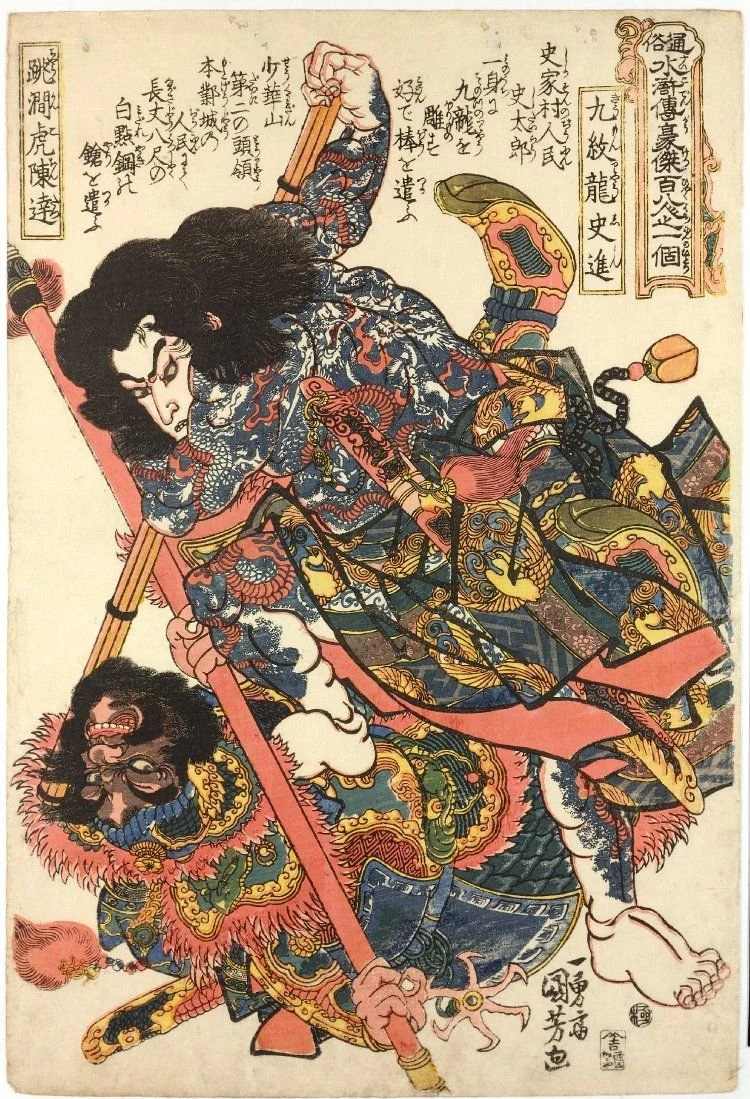
Another major influence on the popularity of tattooing was the Chinese classic Water Margin. Its heroic characters, often depicted with dramatic body tattoos, captured the imagination of people in Japan and inspired similar styles in tattoo art.
Over time, wabori evolved into a highly refined art form—combining storytelling, symbolism, and craftsmanship. Even today, it remains a powerful cultural expression, carrying with it layers of history, identity, and aesthetic tradition.
Water Margin and the Rise of Tattoo Culture
Water Margin is a long-form novel written during China’s Ming dynasty, and is counted among the Four Great Masterpieces alongside Romance of the Three Kingdoms, Journey to the West, and Jin Ping Mei.
In Japan, the story spread widely during the mid-Edo period through adaptations such as Tsūzoku Chūgi Suikoden, translated by Okajima Kanzan. Over time, illustrated editions made the work even more accessible, expanding its readership across social classes.
By the late Edo period, renowned ukiyo-e artists such as Utagawa Kuniyoshi and Katsushika Hokusai created powerful visual interpretations of the story.
Kuniyoshi’s famous woodblock print series One of the 108 Heroes of the Popular Water Margin depicted heroic figures adorned with bold, full-body tattoos. These vivid, dynamic images captured the imagination of young men of the time, turning tattooed heroes into symbols of strength, rebellion, and style.
This cultural phenomenon sparked a widespread fascination with tattooing, contributing significantly to the rise of tattoo culture as an expression of iki—a refined sense of boldness and aesthetic pride.
With the arrival of the Meiji period, tattooing came to be viewed negatively and was officially banned. Despite this, the tradition did not disappear.
Instead, it continued quietly among those who carried forward the spirit of Edo craftsmanship and identity. Even through the hardships of the modern era, including wartime Japan, the culture endured.
Today, traditional Japanese tattooing—wabori—has re-emerged as a respected art form, embraced by a new generation while still honoring its deep historical roots.
Gakubori — Framing the Story
A defining technique in Japanese tattoo art is gakubori, or “framing.” This method enhances the central motif by surrounding it with a carefully designed background.
Elements such as rocks, flowing water, waves, clouds, lightning, or swirling forms are arranged to complement the main subject. Through subtle gradients and bold contrasts, the composition creates a sense of depth and unity—much like a painting set within an ornate frame.
A Fusion of Tattoo Art and Textile Design
The newly introduced pattern, “Framed Waves,” is a collaborative creation with the Kyoto-based tattoo studio Gion Daruma.
Inspired by the powerful wave motifs unique to Japanese tattooing, the design translates this bold aesthetic into the refined medium of Yuzen textile art. The result is a striking fusion of tradition and expression—where the energy of tattoo culture meets the elegance of Kyoto craftsmanship.