
Gosho Ningyo
御所人形
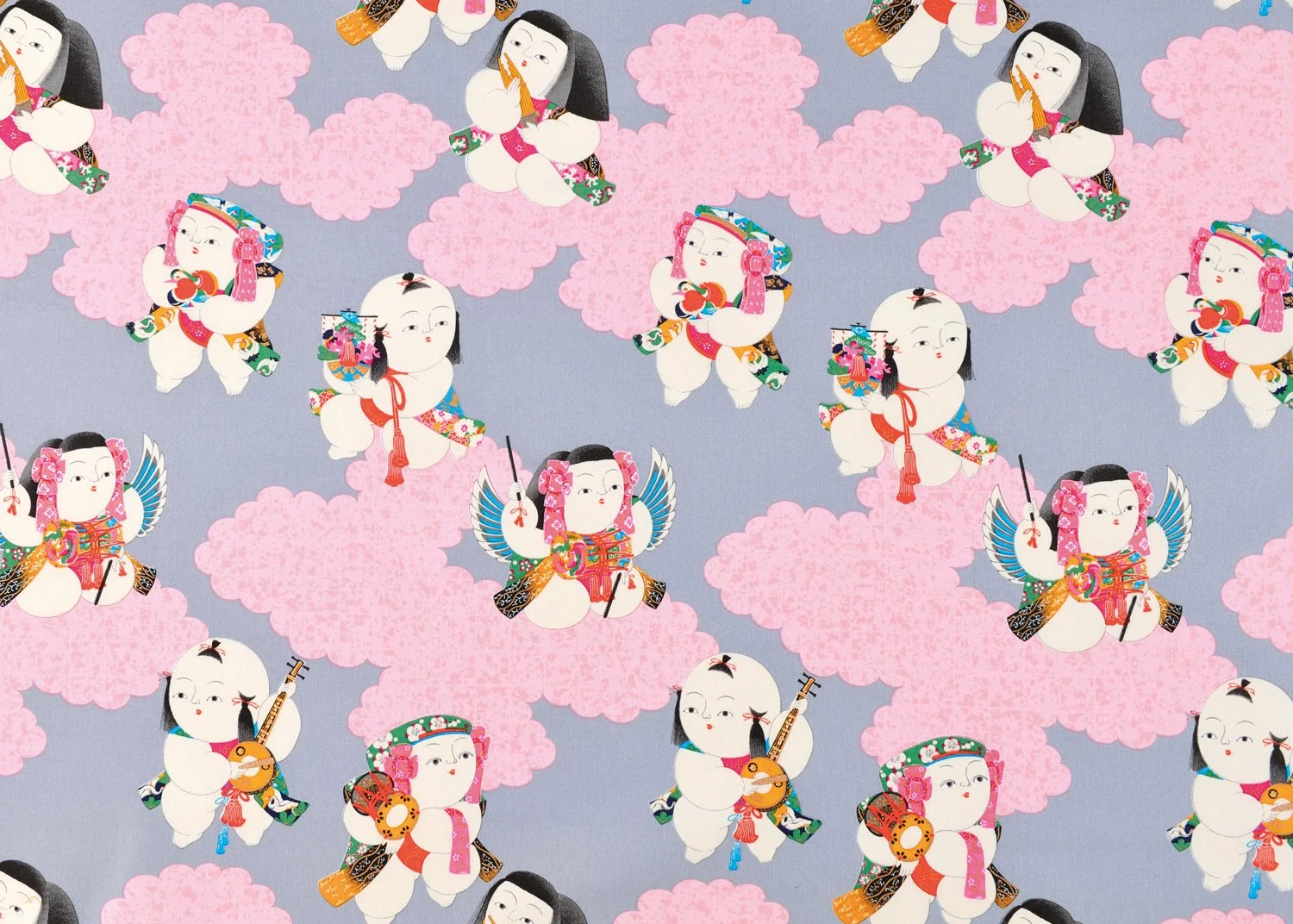
The Story of the Gosho Ningyo Pattern
This pattern was used in the early Shōwa period for children’s kimonos and as lining for women’s haori jackets. It features charming court dolls engaged in gagaku—the refined music of the imperial court. Their playful and endearing expressions bring a sense of warmth and delight, reflecting the exceptional skill and sensitivity of designers of that era.
Gosho dolls are traditional figures that originated in Kyoto during the Edo period. Known for their distinctive proportions—large heads, rounded forms, and smooth white skin—they embody an idealized image of childhood. Their softly rounded shapes symbolize abundance and auspiciousness.
These dolls are crafted from wood and finished through a meticulous process of repeatedly applying and polishing white pigment, resulting in their signature luminous surface. This technique requires a high level of craftsmanship, and even today, a small number of artisans in Kyoto continue to preserve this tradition, making authentic Gosho dolls increasingly rare and highly valued.
They are often dressed in kimekomi-style garments, where fabric is carefully tucked into the form, or adorned with separate kimono and decorative bibs. Historically, Gosho dolls were used in seasonal court celebrations and were also presented as prestigious gifts from the imperial court and court nobles to feudal lords.