
Gosho guruma
御所車
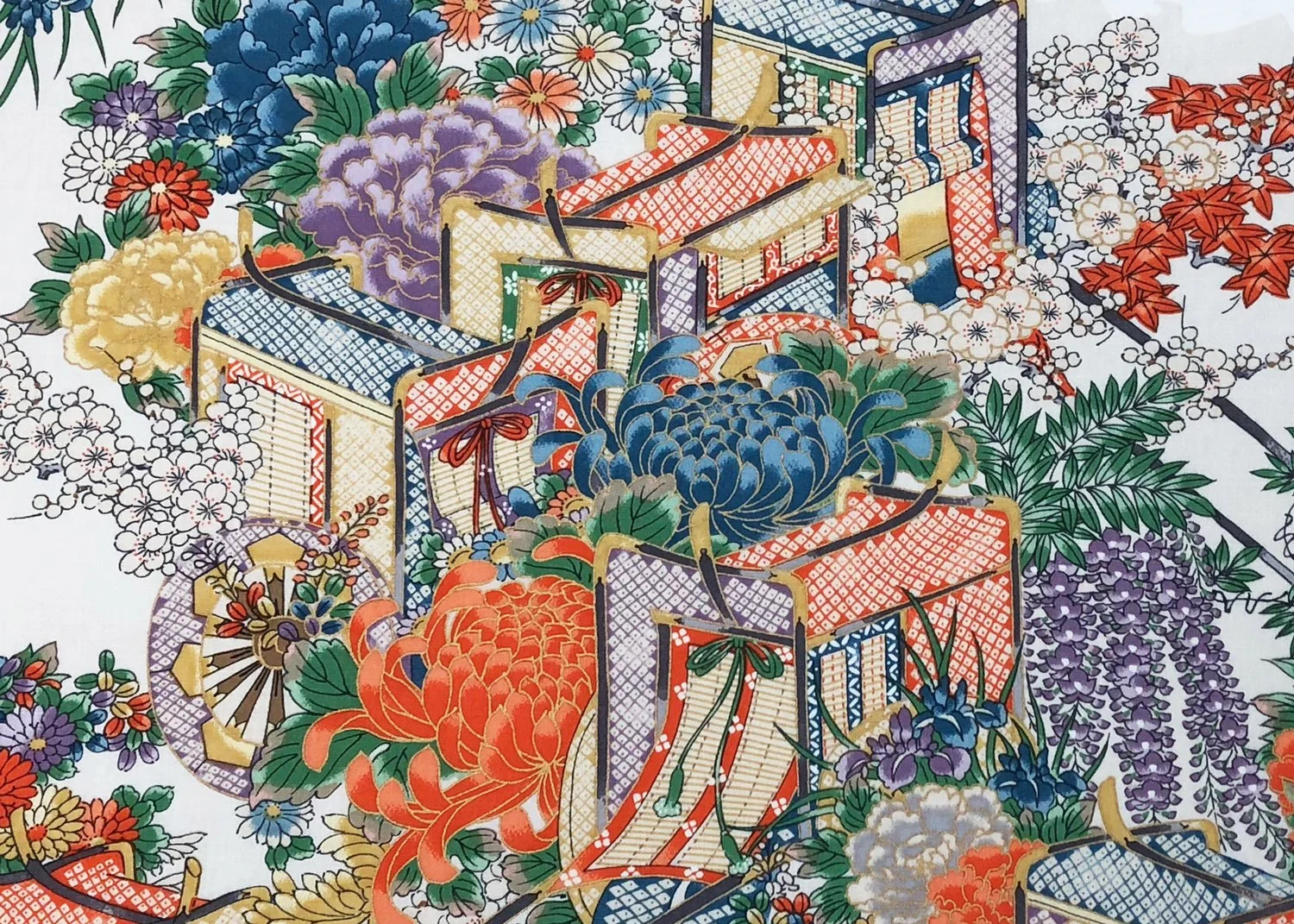
The Story of the Gosho guruma Pattern
The ox-drawn carriages used by aristocrats in court ceremonies from the Heian to Kamakura periods are known as Gosho-guruma. Their graceful form has become one of the most iconic motifs in courtly design. This pattern features the Gosho-guruma alongside seasonal flowers and plants, creating an atmosphere of refined elegance and quiet luxury.
Japan is blessed with a rich natural landscape that changes beautifully with the seasons. Flowers and trees display vibrant colors throughout the year, and in ancient times, it is said that people sought protection by wearing the blessings of nature—transferring the essence of flowers and greenery onto their garments. From this belief, the art of plant-based dyeing developed. In Kyoto, where the aristocracy flourished, the abundance of pure water allowed for the creation of exceptionally beautiful dyed silk textiles.
During the Heian period, a deep appreciation for balance and harmony shaped both aesthetics and daily life. This pattern reflects that sensibility through its use of traditional color groupings. Colors were understood in relation to natural elements, seasons, and directions, forming a harmonious system that guided design and symbolism. The five principal colors—blue, red, yellow, white, and black—were complemented by softer intermediate tones such as purple, crimson, indigo, green, and brown, creating depth and refinement in visual expression.
This imperial carriage design incorporates these traditional colors, centering on the rich intermediate tones while accenting them with select primary hues. The combination expresses a sense of balance, seasonal harmony, and continuity. The elegant depiction of the Gosho-guruma adorned with seasonal flowers, together with this complete color composition, imbues the design with an especially auspicious meaning—symbolizing harmony, protection, and the peaceful flow of time.