
Gotenmari
御殿鞠
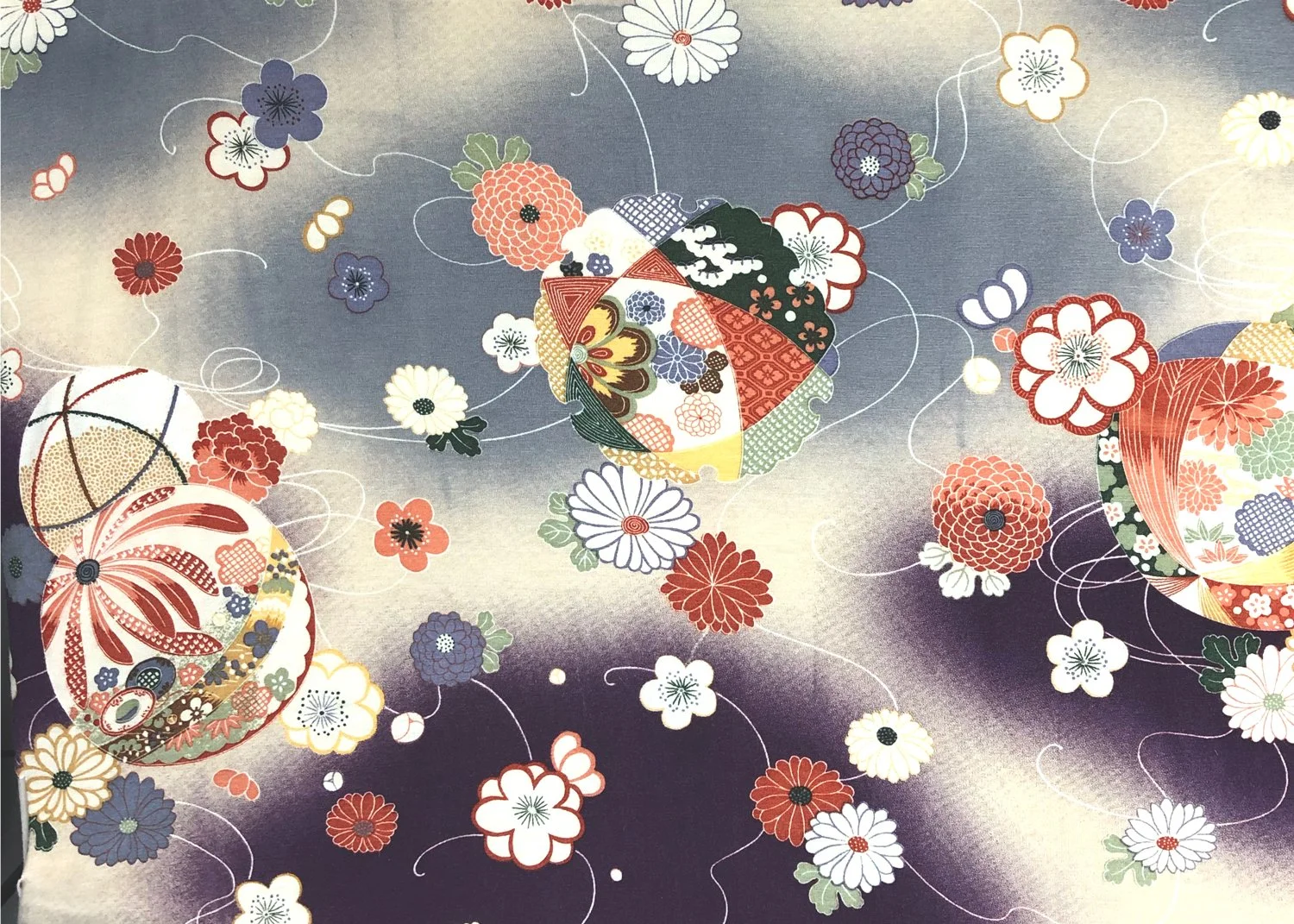
The Story of the Gotenmari Pattern
This is a kata-yūzen dyed fabric from the early Shōwa period, created as a pattern for a child’s kimono. Its refined beauty led to it being described as “Goten” (palace), reflecting an atmosphere of courtly elegance. The gently flowing cords within the design create a graceful sense of movement.
Goten-mari (palace balls), adorned with intricate patterns, were crafted both as decorative ornaments and as a popular form of women’s handicraft. During the early Shōwa period, motifs such as decorative balls and cypress fans connected by elegantly trailing cords became especially fashionable. These designs were so admired that collections were published under the name “Goten patterns,” and they were widely used in children’s kimono.
Originally, such designs were known as Ōuchi (Daidairi) patterns, referring to styles inspired by the imperial court. Over time, these courtly motifs came to symbolize auspicious meanings—expressing elegance, prosperity, and harmonious abundance.