
Grape
葡萄文様 - Budou Monyo
The Story of the Grape Pattern
The grape motif is a design that traveled along ancient trade routes before eventually becoming part of Japanese decorative art.
Grapes, believed to have originated in western regions, have long been cultivated and appreciated for their abundant fruit. They came to symbolize fertility and prosperity, admired for the way their vines grow vigorously and bear clusters of fresh, plentiful grapes.
As a decorative motif, grapes are often paired with arabesque-style vines, forming elegant, flowing patterns. This style gradually spread across regions and was eventually introduced to Japan, where it appeared in decorative arts from the Nara period onward. It can also be seen in Momoyama-period Noh costumes and ceramic designs.
In Japan, grape motifs are sometimes combined with squirrels, forming the budō-risumon (grape and squirrel pattern). They also appear in family crests, such as hanging grape clusters and grapevine designs. Because the vine extends strongly and produces many fruits in a single cluster, the grape has long been regarded as an auspicious symbol of fertility, prosperity, and the flourishing of future generations.
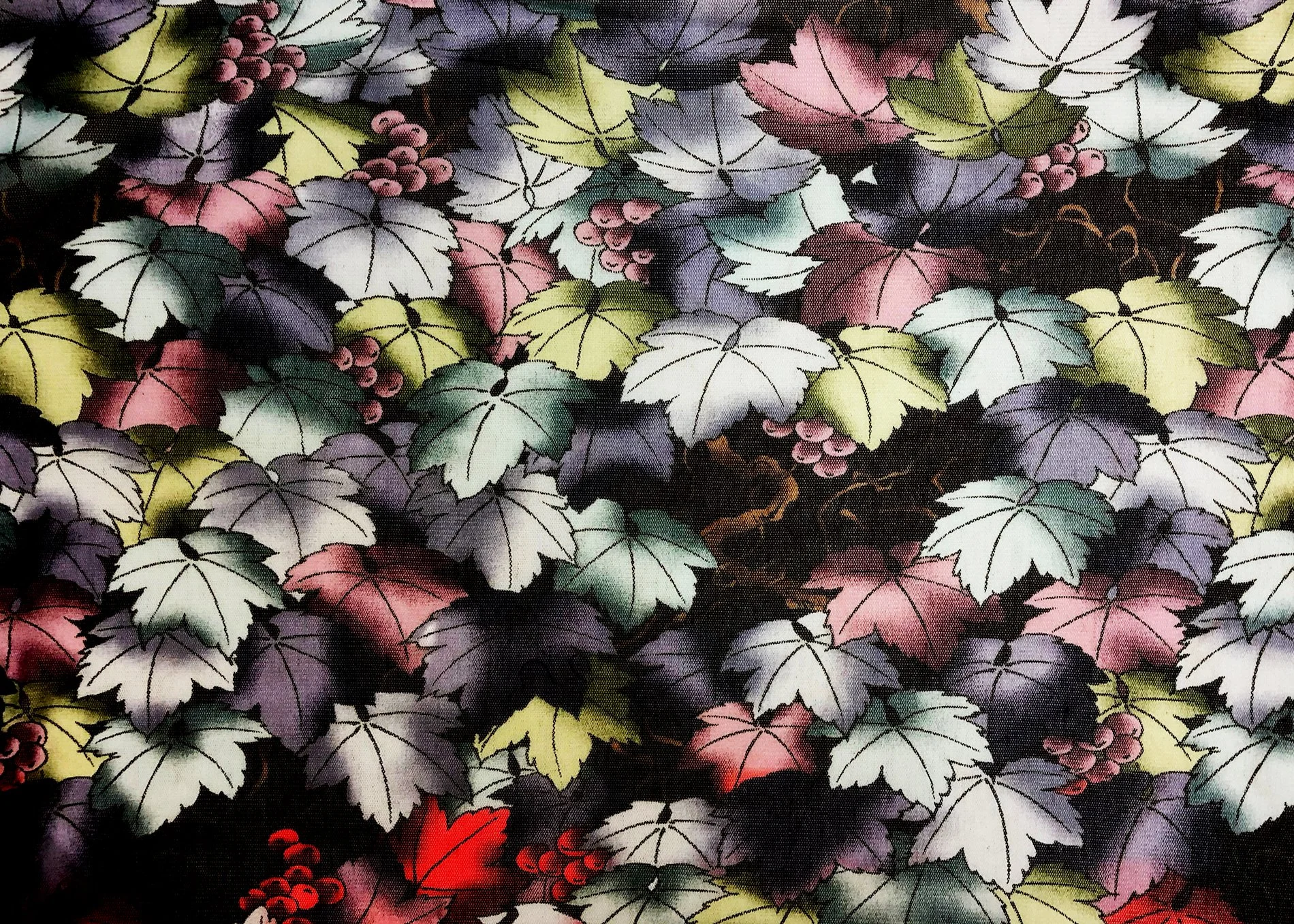
In this particular design, lush grape leaves spread abundantly, almost as if gently concealing something precious. They seem to offer protection—sheltering what is dear, and quietly promising lasting prosperity.