
Hana Usagi
花うさぎ
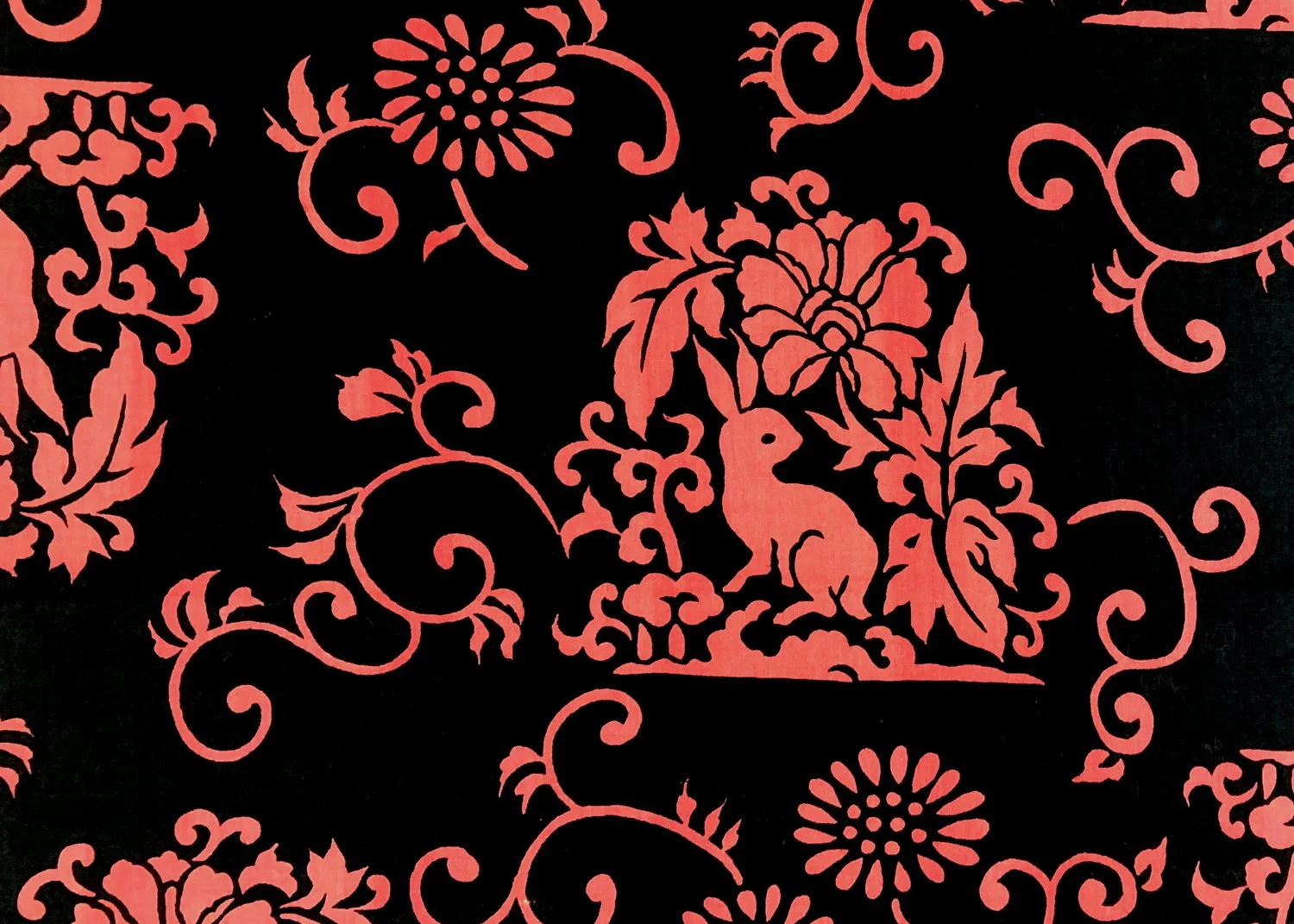
The Story of the Hana Usagi Pattern
When we were young, many of us were told that a rabbit could be seen pounding mochi in the full moon—and perhaps even believed that a rabbit lived there.
In East Asian folklore, it is said that the moon is home to a rabbit that endlessly pounds the elixir of immortality, alongside other mythical elements. When this legend was transmitted to Japan, it is believed that only the rabbit remained, becoming the central image associated with the moon.
The full moon of the harvest season is called mochizuki, and its sound is said to resemble mochi-tsuki (pounding rice cakes), which may have further inspired the image of a rabbit making mochi.
In a Buddhist tale from ancient India, a rabbit once sacrificed itself by leaping into a blazing fire. Moved by its selflessness, Indra preserved its form in the moon. It is said that the shadowy patterns seen on the moon’s surface are the smoke from that fire, and the rabbit we see there is this very being.
Rabbits began to appear frequently as decorative motifs from the Momoyama period onward. A famous example is the luxurious textile known as Hana-usagi Kinran, favored by Suminokura Ryōi. The “flower rabbit” motif typically depicts a rabbit poised lightly on a mound, often turning back, set within dome-shaped floral designs.
Such textiles, known as meibutsugire, were highly prized imported fabrics used for mounting scrolls and crafting tea ceremony items such as pouches and wrapping cloths. The surrounding pattern in this design is a chrysanthemum arabesque (kiku karakusa). Arabesque patterns originated in ancient regions to the west and spread along trade routes, eventually becoming an important motif in Buddhist art in Japan.
Although imaginary, the endlessly intertwining vines of the arabesque symbolize vitality, longevity, and continuous growth, and are associated with wishes for prosperity and the flourishing of future generations. In Japan, these motifs evolved further, incorporating flowers such as chrysanthemums and plum blossoms into their flowing forms.
Rabbits are said to move only forward, never backward, and their lively leaps symbolize progress and advancement. They are also associated with “tsuki” (the moon), which is linked to good fortune, making them an auspicious symbol.
By wearing the hana-usagi pattern, it is hoped that you will invite abundant good fortune and leap boldly forward into the future.