
Hannya
般若
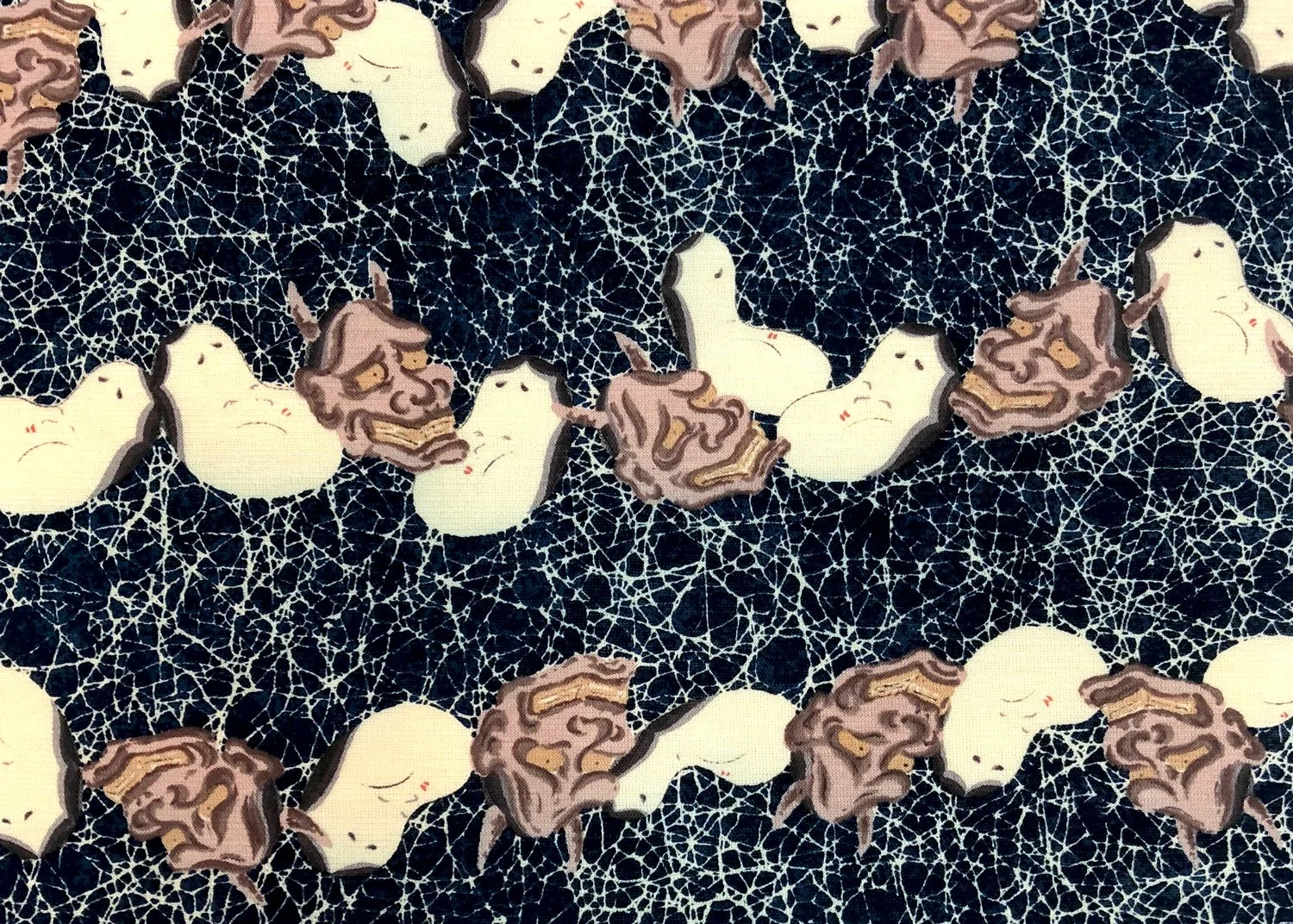
The Story of the Hannya Pattern
This pattern dates from the Taishō to early Shōwa period and was used for the haura (the lining of a man’s kimono).
Inspired by the world of kyōgen theater, the design depicts the dual nature of a woman: the gentle, smiling Okame transforming into a fierce Hannya when consumed by jealousy. The Hannya mask is a powerful symbol of a woman’s anger and resentment, capturing the dramatic shift in emotion.
Men of the time wore kimono with this pattern hidden on the inside as they visited their lovers. Perhaps they wished to be loved so deeply as to inspire jealousy… or perhaps it was a playful warning—“don’t let your feelings turn into a Hannya.” It reflects a subtle sense of humor and sophistication characteristic of the era.
The background of this design is inspired by rōsen, a type of luxurious decorative paper. This special paper, introduced to Japan during the Heian period, was used in calligraphy and is still appreciated today. In this piece, its texture and aesthetic have been beautifully recreated through the techniques of Yuzen dyeing