
Hiroshige’s Hakone
東海道五十三次箱根 - Tōkaidō gojūsan tsugi Hakone
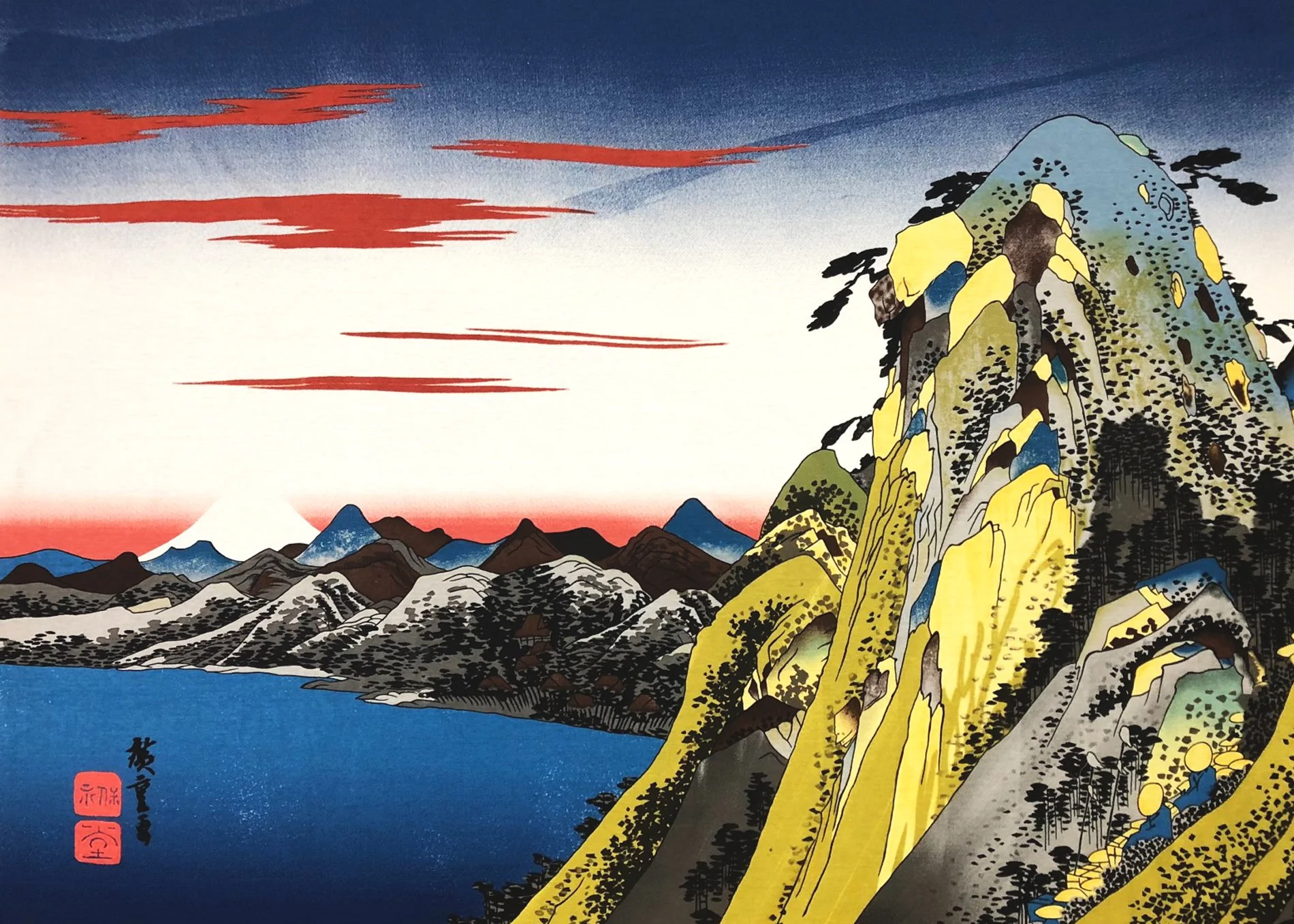
The Story of the Hiroshige’s Hakone Pattern
Utagawa Hiroshige was one of the most celebrated ukiyo-e artists of the Edo period. At around the age of 15, he aspired to become an artist and became a disciple of Utagawa Toyohiro, receiving the name “Hiroshige” the following year. Unlike many artists of the Utagawa school, who specialized in portraits of beautiful women and kabuki actors, Hiroshige explored a broader artistic vision. Influenced in part by Maruyama Ōkyo, he placed strong emphasis on observation and realism, developing a distinctive and personal style.
Hiroshige is also widely recognized for his influence on Western artists such as Van Gogh and Monet. In particular, the vivid blues used in his works became known internationally as “Hiroshige Blue” or “Japan Blue,” admired for their depth and clarity.
His famous series “The Fifty-Three Stations of the Tōkaidō” depicts the 53 post towns along the historic Tōkaidō route, including its starting and ending points. The series gained immense popularity not only for its artistic quality, such as its use of perspective to create a sense of depth, but also due to the growing travel culture of the time, including pilgrimages to sacred sites and Mount Fuji.
This time, Pagong has recreated “Hakone Lake from The Fifty-Three Stations of the Tōkaidō” within the world of Kyoto Yuzen dyeing.
The Tōkaidō was the most important highway of the Edo period, and the Hakone checkpoint played a critical role in controlling movement into Edo. Passing through the checkpoint without permission was a serious offense, often punishable by death. Because of this strict control and the steep mountainous terrain, Hakone was considered the most difficult and dangerous section of the entire route, famously described as one of the most challenging mountain passes in the world.
In Hiroshige’s composition, the dramatic ruggedness of Mount Hakone is shown in contrast with the calm beauty of Lake Ashi and the distant view of Mount Fuji. A procession of travelers moving through the harsh mountain path emphasizes the scale and difficulty of the landscape.
The rocky slopes are expressed through layered, varied colors that highlight their rough texture and uneven form. Although such a composition would be difficult to encounter in reality, Hiroshige masterfully combines vivid color and dynamic structure to create a scene that is both dramatic and harmonious—widely regarded as one of his masterpieces.
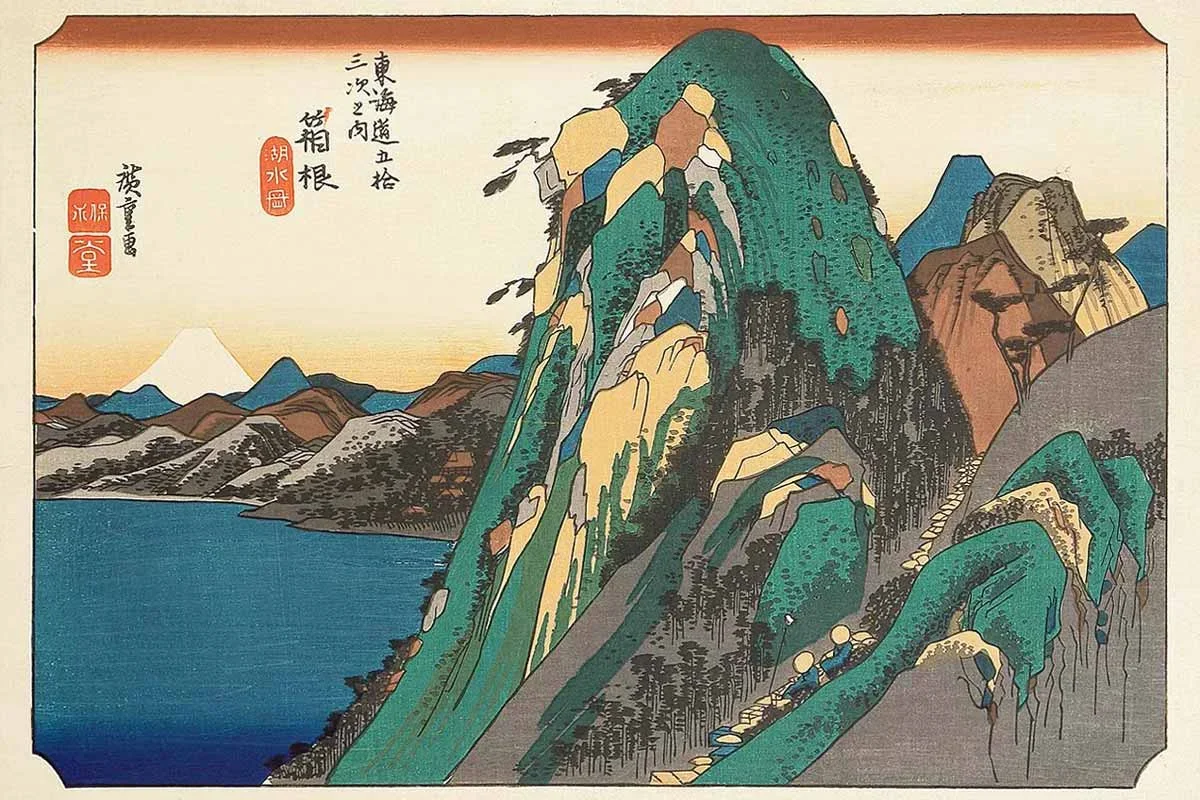
"Hakone Lake Scene from the Fifty-Three Stations of the Tokaido" owned by the Hiroshige Museum of Art, Shizuoka City.