
Hokusai’s Masculine Wave
怒涛図 男浪 - Dotouzu Onami
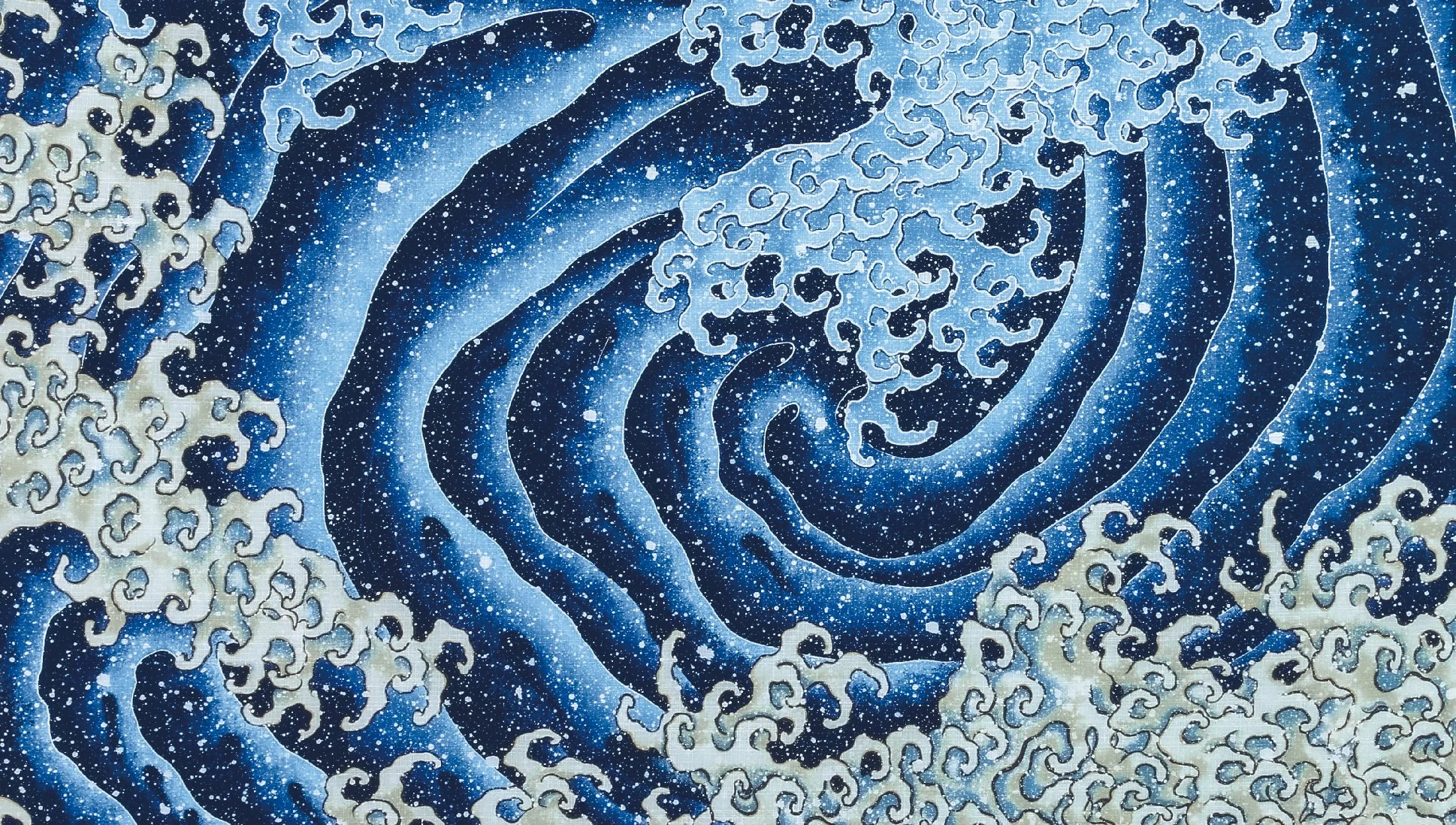
The Story of the Masculine Wave Pattern
Katsushika Hokusai, an ukiyo-e artist of the Edo period, produced an extraordinary body of work over his long life of around 90 years, including woodblock prints, painting manuals, and large-scale original paintings. His masterpieces such as “Thirty-Six Views of Mount Fuji” and “Hokusai Manga” remain among the most influential works in Japanese art history.
He is also widely recognized for his profound impact on European artists, and in 1998, he was the only Japanese figure selected by the American magazine Life as one of the “100 Greatest People of the Millennium.”
Hokusai was known for his eccentric personality as well as his artistic genius. Throughout his life, he changed his name more than 30 times. Some of his known art names include Shunrō, Sōri, Hokusai, Tatsusai, Hyakurin, Raito, Gakyōjin, Raishin, Gakyō Rōjin, and Manji. The name “Hokusai,” by which he is best known today, is derived from his devotion to Hokushin Myōken, a deity associated with the North Star and the Big Dipper.
Another famous anecdote is his frequent relocation—reportedly moving residences around 90 times in his lifetime. It is said that both Hokusai and his daughter Ōi, who assisted him in painting, would move whenever their living space became too cluttered with work materials, prioritizing painting above all else.
Although entirely devoted to his art, Hokusai also engaged in exchanges of works with foreign figures such as Dutch physician Philipp Franz von Siebold. During a time when the transfer of Japanese materials abroad was strictly regulated, such exchanges were considered highly sensitive.
At the age of 83, Hokusai traveled to Obuse in Shinshū, where he received the patronage of the wealthy merchant Takai Kōzan. There, he was provided with a studio-like space known as Hekiiken. Their relationship was so close that they addressed each other respectfully as “Sensei” and “Danna-sama.”
In this supportive environment, Hokusai devoted his later years to large-scale hand-painted works. At 86, he was commissioned by Kōzan to paint ceiling panels for a festival float titled “Male Wave” and “Female Wave.” These works powerfully depict surging waves, crashing crests, and the overwhelming force of the sea.
The dynamic composition and flowing lines give the impression of waves in motion, almost as if they are about to break free from the surface and engulf the viewer, demonstrating Hokusai’s unmatched ability to capture nature’s raw energy.
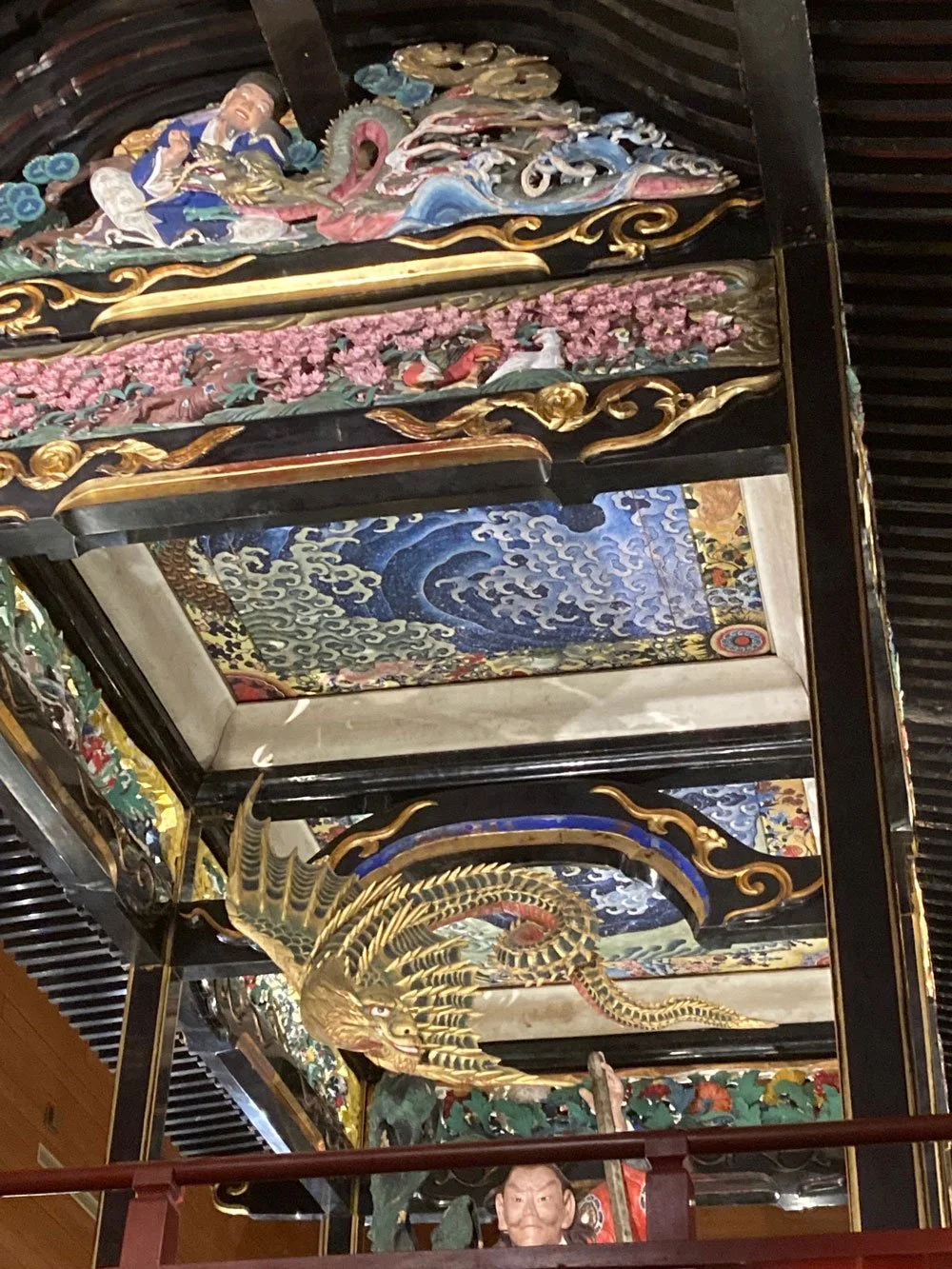
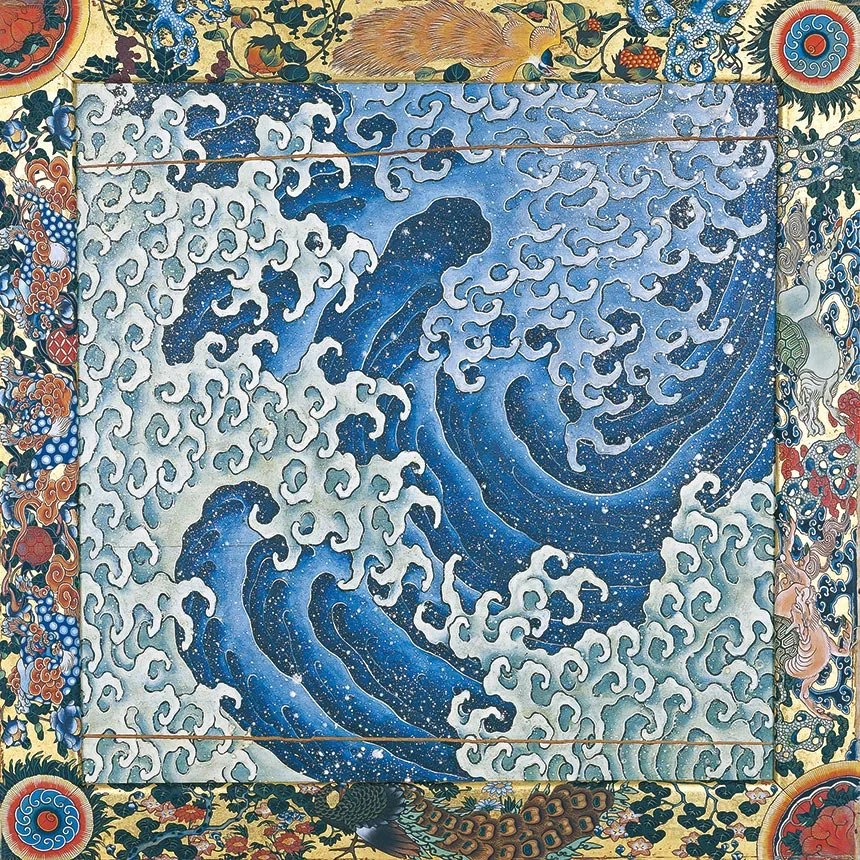
"Kamimachi Festival Float Ceiling Painting: Masculine Wave" by Katsushika
Hokusai (1760-1849, died at age 90), owned by the Hokusai Museum in Obuse, Shinshu.
This time, with the permission of the Hokusai Museum in Obuse, Nagano Prefecture, Pagong has reproduced Katsushika Hokusai’s powerful wave composition “Masculine Wave” using Kyoto Yuzen dyeing techniques.
Obuse is also home to many important works from Hokusai’s later years, including the ceiling paintings of the Higashimachi festival floats such as “Dragon” and “Phoenix,” as well as the ceiling painting “Eight-Directional Phoenix,” preserved at Iwamatsuin Temple.
These works reflect the remarkable creativity of Hokusai’s final period, where his dynamic brushwork and bold imagination reached an even greater level of expression.