
Horaizu
蓬莱図
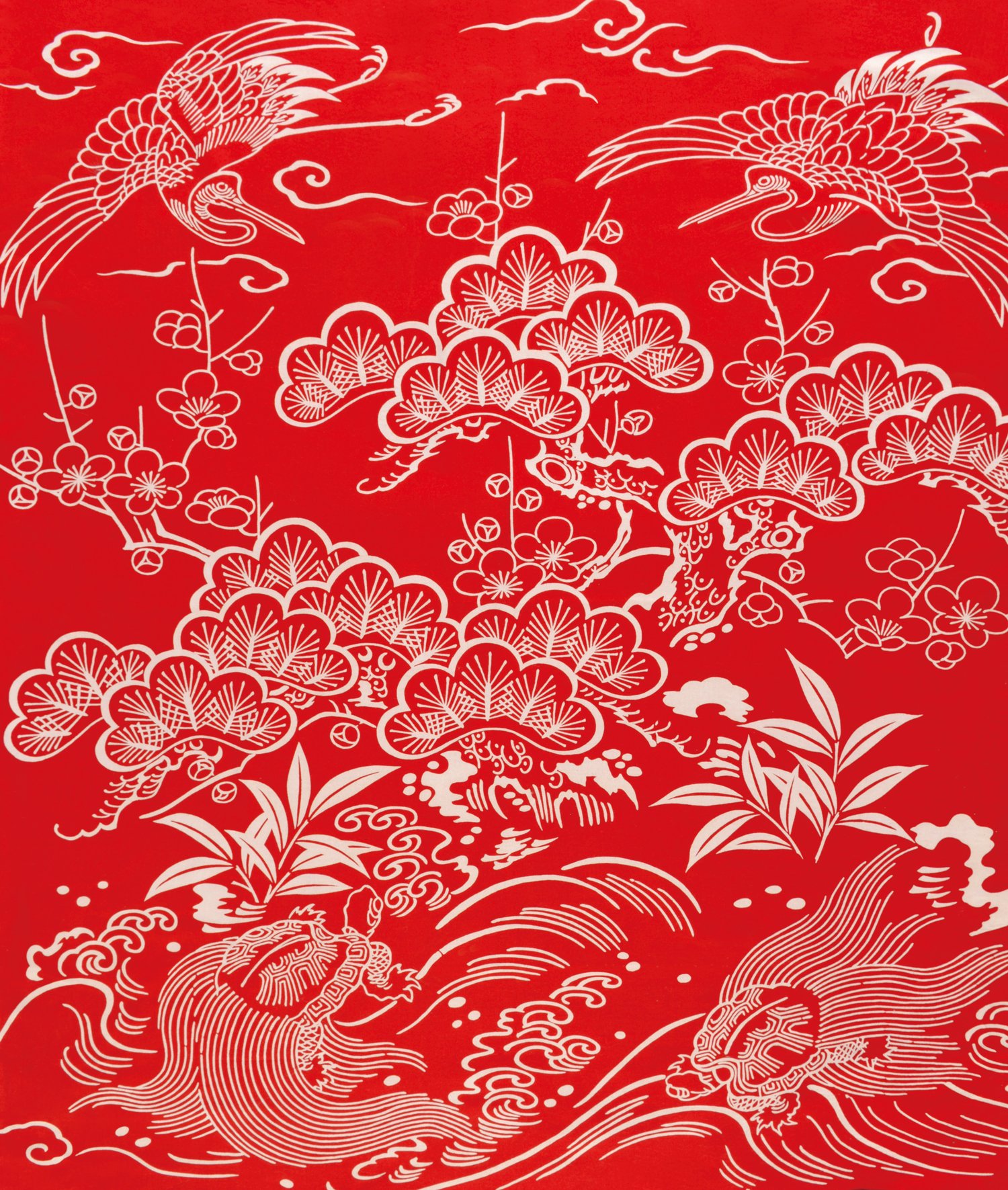
The Story of the Horaizu Pattern
This pattern was originally used on bedding (yagu), one of the traditional items included in a bride’s trousseau during the Taishō period. At the time, such bedding was often dyed in indigo and decorated with auspicious motifs.
The design brings together a rich collection of शुभ symbols—crane and tortoise, pine, bamboo, and plum—forming a celebration of good fortune and longevity.
At its heart is the imagery of Hōrai, a mythical paradise said to lie beyond the eastern sea. Rooted in ancient continental beliefs and later adapted in Japan, Hōrai is envisioned as a sacred land where immortals dwell and eternal spring prevails. It is described as a place that connects heaven and earth, where divine beings descend from the sky riding on the phoenix.
In this worldview, only the phoenix and the dragon could travel freely between heaven and Hōrai. Over time in Japan, these mythical creatures were reimagined through more familiar forms—the phoenix associated with the crane, and the dragon with the tortoise.
Hōrai is a land filled with auspicious trees—pine, bamboo, and plum—along with blooming flowers of all seasons. Butterflies dance in the air, cranes soar across the sky, and turtles glide through the sea. It is an ideal world of harmony, longevity, and prosperity, also known as Mount Hōrai or Hōrai Island.
There is even a motif called Matsukui-zuru (“crane with a pine branch”), said to depict a crane carrying pine from this very paradise.
In celebratory traditions, a decorative stand called shimadai is arranged with a symbolic mountain representing Hōrai, adorned with pine, bamboo, plum, cranes, tortoises, and sometimes the aged couple of Takasago—still used today in wedding ceremonies.
For a bride, a pattern like this may have carried a deeply personal wish: that her new home would be like Hōrai itself—a place of peace, abundance, and lasting happiness. Perhaps it reflects the quiet hopes of her family, wishing her a life filled with harmony and prosperity.