
Hydrangea
紫陽花 - Ajisai
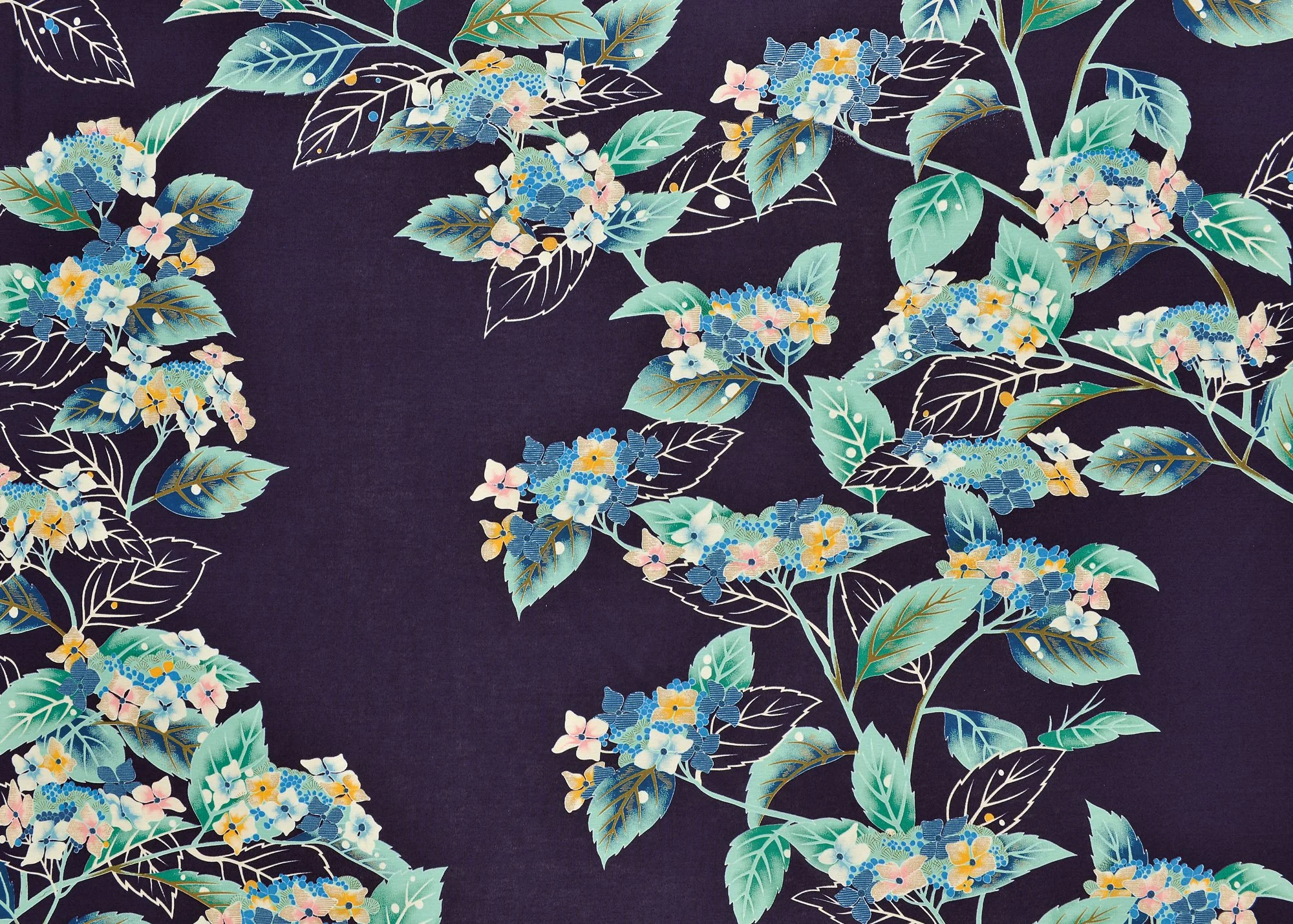
The Story of the Hydrangea Pattern
Hydrangeas are native to Japan and have long been cherished as a symbol of the early summer season. The variety depicted here is known as gakuajisai (lacecap hydrangea), a form admired for its delicate structure and quiet elegance. Its presence is even recorded in the Manyoshu, one of Japan’s oldest poetry anthologies, showing how deeply rooted it is in Japanese culture.
One of the most captivating qualities of hydrangeas is their ever-changing color. Depending on the soil’s pH, the flowers shift in hue, earning the poetic name “seven-color hydrangea.” With their abundant clusters of blossoms, they express a wide range of moods—from soft and gentle to rich and vibrant.
Among these, the large bluish-purple blooms have been especially loved and have appeared as motifs since the Edo period. Artists of the Rinpa school skillfully incorporated hydrangeas into crafts such as ceramics and lacquerware, and today they continue to appear in kimono, obi, and yukata designs, evoking the fresh, rain-kissed atmosphere of early summer.
In the Manyoshu, a poem speaks of love and longevity: a wish for a beloved to live for many generations, like the layered blossoms of the hydrangea. The way its many flowers bloom together has also come to symbolize human connection and togetherness.
With raindrops gently resting on its leaves, the hydrangea carries a quiet, emotional beauty—suggesting the deepening of bonds and the promise of lasting relationships.
The result is more than a pattern — it is a reflection of fleeting moments, connection, and enduring beauty.