
Japanese Calligraphy
麻と桔梗 - Asa to Kikyo
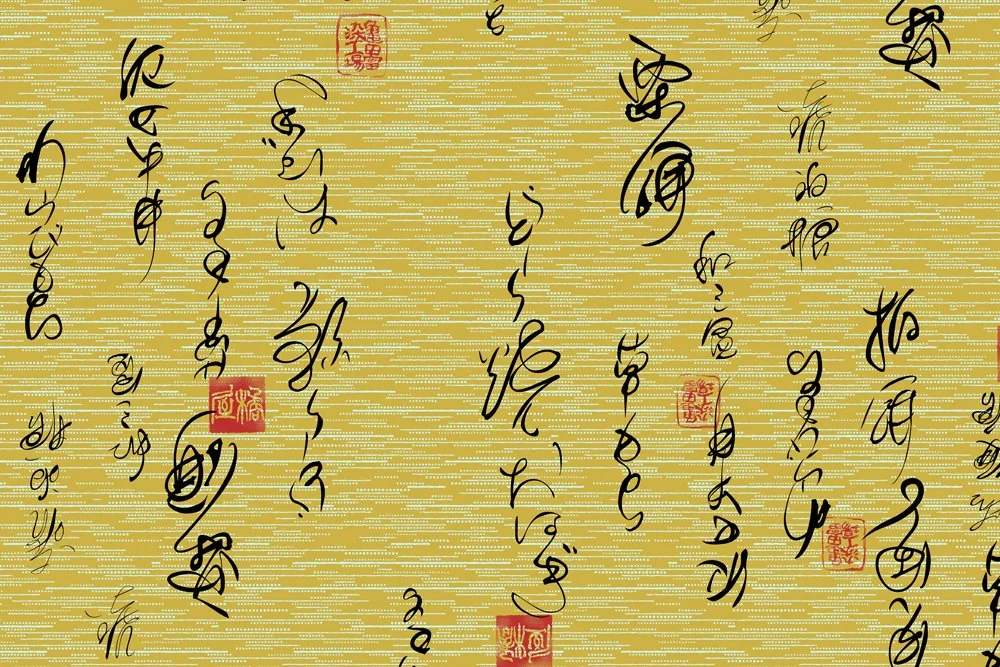
The Story of the Japanese Calligraphy Pattern
From cherry blossom sweets in spring to refreshing bracken-starch confections in summer, chestnut treats in autumn, and strawberry-filled delights in winter—traditional Japanese sweets beautifully reflect the rhythm of the seasons. These confections are one of Japan’s proud cultural expressions, offering a way to experience the passage of time through taste and form.
Once prepared as special offerings for courtly occasions, these sweets have evolved into seasonal markers found throughout everyday life. Appearing only for a brief moment before quietly giving way to the next season, they carry a sense of fleeting beauty—an elegance rooted in transience.
Through a special collaboration, Kyoto’s long-established confectionery Tachibanaya and Pagong have created a unique textile inspired by the names of traditional sweets.
Located in the Rokujō Horikawa area of Kyoto, Tachibanaya has been serving handmade wagashi since shortly after the war. The shop’s third-generation owner, Tsujimoto, personally crafted the calligraphy used for the names of the sweets and their ingredients, while Pagong developed the overall textile design.
Tachibanaya was founded in the difficult years following the war, when sugar was scarce and considered a luxury. Despite these hardships, the founder was driven by a simple wish—to bring sweetness and comfort to people’s lives.
That spirit continues today. Their wagashi are known for their gentle, nostalgic flavor—soothing and memorable, drawing not only local customers but visitors from afar, even from overseas.
One of their most beloved creations is a dorayaki named after the legendary well Samegai no I. Each piece is carefully handmade using traditional methods. Achieving a consistent size and perfect texture on a copper griddle requires true craftsmanship.
At Tachibanaya, no preservatives or additives are used. The sweet red bean filling is prepared slowly and thoughtfully, using only natural ingredients and rock sugar to enhance the pure flavor of the beans.
Kyoto, surrounded by mountains, has long been blessed with abundant underground water, supporting over a thousand years of culture. This “sacred water” has been essential for the creation of wagashi, tofu, yuba, and sake.
The famed Samegai no I was once located within a noble residence in Kyoto and was cherished by tea masters, including Oda Urakusai, who is said to have created a well bearing his own name to enjoy its water. It became renowned as one of the finest water sources of its time.
Although the well was eventually lost due to postwar urban development, its legacy lives on through the name of this confection.
In an age increasingly shaped by mechanized production, this design embodies a shared philosophy between confectioners and textile artisans—a dedication to craftsmanship, tradition, and heartfelt creation.
It is a pattern born from respect for time-honored techniques, carrying forward the warmth and spirit of handmade artistry.