
Kanjincho
勧進帳
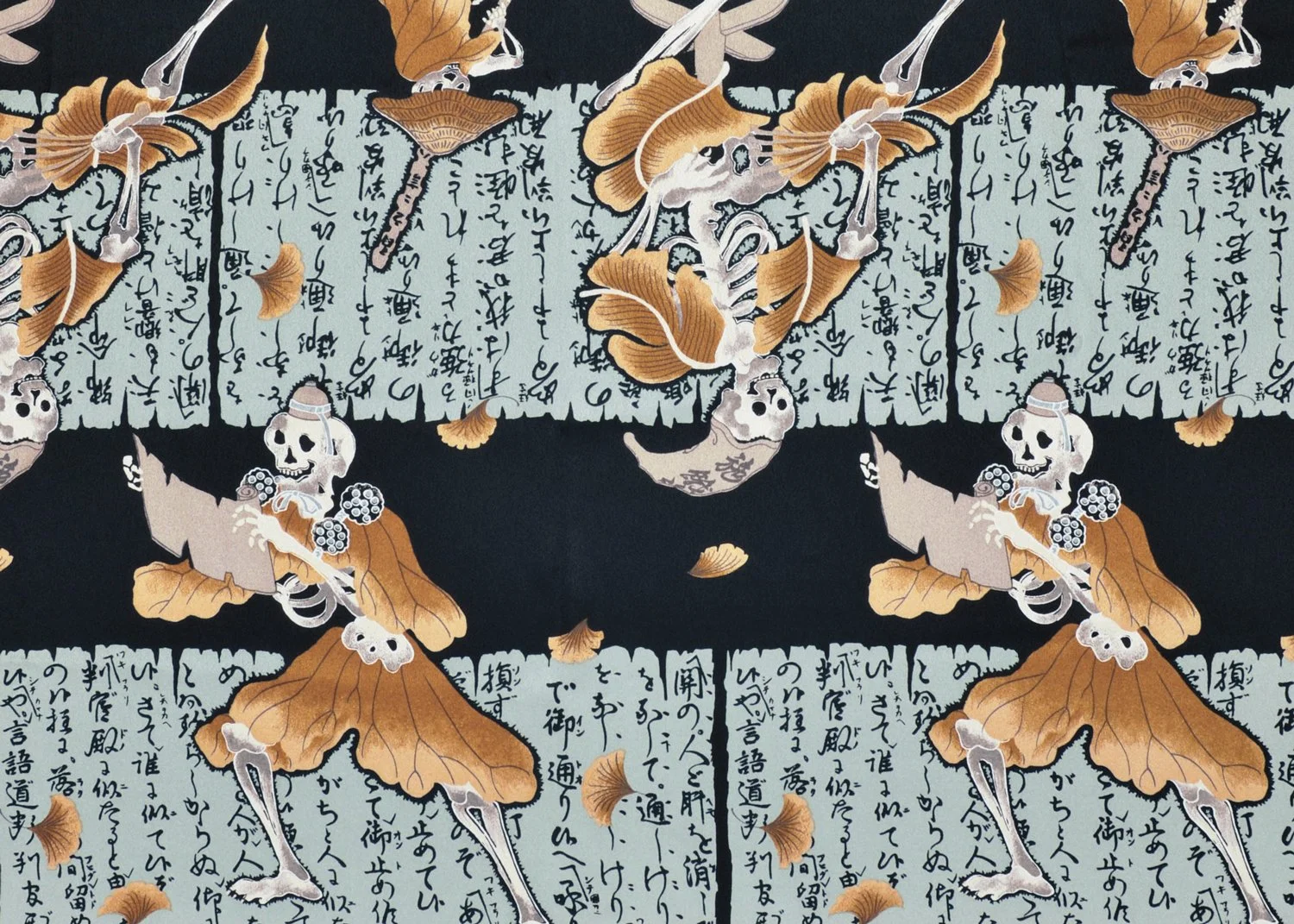
The Story of the Kanjincho Pattern
This design draws inspiration from a dramatic moment in the Kabuki play Kanjinchō, set at the Ataka Barrier. It captures a scene of tension, loyalty, and sacrifice—where devotion is tested and revealed through bold, decisive action.
In this interpretation, the figures are rendered as skeletons, transforming the narrative into something both striking and symbolic. The use of skeletal forms adds a layer of abstraction, emphasizing emotion and intensity over realism, and giving the scene an eerie yet captivating presence.
The motif originates from a men’s undergarment (juban) dating back to the Taisho period. During this time, refined social culture included gatherings in which subtle displays of style were highly valued. Rather than being outwardly visible, true sophistication was often hidden beneath the surface.
Garments such as nagajuban and haori linings featured bold, unconventional designs—sometimes grotesque, sometimes playful, sometimes sensual. These hidden patterns would only be revealed in fleeting moments, creating a sense of surprise and individuality.
This design reflects that spirit: a fusion of drama and wit, tradition and bold expression, where what lies beneath becomes the true statement.