

Men’s Kimono Pants

Color / Purple and Yellow Care Instruction
Japanese name/ 乱菊 ( Rangiku )
-About-
Starting from the late Taisho era (1912-1926), more modern and exuberant patterns became fashionable in Japan. This depiction of “dancing” chrysanthemums was made during Japan’s “Art Nouveau Movement”, and became a very popular design for those who wished to represent the fashion style of a new era.
Kiku, or chrysanthemums, were introduced to Japan from China in the Nara-era(710-794. In Japan, the chrysanthemum has become a symbol for the emperor and appears on the Japanese imperial seal.
In the language of flowers, the chrysanthemum carries the symbolic meaning of devoted love, loyalty, happiness, longevity, and joy.
・85%Cotton 15%Linen
・Made in Japan
・Hand-wash
・Hang to dry
・Use pressing cloth to iron
・Currency : US Dollar (USD)

Color / Navy Care Instruction
Japanese name / ジェット鶴 (Jetto Tsuru)
-About-
”Ryukyu” is the ancient name for Okinawa, once known as the “Ryukyu Kingdom”.
The flying tsuru, or crane in this design is a unique style of patterning called ”Ryukyu Bingata”, used on traditional linen kimono.
In Japanese mythology, the crane, comes from Mount Horai in heaven, and carries happiness and good fortune to earth. Since the crane was believed to live 1,000 years, in Japan it is revered as a symbol for resilience, strength and long life.
・85%Cotton 15%Linen
・Made in Japan
・Hand-wash
・Hang to dry
・Use pressing cloth to iron
・Currency : US Dollar (USD)
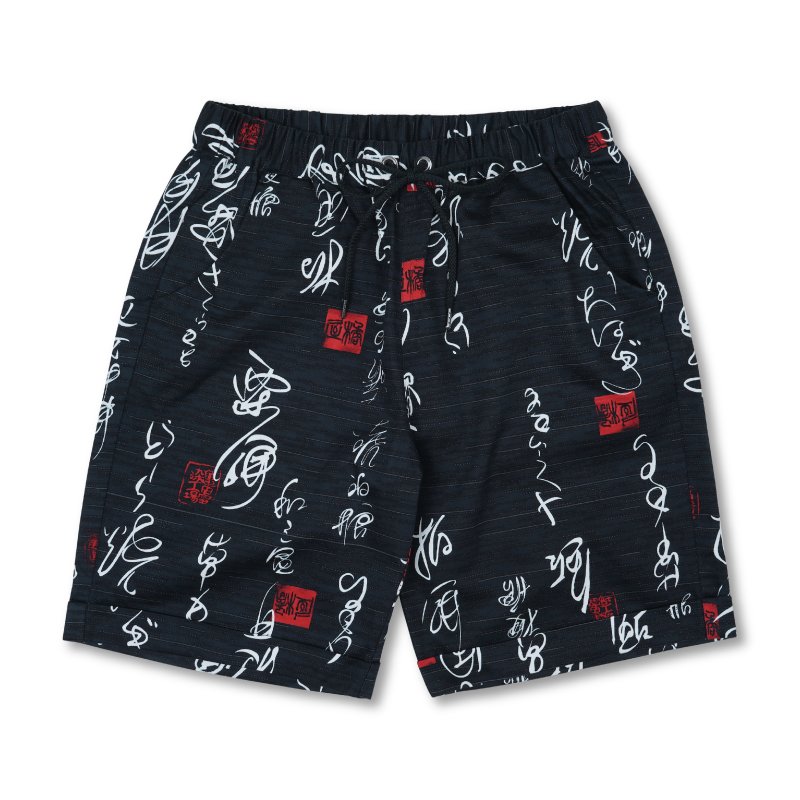
Color / Black, White and RedCare Instruction
Japanese name/ 有楽斎好み
-About-
Sakura mochi in spring, refreshing warabi mochi in summer, kuri mochi in autumn, and strawberry daifuku in winter - wagashi, which allows you to feel the four seasons, is one of Japan's world-famous cultures. In the past, they were a treat associated with imperial ceremonies, but in modern times, they have come to signal the change of seasons, and you can see wagashi all over town. Wagashi seem to have a noble character, as they quickly retire once the season has passed, and can only be found in that season. This time, we have collaborated with Kyoto's long-established wagashi shop "Tachibanaya'' and "Pagong'', and produced textiles named after wagashi. While machine-made products are becoming mainstream, this pattern was created with the feelings of wagashi shop and dye shop that have been cherished for a long time.
・100%Cotton
・Made in Japan
・Hand-wash
・Hang to dry
・Use pressing cloth to iron
・Currency : US Dollar (USD)
Women’s Kimono Pants
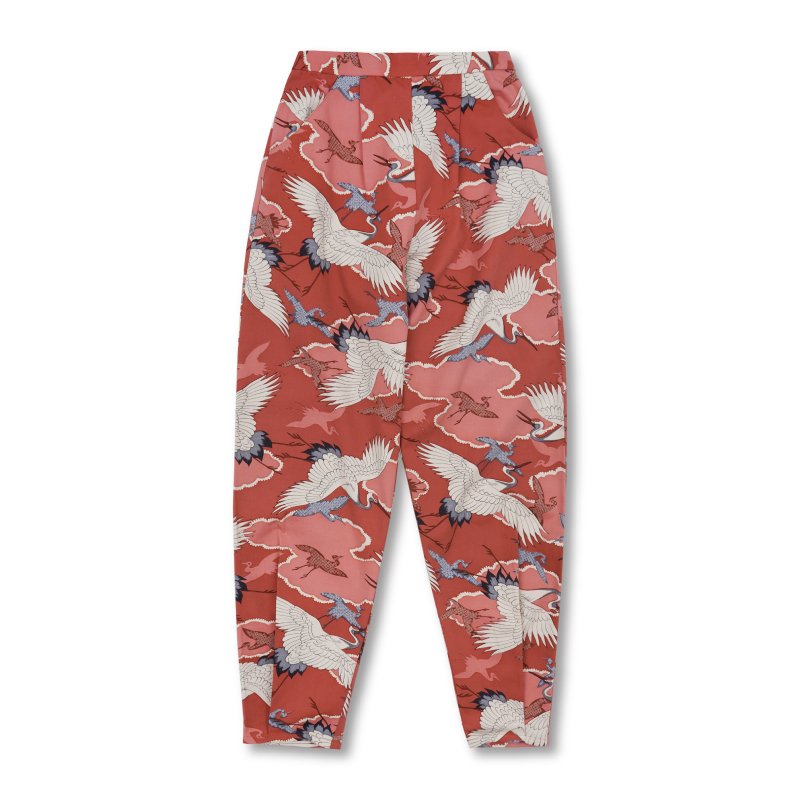
Color / Red, Pink and Multi-color Care Instruction
Japanese name/ 鶴 ( Tsuru )
-About-
In Japanese mythology, the tsuru, or crane, comes from Mount Horai in heaven, and carries happiness and good luck to earth. Since the crane was believed to live 1,000 years, in Japan it has become a symbol for survival, and long life.
・65%Cotton 35%Lyocell
・Made in Japan
・Hand-wash
・Hang to dry
・Use pressing cloth to iron
・Currency : US Dollar (USD)
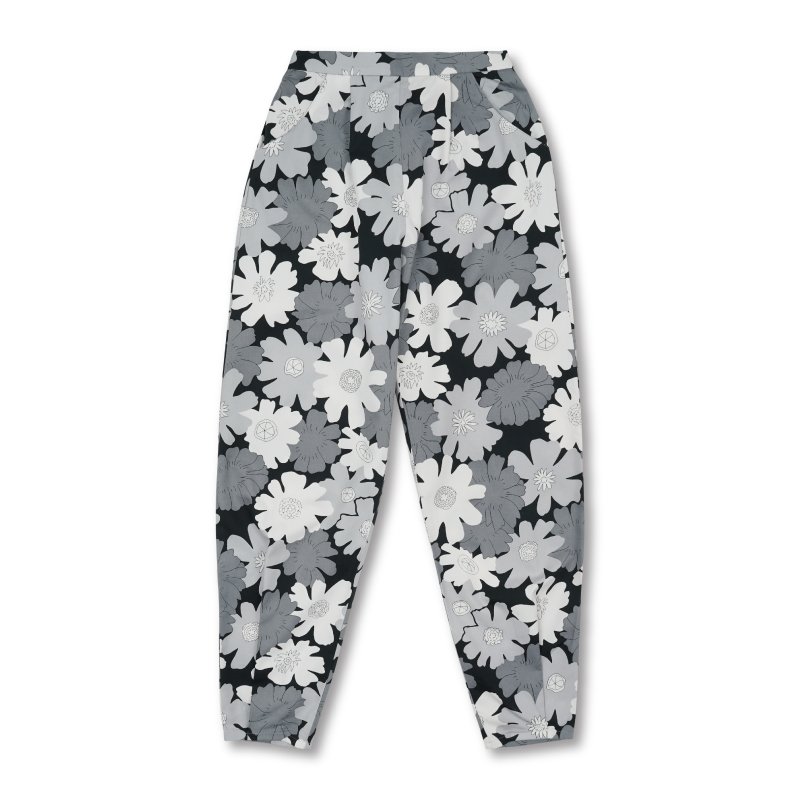
Color / Black,Grey and White
Japanese name/ 秋桜 (Cosmos)
・65%Cotton 35%Lyocell
・Made in Japan
・Hand-wash
・Hang to dry
・Use pressing cloth to iron
・Currency : US Dollar (USD)

Color / Black and Multi-color Care Instruction
Japanese name/ 渦と立波 (Uzutotatsunami)
-About-
This dynamic design of whirls with standing waves “caught in a moment”, has long been used on traditional kimono, as well as other hand-crafted items. Each artisan’s rendition being slightly different, such as the addition of flying cranes or geometric shapes; elements added for interest to the original pattern.
Pagong’s design is comprised of repeated concentric circles, or maru, which represent a “current” signifying harmony. The motif’s resemblance to a “target” is symbolic of persistence, and the achieving of one’s personal goal. The seigaiha or “standing wave” is a pattern which represents surges of good fortune, power, and resilience.
・65%Cotton 35%Lyocell
・Made in Japan
・Hand-wash
・Hang to dry
・Use pressing cloth to iron
・Currency : US Dollar (USD)
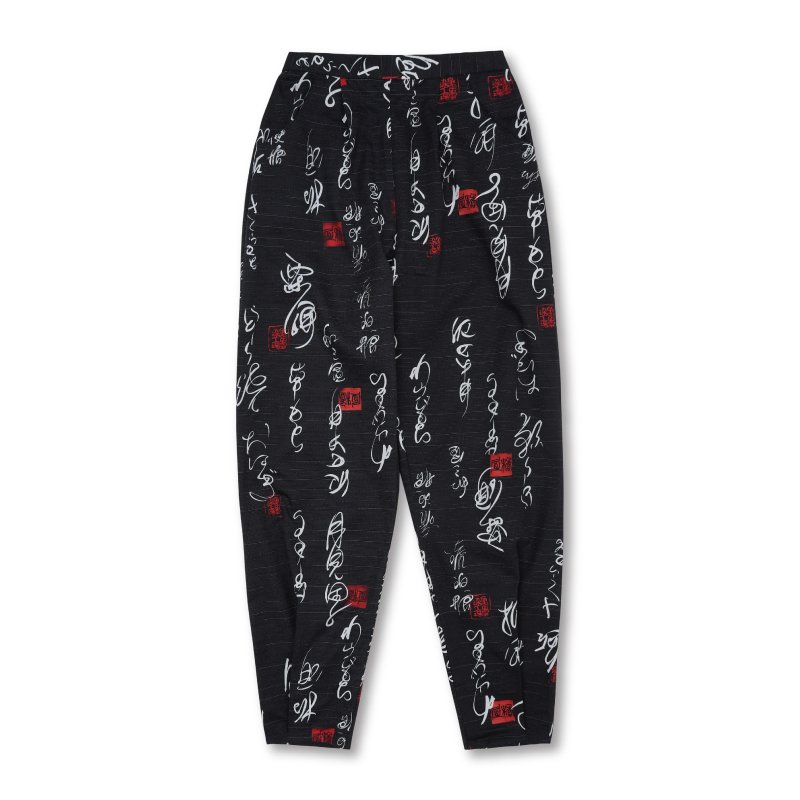
Color / Black, White and Red Care Instruction
Japanese name/ 有楽斎好み
・65%Cotton 35%Lyocell
・Made in Japan
・Hand-wash
・Hang to dry
・Use pressing cloth to iron
・Currency : US Dollar (USD)
Men’s Kimono Shorts

Color / Black and Blue Care Instruction
Japanese name/ 鞍馬天狗のうちわ (Tengu no Uchiwa)
Tengu, a class of supernatural creatures found in Japanese folklore, art, theater, and literature.
The normal feather fan of a Tengu has 7 or 8 (yatsude) feathers. Some have nine feathers.Many tales feature this fan, which has the ability to grow or shrink the nose of its owner. They can also produce a strong gust of wind.
This is the fan of the great Tengu from Kurama mountain, used to ward off all evil during the goma fire rituals.
・100%Cotton
・Made in Japan
・Hand-wash
・Hang to dry
・Use pressing cloth to iron
・Currency : US Dollar (USD)

Color / Blue and Red Care Instruction
Japanese name/ 鞍馬天狗のうちわ
-About-
Tengu, a class of supernatural creatures found in Japanese folklore, art, theater, and literature.
The normal feather fan of a Tengu has 7 or 8 (yatsude) feathers. Some have nine feathers.Many tales feature this fan, which has the ability to grow or shrink the nose of its owner. They can also produce a strong gust of wind.
This is the fan of the great Tengu from Kurama mountain, used to ward off all evil during the goma fire rituals.
・100%Cotton
・Made in Japan
・Hand-wash
・Hang to dry
・Use pressing cloth to iron
・Currency : US Dollar (USD)

Color / Black and Multi-color Care Instruction
Japanese name/ 渦と立波 (Uzutotatsunami)
-About-
This dynamic designofwhirls with standing waves “caught in a moment”, has long been used on traditional kimono, as well as other hand-crafted items. Each artisan’s rendition being slightly different, such as the addition of flying cranes or geometric shapes; elements added for interest to the original pattern.
Pagong’s design is comprised of repeated concentric circles, or maru, which represent a “current” signifying harmony. The motif’s resemblance to a “target” is symbolic of persistence, and the achieving of one’s personal goal. Theseigaiha or “standing wave” is a pattern which represents surges of good fortune, power, and resilience.
・100%Cotton
・Made in Japan
・Hand-wash
・Hang to dry
・Use pressing cloth to iron
・Currency : US Dollar (USD)
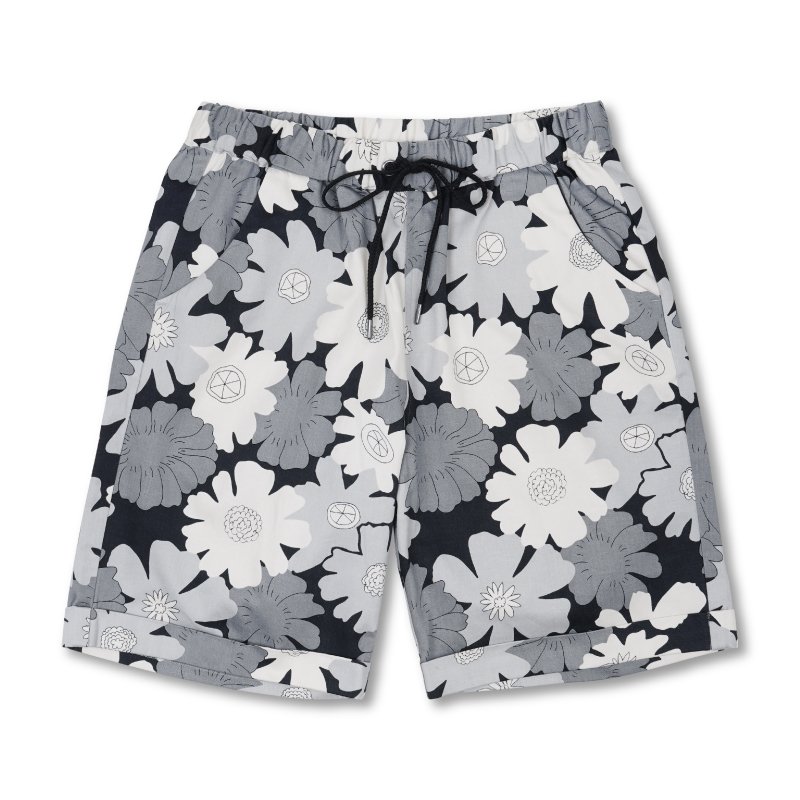
Color / Black,Grey and White Care Instruction
Japanese name/ 秋桜 (Cosmos)
The word "cosmos" has its roots in the Greek language, specifically in the word "Kosmos" or "Cosmos." This word initially meant "order" and "harmony." Since the Greeks believed that order and harmony were synonymous with beauty, the word "Kosmos" or "Cosmos" also came to represent "decoration" and "beauty." As a result, the universe, which is arranged beautifully and orderly, was named "Cosmos."
Cosmos are generally associated with a pink color, but some varieties bloom in orange or yellow. Although it is an autumn flower, it is a pattern often used on yukata as a stylish way to get ahead of the season.
・100%Cotton
・Made in Japan
・Hand-wash
・Hang to dry
・Use pressing cloth to iron
・Currency : US Dollar (USD)
Color / White and Multi-color
Care Instruction
Japanese name/ 花更紗 (Hana Sarasa)
-About-
The exotic chintz pattern was introduced to Japan from India on European trading ships between the Muromachi and Edo periods. Plant designs have been considered the source of the basic flow of life since ancient times, and the way they grow endlessly with abundant vitality makes them auspicious patterns that celebrate longevity.
・85%Cotton 15%Linen
・Made in Japan
・Hand-wash
・Hang to dry
・Use pressing cloth to iron
・Currency : US Dollar (USD)