
Korin chrysanthemum
光琳菊 - Korin giku
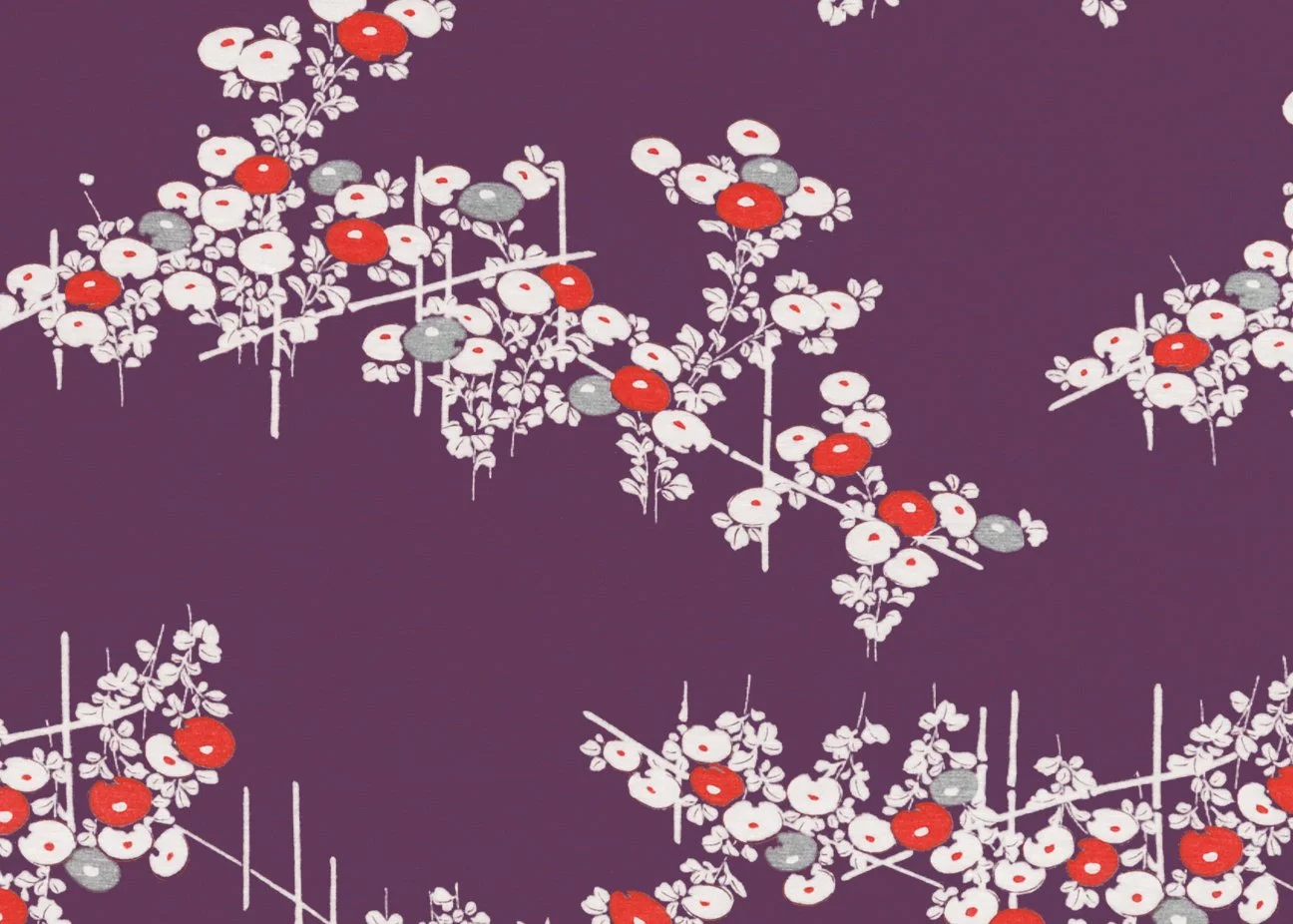
The Story of the Korin chrysanthemum Pattern
Chrysanthemums have long been cherished in Japan as a symbol of longevity and elegance. Celebrated for their refined beauty, they have been widely incorporated into traditional crafts and kimono designs throughout the centuries.
The term “Kōrin patterns” refers to designs inspired by the distinctive style of Ogata Kōrin, a master artist born in Kyoto during the mid-Edo period. Kōrin often depicted familiar natural motifs—such as chrysanthemums, plum blossoms, pine trees, and waves. While rooted in realism, his work boldly simplified forms, creating a refined and striking aesthetic that was unlike anything before it.
His innovative style became immensely popular, even appearing in pattern books for kosode (short-sleeved kimono). Its influence extended far beyond the Edo period, continuing through the Meiji and Taishō eras.
The “Kōrin chrysanthemum” is a stylized interpretation of the flower, characterized by its rounded, full shape. Its resemblance to a steamed bun has earned it the name manjū-giku (bun chrysanthemum). This form is associated with longevity, making it an especially auspicious motif in Japanese design.