
Kotobuki
寿
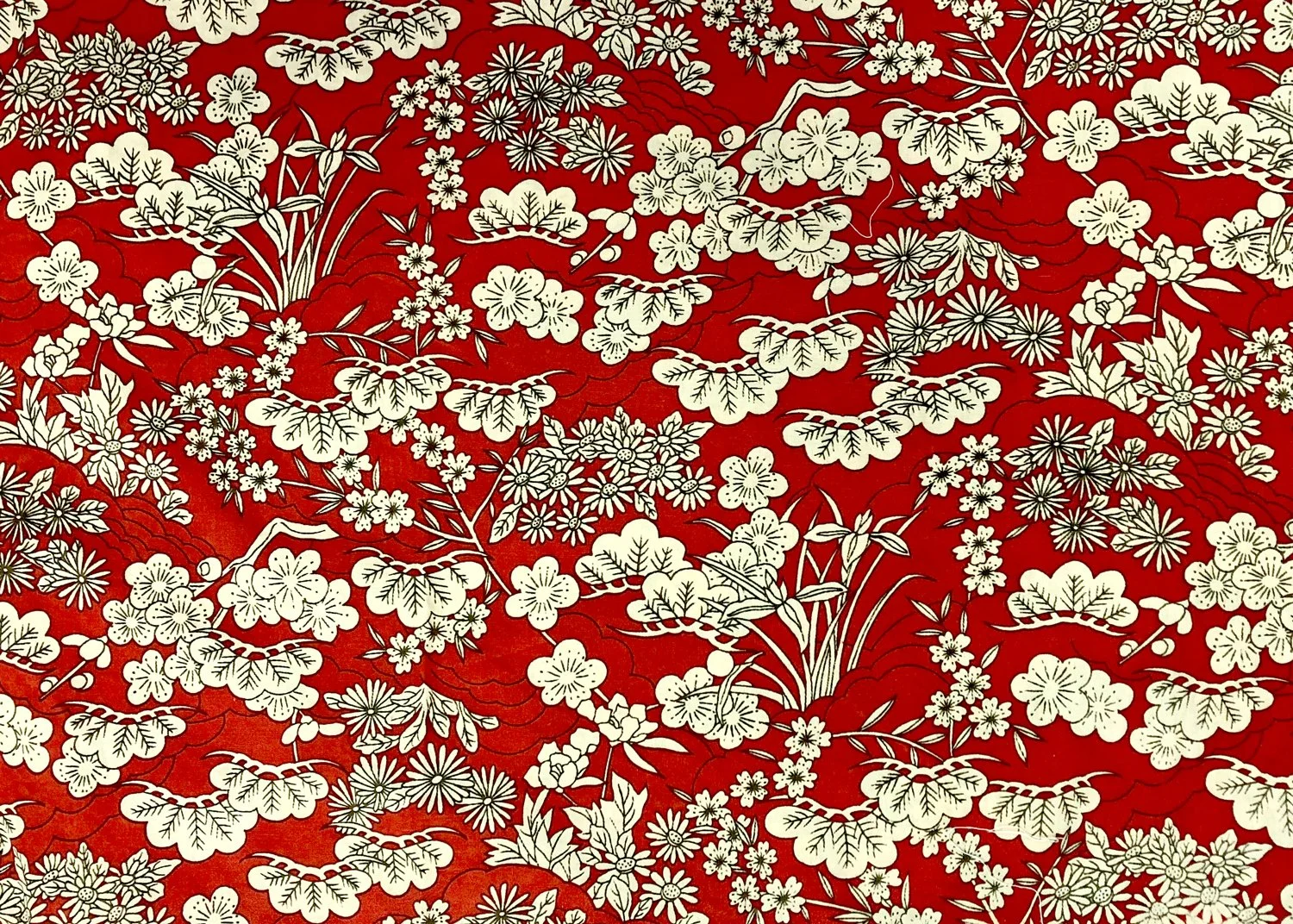
The Story of the Kotobuki Pattern
This pattern is a new creation—an adaptation of a classic design. It features a collection of auspicious flowers—pine, bamboo, plum, cherry blossom, chrysanthemum, peony, and iris—rendered delicately in outline. The result evokes the elegant patterns once seen on the garments of court ladies during the Edo period.
Each kimono pattern carries its own meaning, and every flower holds a story.
Pine trees are said to live for a thousand years, and their evergreen needles remain unchanged through the seasons, symbolizing eternal youth and longevity. Bamboo, with its vibrant green color throughout the year, represents vitality, while also embodying nobility and integrity.
Plum blossoms bloom in the coldest days of winter, ahead of all other flowers, and release a graceful fragrance. Because of this, they have long been regarded as auspicious. They are frequently celebrated in the Man'yōshū and were once among the most beloved flowers in Japan.
Cherry blossoms, though brilliant and captivating, embody a fleeting beauty. Their petals fall even without wind, symbolizing the transient nature of life. Since the Heian period, they have remained one of the most cherished flowers in Japan.
Chrysanthemums are associated with longevity and refined elegance, making them a timeless motif in Japanese design.
Peonies, known as the “king of flowers,” symbolize prosperity, wealth, and high status, representing both elegance and abundance.
Irises, often depicted in Noh costumes and traditional designs, are sometimes paired with Yatsuhashi (a type of bridge) or shown on their own. They are associated with scenes from The Tales of Ise and evoke a sense of poetic journey and refined beauty. The phrase “which is the iris, and which is the Japanese iris?” is still used to describe two equally beautiful things when it is difficult to choose between them.