
Koumori to Kikusui
蝙蝠と菊水
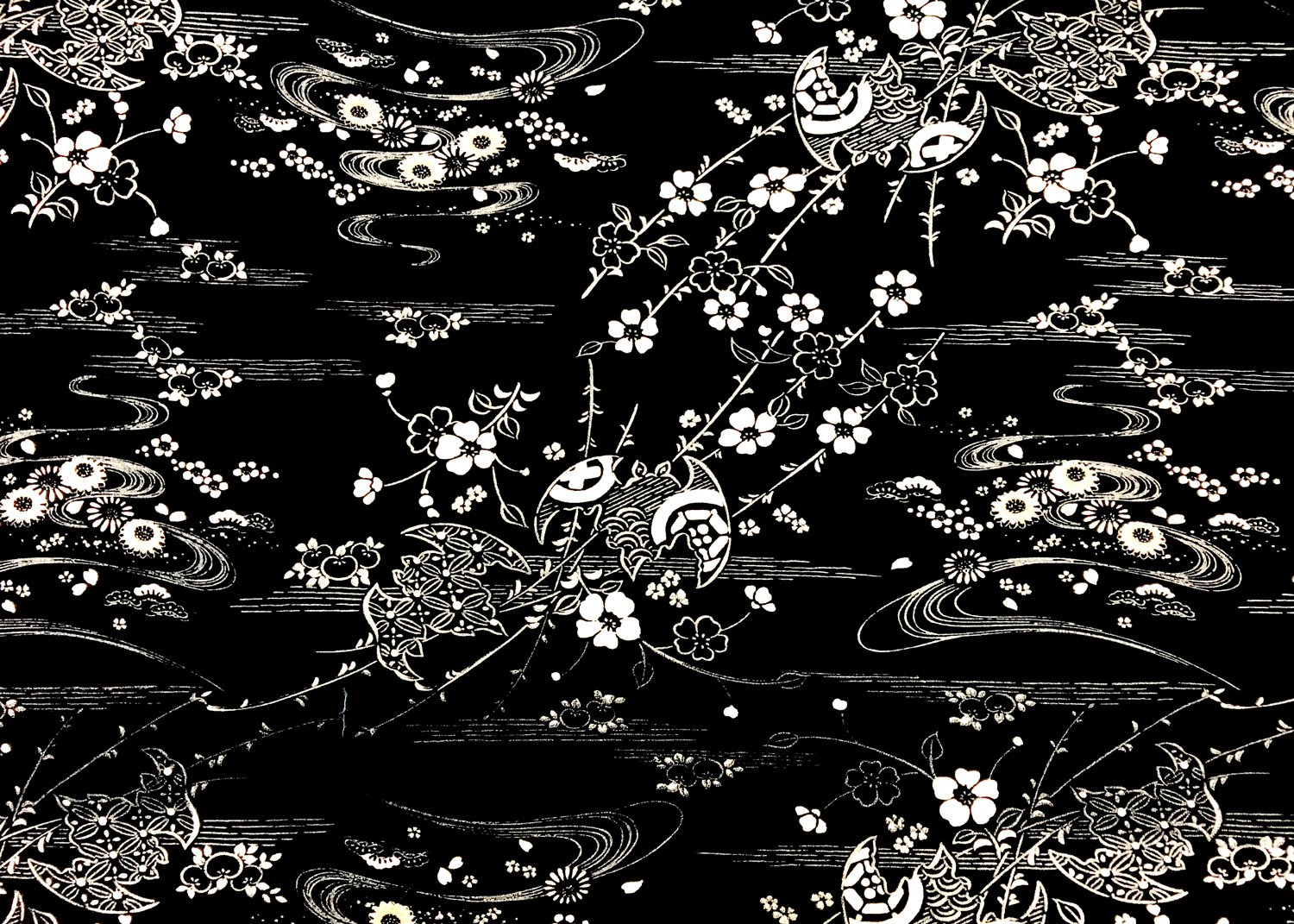
The Story of the Koumori Pattern
The bat motif has long been appreciated as an auspicious symbol in decorative arts. In Japan, bats were once called kawahori, and their distinctive shape became associated with objects such as folding fans, known as kawahori-sensu. Because the fan opens outward in a spreading form, it symbolizes growth and prosperity, making bat-inspired designs suitable for kimono patterns.
In this design, delicate motifs are arranged within the silhouette of a bat, creating a playful yet refined composition sometimes referred to as koumoritori.
The pattern also incorporates kikusui—a combination of chrysanthemum and flowing water. The chrysanthemum, cherished as a symbol of longevity and vitality, paired with water, evokes the idea of life-giving nourishment and enduring health. This motif is associated with wishes for long life and well-being and appears in classical themes such as the Noh play Kikujido.
Together, these elements form a design rich in auspicious meaning, blending elegance with subtle symbolism rooted in traditional Japanese aesthetics.