
Kuniyoshi Loves Cats
猫の歌舞伎 - Neko no Kabuki
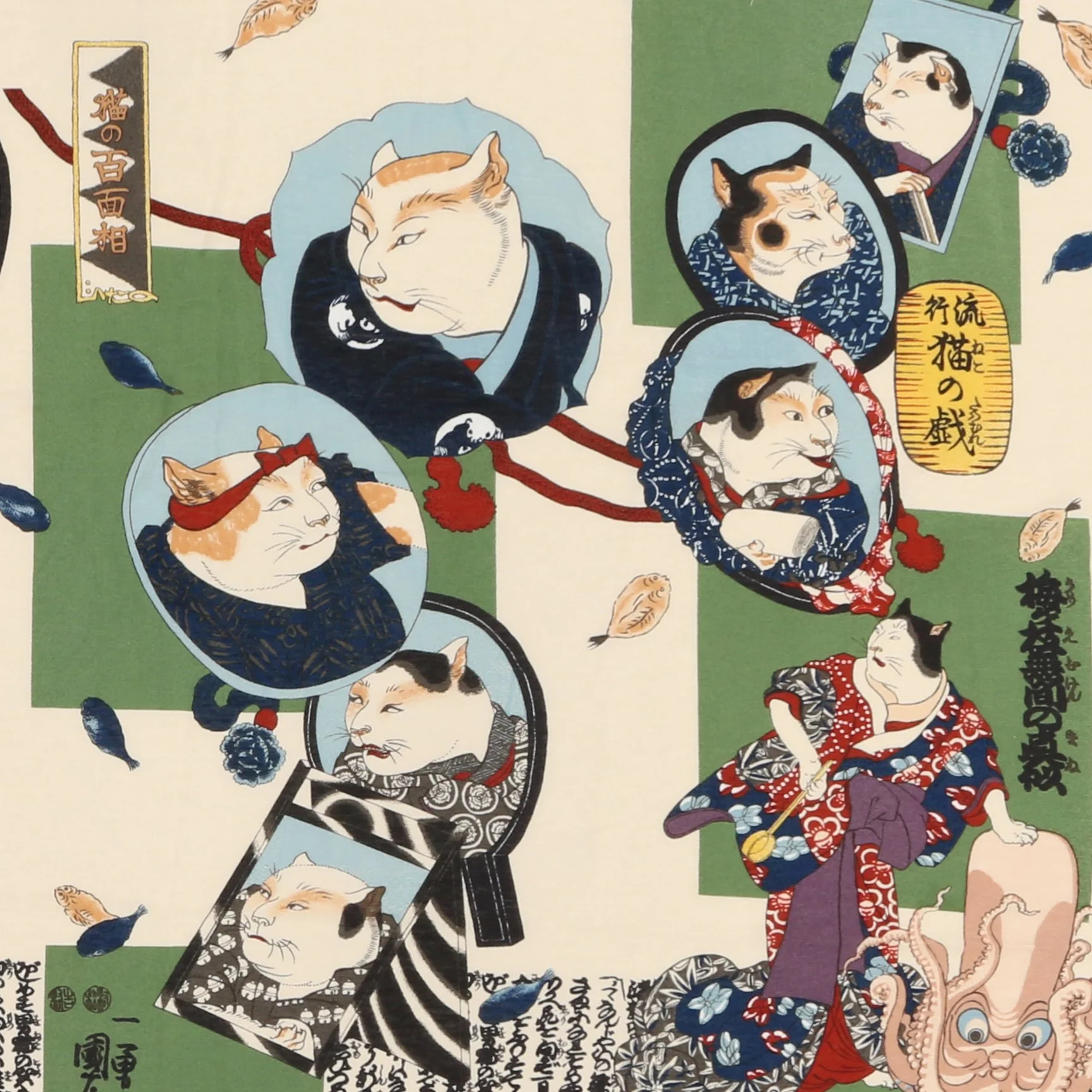
The Story of the Kuniyoshi Loves Cats Pattern
Utagawa Kuniyoshi was a leading ukiyo-e artist of the late Edo period, widely admired for his bold imagination and dynamic compositions. He is also known as an exceptional cat lover—historical accounts suggest that he kept several cats, sometimes more than ten at a time, and even painted while holding a cat in his arms. As a result, cats frequently appear throughout his works, both as playful motifs and symbolic figures.
For this collection, Pagong has selected two of Kuniyoshi’s cat-themed works related to the world of Kabuki and reinterpreted them through Kyoto Yuzen dyeing.
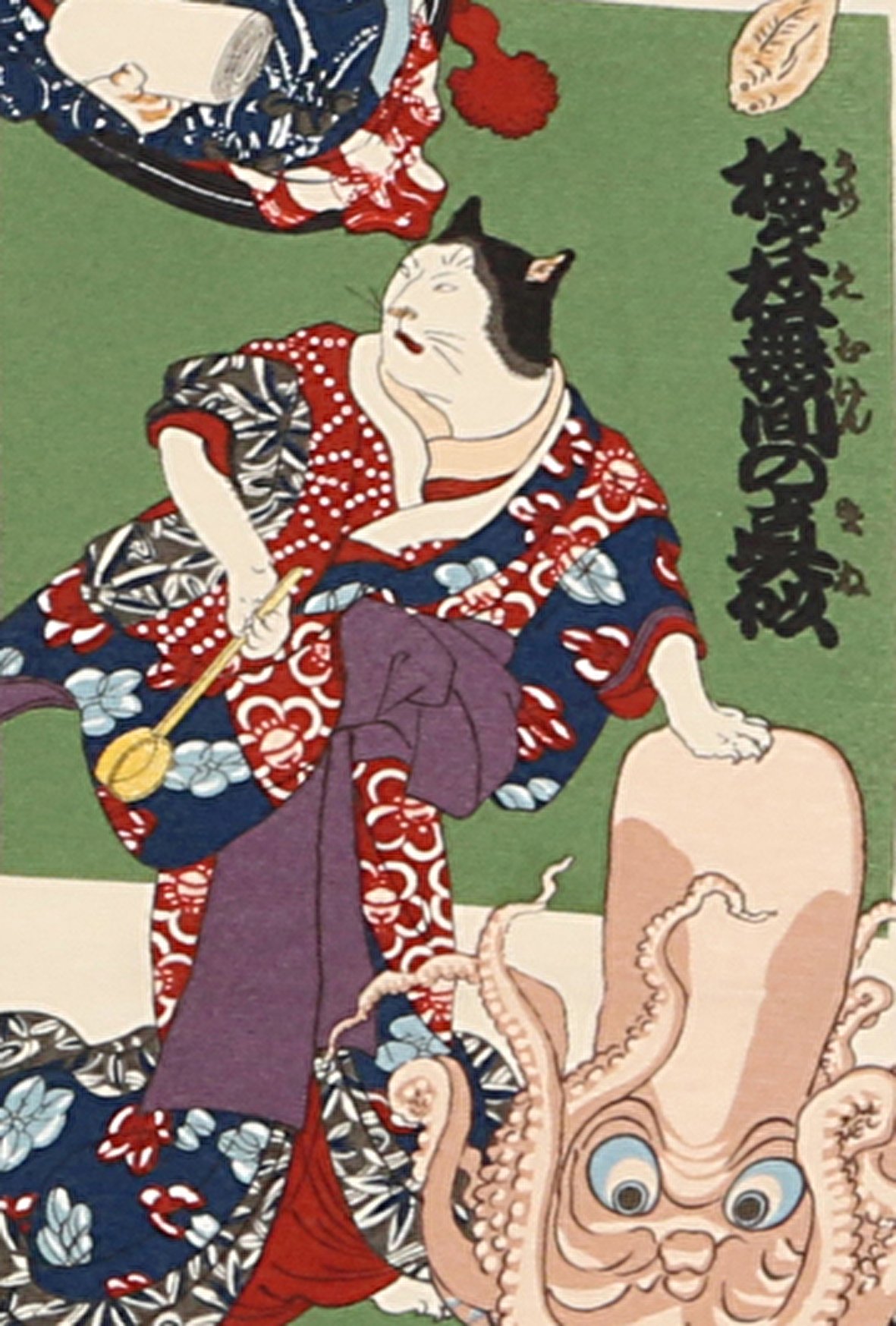
One of them is “A Popular Cat’s Play: Umegae’s Imitation of the Infinite Hell.”
This scene originates from the fourth act of the Kabuki play “Hiragana Seisuiki,” specifically the “Kanzaki Ageya” scene. In the original story, the “Bell of Infinite Hell” at Enshū Kannon-ji Temple is said to grant wealth to those who ring it, but also bring punishment in the afterlife. In a desperate act of devotion, the courtesan Umegae attempts to strike a water basin made to resemble the bell in order to help her disowned husband.
Kuniyoshi transforms this dramatic moment with humor and imagination: Umegae becomes a cat, the water basin is reimagined as an octopus, and falling gold coins are playfully replaced with dried fish, creating a witty and surreal reinterpretation of the scene.
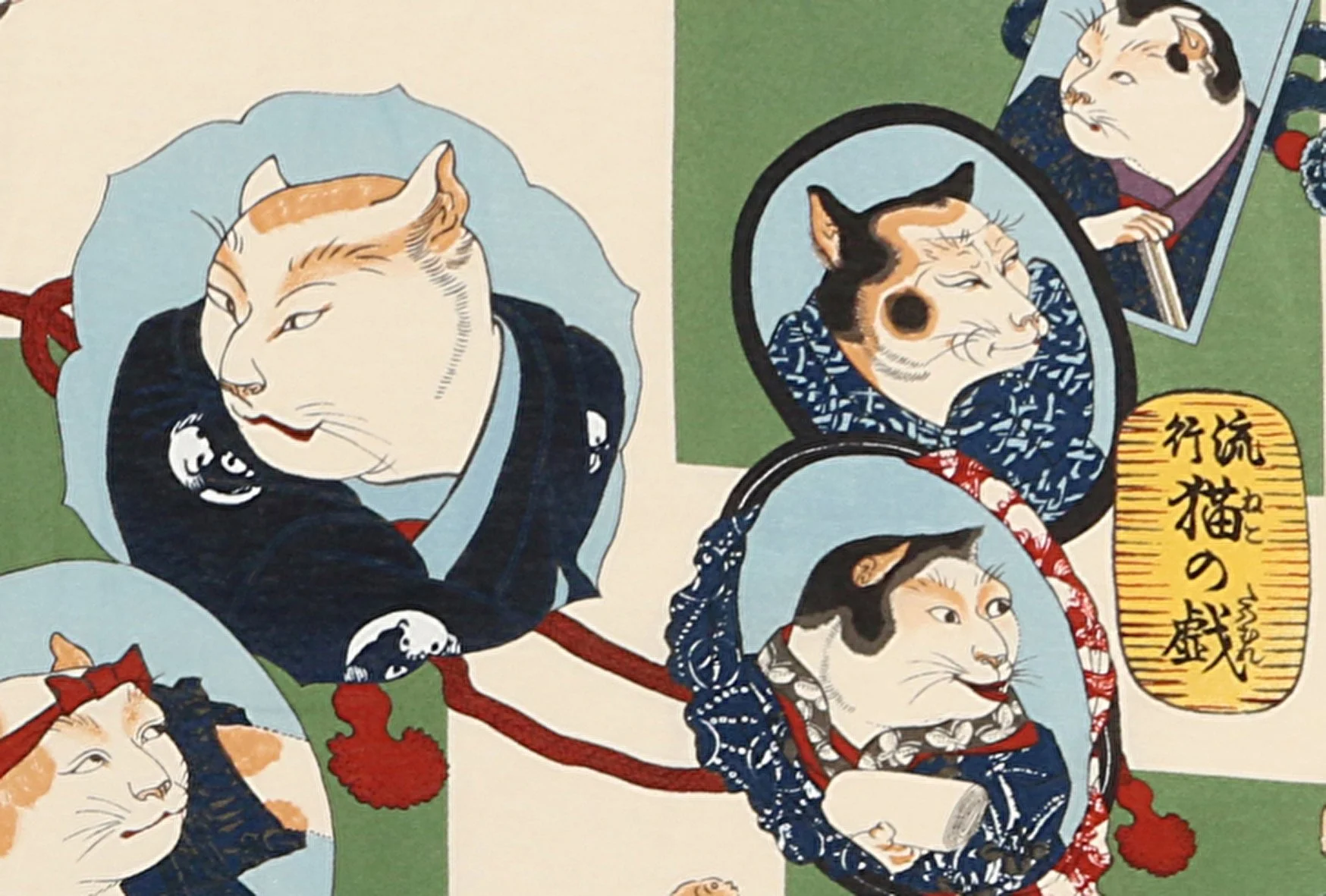
The second work is “One Hundred Faces of Cats.”
This series depicts famous Kabuki actors reimagined as cats, and was highly popular in its time. It includes characters from “Kanadehon Chūshingura.” Here again, actors are humorously transformed into cats, with costume patterns reinterpreted as motifs such as catfish and bells.
A notable point is that the cat actor wearing the catfish-patterned costume and the cat actor portraying Umegae are actually based on the same person—Sawamura Totsushō I (later Sawamura Sōjūrō V). Comparing the two reveals Kuniyoshi’s playful approach to character depiction.
Cats are believed to have been kept as companions in Japan since around the Heian period, and they were also transported on merchant ships along trade routes to control rats. In this way, cats have long existed alongside human life in both practical and affectionate roles. Kuniyoshi’s works capture this familiar presence of cats, reflecting both their charm and their enduring place in everyday culture.
Adapted from Utagawa Kuniyoshi’s “Popular Cat Play: Imitating a Plum Branch” and “One Hundred Faces of Cats” (Collection of Gallery Beniya).