
Welcoming the New Year: “Year of the Horse”
As we step into the New Year, we would like to express our sincere gratitude to everyone who continues to support us. In the Japanese zodiac, 2026 is the Year of the Horse, a symbol of vitality, progress, and bold new beginnings. Traditionally associated with strength, movement, and success, the Year of the Horse is considered an auspicious time to embrace new challenges and move forward with confidence. We hope this year brings you good fortune, inspiration, and exciting journeys ahead.
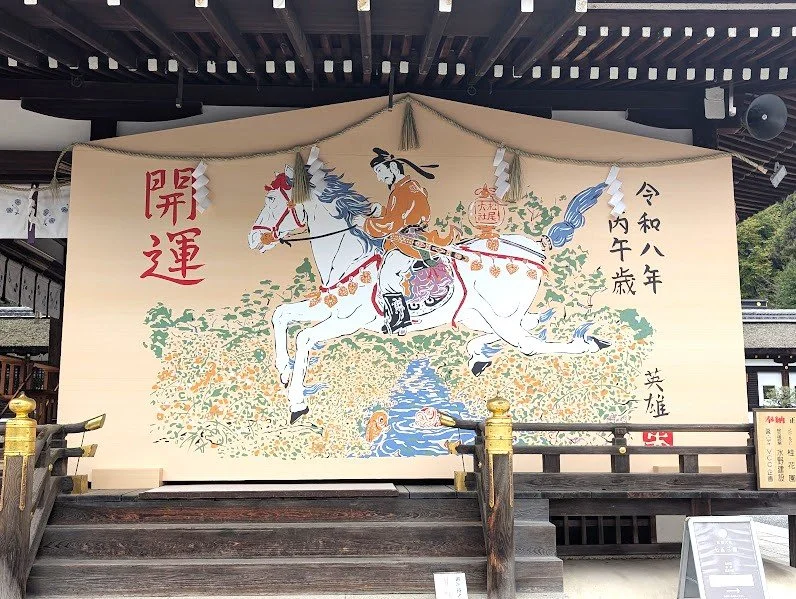
*Large ema votive plaque at Matsunoo-taisha Shrine. (© kyoto.travel)
In the Japanese zodiac, 2026 is the Year of the Horse. The horse is seen as a powerful and energetic symbol, representing vitality, forward movement, bold action, success, prosperity, and competitiveness. Because of this symbolism, 2026 is considered an auspicious year, especially for those who are willing to take on new, challenging, or ambitious endeavors, as such efforts are believed to be rewarded with good fortune.
In Japan, the guardian deity associated with the Year of the Horse is Seishi Bodhisattva, also known as Mahāsthāmaprāpta. As the right attendant of Amida Buddha, Seishi is revered as a bodhisattva who embodies wisdom, inner strength, and compassion, offering guidance and spiritual support to those born under or connected to the Horse year.
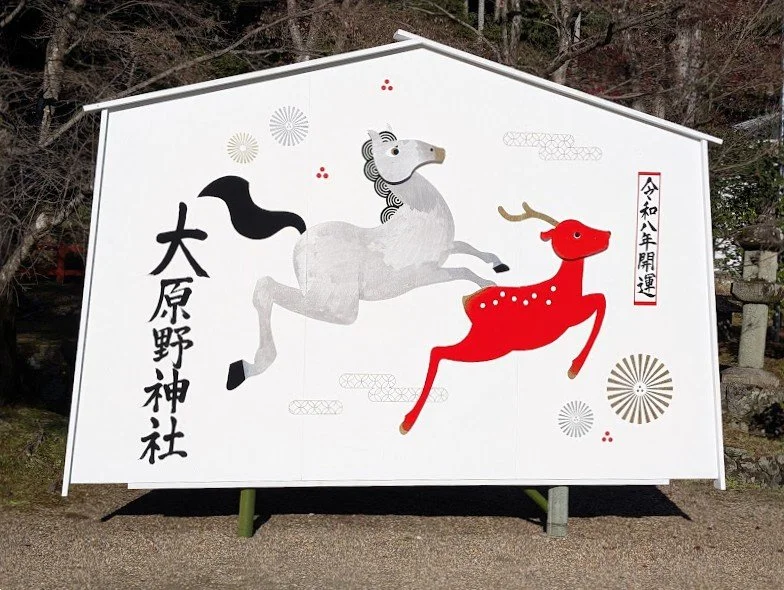
Large ema votive plaque in Oharano-jinja Shrine. (© kyoto.travel)
Ema are wooden prayer plaques, traditionally shaped like or illustrated with a horse, and are offered at Shinto shrines when making a wish or prayer. In ancient times, people would dedicate live horses to shrines, as horses were believed to serve as divine mounts for the gods. Over time, these live offerings were replaced by wooden horse carvings or painted boards, which is considered the origin of ema.
As the practice evolved, the designs on ema expanded to include animals associated with each shrine’s enshrined deity, such as foxes or snakes. Eventually, ema designs became even more diverse, and today they often feature auspicious symbols like cranes, turtles, and Daruma dolls, as well as popular characters, seasonal imagery, and landscapes, reflecting both tradition and modern culture.
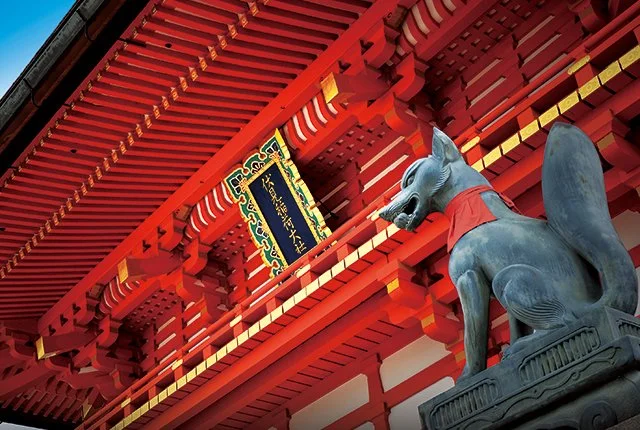
Fushimi Inari Taisha (© inari.jp)
In the ancient lunar calendar, still observed today during sacred rituals and seasonal ceremonies, time itself was guided by the twelve zodiac animals. Each day carried the spirit of an animal, quietly shaping the rhythm of the year. In 2026, Hatsuuma—the first day of the Horse—arrives on February 1st, marking a moment of renewal, movement, and auspicious beginnings.
Legend tells that in 711 CE, on this very first day of the Horse, Inari, the deity of harvest, abundance, and prosperity, descended upon Fushimi Inari Taisha Shrine. Foxes, known as Inari’s divine messengers, were said to accompany the deity, weaving a bond between the earthly and the sacred. This moment became etched into spiritual memory and is honored each year through the Hatsuuma Festival, celebrated at shrines throughout Japan.
At Fushimi Inari Taisha, the atmosphere on Hatsuuma is filled with quiet devotion. Visitors receive “shirushi-no-sugi” lucky charms, carefully crafted from sacred cedar wood, believed to carry protective blessings for the year ahead. Offerings of fried tofu and inari sushi are gently placed before the fox statues—simple yet meaningful gestures of gratitude to the messengers who watch over the shrine and its visitors.
In this way, Hatsuuma is not only a date on the calendar, but a living tradition—one that connects movement, faith, and hope as a new cycle begins.