New Release : Silk Aloha Shirts
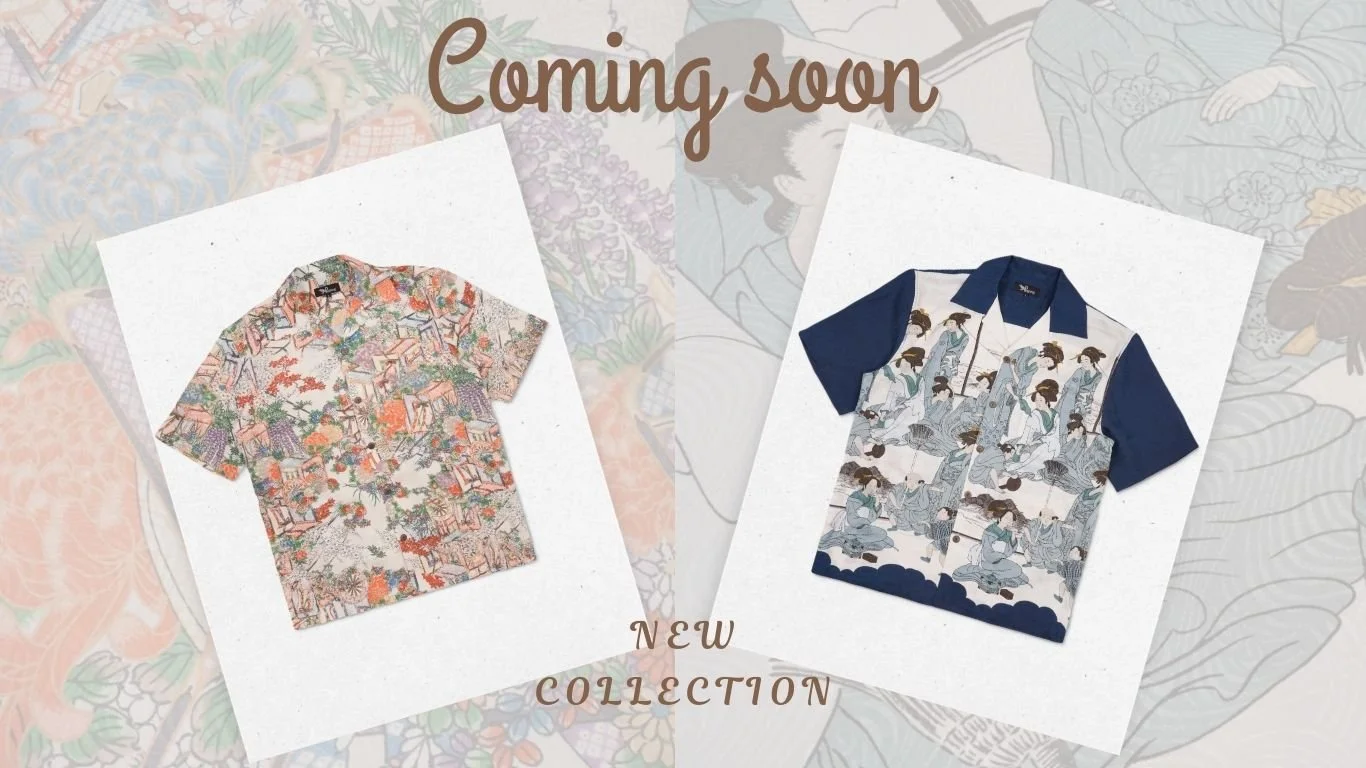
This year’s first silk aloha shirt release has arrived.
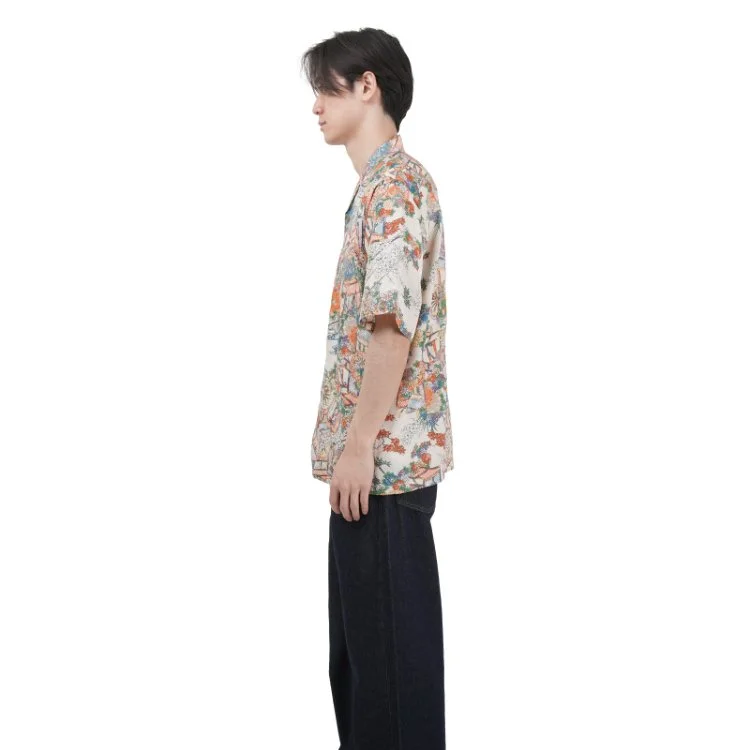
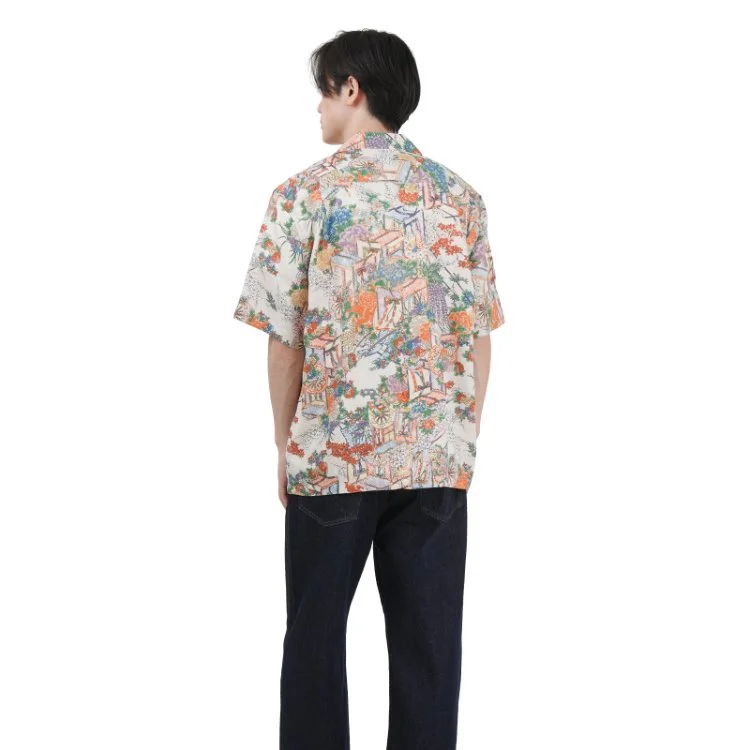
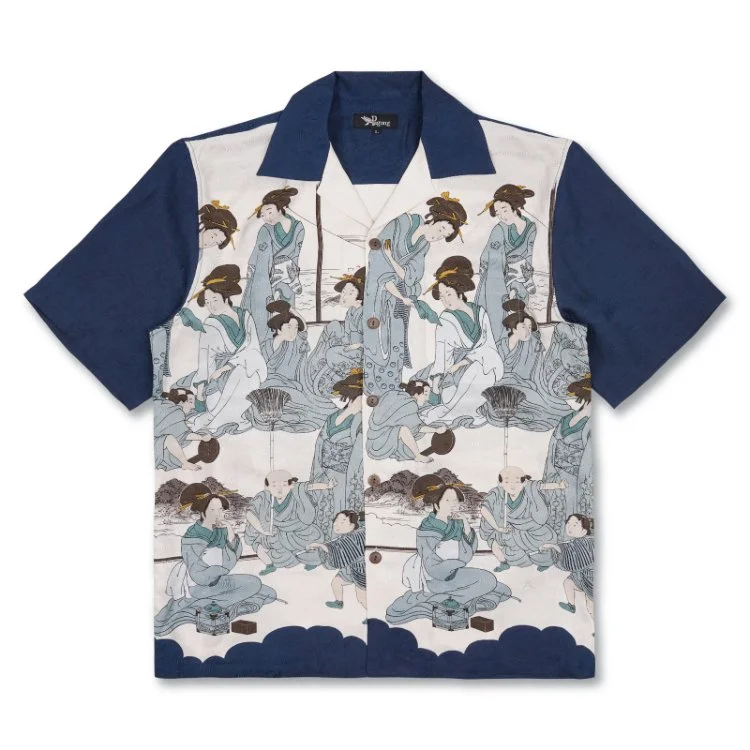
We proudly present two new designs — Goshoguruma and Ukiyo-e — each carrying the depth of Japanese heritage and the quiet strength of timeless artistry.
Crafted from luminous silk, these pieces mark the beginning of a new chapter in our collection. They reflect not only tradition, but renewal — a celebration of culture, refinement, and enduring beauty.
As the first silk release of the year, these designs symbolize a fresh start, elegance in motion, and our continued dedication to craftsmanship.
We invite you to experience this meaningful beginning with us.
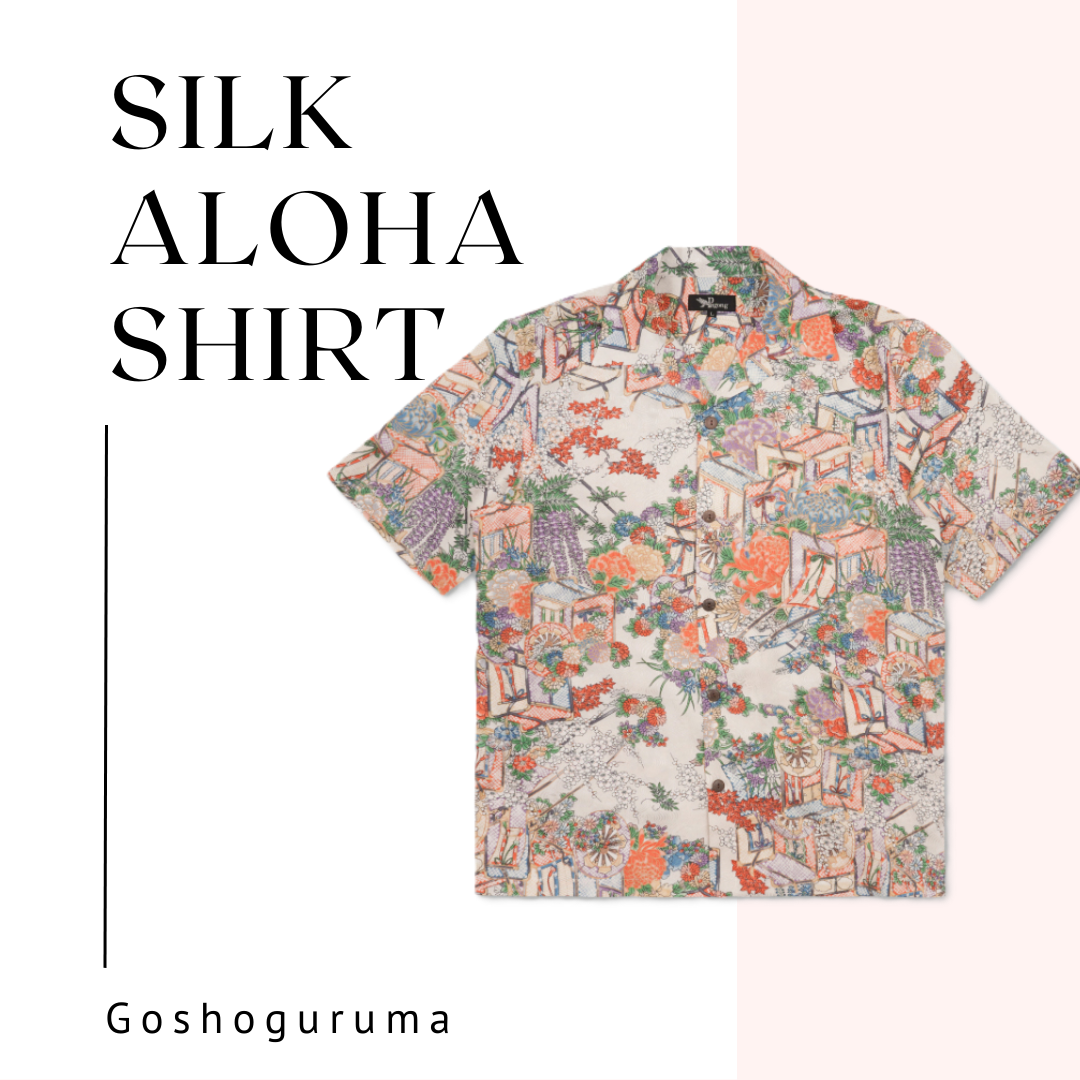
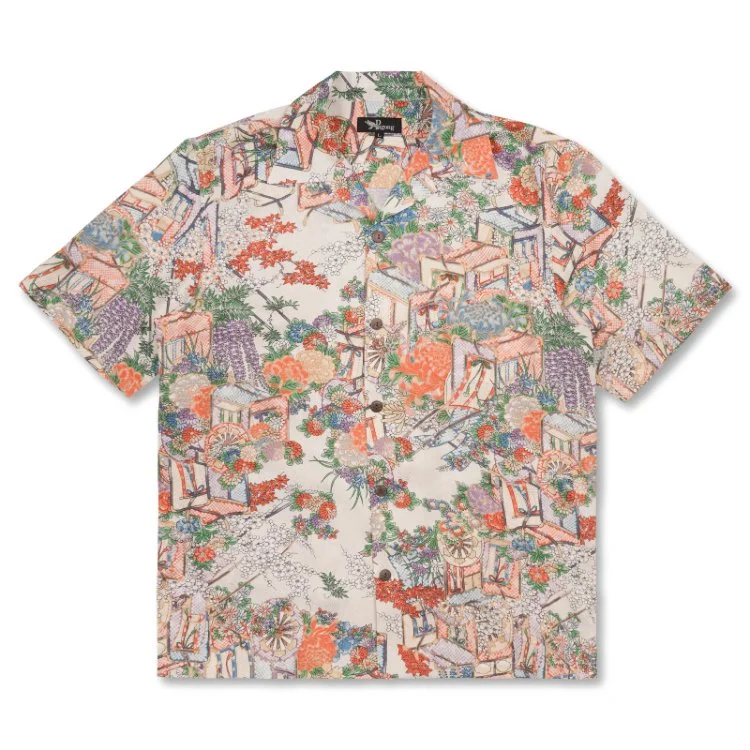
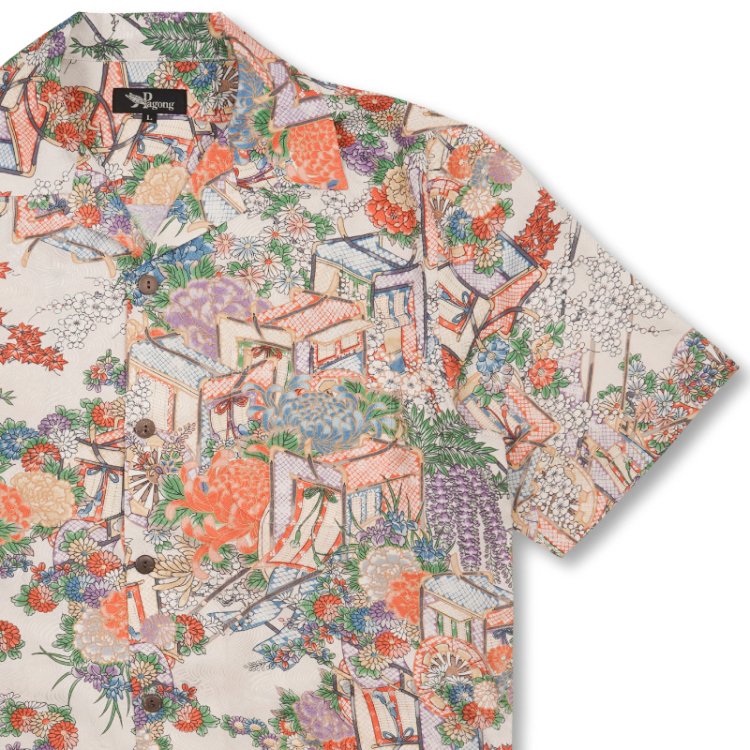
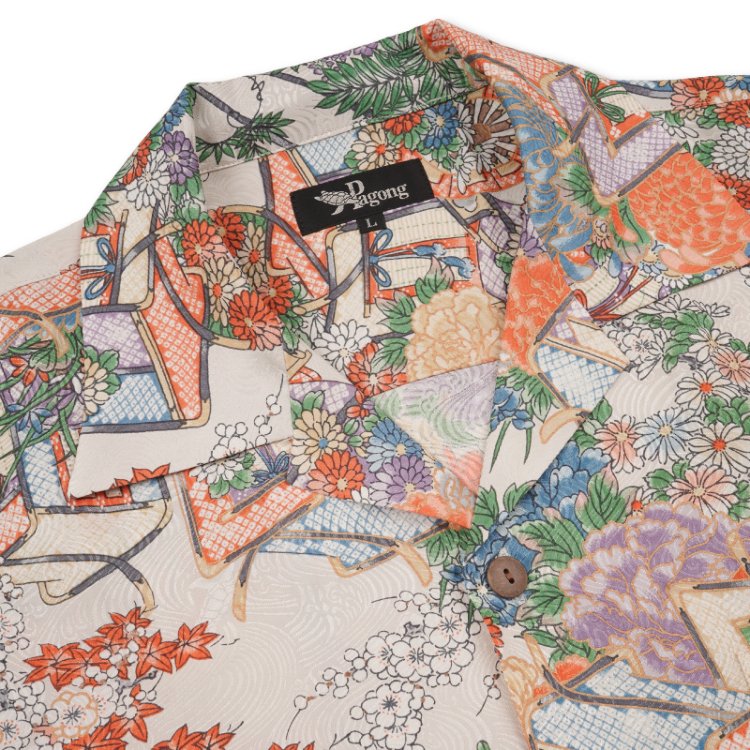
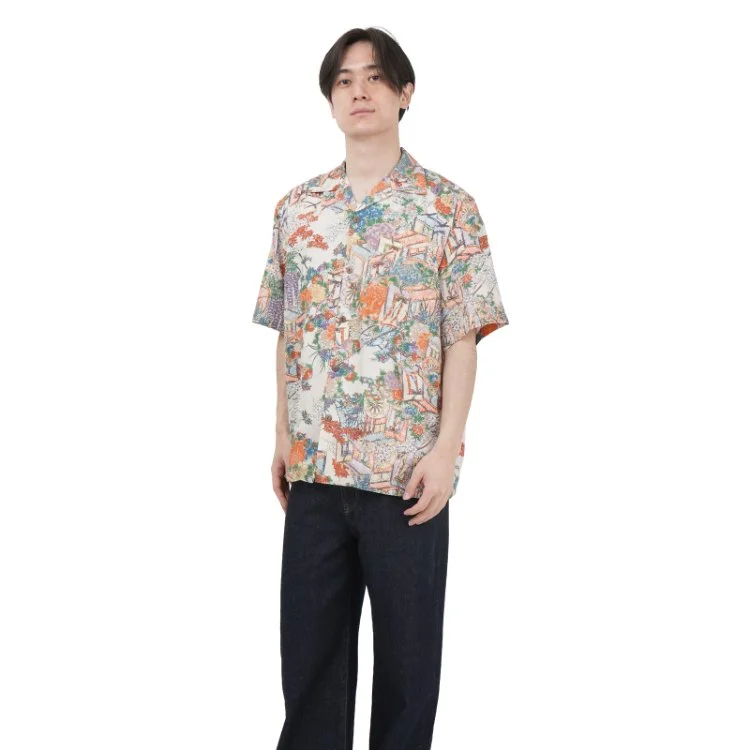
“Goshoguruma” ~御所車~
The ox-drawn carriages used by aristocrats during court ceremonies from the Heian to Kamakura periods are called Goshoguruma. Their graceful form is a classic dynastic motif, often arranged among flowers of the four seasons to express elegance and luxury.
Japan’s rich natural environment and clear seasonal changes inspired people to seek protection through nature’s beauty. Flowers and plants were believed to hold protective power, leading to the development of plant-based dyeing techniques. Kyoto, blessed with pure water, became especially renowned for producing beautifully dyed silk fabrics.
The colors used in this Imperial carriage pattern are based on traditional Japanese aesthetics. Five key colors—purple, red, indigo, green, and brown—are combined with yellow, white, and black. Decorating garments with these colors symbolizes harmony, balance, seasonal cycles, and protection in all directions, expressing a wish for peace and prosperity.
From the floral designs of the four seasons to its carefully chosen colors, the Goshoguruma pattern carries a deeply auspicious meaning.
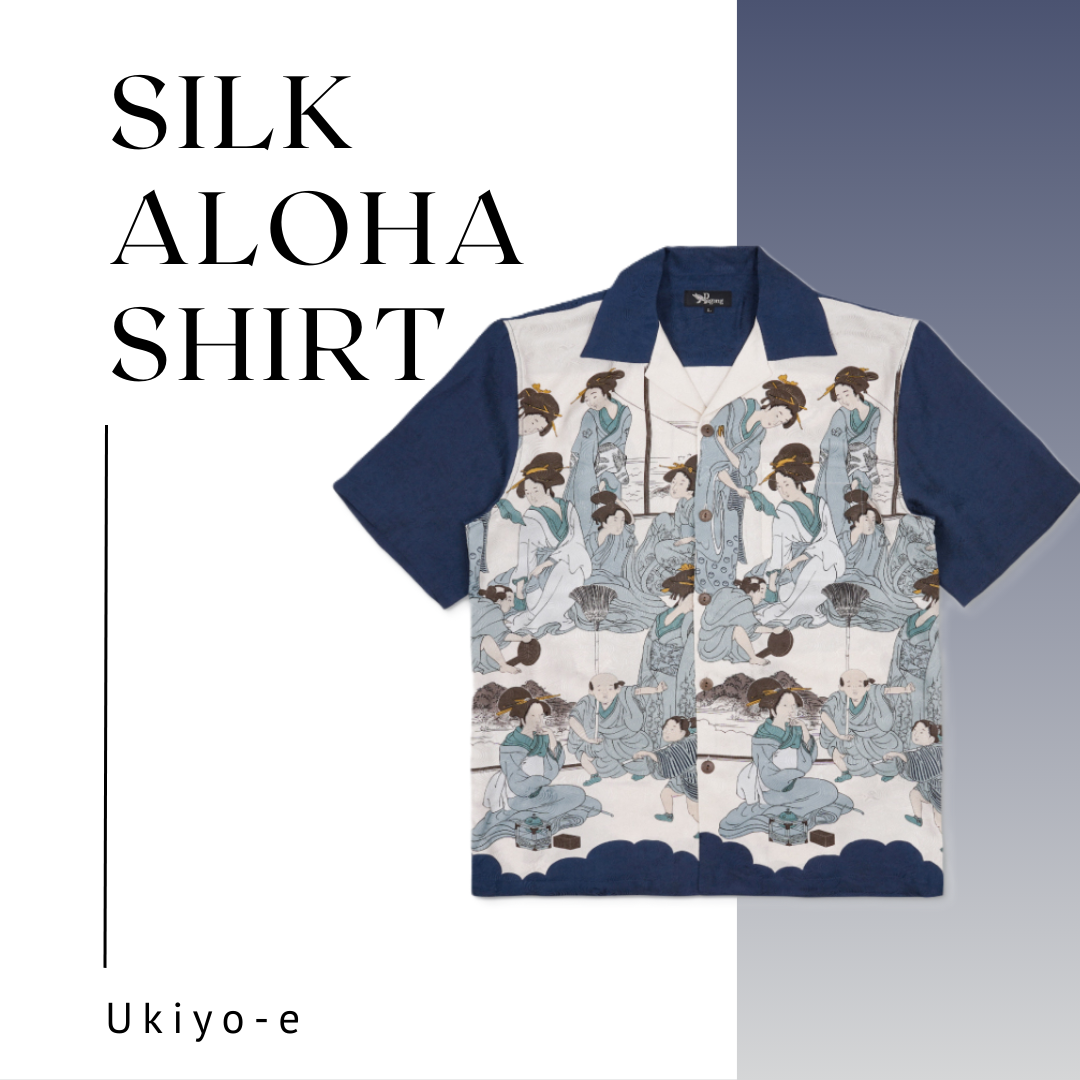
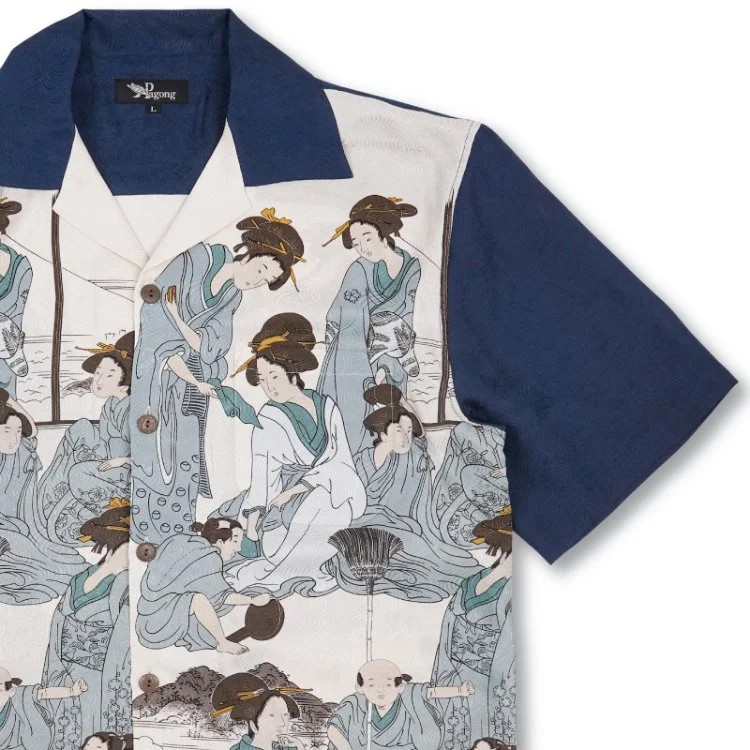
“Ukiyo-e” ~浮世絵~
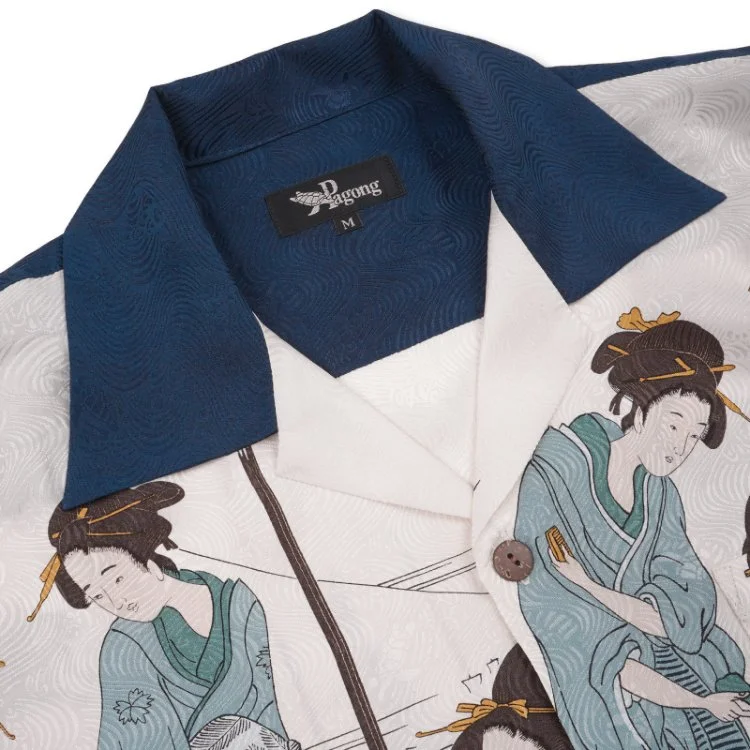
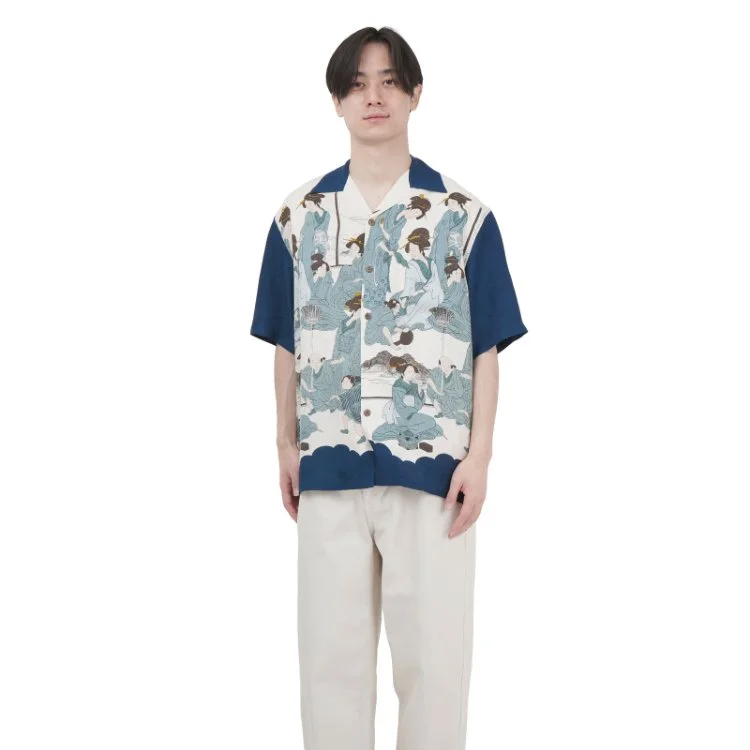
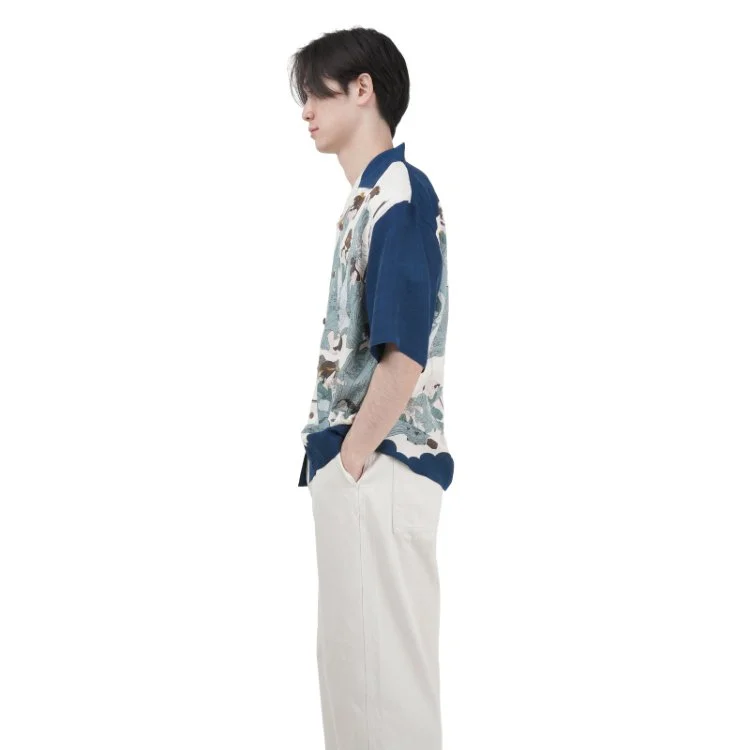
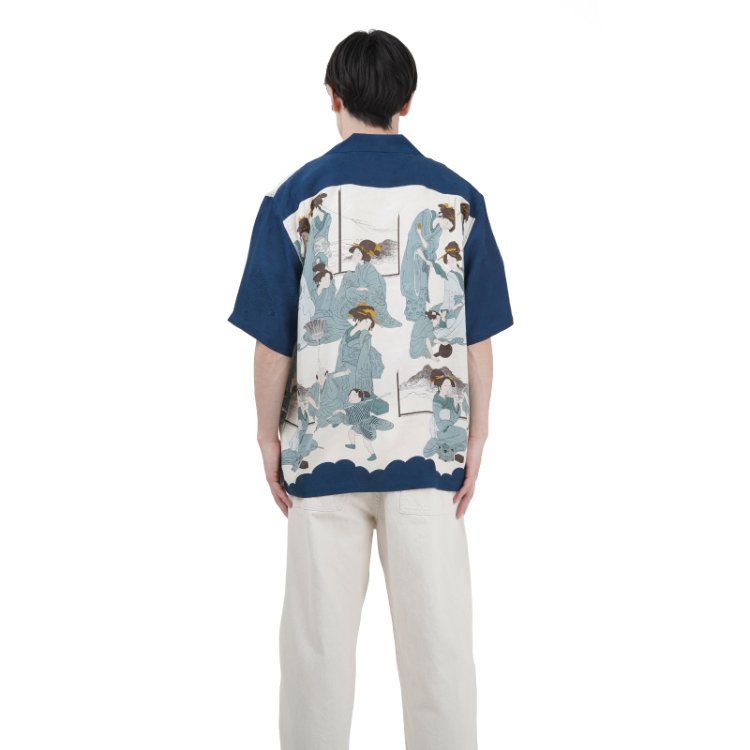
This design depicts elegant women and children of various ages, recalling the refined ukiyo-e style of Kitagawa Utamaro and Torii Kiyonaga, active during the late Edo period, particularly the Kansei era (1789–1801). It offers a vivid glimpse into the daily life and aesthetics of Edo’s townspeople.
Although the Kansei era was marked by political reform and restrictions on luxury, Edo’s urban culture continued to flourish, cultivating a sophisticated sense of chic and understated elegance.
One of the most captivating features of this pattern is the woman’s hairstyle, delicately rendered to reflect the refined beauty ideals of the period and adding depth, authenticity, and visual charm to the design.