

T-Shirts and Quarter-Sleeve Shirts
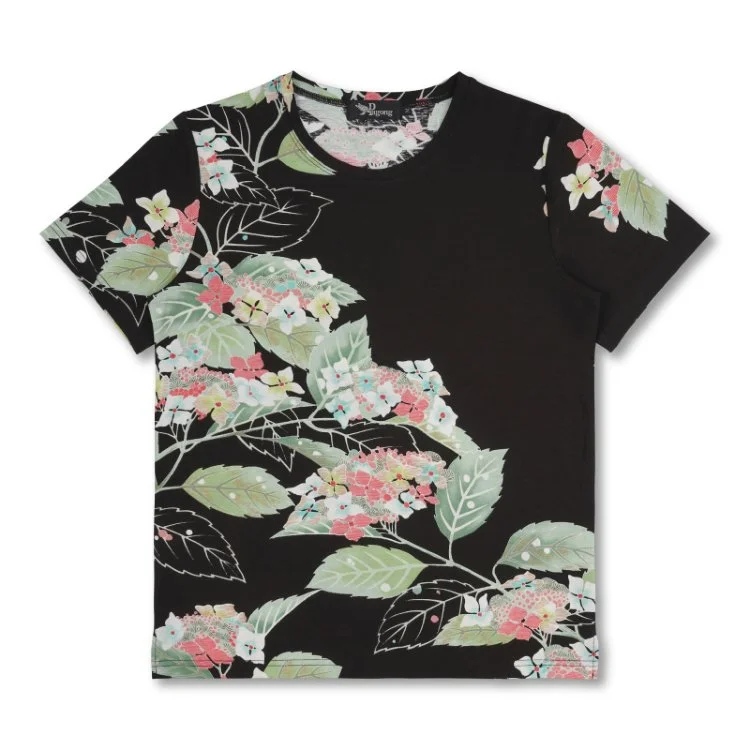
Color / Black Care Instruction
Japanese name/ 紫陽花 (Ajisai)
-About-
Hydrangeas, native to Japan, include a variety called "Gaku hydrangea," which has been integrated into Japanese culture since ancient times and is mentioned in the Man'yoshu.
The flower's color changes with soil pH, giving it the nickname "Shichihenge" or "seven changes." Notably, large blue-purple flowers have been popular since the Edo period and are common motifs in ceramics, lacquerware, kimonos, and yukata, evoking early summer.
A poem in the Man'yoshu expresses a wish for a loved one’s prosperity, likening it to the layered blooming of hydrangeas. This imagery symbolizes deep connections between people, suggesting that the beauty of blooms and dew may inspire enduring bonds.
・100% Premium Cotton
・Made in Japan
・Hand-wash
・Model (5 feet, 3 inches)
・Currency : US Dollar (USD)
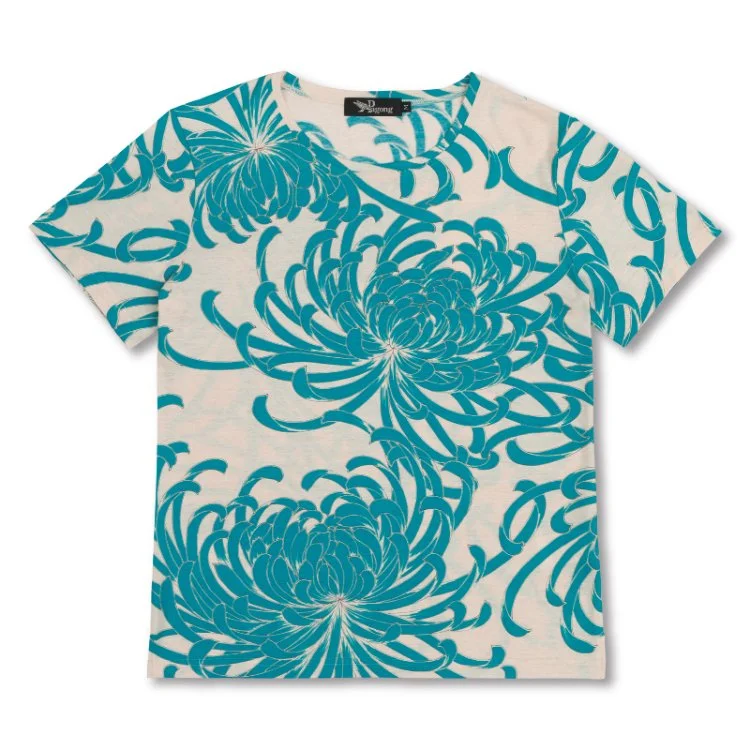
Color / Silver Care Instruction
Japanese name/ 乱菊 (Rangiku)
-About-
The Japanese chrysanthemum is a symbol of longevity and vitality.
Starting from the late Taisho era (1912-1926), more modern and exuberant patterns became fashionable in Japan. This depiction of “dancing” chrysanthemums was made during Japan’s “Art Nouveau Movement”, and became a very popular design for those who wished to represent the fashion style of a new era.
・100% Premium Cotton
・Made in Japan
・Hand-wash
・Model (5 feet, 3 inches)
・Currency : US Dollar (USD)
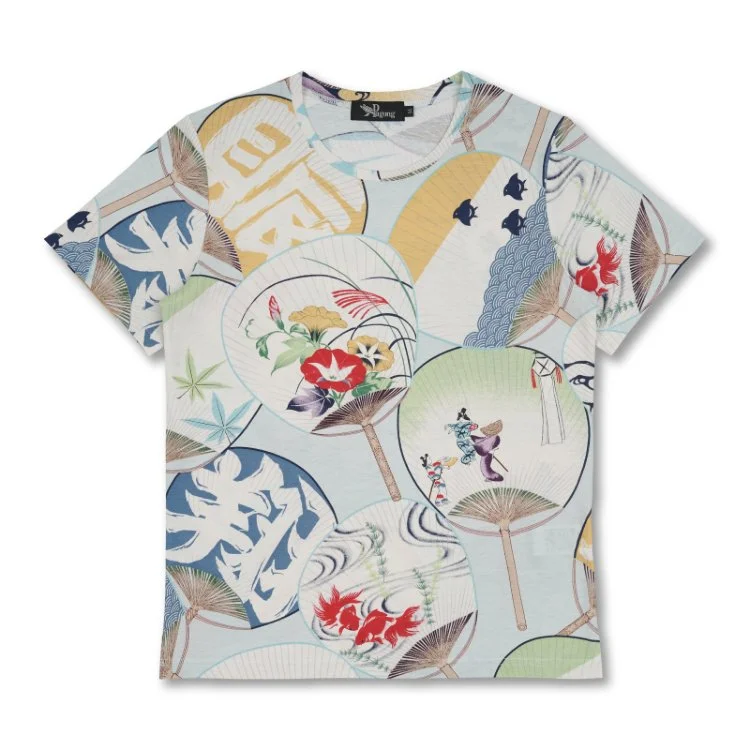
Color /Light Blue and Multi-color Care Instruction
Japanese name / 京涼の団扇(Kyoryō Uchiwa)
-About-
The Kyoryō Uchiwa design captures the essence of Kyoto’s summer scenery.
Inspired by Kyoto-style uchiwa fans, long cherished in daily life as symbols of comfort and coolness, this design expresses Kyoto’s distinctive elegance and the longing for purity and serenity amid the summer heat.
The overlapping fans are adorned with seasonal motifs such as morning glories, goldfish, flowing water, and dancing figures, evoking the vibrant atmosphere of summer.
Each element reflects the changing seasons and carries prayers for happiness and peaceful living.
The auspicious kanji depicted within the fans convey the following meanings:
「魁」 (Sakigake) — to lead the way, to stand at the forefront, and to guide an era forward.
「翔」 (Shō) — to soar freely through the open sky, transcending limitations and rising toward one’s dreams.
「賑」 (Nigiwai) — signifying liveliness, abundance, and prosperity, expressing the joyful gathering of people and the fullness of happiness, much like a festival.
The layered composition of the fans suggests the gentle flow of passing breezes and the quiet passage of time.
It depicts the interplay of light and shadow on summer days, the prayers woven into everyday life, and tranquil moments shaped by people and the wind.
Since ancient times, uchiwa fans have been regarded as auspicious objects, believed to invite good fortune and ward off misfortune. This pattern carries a wish that pure breezes may bring calm and clarity to the heart.
To express the unseen wind as beauty—this is a sensibility passed down through generations of Kyoto’s artisans and artists.
Kyoryō Uchiwa brings this appreciation of the invisible into the present, offering gentle coolness and quiet healing within the summer air.
Like a soft embrace of Kyoto’s summer, this design delivers a tender breeze to the wearer’s heart, adding peaceful blessings to everyday life.
・100% Premium Cotton
・Made in Japan
・Hand-wash
・Hang to dry
・Currency : US Dollar (USD)
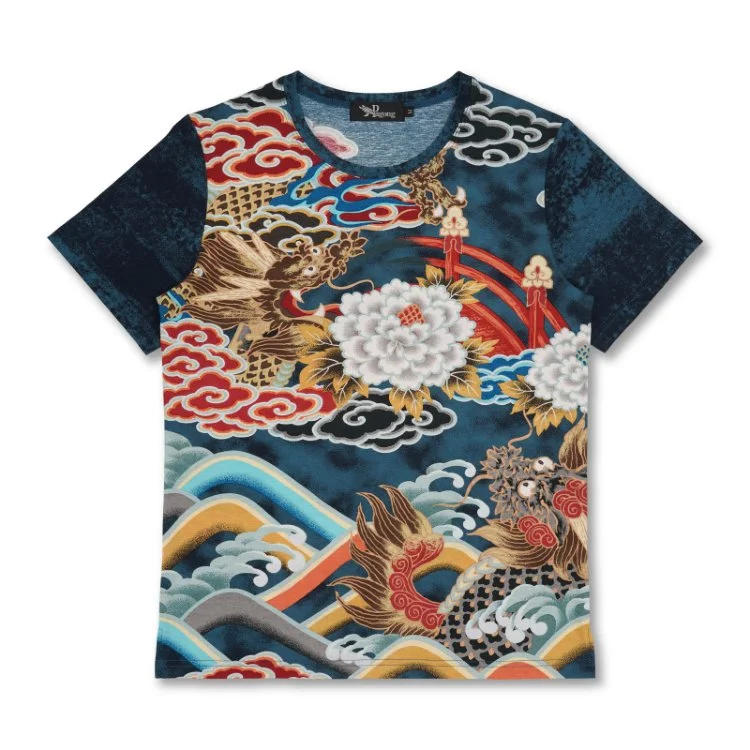
Color /Navy and Multi-color Care Instruction
Japanese name / 玉蜀黍(Ryu to Kirin)
-About-
This auspicious pattern, depicting a dragon and a Kirin facing one another, has long been cherished as a symbol of harmony between heaven and earth and the union of power and virtue.
The dragon is a sacred being believed to ascend to the heavens, summon clouds, and bring life-giving rain. Often associated with thunder and the sky, it has been revered as a manifestation of celestial power.
In contrast, the Kirin is known as a benevolent and gentle guardian, said to herald times of peace and wisdom. Though it bears horns, it is believed to possess such compassion that it would not even harm a single living creature.
Traditionally, the dragon represents the energy of the heavens, while the Kirin embodies the virtue of the earth. When these two stand together, they express the moment when heaven and earth are united. The vermillion bridge at the center symbolizes connection—between sky and land, humanity and nature, and differing forces brought into balance.
The scene of the dragon and Kirin facing one another captures the meeting of strength and virtue, merging in harmony and giving rise to renewal and new beginnings.
The mountains and waves in the background reflect the rhythms of nature and the flow of life, while blooming peonies symbolize prosperity, abundance, and noble grace.
Softly drifting clouds carry auspicious signs, lending depth and quiet movement to the composition.
This design reflects the refined elegance of classical court aesthetics, later echoed in ceremonial and performance garments, and is distinguished by its dignified and timeless beauty.
Within this composition, where the dragon and Kirin form a single world, there lives a quiet wish—that celestial power and earthly virtue may intertwine, bringing peace, balance, and prosperity.
・100% Premium Cotton
・Made in Japan
・Hand-wash
・Hang to dry
・Currency : US Dollar (USD)
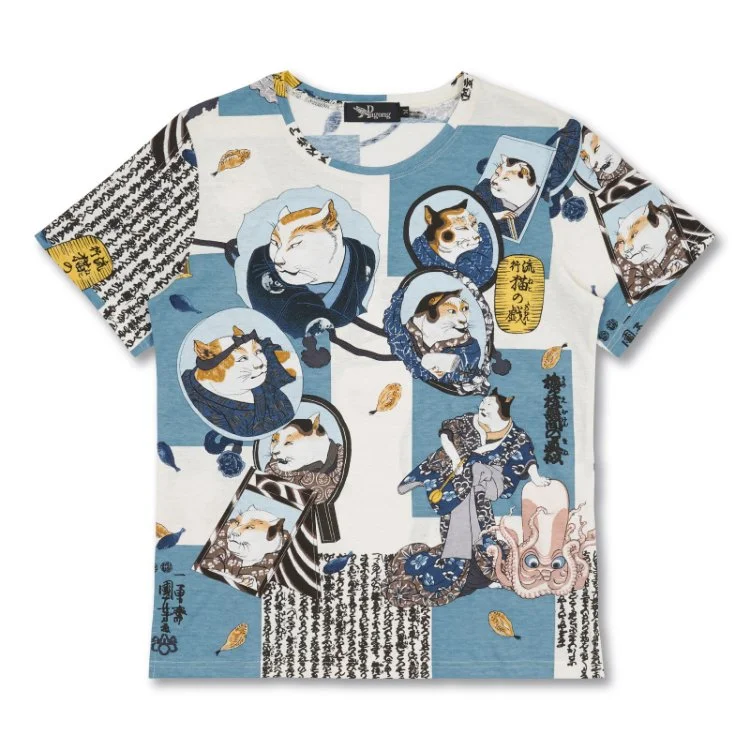
Japanese name/ <猫の歌舞伎> (Nekonokabuki)
-About-
One of three Museum Collection patterns at Pagong inspired by great ukiyo-e masters of the Edo-era, Kuniyoshi Loves Cats! The composition for this pattern is actually based on two ukiyo-e works by Kuniyoshi Utagawa who lived from 1797 to 1861, in Edo (modern-day Tokyo).
The son of a kimono silk-dyer, Kuniyoshi apprenticed from the age of twelve in the tradition of ukiyo-e woodblock printmaking.
As an adult artist, Kuniyoshi became quite well-known for his prints depicting Kabuki actors and beautiful courtesans. However, when the ruling shogunate placed an official ban on the making of prints depicting the popular actors and courtesans, (reflecting his love of felines), Kuniyoshi ingeniously began to use his own charming and beloved cats as his subjects,“cats that have been well-loved”, he liked to say.
Creating hundreds of works of his own cats “playing humans”, Kuniyoshi packed each print with his witty, entertaining style, and often his friends said, while having a cat cozily sleeping in the folds of his kimono as he worked.
Neko no Hyakumensou and Hayarineko no Tawamure are the prints used in the making of Kuniyoshi Loves Cats!
A collaboration with GALLERY BENIYA.
・100% Premium Cotton
・Made in Japan
・Hand-wash
・Hang to dry
・Currency : US Dollar (USD)
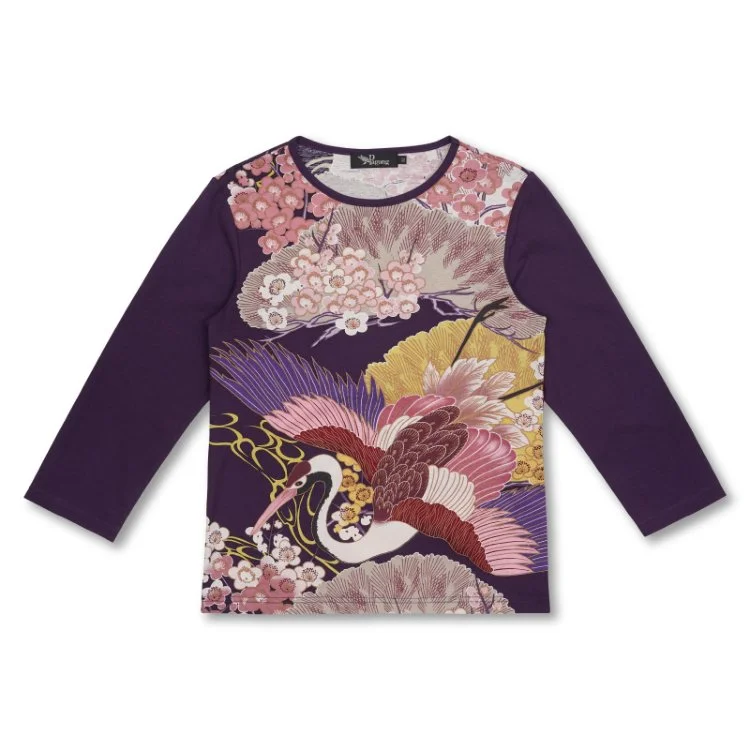
Color / Purple and Multi - color
Size Chart Care Instruction
Japanese name/ 百年の鶴 (Momotose No Tsuru)
-About-
In Japanese mythology, the tsuru, or crane, comes from Mount Horai in heaven, and carries happiness and good fortune to earth. Since the crane was believed to live 1,000 years, in Japan it is revered as a symbol for resilience, strength and long life.
The matsu, or pine, in reality, CAN live for up to 1,000 years; therefore it is also a symbol for long life, as well as strength.
The ume, or plum, always blooms during the harsh, cold winter; signifying vitality, and life-force.
In 2019, in order to celebrate the 100th Anniversary of our founding company Kamedatomi LTD, this exquisite pattern was especially chosen to represent our sincere wish for everyone:
“One Hundred Years of Happiness, Continued Good Health, and a Long Prosperous Life“.
・100% Premium Cotton
・Made in Japan
・Hand-wash
・Currency : US Dollar (USD)
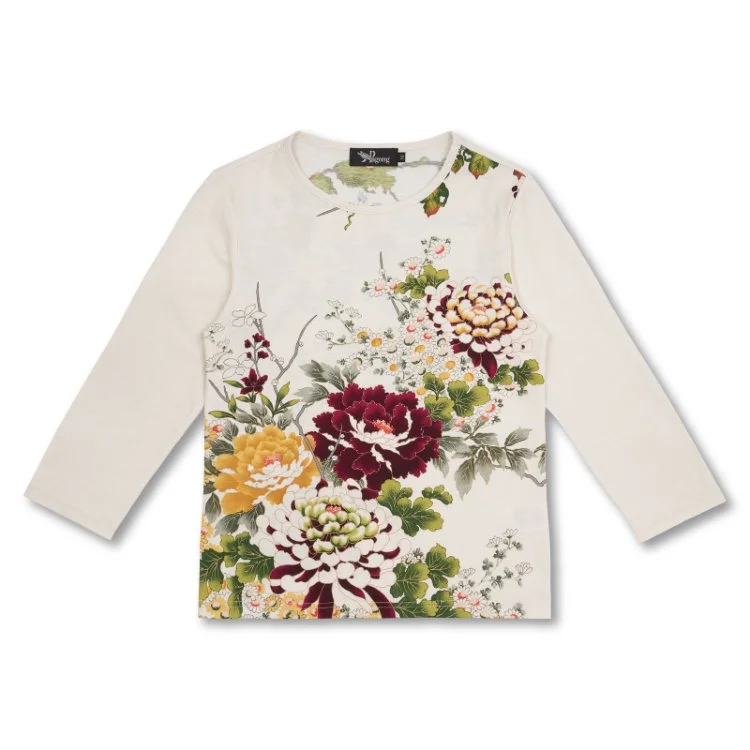
Color / White and Multi - color
Size Chart Care Instruction
Japanese name/ 蔦と菊牡丹 (Tsuta to Kikubotan)
-About-
Ivy is loved for its beautiful palm-shaped leaves and tendrils that form stems. It is also used as a family crest, as it is considered a strong and auspicious plant, as it grows by climbing other trees and buildings. Geisha also liked the way it tangles and multiplies, as it represents a lifetime of staying with regular customers. Chrysanthemums are depicted as a motif representing longevity and are beloved as a flower that represents autumn in Japan. The peony is also known as the "flower of wealth" and symbolizes people's yearning for abundance.
・100% Premium Cotton
・Made in Japan
・Hand-wash
・Currency : US Dollar (USD)
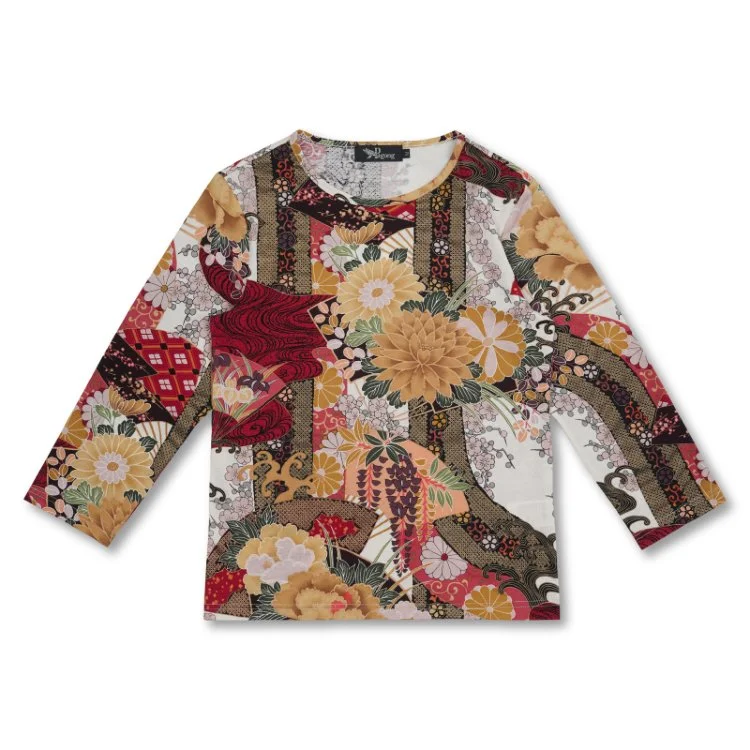
Size Chart Care Instruction
Japanese name/ 滝と扇面 (Takitosenmen)
-About-
The “seigaha” or standing wave, is a pattern which represents surges of good fortune, power and resilience. When combined with exquisite seasonal flowers such as the peony, chrysanthemum and wisteria, it takes on an even deeper meaning.
Kiku, or chrysanthemums, were introduced to Japan from China in the Nara-era (710-794) and when depicted with the peony and wisteria, traditionally symbolize the wish for a long, healthy life filled with everlasting joy and happiness.
・100% Premium Cotton
・Made in Japan
・Hand-wash
・Currency : US Dollar (USD)
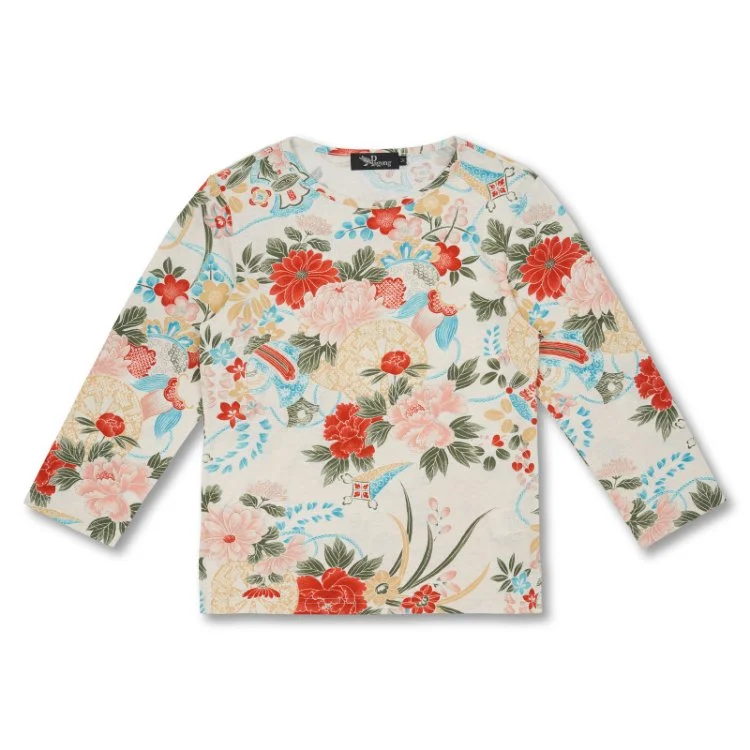
Japanese name/ 花車と宝尽くし (Hanaguruma to Takazukushi)
-About-
This design is inspired by a formal kimono pattern for young women from the early Showa era. It features a flower cart overflowing with seasonal blossoms and symbolic treasures.
At its center is the peony, often called the “king of flowers” for its rich and elegant beauty. Traditionally, the peony represents wealth, nobility, and prosperity. It is also associated with the wish for a fortunate marriage and a life of abundance.
The flower cart, filled with blossoms and treasures, expresses a parent’s heartfelt hope that their daughter will grow to live a life as beautiful, graceful, and prosperous as the flowers themselves.
・100% Premium Cotton
・Made in Japan
・Hand-wash
・Currency : US Dollar (USD)
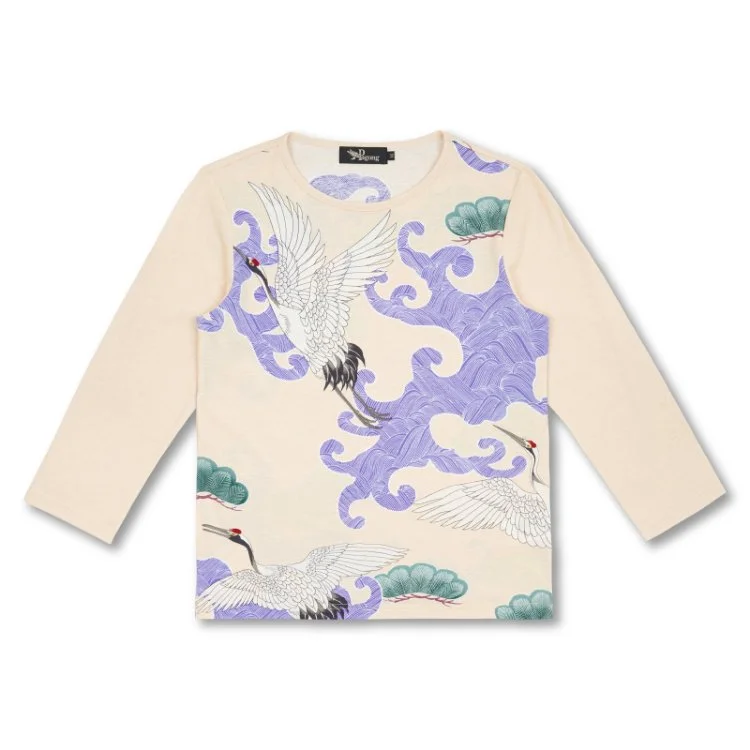
Japanese name / 松波と鶴(Shyowa to Tsuru)
-About-
Among Japanese motifs, the crane and pine have long been a beloved combination symbolizing good fortune.
Worshipped as messengers of the gods, the crane brings happiness and joy to people.
On the other hand, the pine is an evergreen tree that remains green year-round and has strong roots in the earth. Its appearance embodies wishes for eternal youth and longevity, unwavering sincerity, and prosperity.
When these two designs come together in harmony, they represent "everlasting happiness" and "a spirit living with hope."
In "Pine Waves and Cranes," a pine tree is depicted atop gently lapping waves, with a crane dancing majestically above it.
Since ancient times, waves have been considered an auspicious motif symbolizing "everlasting energy" and the "cycle of life."
The waves' gentle swaying motion reflects the transitions of human life and nature.
The pine supports the earth with its strength, while the crane dances lightly through the sky.
While each symbolizes a different world, they resonate together within a single design,
evoking a sense of the connection between heaven and earth, and the beauty of the symbiosis between nature and man.
This pattern embodies a gaze toward both the unchanging and the ever-changing.
The tranquility of the pine, the movement of the waves, and the elegance of the cranes resonate with each other,
embodying the spirit of harmony, respect for nature, and prayers for the future that Japanese people have long cherished.
"Pine Waves and Cranes" is a design that inherits the elegance of classic motifs, but is newly drawn with a modern sensibility.
Wearing it will envelop you in a calm and dignified air,
bringing a quiet elegance and sense of security to the heart of anyone who sees it.
・100% Premium Cotton
・Made in Japan
・Hand-wash
・Currency : US Dollar (USD)
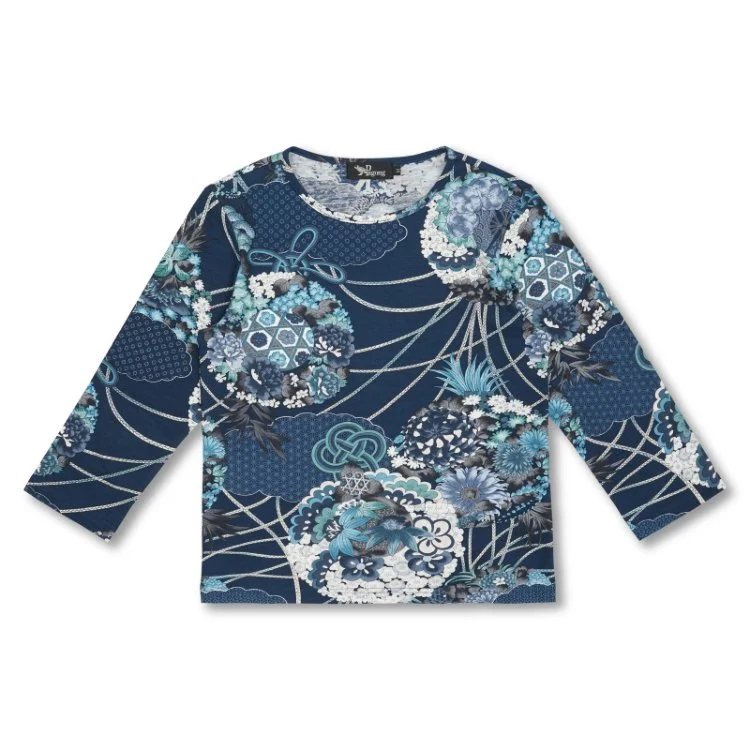
Japanese name/ 薬玉 (kusudama)
-About-
In traditional Japanese culture “Kusudama” have been used since ancient times as an amulet to ward off negativity and protect one from harm.
Its name comes from a combination of two Japanese words “kusuri” which means medicine, and “tama” or “dama” which means ball.
This fragrant protective amulet is made using a selected blend of flowers, incense, and medicinal herbs shaped into a ball, then displayed with the sole purpose of welcoming in healing, purification, and wellness.
・100% Premium Cotton
・Made in Japan
・Hand-wash
・Currency : US Dollar (USD)
Blouse and Skippers
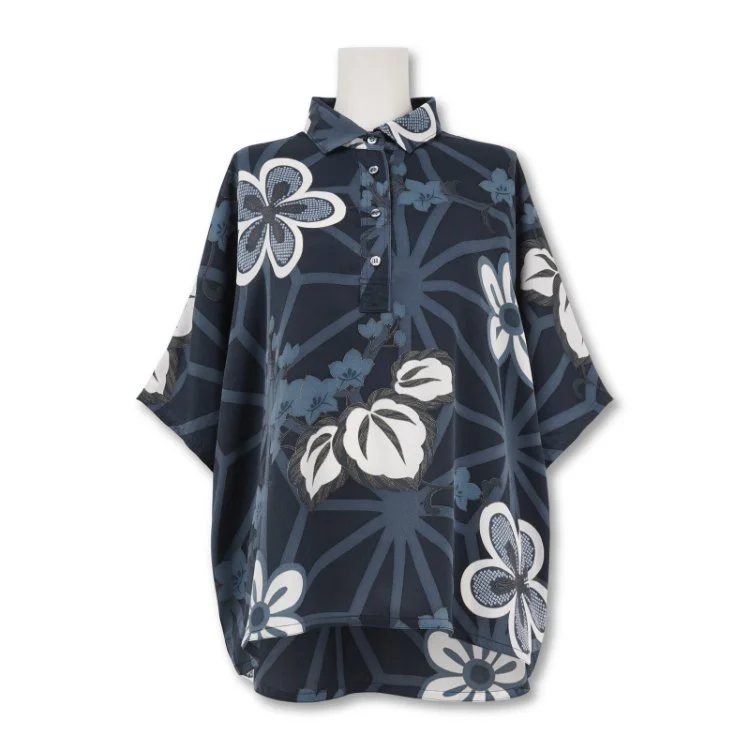
Color/ Navy and Multi-color Care Instruction
Japanese name/ 梅と桐 - Ume to Kiri
-About-
The Story of the Plum & Empress tree ( Paulownia )
At the foundation of this design lies the “Asanoha” (hemp leaf) pattern, a geometric motif based on repeating hexagonal shapes. Its name comes from its resemblance to hemp leaves, a plant known for growing strong, straight, and quickly. Because of these qualities, Asanoha has long symbolized healthy growth and was often used in garments for children as a wish for strength and vitality.
In this pattern, large Asanoha forms create a bold base, upon which equally striking plum blossoms and paulownia motifs are arranged. The generous scale and confident composition give the design a powerful presence. Its vivid colors and dynamic layout reflect a time when kimono designs became increasingly expressive and decorative.
Plum blossoms have long been cherished as auspicious symbols. Blooming in the cold of winter, they represent resilience, renewal, and the quiet arrival of spring. Their delicate fragrance and enduring strength make them a timeless emblem of beauty and perseverance.
The paulownia motif adds a sense of dignity and refinement. Traditionally associated with nobility and elegance, it has been regarded as a prestigious symbol, admired for its graceful form and cultural significance. Over time, it has come to be widely used as a motif representing honor and sophistication.
Together, these elements create a striking harmony—geometric structure balanced with organic form, strength paired with elegance. The bold scale of the design gives it a modern presence, while its motifs remain deeply rooted in tradition.
The result is more than a pattern — it is a powerful expression of growth, resilience, and refined beauty.
・100% Polyurethane
・Made in Japan
・Dry-clean
・Use pressing cloth to iron
・Model (5 feet, 3 inches)
・Currency : US Dollar (USD)
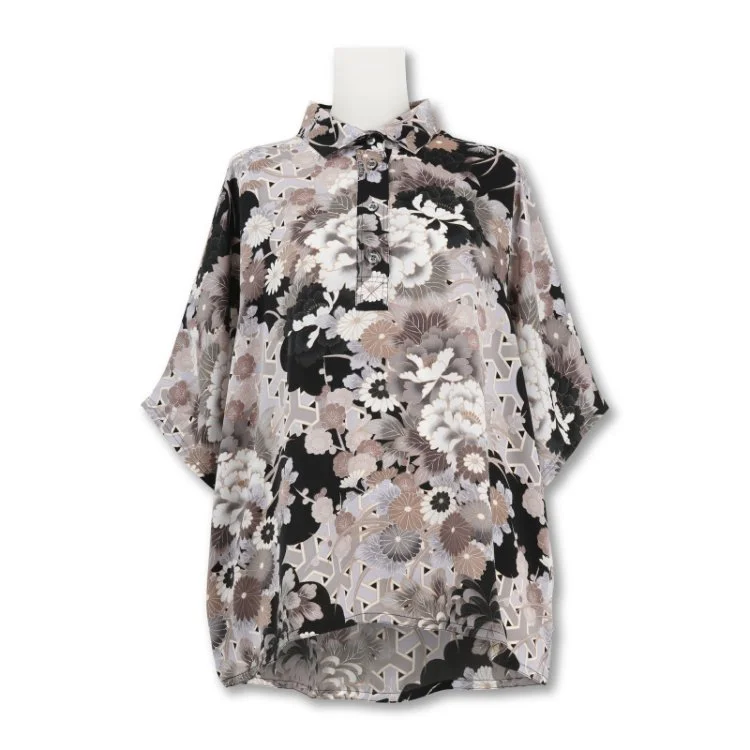
Color/ Black and Multi-color Care Instruction
Japanese name/ 牡丹と菊 - Botan to Kiku
-About-
This pattern reflects the period around the early Showa era, a time when people dreamed of prosperity during years of rapid growth. It is a brilliantly ornate kimono design, suitable for young women to wear on formal occasions.
Centered around the peony—known as the “king of flowers”—a multitude of blossoms bloom in harmony, expressing wishes for peace and prosperity. The design follows the tradition of hyakkazu (a “hundred flowers” motif), symbolizing abundance, elegance, and a harmonious world.
A collection of classical auspicious flowers is beautifully arranged, while the Bishamon-kikkō pattern is stylized to resemble a decorative flower basket, creating the impression of a luxurious ikebana arrangement.
・100% Polyurethane
・Made in Japan
・Dry-clean
・Use pressing cloth to iron
・Model (5 feet, 3 inches)
・Currency : US Dollar (USD)
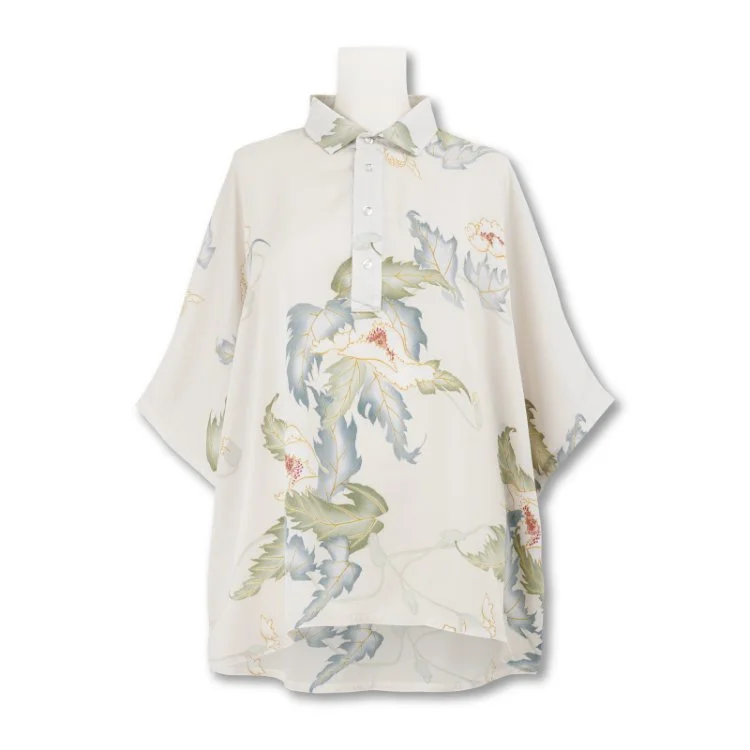
Color/ Beige and Multi-color Care Instruction
Japanese name/ けし - (Keshi)
-About-
Poppies are admired for their delicate beauty and fleeting bloom, opening softly before quickly fading. Their gentle movement in the wind and their ever-changing forms—from drooping buds to fully opened petals—create a sense of quiet vitality and transience.
In this design, poppies are depicted with a painterly touch, capturing each stage of their life. Buds just beginning to open, fully blossomed flowers, and distinctive seed pods appear together, creating a natural rhythm across the composition.
Fine details, such as the veins of the leaves and subtle irregularities, add depth and realism, giving the pattern a lively, almost breathing presence. The flowers seem to sway gently, as if caught in a passing breeze.
Rather than a purely decorative motif, this pattern feels like a scene captured in time—an expressive blend of movement, fragility, and natural beauty. It carries a soft elegance, celebrating the fleeting moments of life with quiet sophistication.
・100% Polyurethane
・Made in Japan
・Dry-clean
・Use pressing cloth to iron
・Model (5 feet, 3 inches)
・Currency : US Dollar (USD)
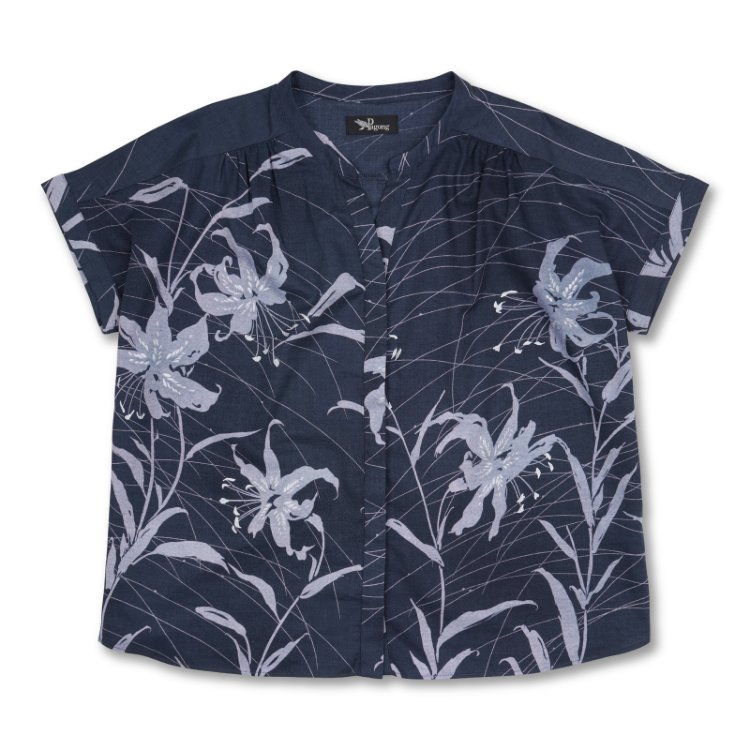
Color / Navy and Multi-color Care Instruction
Japanese name / 百合と露芝 (Yuri to Ro )
-About-
Japan is famously known as the land of lilies, which have thrived in its mountains and fields since the Manyo period. The bulbs, referred to as lily roots, consist of overlapping, fleshy, scale-like leaves. The name "lily" is thought to originate from the way these leaves gather together, with some theories suggesting it comes from the flower's graceful sway in the wind. Lilies have been appreciated for centuries, but realistic motifs are mainly found in Noh costumes from the Momoyama period.
As Western flowers gained popularity in the late Meiji period, sketch-like designs began to emerge, and by the Taisho period, lilies started to appear on kimonos.
This style often depicted lilies in a realistic yet simplistic manner, emphasizing their elegance. The Japanese aesthetic values the fleeting beauty of morning dew. The "dew grass" pattern features layered grass shapes adorned with dewdrops, capturing a quintessential Japanese sentiment. The saying "walking like a lily flower" highlights the flower’s dignified beauty, evoking images of misty fields with graceful lilies swaying in the breeze. Wearing this pattern of lilies and dew grass offers an ultimate expression of elegance.
・Cotton 75% / Rayon 25%
・Made in Japan
・Hand-wash
・Model ( 5 feet, 3 inches )
Currency : US Dollar (USD)
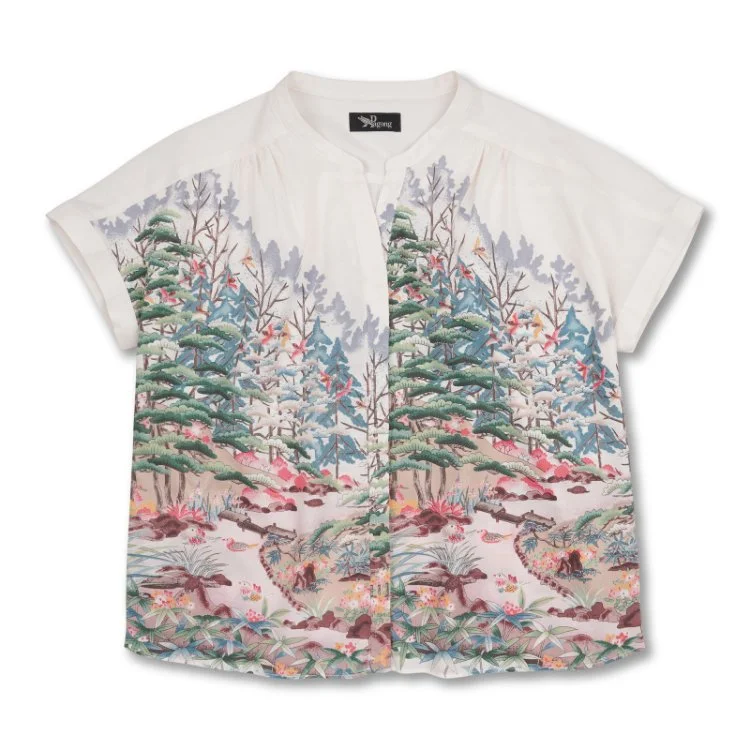
Color / White and Multi-color Care Instruction
Japanese name / 風景画 (fukeiga)
-About-
From ancient times, beautiful artistic patterns on kimono have reflected a delicate sensibility with nature. Fukeiga or “Japanese Mountain Landscape” is no exception, which celebrates forested mountains, and a river with turtles and ducks which are meant to bring back idyllic childhood memories of childhood. In short, a desirable place for one to live!
・Cotton 75% / Rayon 25%
・Made in Japan
・Hand-wash
・Model ( 5 feet, 3 inches )
Currency : US Dollar (USD)
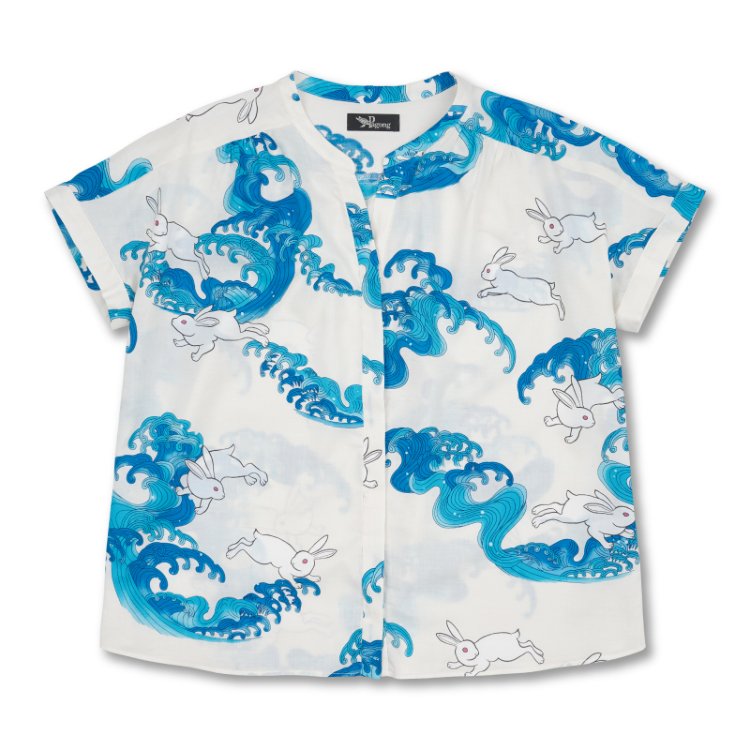
Color / White and Multi-color Care Instruction
Japanese name / 波に兎 ( Nami ni usagi )
-About-
In Japan, rabbits are known as “messengers from the gods, or “kami”, and represent intelligence, prosperity, and moving forward especially in new directions.
In this dynamic, fun-loving pattern, rabbits are seen frolicking with “standing waves”, or “seigaha” taking on an even deeper traditional meaning representing surges ofgood fortune, power against adversity, and resilience.
・Cotton 75% / Rayon 25%
・Made in Japan
・Hand-wash
・Model ( 5 feet, 3 inches )
Currency : US Dollar (USD)
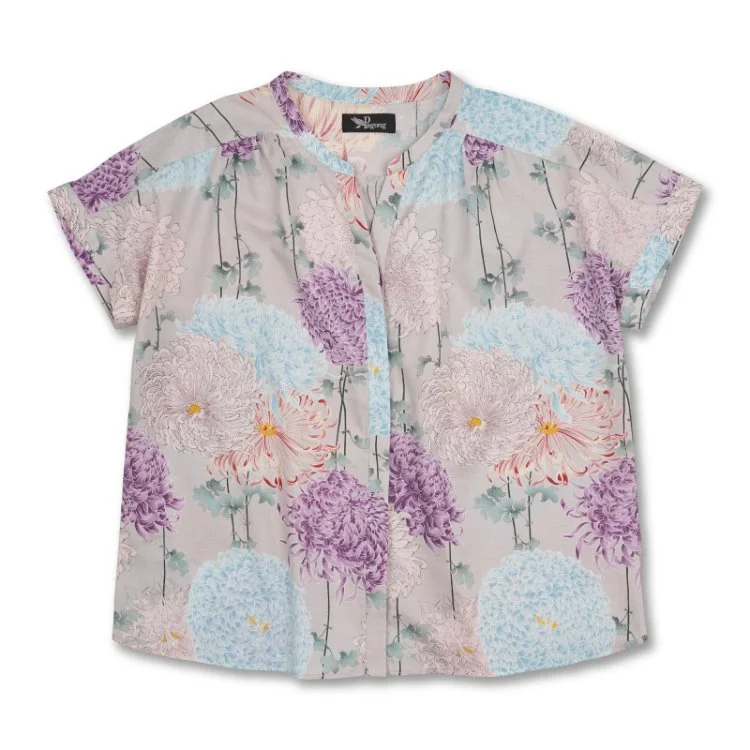
Color / Gray and Multi-color Care Instruction
Japanese name / 彩り菊蔦文様 ( Irodori Kikutsuta monyo )
-About-
The colorful chrysanthemum and ivy pattern beautifully combines the elegance of the chrysanthemum with the vitality of ivy, resulting in a design that exudes sophistication and refinement. This pattern is particularly popular on women's kimonos, obi, and various Japanese accessories, as it creates a noble and aesthetically pleasing appearance.
The chrysanthemum symbolizes "nobility" and "elegance," while ivy represents "vitality," "prosperity," and "growth." The harmonious combination of these two plants is considered auspicious, making it a favored choice for kimonos and obi worn during celebratory occasions such as weddings, coming-of-age ceremonies, Shichigosan, and school entrance ceremonies.
The chrysanthemum and ivy pattern is especially prevalent on women's "furisode" and "homongi" kimonos, which are worn during significant events. This pattern not only adds a gorgeous and noble impression but also carries with it wishes for good luck and prosperity.
・Cotton 75% / Rayon 25%
・Made in Japan
・Hand-wash
・Model ( 5 feet, 3 inches )
Currency : US Dollar (USD)
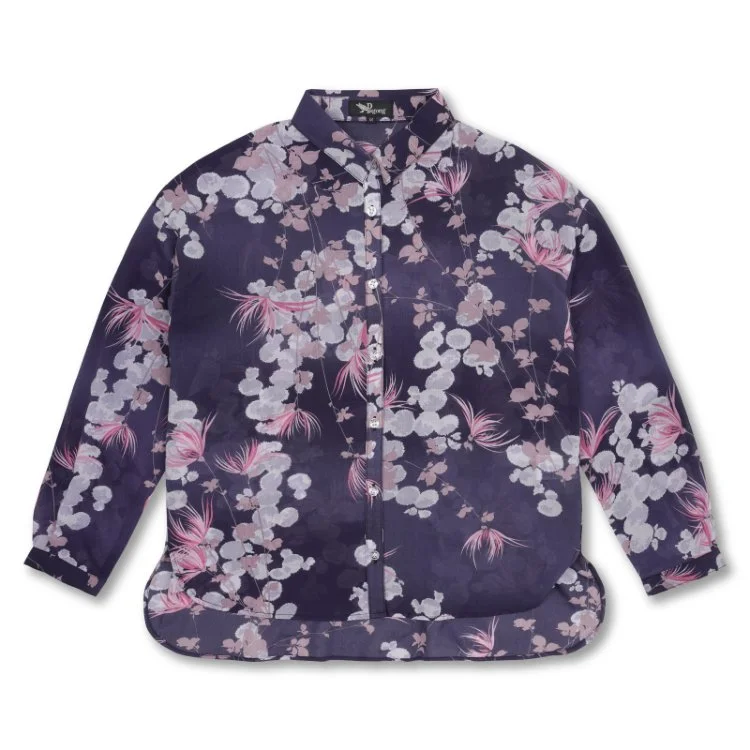
Color / Purple and Multi-color Care Instruction
Japanese name/ 菊に常盤木 - Kiku ni Tokiwagi
-About-
Chrysanthemums are known as a quintessential flower of autumn, admired for their refined beauty and graceful presence. They have long been associated with longevity, vitality, and enduring elegance, making them a beloved motif in seasonal design.
Pine, also known as tokiwagi (evergreen), is a symbol of resilience and continuity. Remaining green throughout the changing seasons, it represents unwavering strength and the idea of permanence. Because of this, pine has been cherished as an auspicious motif, often used to convey wishes for stability and long-lasting prosperity.
In this design, chrysanthemums are depicted with long, slender petals that stretch upward with a sense of quiet movement. Their delicate, flowing form adds refinement and a subtle dynamism to the composition.
The pattern itself is expressed in a simple and balanced style, allowing each element to stand out while maintaining overall harmony. The pairing of chrysanthemums and evergreen pine creates a meaningful contrast—soft elegance alongside steadfast strength.
Together, these motifs embody a wish for longevity, resilience, and a life that remains vibrant through the passage of time.
・Cotton 95% / Silk 5%
・Made in Japan
・Hand-wash
Currency : US Dollar (USD)
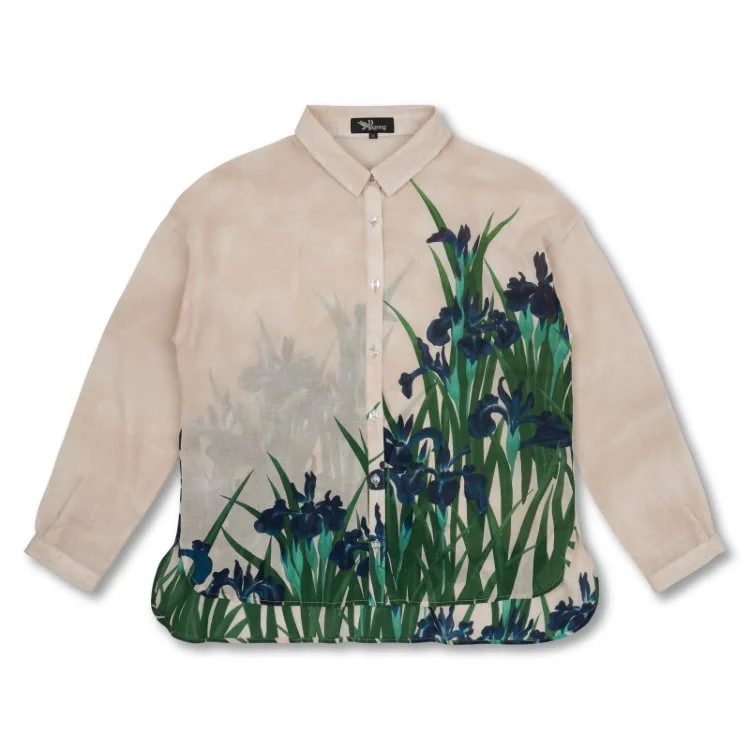
Color / Beige and Green Care Instruction
Japanese name/ 燕子花 (Kakitsubata)
-About-
This exquisite pattern was inspired by a work of art in the collection of the Metropolitan Museum of Art in New York called “Irises at Yatsuhashi (Eight Bridges)”, a pair of six-panel folding screens or “byobu” by Japanese artist Ogata Korin (1658-1716) of the Rimpa school. Born and raised in Kyoto, Korin became an official painter for the royal court in 1701, with Irises being painted just after receiving this honor.
Korin’s focus on irises seems to have many hidden meanings which stem from Japanese literature written over 1,000 years ago; telling of the noble class putting the iris in high regard due to its purple color, which could purify negative energies, and protect those who wore it. The flower was also believed to bring happiness and good fortune, as well as symbolize wisdom, hope, trust, and valor; therefore becoming a pattern which is often seen used on ceremonial kimono.
We are delighted to have been given official permission to use this extraordinary painting from the Metropolitan Museum of Art in New York, to which Pagong has implemented the dye technique of Kyoto Yuzen.
・Cotton 95% / Silk 5%
・Made in Japan
・Hand-wash
Currency : US Dollar (USD)
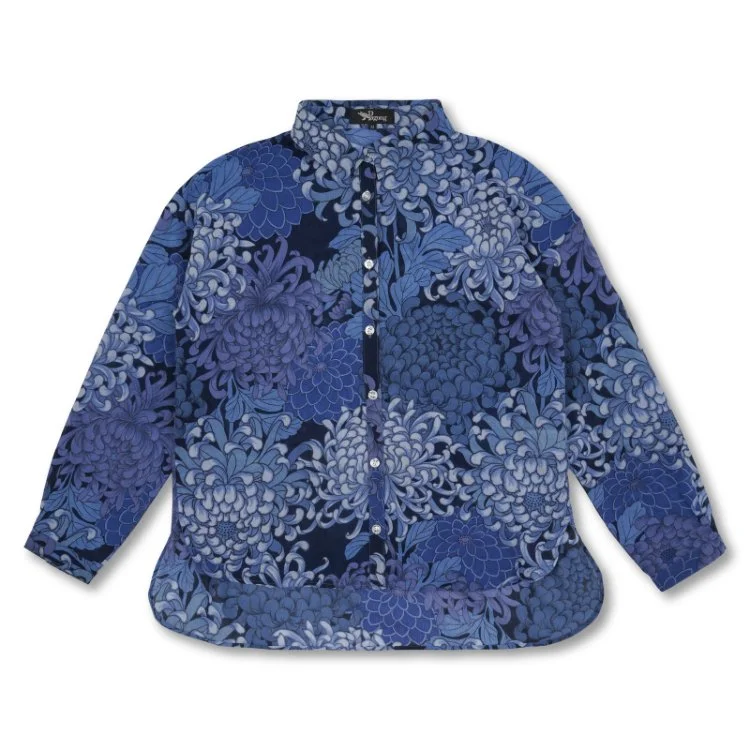
Color / Blue Care Instruction
Japanese name / ( 大輪菊 ) Dairingiku
-About-
Kiku, or chrysanthemums, were introduced to Japan from China in the Nara-era ( 710-794 ). In Japan, the chrysanthemum has become a symbol for the emperor and appears on the Japanese imperial seal. In the language of flowers, the chrysanthemum carries the symbolic meaning of devoted love, loyalty, happiness, longevity, and joy.
・Cotton 95% / Silk 5%
・Made in Japan
・Hand-wash
Currency : US Dollar (USD)
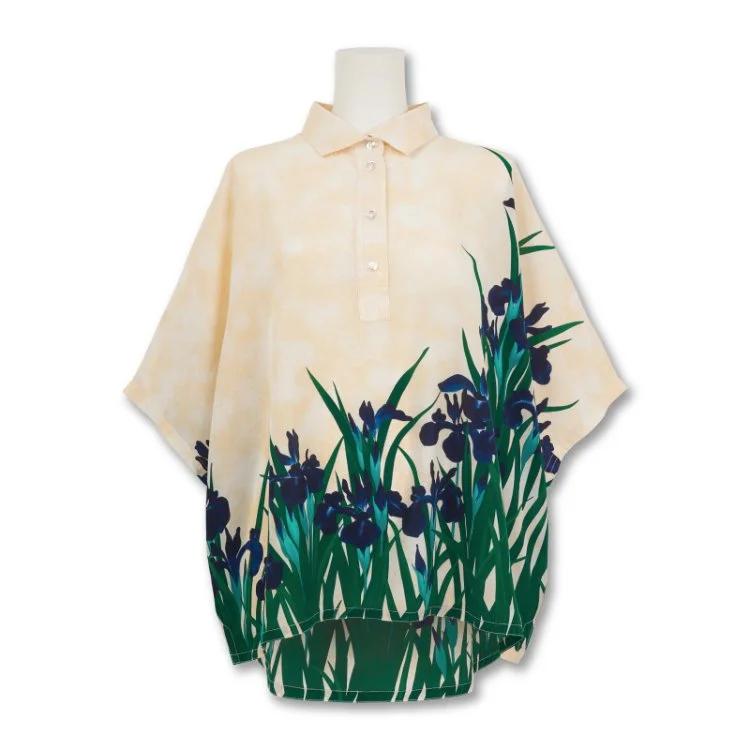
Color/ Beige Care Instruction
Japanese name / 燕子花(Kakitsubata)
-About-
This exquisite pattern was inspired by a work of art in the collection of the Metropolitan Museum of Art in New York called “Irises at Yatsuhashi (Eight Bridges)”, a pair of six-panel folding screens or “byobu” by Japanese artist Ogata Korin (1658-1716) of the Rimpa school. Born and raised in Kyoto, Korin became an official painter for the royal court in 1701, with Irises being painted just after receiving this honor.
Korin’s focus on irises seems to have many hidden meanings which stem from Japanese literature written over 1,000 years ago; telling of the noble class putting the iris in high regard due to its purple color, which could purify negative energies, and protect those who wore it. The flower was also believed to bring happiness and good fortune, as well as symbolize wisdom, hope, trust, and valor; therefore becoming a pattern which is often seen used on ceremonial kimono.
We are delighted to have been given official permission to use this extraordinary painting from the Metropolitan Museum of Art in New York, to which Pagong has implemented the dye technique of Kyoto Yuzen.
・100% Polyurethane
・Made in Japan
・Dry-clean
・Use pressing cloth to iron
・Model (5 feet, 3 inches)
・Currency : US Dollar (USD)
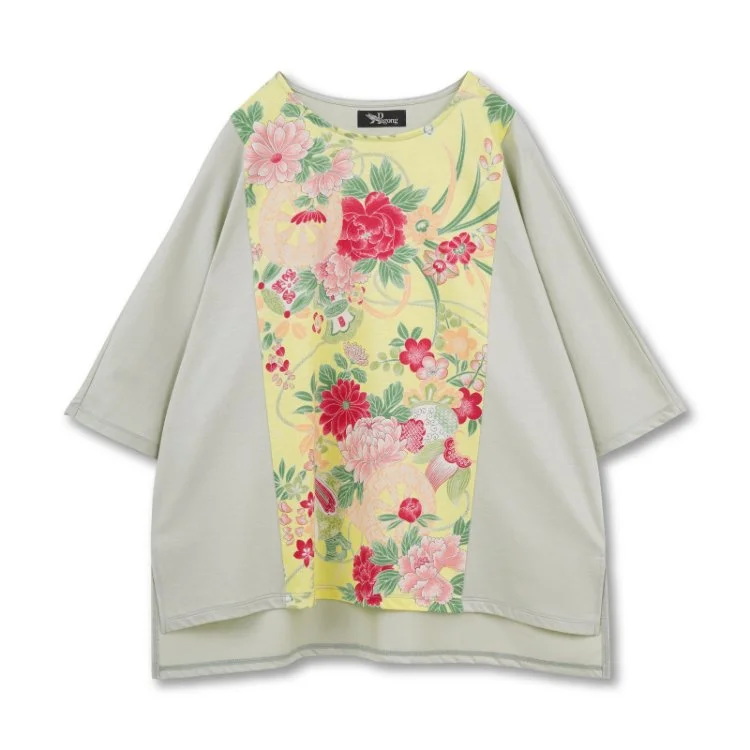
Color / Grey and Multi-color Size Chart
Japanese name / 花車と宝尽くし (Hanaguruma to Takazukushi)
-About-
This design is inspired by a formal kimono pattern for young women from the early Showa era. It features a flower cart overflowing with seasonal blossoms and symbolic treasures.
At its center is the peony, often called the “king of flowers” for its rich and elegant beauty. Traditionally, the peony represents wealth, nobility, and prosperity. It is also associated with the wish for a fortunate marriage and a life of abundance.
The flower cart, filled with blossoms and treasures, expresses a parent’s heartfelt hope that their daughter will grow to live a life as beautiful, graceful, and prosperous as the flowers themselves.
・Material: (Patterned part) 100% cotton (Solid part) 70% rayon, 30% cotton
・Made in Japan
・Hand-wash
Currency : US Dollar (USD)
Gamaguchi Bags
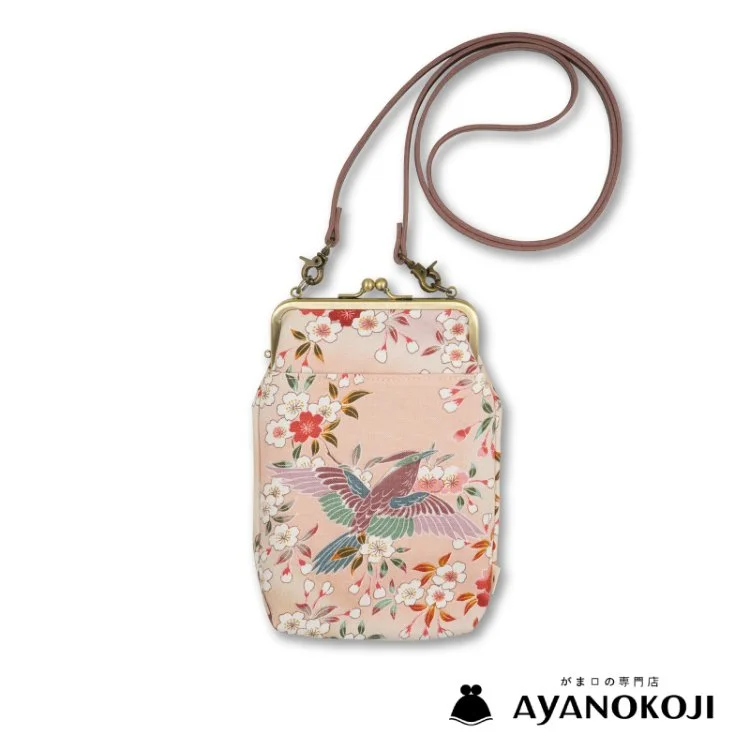
Color/ Pink and Multi-color
Japanese name / さくら (Sakura)
-About-
Sakura, or cherry blossoms, are Japan’s national flower in the hearts of the people. Every spring, throngs of Japanese people and visitors make efforts to see this well-loved flower, a tradition known as “hanami”, a flower-viewing and picnic event to enjoy the blossoms.
Widely celebrated in Japanese literature, poetry, and art, sakura carry layered meanings. For example, because they bloom briefly, the blossoms are often seen as a metaphor for the ephemeral beauty of living. The brilliant blooming season is powerful, glorious, and intoxicating, but short-lived, a visual reminder that our lives, too, are fleeting.
The joyful tradition of hanami is an old and ongoing tradition, and can be traced back centuries in Japanese culture. The eighth century chronicle Nihon Shoki records hanami festivals being held as early as the third century AD.
The style of this painting is from the Maruyama school of the Edo era (1603-1868).
・Size:7.8 x 5 x 0.6 inch
・Belt :47 inch
・Made in Japan
・Currency : US Dollar (USD)
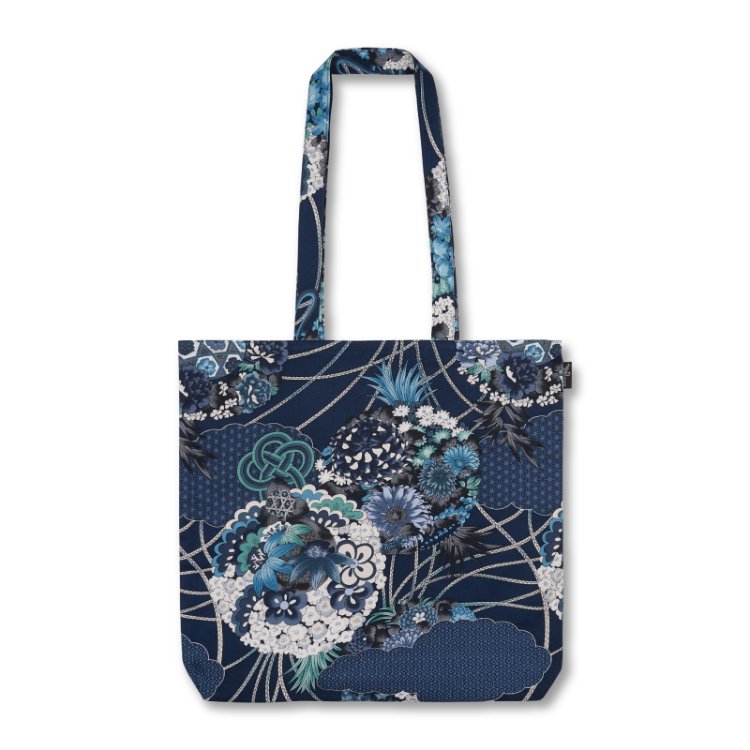
Color / Navy and Multi-color Care Instruction
Japanese name/ 薬玉
-About-
In traditional Japanese culture “Kusudama” have been used since ancient times as an amulet to ward off negativity and protect one from harm.
Its name comes from a combination of two Japanese words “kusuri” which means medicine, and “tama” or “dama” which means ball.
This fragrant protective amulet is made using a selected blend of flowers, incense, and medicinal herbs shaped into a ball, then displayed with the sole purpose of welcoming in healing, purification, and wellness.
・Size:17 x 16 x 2 inch
・Material:cotton 100%
・Made in Japan
・Currency : US Dollar (USD)
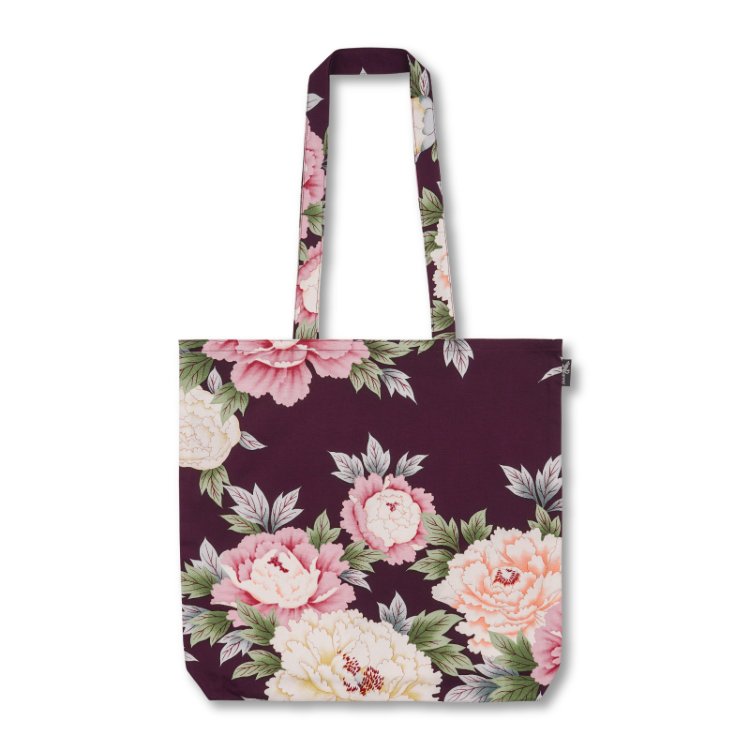
Color / Violet and Multi-color Care Instruction
Japanase name / 牡丹 ( Botan )
-About-
Peonies were known as the "king of flowers" for their gorgeous appearance and popularity. They were introduced to Japan during the Nara period, and in the Heian period, they were cultivated in the imperial court and temples as ornamental plants. During the Edo period, the cultivation method became widespread, and as they became familiar with the common people, they began to be widely depicted on kosode and other items. Peony is also known as the "flower of wealth and honor" and is loved as a symbol of wealth and honor. The peony pattern, which symbolizes the acquisition of wealth, is filled with hopes and aspirations for prosperity.
・Size:17 x 16 x 2 inch
・Material:cotton 100%
・Made in Japan
・Currency : US Dollar (USD)
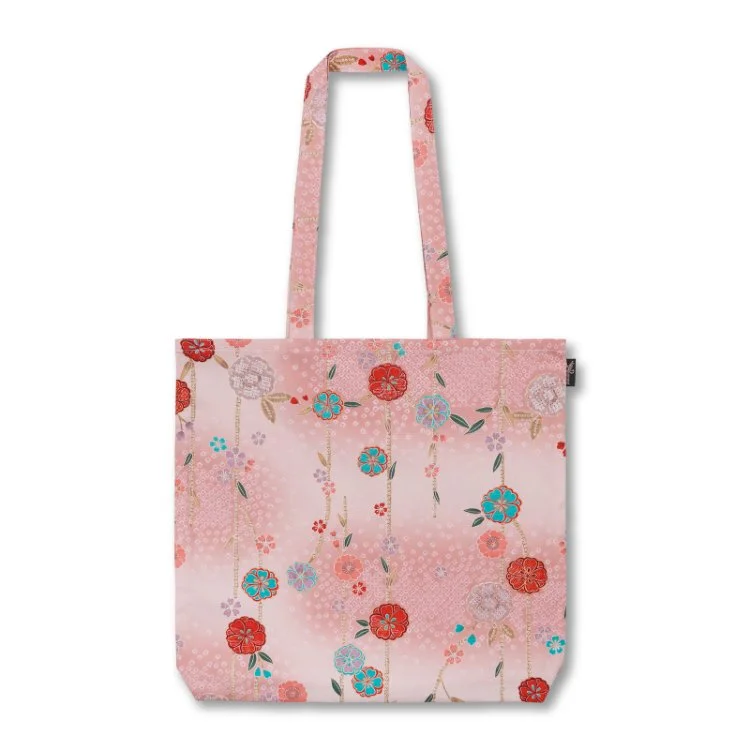
Color /Pink and Multi-color Care Instruction
Japanese name/ <枝垂れ桜> Shidare-zakura
-About-
This pattern dates back to the Showa era. It depicts the elegant and lustrous form of a weeping cherry tree. The branches are treated like vertical stripes, and the cherry blossoms are stylized, creating a modern weeping cherry tree pattern.
Until the Manyo period, "flowers" meant "plum blossoms," but by the Heian period, cherry blossoms were beloved by aristocrats, and "flowers" came to mean "cherry blossoms." Cherry blossoms have captivated people's hearts from the Heian period to the present day.
In ancient times, trees with drooping branches were believed to house divine spirits. In some regions, weeping cherry trees were not considered appropriate for planting near ordinary private homes and were instead planted within temple grounds.
・Size:17 x 16 x 2 inch
・Material:cotton 100%
・Made in Japan
・Currency : US Dollar (USD)

Color /Pink and Multi-color Care Instruction
Japanese name/さくら (Sakura)
-About-
Sakura, or cherry blossoms, are Japan’s national flower in the hearts of the people. Every spring, throngs of Japanese people and visitors make efforts to see this well-loved flower, a tradition known as “hanami”, a flower-viewing and picnic event to enjoy the blossoms.
Widely celebrated in Japanese literature, poetry, and art, sakura carry layered meanings. For example, because they bloom briefly, the blossoms are often seen as a metaphor for the ephemeral beauty of living. The brilliant blooming season is powerful, glorious, and intoxicating, but short-lived, a visual reminder that our lives, too, are fleeting.
The joyful tradition of hanami is an old and ongoing tradition, and can be traced back centuries in Japanese culture. The eighth century chronicle Nihon Shoki records hanami festivals being held as early as the third century AD.
The style of this painting is from the Maruyama school of the Edo era (1603-1868).
・Size:17 x 16 x 2 inch
・Material:cotton 100%
・Made in Japan
・Currency : US Dollar (USD)
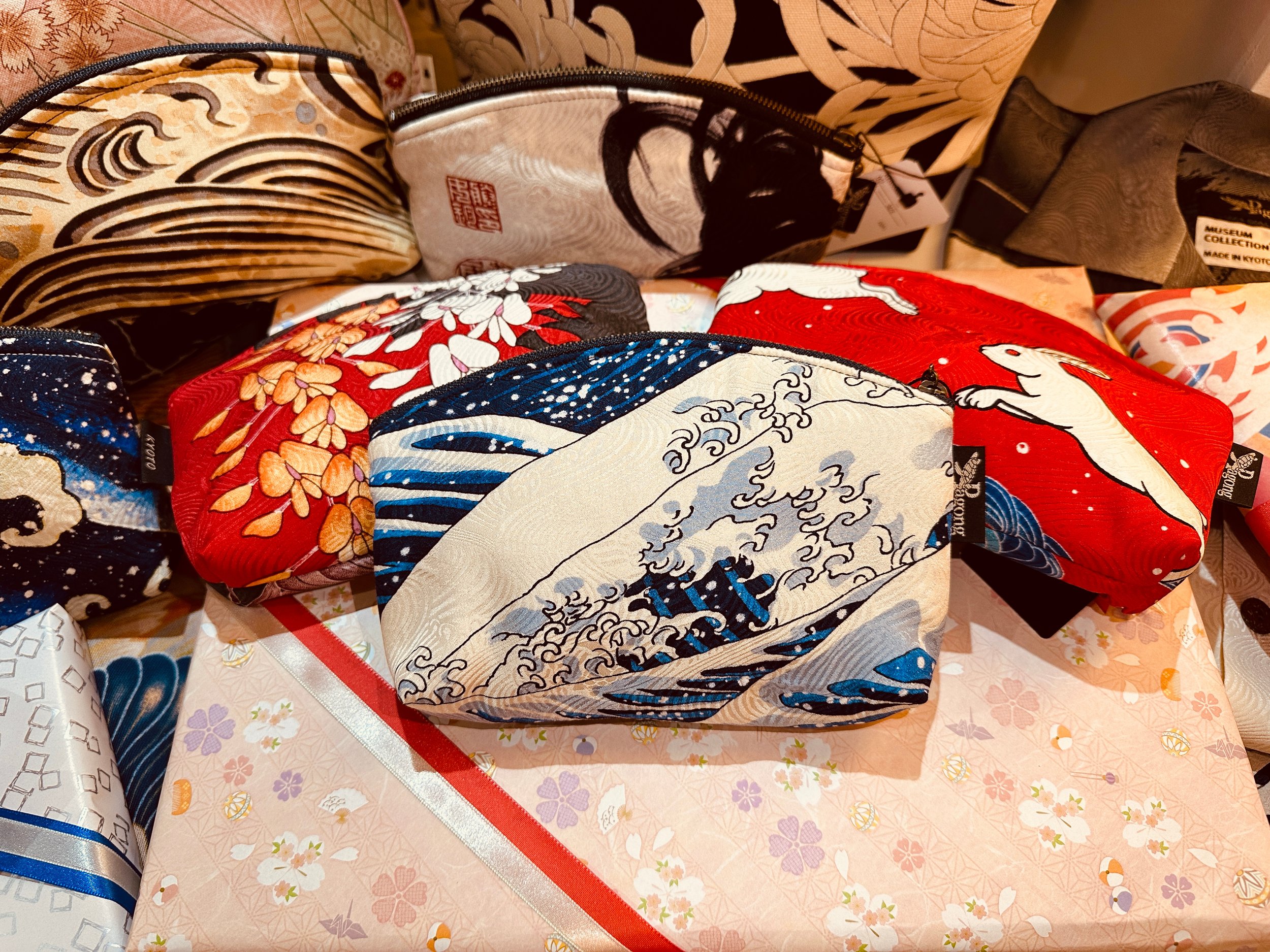
One Set Box
The One Set Box includes Three beautifully designed pouches, each crafted to showcase the exquisite artistry of traditional Japanese textiles.
This set will contain Three silk pouches. One of the silk pouches will definitely be The Hokusai's Great Wave. The remaining Two will be random pattern silk pouches.
Each pouch is ideal for storing small items, making it a versatile addition to your collection. The elegant patterns reflect our rich heritage, offering a unique blend of Japanese kimono design with a modern touch. Perfect for gifting or personal use, this set embodies the spirit of both tradition and functionality.
Discover the elegance of our silk pouch, expertly crafted from traditional Japanese textile. This versatile accessory is perfect for storing small items, securing cosmetics, or even as a unique gift option. Made with high-quality silk, it showcases intricate patterns that reflect the rich heritage of kimono design. The soft texture and delicate appearance of the silk render it both luxurious and practical.
Our silk pouch is lightweight and portable, making it easy to carry in a handbag or travel case. The drawstring closure provides convenience while ensuring your belongings remain secure. Whether you're looking to keep your essentials organized or simply want to add a touch of sophistication to your daily routine, this silk pouch embodies the artistry of Kyoto's textile tradition. Ideal for everyday use or special occasions, it brings a sense of beauty and culture to your accessories collection.
Actual items may look slightly different than their photo depending on cutting.
・Silk 100%
・Dyeing method-Kyo-Yuzen
・Made in Japan
・Currency : US Dollar (USD)
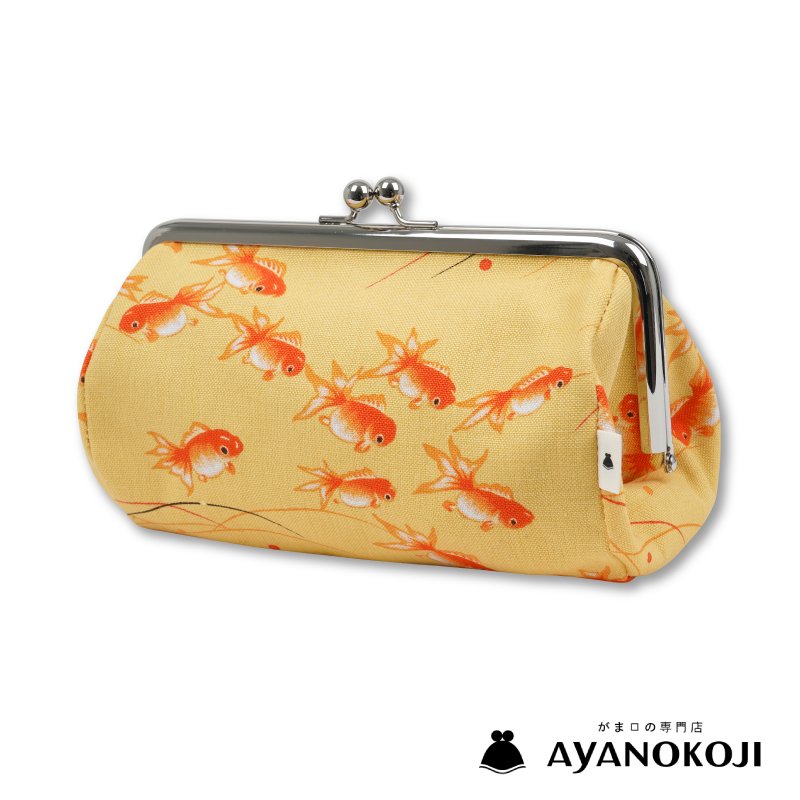
Color/ Yellow and Golden
Japanese name/ 金魚すくい (Kingyo Sukui)
-About-
This pattern depicts small goldfish swimming gracefully and gently. Goldfish are used as a subject for summer kimonos, as they represent the scenery of summer. They give off a feeling of coolness. Their cuteness also makes them popular for children's kimonos.
Goldfish lay many eggs at once, so they are also a prayer for fertility, making them very auspicious creatures.
Actual items may look slightly different than their photo depending on cutting.
Actual items may look slightly different than their photo depending on cutting.
・Cotton 100% Nylon 100%(Lining)
・SIZE ( inches)
Height 4.3
Maximum width 6.7
Depth 4
・Dyeing method-Kyo-Yuzen
・Made in Japan
・Currency : US Dollar (USD)
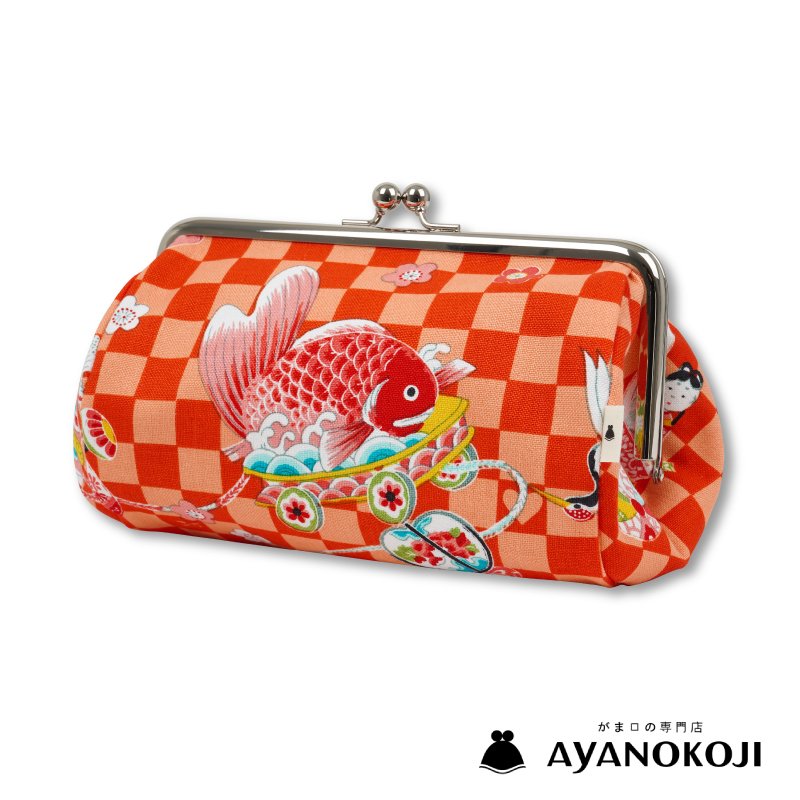
Color/ Orange and Multi-color
Japanese name/ おもちゃ (Omocha)
-About-
This is a pattern from the early Showa period. It is a kimono for girls. It features a variety of nostalgic toys.
Taiguruma (fish-snake wheel), Kazaguruma (windmill), Inuguruma (dog-drawn cart), Hina dolls, Den-den taiko drums, Sho flutes, Hagoita (battledore), Koma (top), Buriburi (buri-buri), Hoko (floor), etc. There are many more fun toys. It is a celebratory pattern that prays for the healthy growth of children.
The Kara Uchiwa fan with a chrysanthemum pattern originates from a Chinese story, "Kikujido." It is said that Kikujido lived in a valley deep in the mountains, and lived to be hundreds of years old as a child by drinking the valley water that dripped from the morning dew on the chrysanthemum leaves. It is immortal youth and longevity. The instruments are den-den drums, sho flutes, bells, and buri-buri... musical instruments. The musical instruments are ohayashi, which make sounds to call the gods. Musical instruments are auspicious things that invite the blessings of the gods. The crown with plum blossoms on it means success in life by demonstrating literary talent, according to a Chinese story. The kocho (butterfly) is a costume worn by children in gagaku when they dance at Buddhist events to appease the souls of the dead.
There is also a chapter on the kocho in the Tale of Genji, which depicts the elegant life of the dynasty and derives an image of wealth.
Since it is New Year's Day that people wear formal attire, there are also hagoita and tops, which are New Year's toys. There are also treasures . You can see jewels, gold bags, scrolls, weights, raincoats, rhinoceros horns, cloves, and seven treasures. These patterns are filled with the love of parents who wish for their children to live healthy, wealthy, and spiritually rich lives.
Actual items may look slightly different than their photo depending on cutting.
・Cotton 100% Nylon 100%(Lining)
・SIZE ( inches)
Height 4.3
Maximum width 6.7
Depth 4
・Dyeing method-Kyo-Yuzen
・Made in Japan
・Currency : US Dollar (USD)
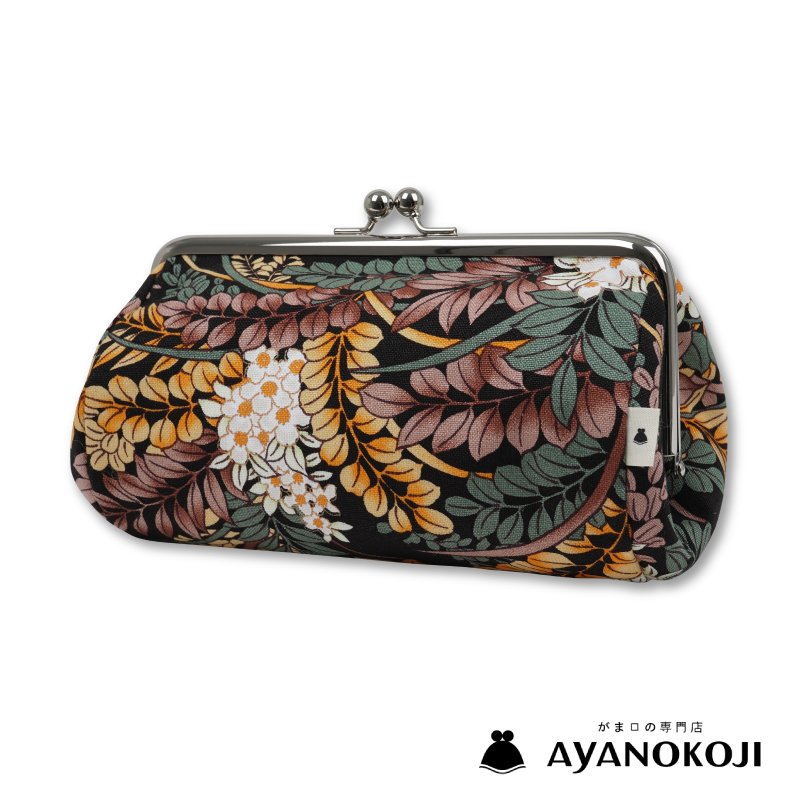
Color/ Black and Multi-color
Japanese name/ 草花文様 (Souka Monyo)
-About-
This pattern incorporates a variety of flowers and plants.
The various plants and flowers are depicted very realistically, and the background to this realistic pattern being used for kimono patterns is closely related to Yuzen dyeing.
The history of Yuzen dyeing dates back to the Edo period.
It is said that Yuzen dyeing was founded in the mid-Edo period by Miyazaki Yuzensai, who painted fan pictures in front of the Chion-in Temple in Kyoto. Before the appearance of Yuzen dyeing, there were only limited ways to create patterns on fabric, such as embroidery, attaching foil, tie-dyeing, and dyeing with boards.
Compared to these existing methods, Yuzen dyeing was a revolutionary technique that allowed you to dye fabric with any pattern you wanted, just like painting a picture. Also
, since Miyazaki Yuzensai was originally a fan-painting artist, the patterns drawn in Yuzen dyeing had beautiful compositions and a playful spirit.
Based on this history of Yuzen, various kimono designs have been created to this day.
Actual items may look slightly different than their photo depending on cutting.
・Cotton 100% Nylon 100%(Lining)
・SIZE ( inches)
Height 4.3
Maximum width 6.7
Depth 4
・Dyeing method-Kyo-Yuzen
・Made in Japan
・Currency : US Dollar (USD)
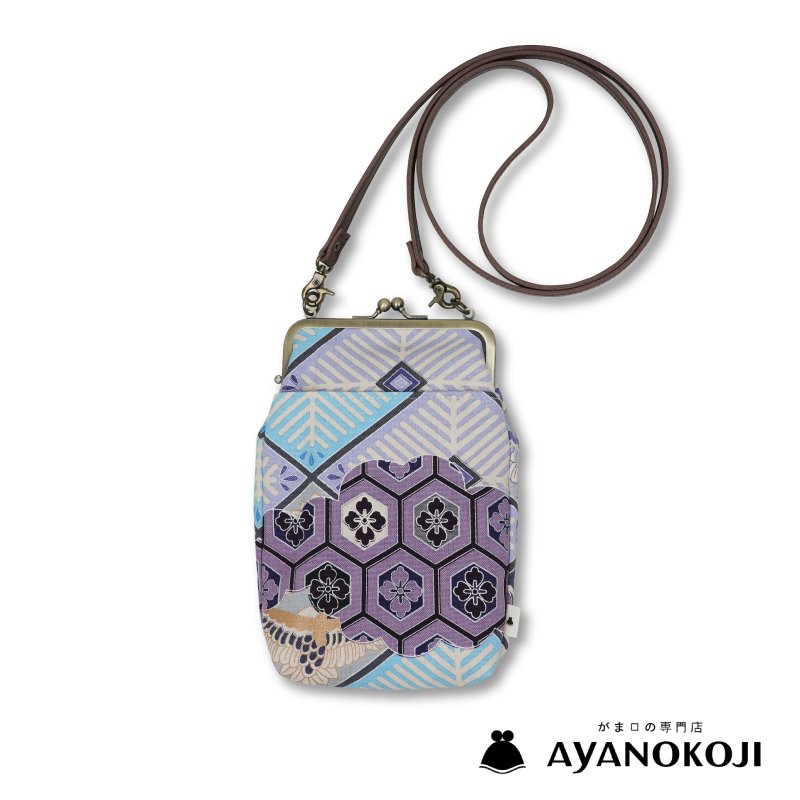
Japanese name/ 向い鶴菱 (MUKAI TSURUBISHI)
-About-
In this pattern two facing cranes, a male and female, are depicted within a rhombus shape. The rhombus shape is symbolic of the pine tree, an auspicious symbol. The cranes are believed to be a couple committed to protecting one another. Both the crane and pine, are symbols often matched together representing the wish of the couple for a long life of eternal youth.
Actual items may look slightly different than their photo depending on cutting.
・Size:8.2 x 5.7 x 1.7 inch
・Belt :47 inch
・Made in Japan
・Currency : US Dollar (USD)
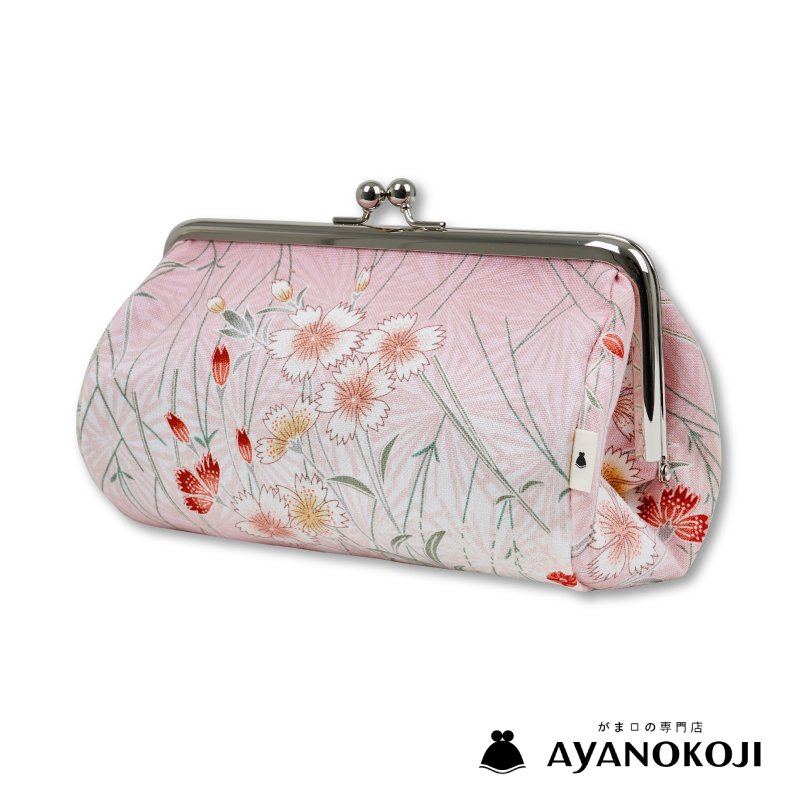
Color/ Pink and White
Japanese name/ 撫子と松葉
-About-
A pattern with scattered needle-like pine needles is called Matsubachirashi. This pattern features dianthus and bush clover flowers painted on top of scattered pine needles.
Dianthus, also known as Kawara Nadeshiko or Yamato Nadeshiko, is a flower beloved as one of the seven autumn herbs.
Pine is sometimes used as a pun on the word "wait". Perhaps a young, pretty woman like the dianthus is waiting for a wonderful man to appear.
Hagi is one of the seven autumn herbs, and is one of the flowers that is often mentioned in poems in the Man'yoshu. With its cute oval leaves and its branches full of pretty butterfly-shaped flowers in crimson purple and white, hagi is one of the autumn herbs that often appears as a kimono pattern.
Actual items may look slightly different than their photo depending on cutting.
・Cotton 100% Nylon 100%(Lining)
・SIZE ( inches)
Height 4.3
Maximum width 6.7
Depth 4
・Dyeing method-Kyo-Yuzen
・Made in Japan
・Currency : US Dollar (USD)
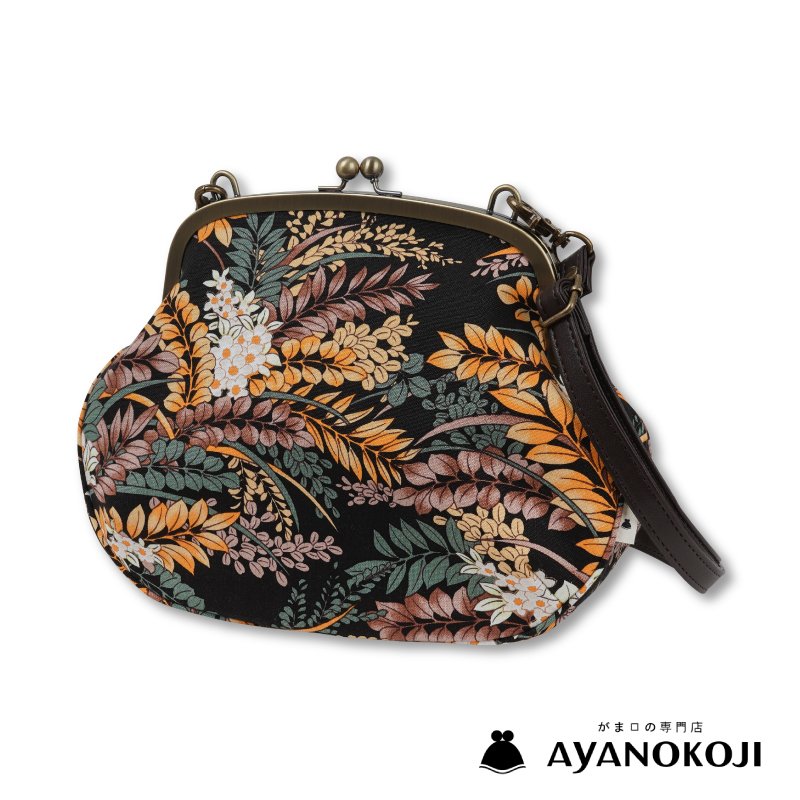
Color/ Black and Multi-color
Japanese name/ 草花文様 (Souka Monyo)
-About-
This pattern incorporates a variety of flowers and plants.
The various plants and flowers are depicted very realistically, and the background to this realistic pattern being used for kimono patterns is closely related to Yuzen dyeing.
The history of Yuzen dyeing dates back to the Edo period.
It is said that Yuzen dyeing was founded in the mid-Edo period by Miyazaki Yuzensai, who painted fan pictures in front of the Chion-in Temple in Kyoto. Before the appearance of Yuzen dyeing, there were only limited ways to create patterns on fabric, such as embroidery, attaching foil, tie-dyeing, and dyeing with boards.
Compared to these existing methods, Yuzen dyeing was a revolutionary technique that allowed you to dye fabric with any pattern you wanted, just like painting a picture. Also
, since Miyazaki Yuzensai was originally a fan-painting artist, the patterns drawn in Yuzen dyeing had beautiful compositions and a playful spirit.
Based on this history of Yuzen, various kimono designs have been created to this day.
Actual items may look slightly different than their photo depending on cutting.
・Size:8.4 x 10.8 x 3.7 inch
・Belt :30~55 inch
・Made in Japan
・Currency : US Dollar (USD)


Color / White and Multi-color Care Instruction
Japanese name/ きのこ (Kinoko)
About-
The mushrooms are drawn in a graphic design style, like illustrations in printed matter. This trend of drawing mushrooms in this way began in the Taisho era but became more popular before and after the war. After the war, the motifs also moved away from traditional flowers and birds and became more Western-style motifs and modern expressions influenced by European textile design.
・100% Premium Cotton
・Made in Japan
・Hand-wash
・Model (5 feet, 3 inches)
・Currency : US Dollar (USD)