
Mujinagiku
むじな菊
The Story of the Mujinagiku Pattern
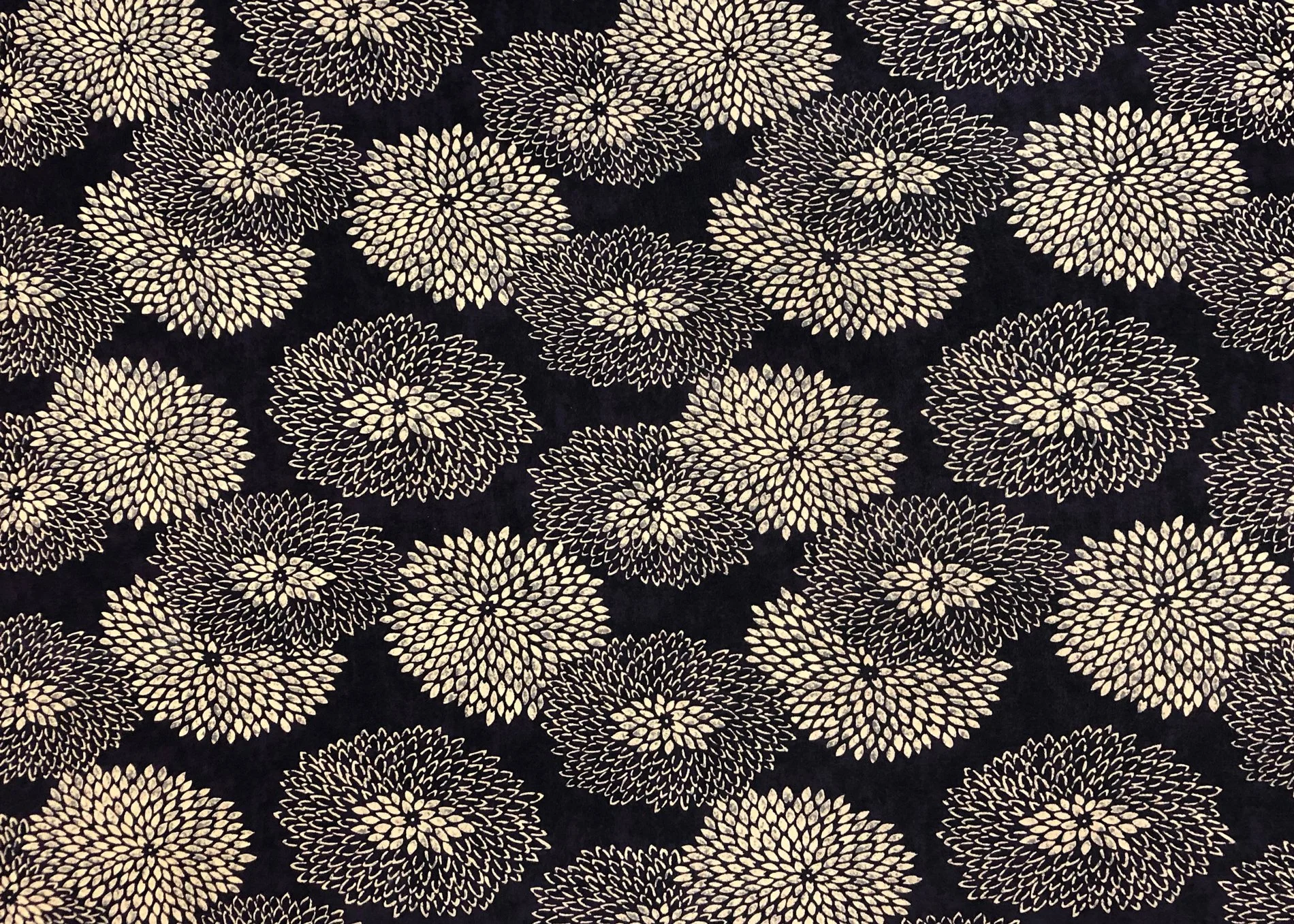
This pattern features delicate chrysanthemum petals arranged to form a layered, double-flower design. It takes its name from the way the fine petals resemble the soft fur of a woodland animal known as mujina.
While this motif is often used as a repeating micro-pattern on kimono, in this design each chrysanthemum is placed individually, with subtle variations in the petals that create a sense of movement and individuality.
Chrysanthemums have long been cherished in Japan. Originally introduced as a useful plant in ancient times, they were later cultivated and admired by court nobles, eventually becoming beloved among people from all walks of life.
As a flower that represents autumn, the chrysanthemum appears in countless artistic expressions—from kimono designs to decorative crafts. It is also considered an auspicious symbol, associated with longevity and enduring vitality through long-standing cultural traditions.
The term komon refers to a style of kimono characterized by fine, repeating patterns that cover the entire fabric. Unlike more formal garments, where designs are arranged with a clear directional composition, komon patterns are designed to appear continuous and balanced from any angle.
Today, komon broadly refers to all-over patterns regardless of size or density. There are many variations depending on the dyeing technique, including stencil-dyed, tie-dyed, and printed styles, each offering its own unique texture and expression.
The “Mujina Chrysanthemum” is a versatile and approachable komon pattern, making it easy to incorporate into everyday wear. Its refined yet playful design allows you to enjoy the beauty of traditional motifs in a modern, effortless way.